יום רביעי, י׳ חשוון תשפ״זWednesday, October 21, 2026



Follow Us


What can we learn from a seeming grammatical anomaly?

This discrepancy between human and angelic perspectives plays a central role in Chazal’s account of the giving of the Torah, albeit in an entirely different vein. While no angels appear in the Torah’s version of the story, our Sages recount that at Sinai too, Moshe encounters conflict between himself and the angels.
Man will be disappointed when he realizes that Hashem is no longer in such close proximity as He was in this world.
There is one great payback to mentoring. It brings one a certain type of immortality even in this world.

Tefillin is a daily reminder to avoid sin which would result in punishment and to do mitzvos which earn us great reward.

There cannot possibly be a substitute for the experience of encountering the knowledge of Hashem once it has directly impacted upon one’s consciousness.

Midyan therefore embody a double-edged sword. On the one hand, being descendants of Avraham with the attribute of controlled chesed, they are attracted to Am Yisrael, out of love. On the other hand, they are not Am Yisrael and do not have our Torah values – so they potentially pose a threat.
One big lesson we can learn, is stop complaining, see the טוב.

Those who are skilled in producing surprises Are as infinitely varied as heaven and earth, And as inexhaustible as the great rivers. -Sun Tzu

The overarching texts and principles that guide the Seder Tu B’Shvat are the two trees that were created in the Garden of Eden and the biblical passage stating that the human being is a tree of the field (Devarim 20:19).

Seeing the Egyptians close in on them, the Jews did what they had originally done to escape oppression; they cried out to G-d to save them. But this time, G-d threw the ball into their court and said, “a titzak elei, daber el benei Yisrael veyisau – Why are you crying out to me, speak to the Israelites and let them start moving (14:15).

This concept is consistent with the Gemara in Masechtas Sanhedrin that states categorically, Adam la’amal peh nivrah – A person was created primarily for the toil of the mouth. In other words, the greatest arena of achievement in life is in one’s control of their speech.

In order to perform acts of kindness with each other, they would each have to overlook the deficits and defects of the other.

Even the animals have been singing to G-d every day, since Creation. Every time you hear a bird chirping, a rooster crowing, a donkey braying etc., they are singing praise to G-d. If you want to know what they are singing, refer to Sefer Perek Shira.

How does the bracha of kiddush levana relates to Kabalas Pnei HaShechina?
For 210 years, they labored in Egypt under extremely harsh conditions. But like a small child with a dirty shirt, they didn’t even realize how inappropriate it was for them to be slaves.
" I went to the woods because I wished to live deliberately, to front only the essential facts of life, and see if I could not learn what it had to teach, and not, when I came to die, discover that I had not lived." Henry David Thoreau

The Kerem Shlomo says further that if the children receive a Torah true chinuch they can recognize that their parents seek Hashem, and they are therefore galvanized to give over that same chinuch to their children.

The fundamental idea of how important is the trait and the power of keeping ones mouth shut is echoed in Pirkei Avos where it teaches us, Shimon b’no omeir, Kol yomai gadalti bein hachachamim, v’lo matzasi l’guf tov m’shtika – Shimon, his [Rabban Gamli’eil’s] son said, All my life I grew up amongst the sages and I never found anything better for the body than the art of silence.
In the fascinating and unjustifiably obscure text Semichat Chachamim by R’ Naftali Katz HaCohen, the question is asked why Rosh Hashana in Tishrei and the one in Nissan, the new year for kings and for festivals, seem to be reversed.

According to Meir Panim, the entire episode of Am Yisrael in Egypt and the Exodus, was to atone for this sin. This is why we are commanded to eat matzos when we left Egypt, to atone for the chametz bread baked by Chava.

Offhand, one could think of scarier pests than frogs.

According to the Midrash (Bereishit Rabbah 93:10), Aba Kohen Bardela says that the shock and shame of the brothers is nothing compared to what each and every one of us will experience on the Day of Judgement, when we go up to Heaven after 120.

It is possible to be enslaved but not to suffer brutality, and also to be tormented without being a slave.
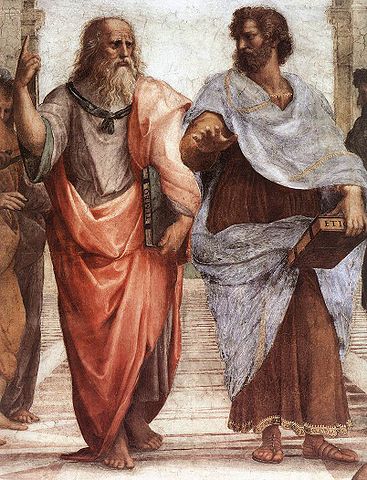
While I respect many of the moral accomplishments of the West, I believe that Judaism still has much to offer in critique of the West’s many remaining failings.

When a person is beleaguered with problems that disrupt his avodas Hashem and his Torah learning, he may ponder why he is suffering when his friend – who is not as devout – enjoys the good life, is well-to-do and at peace.
Reb Moshe asks, Why would we need someone coming out of a coma to teach us something so obvious?
How often in ancient and contemporary Jewish history have we seen things become desperate before they improved? And yet we persevered and survived. And with this perseverance, our faith in G-d as our ultimate savior survived too.

This staff was given by G-d to Adam HaRishon. It was then passed down from generation to generation, to Shet, Chanoch, Metushelach, Noach, Shem, Avraham, Yitzchak, Yaakov and then to Yosef.

Each of us is like a diamond, and each of us has the potential to be brilliant. -Simon T. Bailey
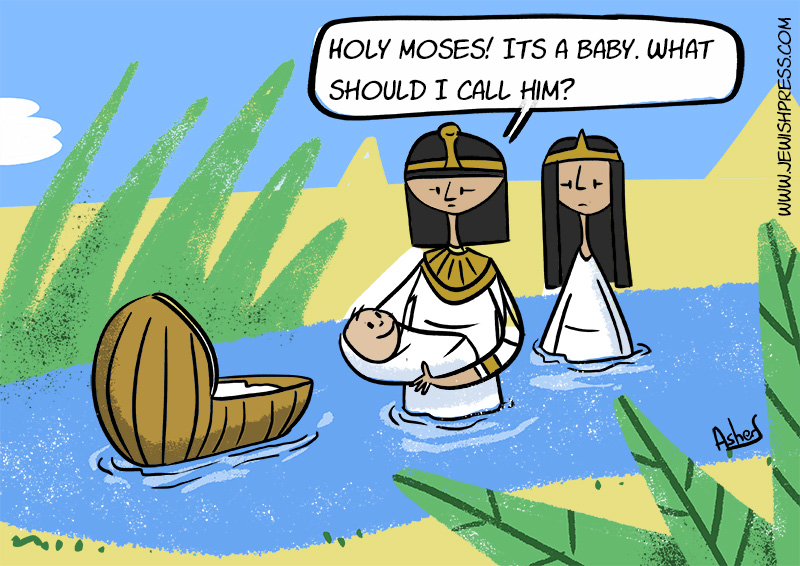
Did Pharaoh's Daughter Speak Hebrew?
Historical perspective should humble us. It should make us realize how little we understand the true nature of what is going on around us. But it should also make us realize that things truly worthwhile have a staying power.
The double language of reckoning also encompasses two aspects of the Divine Judgment that the true redeemer would have to know to invoke – Hashem will do good to Israel and lead us out of our misfortune, and He will also punish those who tormented us and hold them accountable.
The thought process of believing that rather than having a child murdered he would separate from his wife was incorrect. Miriam revealed the will of Heaven that the exact opposite was appropriate.
While the yeitzer hara has many arrows in his quiver, and his aim is focused on getting us to speak lashon hara and to fight with our spouse, to look at the wrong things, and to say hurtful words, there is nothing that the yeitzer hara tries harder to accomplish than to stop people from learning Torah.
When Yosef entered, Pharaoh tested him – he said hello to him in Dutch, Greek, and Danish and each time Yosef conversed with him fluently in each language and ascended another step until finally he was on the top 70th step together with Pharaoh.

It was difficult for him to write without errors, but his ambition was so extraordinary. It would have been worth it to me to stand there for hours in the sun or the rain just for the opportunity to help him in his quest.
Kind words are a creative force, a power that concurs in the building up of all that is good, and energy that showers blessings upon the world. -Lawrence G. Lovasik

When Lavan decided to trick Yaakov, and essentially Rachel too, Rachel nevertheless played along and gave the secret codes to Leah to enable her to succeed in the ploy. Rachel realized that what was happening must be the will of Hashem, and that it was not possible for Yaakov to have only one wife.
Even as Western society has become uncomfortable with religion, it has also become increasingly uncomfortable with its own discomfort.

Every individual who finds himself in challenging times only needs to know how to recognize the smile of Hashem from Above.

It’s always important to remember how different we are, and to thank Hashem that He allowed us the privilege to be part of this Holy Nation.

There is no question that they lied, but incredibly, the Gemara above says that they were right to lie because there is a special circumstance when one is permitted to lie and that is to make peace, what is known in English as a white lie.

The sum of the whole is greater than the sum of the parts

People of deep conviction and burning passion are often swept away by the force of their ideals. Drawn to lofty principles and grand visions, they can lose sight of the day-to-day emotions of those around them.
When Yehuda approaches Yosef, he touches his garment, and this is said to be a manner in which individuals may connect with Hashem when they are not at the level of achieving proper communion.
Even when Yosef believed he was right, he considered the possibility that perhaps he had done something wrong that warranted his excommunication.
Since the objective of marital unity brings the coveted blessing of the Shechina, the yeitzer hara tries mightily to block one’s marital harmony. We therefore must strive vigorously to maintain the magic of our oneness at all times.

After Yosef reveals himself to them and they get over their initial shock, the Midrash says – they wanted to kill him! Kill him? Just a few hours earlier they were intent on rescuing Yosef, and willing to pay any price to do so. Now that he is standing in front of them, they want to kill him?
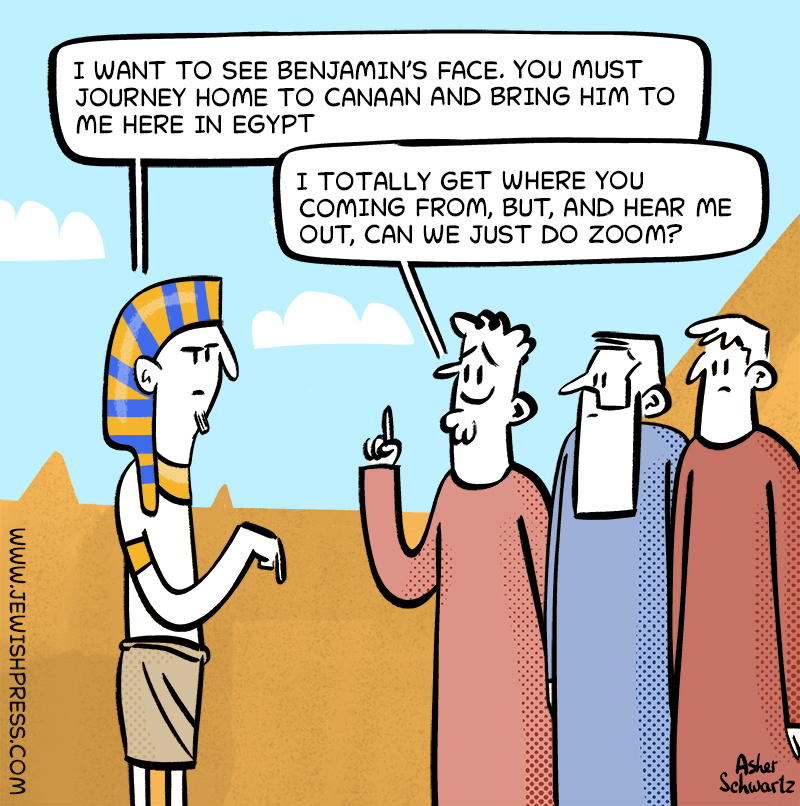
There’s short term and long term, and we must always take the long term into account.
We know Yosef never forgot his father. Even though he no longer lived next to him, his father was an ever-present influence wherever he went and whatever he did.

The Targum Yonasan Ben Uziel explains that the dream of the Royal Butler actually alluded to the redemption of the Jewish people. This being so, Yosef understood that the redemption could only come about if he, Yosef, would be released from prison.

The reward for fulfilling the mitzvah of Ner Chanukah properly is great indeed. It is something we strive for every day. It is, comprehensively speaking, the goal of all our toil.
Where grains abound, so does baking knowledge and Egypt was also the first baking superpower. Much of our modern baking science is derived from the ancient Egyptians.
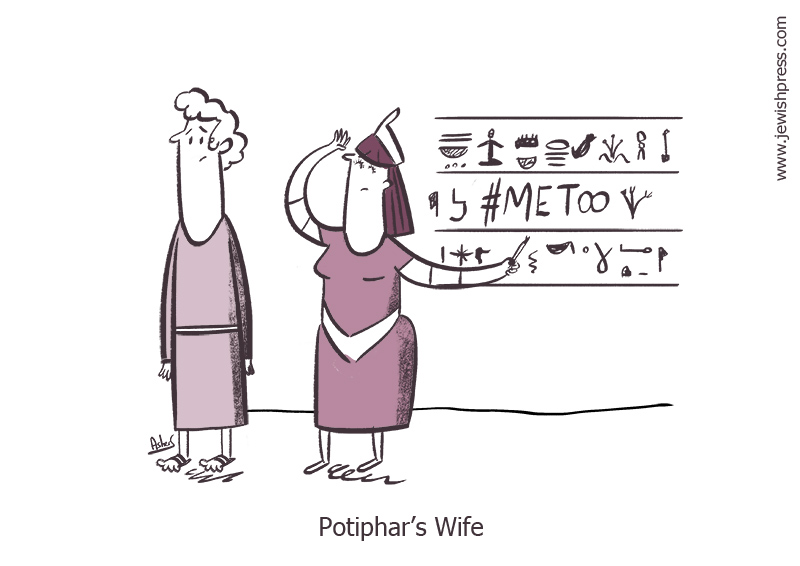
There have been many events expressing unity and support that have taken place in the Jewish world in recent days, but many of them have not been reported in the press. It seems that only a rowdy demonstration, a fight on Twitter, or a sharp exchange in the Knesset are considered newsworthy.

When we are faced with adversity and challenges that are difficult for us to bear, it is a mitzvah to accept His judgment with grace and dignity.
It is surprising that the names are not in chronological order, for first Moshe Rabbeinu was saved from the sword of Pharoah and only then was he a fugitive in Midyan. So why did he give the name Gershom first?

Yosef was being taken away from his father’s house, sold as a slave to be taken down to Egypt, from which place no slave ever escaped. Yet Hashem grants him this great kindness that he should not be assaulted by the offensive odors of tar and petroleum? This would be comparable to indulging a person going to prison by giving him a ride there in a limousine.
Yaakov knew even before Yosef was sold that he and his family would go down to Egypt. If not, why would he buy a future burial plot for Yosef – the first thing he did before settling in Eretz Yisrael?
To understand why we don't see people like these anymore, it is worth pointing out that Rosenzweig and especially Weil could be described as “Renaissance men.”
Indeed, this enemy gives Yaakov an enormous blessing. He bestows upon him a new and much more powerful name: ‘No longer will it be said that your name is just Yaakov, but also Yisrael.’ And this is our name until today.

Rachel’s influence was to unify Israel, to remind us to welcome and accept one another just as she was a mother to all Yaakov’s sons and her sons never treated any of the other brothers with disdain or disrespect.

Let us assume for a moment that the Avot knew for certain what the repercussions of rejecting Timna would be and that they were faced with a dilemma. If they accept her as a convert, it would conflict with the halacha, because she had an agenda.
It is clear that Yaakov felt that danger of assimilating his brother's ways was the more dangerous of the two possibilities.

In truth, Yaakov wanted to know the essence of the Satan, so that he could be better equipped to fight evil. He wanted to understand the Satan’s power that enabled him to ensnare people and bring them down.
This is the story of Yoash, the father of Gidon.
If Sandberg symbolizes what is happening now to our brethren in the Diaspora, we are on the right path. This phenomenon has already been given a name: The Jews of October 8, the Jews who woke up the day after.
Ya’akov is the patriarch that reached the pinnacle of the early Biblical period by combining the strengths of both his father and grandfather and raising all thirteen of his children to follow in his footsteps.

Leah and Rachel are competitors for Yaakov’s affection, but their devotion and kindness to one another is unabated.
The lesson here is very clear. Everything in life is for the good; if not now, tomorrow, and if not tomorrow then the next day.

If you think Lavan was an arch-villain swindler, he had nothing on the serpent. The serpent was the inventor of swindling, using wiles and deception to trick Chava into eating from the Tree of Knowledge.
Esav mocked the privilege of the firstborn - the Korbanot.

Unbelief starves the soul; faith finds food in famine. -Richard Cecil
From the time of Avraham we are told that the Jewish people are aliens on this planet. We don’t belong here. Our very birth was miraculous and our survival remains a phenomenon.
If Eisav received the blessing there was the possibility that Torah could be propagated in the future, and he would beget descendants who were Torah scholars.
When you want to get the most bang-for-your-buck, you try to go to someone who is a specialist in what you need. When it comes to prayer, Yitzchak is the specialist for, while Avraham is the Amud HaChesed, the pillar of kindness, and Yaakov is the Amud HaTorah, the pillar of Torah, Yitzchak is the Amud HaAvodah, the pillar of Divine service, which is prayer.
Rivka’s righteousness in spite of her origins is noteworthy, but the Sages also point out that when it was necessary to pray for Hashem to open her womb, the Torah tells us that Hashem was moved by the prayers of Yitzchak.

If the rest of the world is to survive, you cannot bequeath the blessing of wealth to evil people. Only if you place it in the custodianship of Am Yisrael, will the rest of the world prosper – because of Am Yisrael.
PM Netanyahu, Ministers and MKs talk about Parshat Chayei Sara and Hebron.
We should perform Mitzvot B'simcha, with alacrity.
I could well imagine that I might have lived in former centuries and there encountered questions I was not yet able to answer; that I had been born again because I had not fulfilled the task given to me. -Carl Jung
There are apocryphal sources that describe a period of separation between Adam and Chava during which time they took other partners. Avraham and Sarah, on the other hand never deviate from their commitment to one another, even when it becomes evident that Sarah cannot conceive children and in spite of the great value Avraham places in producing offspring.

True chesed is the ability to intuit when another person is in need and to be sensitive to his deprivation.
The Gemara tells us that if one should encounter the pillar of salt which Lot’s wife turned into, he should make two blessings: Baruch Dayan HaEmes, Blessed is the true Judge [Who punished Lot’s wife], and Baruch Zocheir tzaddikim, Blessed is He who remembers the righteous.
The field of Efron had a bad reputation; it was said to be haunted. Anyone happening to wander into the field reported encountering a demon wielding a sword. As viable real estate it was worthless.
Hashem knew Avraham will pass on to the next generations - to keep the way of God.

I love people who make me laugh. I honestly think it's the thing I like most, to laugh. It cures a multitude of ills. It's probably the most important thing in a person. -Audrey Hepburn
It is at this time that the kindness of Hashem becomes evident, for Hashem will repay him many times over for all his generous acts of tzedakah in the past, corresponding to his singular deed of selflessness now.

Rav tells us that whoever goes to visit the sick, Nitzol m’dino shel Gehennom, will be saved from the punishment of Gehennom.
Who said anything about tying Yitzchak up? Hashem certainly didn’t tell Avraham to tie Yitzchak up, He told him to offer Yitzchak as an olah.

Rav Shagar points out certain thematic similarities between the trial of Avraham and that of Iyov. But Avraham excels and demonstrates his qualities by virtue of the outcome of his test while Iyov is criticized by Chazal for his responses.
Hashem chose this precise juncture to teach us the importance of respecting a wife. This is to teach us that even in trying times, when under extreme stress, we must hold dear to the responsibility to cherish and treat with great care our soul mate.
Despite all the awesome miracles that Og observed as the world was destroyed during the flood, and later at the time of the Dor Haflagah, he nevertheless remained a villain.

The beginning of wisdom is to call things by their proper name. -Confucius
 October 16, 2026