יום רביעי, י׳ חשוון תשפ״זWednesday, October 21, 2026



Follow Us



While corruption was more widespread and perhaps fundamental, the formal case against the generation of the flood was formulated on the basis of something they – and Noach, in particular – could understand: they were hurting each other.

The Rebbe references the Hebrew name of the wood from which the teivah was constructed (gopher wood), which might be cypress but the etymology is unclear. What is clear is that gopher is related to sulfur (gaphror in Hebrew), and thus correlates to burning and simmering rage.

The tragic demise of mankind during the era of the flood was not just a punishment for that wicked generation. Even more so, it was perhaps a series of powerful lessons to be studied by G-d-fearing people throughout the millennia about behaviors that are so toxic that they can cause the absolute destruction of an entire world.

The Chofetz Chaim writes how important it is for a person to reinforce his middah (character trait) of judging others favorably, because it will facilitate his own advancement in attaining the level of a tzaddik, a righteous person.

Hashem does not perform miracles without intention. While it may be difficult to determine specific expectations, future responsibilities can often be articulated in personal terms.

Kayin understood that if Hashem would not help him, he had no hope of remaining alive.
Not only is the sukkah a sign of our emunah in Hashem, but when we hold the lulav and esrog in our hand and shake them back and forth we are declaring, Just as the species cannot exist without You, Hashem, so too we are totally dependent on You.

From our very inception, our existence was a miracle. Avram was unable to have children at his advanced age, but Avraham, the Av hamon goyim, the father of all nations, who spread the message of monotheism worldwide, was able to have a child.
If one does teshuvah because of his love for Hashem, then willful sins are actually converted into meritorious deeds.

When the Torah restates the mitzvot of Sukkot in Devarim (17) – although it doesn’t actually mention there the mitzvah of sukkah (!) – Rabbeinu Bachye discusses some of the hidden aspects of this mitzvah, particularly as they relate to the mitzvah of rejoicing on the holiday and in the context of all the major pilgrimage holidays under discussion there.
The Baal HaTanya writes that on Rosh Hashanah all the Heavenly Hosts sit in Shamayim and wait longingly to hear one Yid praise another. Why? Because in that moment when he does so, the angels take those good words and place them on his scale of merits.

We should not feel like we are martyrs suffering for our children, for, after all, Judaism opposes human sacrifice.

In a world fractured by fear, antisemitism, and isolation, Sukkos reminds us that holiness is not a status, it’s a practice.
Or, beseech, Hashem, I want to give more tzedakah this year. Can I have a bump in my livelihood so I can help my children more, or provide for my elderly parents? My wife has been wonderful. I want to be able to get her a nicer sheitel, some jewelry. Help me please, Hashem, to accomplish these goals.
Chazal say that for three days after Am Yisrael gathered all the loot from the Egyptians who drowned in the Red Sea, they neglected to study Torah, which set off a series of complaints and rebellions against Moshe and HaKadosh Baruch Hu Therefore, it was instituted that three days cannot pass without the Torah being read.
Clearly, Hashem could have created a universe in which there is no suffering and in which we can acknowledge and praise Him without having to overcome adversity. So, there is an inherent value to us, whether as individuals or as a species, in coming to this awareness through our own processes and gaining insight, and not just having it presented to us as perhaps the malachim do.

It’s sad. Our political-media discourse is stuck, narrow. A person is shaped by the landscape of their feed.
Did Mar Ukva crave the cheese so much that he couldn’t wait until the next day? On the other hand, there is no obligation to wait 24 hours before eating dairy. Why did Mar Ukva compare himself to vinegar, i.e. wine that has spoiled and has lost its value?
What Moshe was saying was that once G-d has forbidden him to do something, then even if he was physically able to do the forbidden thing, he was spiritually unable to bring himself to do so.

The shofar doesn’t sound to restore order; it sounds to rupture it. It doesn’t call us to purity; it calls us to have strategic clarity. It doesn’t ask us to return to innocence; it asks us to return to alignment. To choose life in systems that often don’t.
In order to enable free will, HaKadosh Baruch Hu hides Himself in His Creation. When I say hide, I mean behind a concept, for example The Laws of Nature. By hiding behind this "concept," HaKadosh Baruch Hu enables a person to see Him, or not.

Hashem is Hashem in the supernal realms in which He plans Creation as an ideal to be embodied, and He is Hashem in the physical world that He created and which we have inhabited since the first Rosh Hashana.
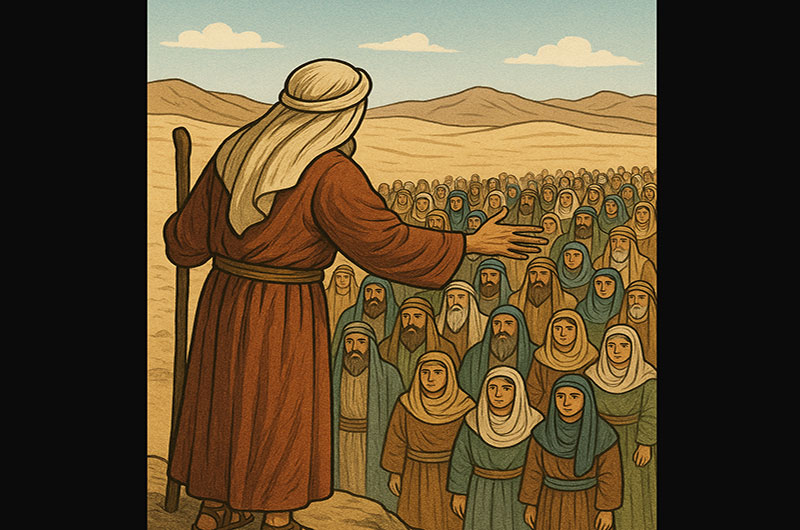
The only way to appease one’s conscience when giving in to one’s most extreme desires is to violate all the prohibitions of the Torah, even those that do not give one any pleasure.
Before the recitation of the berachos preceding the blowing of the shofar, the shofar is placed on the bimah and covered with a tallis. If the ba’al tokei’a has more than one shofar, and/or other congregants have brought their own shofaros, they too are covered with the tallis on the bimah.
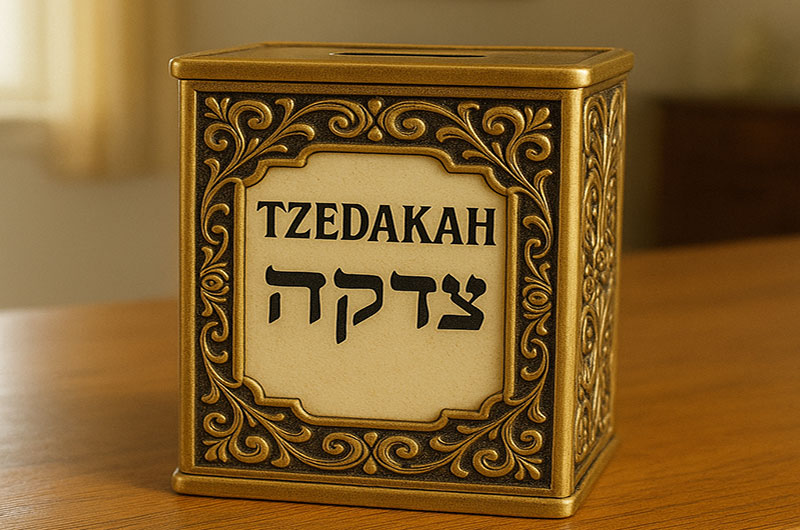
The protection of our charity extends to our children and grandchildren.

If a person keeps in mind that everything belongs to Hashem, and knows the money is only entrusted to him, it is easier for him to tithe.

Elul is the season of return. Not just to G-d, but to self. To what’s bruised, unfinished, still becoming.
If you examine the paragraphs of the curses, both in Bechukotai and in Ki Tavo, you will see that they are preceded by a paragraph of blessings.
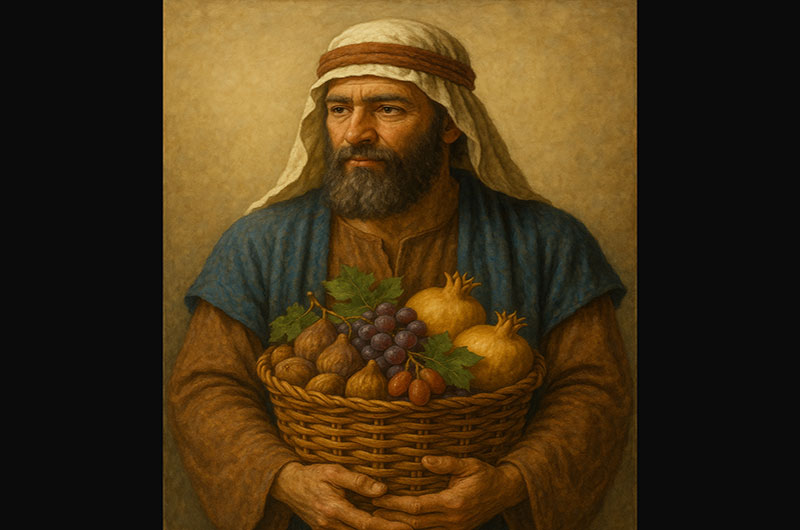
The gift of Bikkurim has to be wrapped in a way that is fit for a King. It must be offered in a beautiful basket.

The true national essence of Israel is not found in our markets, whether domestic or for export. In fact, Hashem made us with all the capabilities we require to subsist and even to thrive in our Land, which He endowed with all the ingredients we require to prosper.

As we recite this haftara, let us hope and pray to be deserving of a redemption that comes in a flash. The Jewish people of today, in Israel and outside it, has progressed spiritually beyond recognition in the years since the founding of the State.
We believe, of course, in the accuracy of the Torah. But it certainly strengthens our belief when we see the words of the Torah come alive throughout the ages.

We know that it is already decided before one is born when and where one will die and there is no way of avoiding that meeting with the angel of death. If that is the case, why must one bother installing a fence? The accident is destined to happen anyway.
The Torah says about Sarah and Rivka that they were lovely (yefat mar'eh) but that Rachel, in addition to being lovely, was also beautiful (yefat toar). So, the only one of the Matriarchs that exactly matches the description of eishet yefat toar is Rachel.

Gold in Torah doesn’t just stand for just wealth, it’s also trust. And trust begins with math. With integrity. With the quiet promise that value won’t be manipulated for profit.

Ma’oz’s soul brought you together. He was your matchmaker. You studied in the same school for twelve years without ever having a real conversation. And yet, here you are – connected because of this Jewish hero, and through your shared love of Torah. This is not only Benji and Eliana’s private story. We are all part of something much greater.
On a spiritual level the rebbe is greater than the father, therefore his property is returned first. But with regard to the transgression itself, obviously that it is more egregious to hit or curse one’s own parent than the rebbe, and therefore the punishment is harsher.

Equally important is resisting the urge to retaliate. A sharp remark often provokes an even sharper response, and the tone can quickly descend into bitterness.
HaKadosh Baruch Hu does communicate “indirectly” with Am Yisrael, showing His pleasure/displeasure with us, by heaping abundance on us or withholding abundance/rain.
One of the hardest feelings, especially now, is uncertainty. We don’t know what tomorrow will bring, and so many people search for answers that can guarantee the future.

Once a month, on days meant to be marked by personal introspection, Hashem challenges us to recognize and value the quiet enablers in our midst.

The architecture of Shoftim invites reflection not just on governance, but on restraint. It cautions against excess and sanctifies balance. It insists that power must be regulated by humility, and that leadership demands a commitment to the law: not a manipulation of it.
The mitzvot of Parshat Shoftim are relevant to the governance and political practices of an Israelite (or Israeli) society ruled by law. The king is interchangeable with the elders, as we find in the present passages (Devarim 21:1-9), and stands in for the collective of Israel at large.
Although one may protest that he would never take a bribe the Mishna in Avos (2:4) states, “Do not believe in yourself until the day you die.”
It is not enough to read about it, even see pictures of it – in a book, in a video. Only when you are physically there and see it with your own eyes does it have the required effect.

What is the blessing that G-d bestows on us for keeping the mitzvot? It is that “tishme’u,” you will be able in the future to continue performing the mitzvot. There is a future to keeping mitzvot.
The Talmud (Shabbos 151b) expounds that anyone who has compassion on Hashem’s creatures will receive compassion from Hashem, and one who does not have compassion will not receive compassion from Heaven...

Other depictions of the redemption tend to emphasize the glory of G-d that derives from His redeeming His people at a time and in a manner which suits Him. But human beings, even those who are desperate and endangered, ideally don’t want to be given something they have not earned.

Being Jewish is not being a religion of holy people. It is a religion of ordinary people aspiring to holiness through sacred acts in daily life.

All her life, from early childhood, Grandma has been meticulous in living a fully observant Jewish life. Her devotion to mitzvot was such that at age 99, when the U.K. was in full lockdown during Covid, she cleaned and kashered her home for Pesach entirely on her own – just months before her 100th birthday.
The Aish Kodesh taught his community, in the abyss of dehumanization and annihilation, that they had been given an opportunity to elicit Hashem’s power to redeem the world and fulfill His promises to our forefathers.

Covenant grows up here. It moves from bedtime prayers to morning spreadsheets. From mezuzahs on doorposts to mercy in hospital rooms. Not because we are commanded, but because we remember.
There was no danger of becoming arrogant in the desert. There were no self-made men there. It was clear to all that manna rained down from heaven, that water was provided in merit of Miriam, that clothes lasted forever and one’s feet did not swell in the heat (8:4).
The Chazon Ish answered him that Torah is not wisdom; it’s a neshama, a soul.
By not revealing the reward for (most of) the positive mitzvot, HaKadosh Baruch Hu prevented a situation where we would excessively observe only some mitzvot at the expense of others.
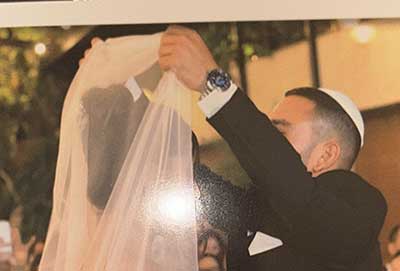
Eliyahu shared his own pain. I’m Elyakim’s father, he said. He was a security guard at the Nova festival. He saved lives and was killed doing so. And you, Nachman, you survived. Tell me, why did you survive? Nachman had no answer.

Adhering to a prohibition like sha’atnez which has kept the Jews alive, but makes as little sense to the layman as the chemical-formula of a life-saving medication, earns the respect of the nations because it is a secret formula that neither they nor us could ever have invented.
The baal habayis could not understand why he merited a visit from R’ Avraham and his son. He waited for the Rav to eat from the delicacies that had been prepared, but R’ Avraham just sat and didn’t do anything.

Moshe gave the Shema knowing he would not cross the Jordan. He prepared his people not with possessions, but with patterns. That is the quiet brilliance of leadership: offering rhythm in place of proximity.
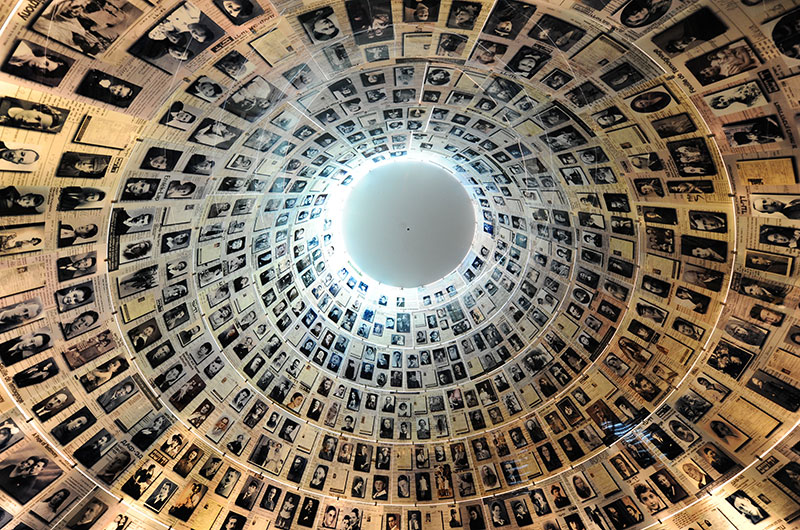
If one were to ask: was it worth experiencing a Holocaust which decimated one third of our people in order to attain a State of Israel? – not only would an affirmative answer be blasphemous, but so is the question.

Notwithstanding Moshe’s defense, the common theme running through these incidents is ingratitude. They had so much to be thankful for. Yet they chose to complain.
If Tzion is to be redeemed, will her captives not be freed as well?

I was taught to make a Kiddush Hashem no matter where I stand; in a parking lot among our own, or as the only Jew in town. Space doesn’t define sanctity. Behavior does. Especially when no one’s watching. Especially when they are.
How was Yonasan allowed to rebuke his own father, Shaul?

How contemporary the Gemara rings when it says the destruction of Yerushalayim puzzled and perplexed the sages, prophets, and angels! It shouldn’t cause us any wonder that we are unable to explain the atrocities of the Holocaust when even prophets and angels were confounded by the similar disasters of yesteryear.

Our justice and our morality are the truth. I’m learning Torah now – chassidut, parashat hashavua. How did I not know about this treasure until now? You shouldn’t have to lose a child, or turn 57, to begin asking who you are and why you’re here.

G-d instructs Moshe that before he dies he must wage war against the people of Midian for having enticed the leaders of Israel to behave immorally with the Midianite women. This event led to the plague that killed 24,000 Jews (Bamidbar 25:9).

In every home I’ve lived in, one thing has remained constant, a quiet covenant. It’s a reminder of Hashem’s presence, much like a mezuzah, though not one in form.
The fact that there are 42 journeys is not incidental, it corresponds to the name of HaKadosh Baruch Hu that has 42 letters.
The person who sinned and has now repented had to fight harder to conquer his Evil Inclination than the righteous individual.
Another way to get close to the Shechinah is by visiting the sick. As Rashi teaches us in Parshas Vayechi, The Shechinah always resides by the head of a choleh, an ill person.

When someone makes shalom between rival parties, what does that mean?

Going out before the people and going in before them is one type of leadership. It is the leadership of the humble public servant who bends before the needs of his people.

Not every gut impulse is a moral directive. When we confuse conscience with certainty, we risk mistaking personal anger for sacred missions.
Rabbbeinu Bachye finds it problematic to accept the literal interpretation that Hashem somehow erred, requiring our intercession on His behalf. He explains that the real purpose of this mitzvah of the Chatat on Rosh Chodesh is to give hope to those who have gone astray but wish to return to the faithful service of Hashem.
Striking the right balance between Torah and one’s livelihood is a tricky business. Especially since making a living is a mitzvah in itself.
We live such public and exposed lives today, yet in this week’s parsha we are reminded to seek the blessing of privacy.
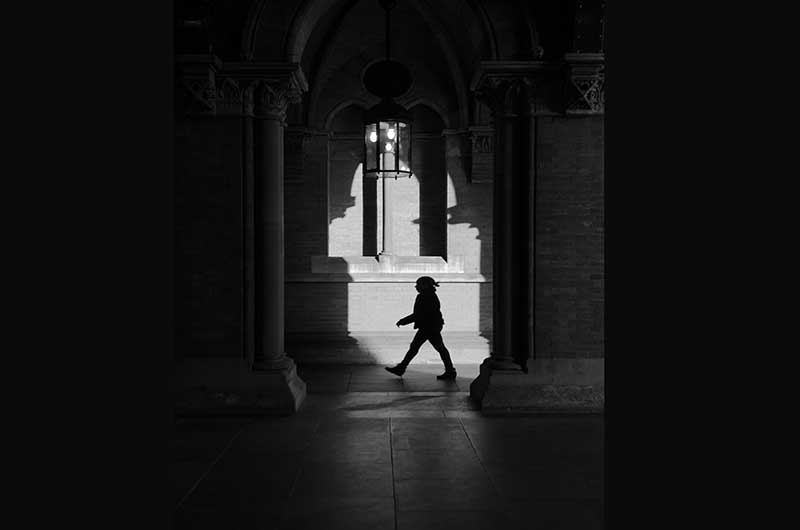
In Parshat Balak, Bilaam never saw the people he was meant to curse. He viewed them from a distance; abstractly, impersonally. His words came not from relationship, but rather from obligation, from politics, from agenda. And yet they could have reshaped a people’s destiny.
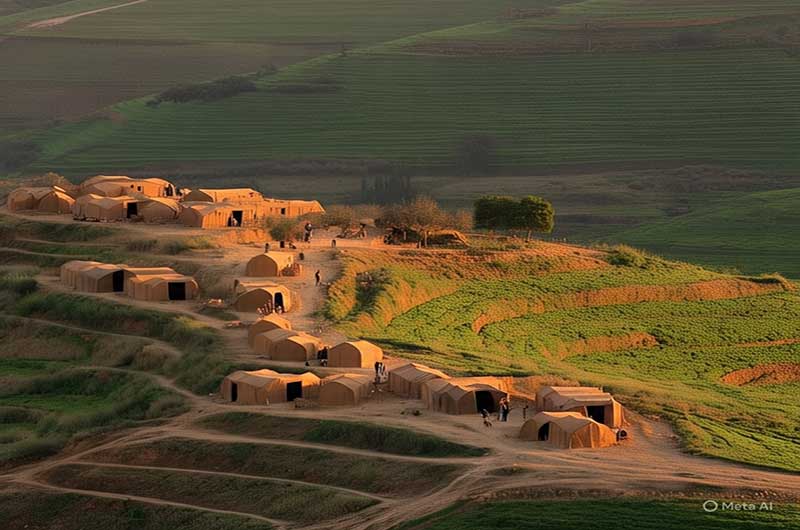
Balak realized that Midyan and Moav, the erstwhile enemies, would have to make a truce and gang up as allies against Israel. But since G-d was on Israel’s side, there was no way he could prevent the Jews from ultimately taking over the land.
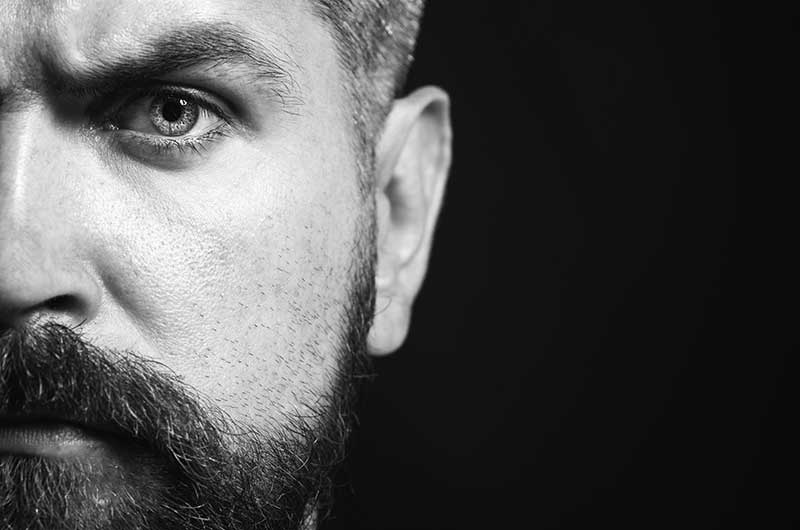
Balak was evil – he did not want to elevate himself to the level of Am Yisrael, he wanted to reduce Am Yisrael down to his level, or even lower.
His father told him: You decide which yeshiva you want to go to. Don’t tell me your decision. When the day comes to leave to yeshiva, take your suitcase, go to the yeshiva, and I don’t want to know where you are going.
Idolatry is insidious and it sneaks into the hearts of the unwary by way of small compromises and prohibited acts that appear insignificant at first.
It is impossible to reach an agreement with Amalek, because the only thing that will satisfy them is our obliteration and…G-d's name in the world can never be complete until Amalek is obliterated.
Because if it is corruption we are worried about, there is no greater corruption and source of impurity than the presence of death itself.
The attitude that one knows that you’ve got my back isn’t born overnight. It’s achieved with a persistent series of small acts and gestures where husband and wife demonstrate that you are first in my book.
When one makes peace in his home, the Torah considers it as if he established peace among the entire Jewish Nation.

Destruction and death come to those who do not serve G-d out joy but out of fear alone.
I’m not sure whether people fully grasp the magnitude of the miracle. Just the day before, the floors of the building that was hit had been cleared. Entire departments had been relocated to reinforced areas.
Someone who understands reality on such a level also begins to see that all of humanity is really bound together as a cohesive whole.

The theological questions from October 7 appear to be answering themselves in a way we can more readily understand.
[Democracy] is contingent on both sides respecting each other and not crossing red lines. When that breaks down, democracy ceases to function and it degenerates into illegitimate anarchy.

Advice is like snow—the softer it falls, the longer it dwells upon, and the deeper it sinks into the mind. – Samuel Taylor Coleridge
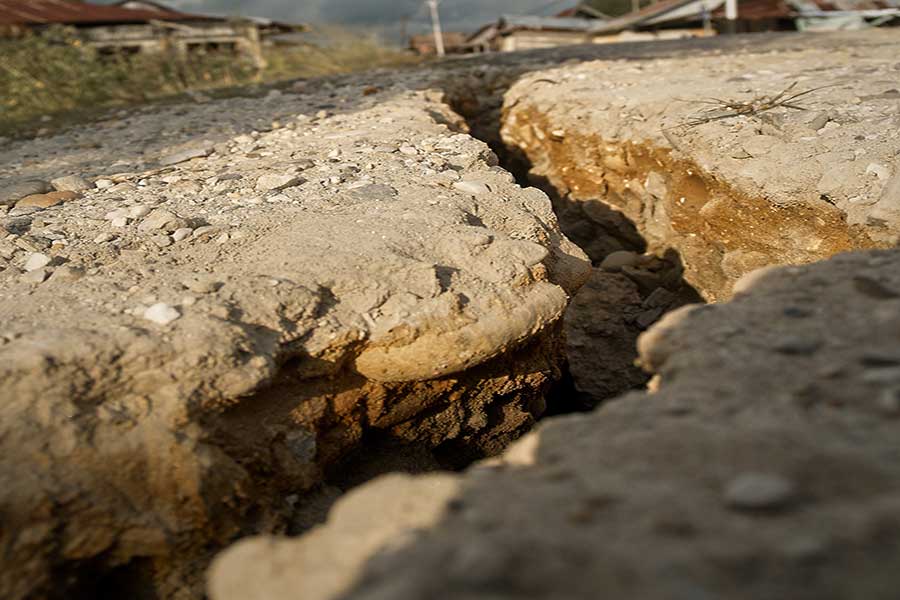
A humble person does not take credit for his power, his riches, or his intelligence, because he knows it is all from Hashem.
I believe that Hashem is sending these unfortunate people to us as a gift to enhance and strengthen our prayers.
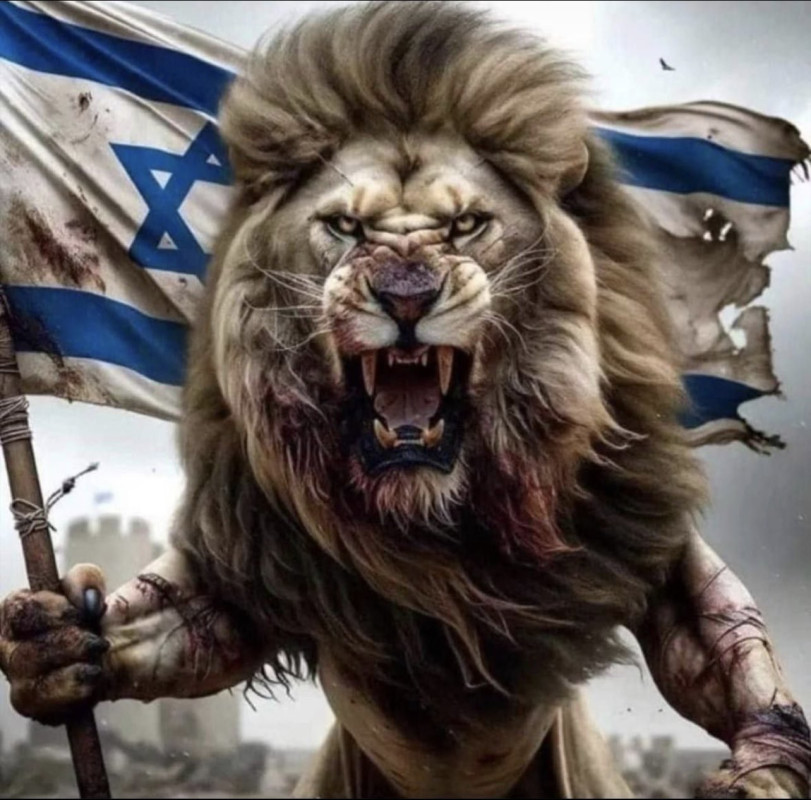
It is no coincidence that Israel courageously attacked Iran in the week the Torah portion tells us: “When you are at war in your land against an aggressor who attacks you, you shall sound short blasts on the trumpets, that you may be remembered before your God and be delivered from your enemies.”

The Rogatchover Gaon emphasizes specifically that Eretz Yisrael is only acquired through tribulation (Brachot 5), noting how inappropriate it is for someone to expect to gain the fruits of the labor of another – especially when somebody has to go to war to defend the land and somebody else expects to just sit at home and benefit from this.
Many marriages have been ruined by the well-meaning but poor advice of friends.

The aveirah of the meraglim was their own lack of faith, and their determination to weaken the faith of the Jewish nation.
 October 16, 2026