יום רביעי, י׳ חשוון תשפ״זWednesday, October 21, 2026



Follow Us


One who foregoes his calculations with others for injustices done to him, the Heavenly Court, in turn, foregoes punishment for all his sins.

G-d never said that great moments of Jewish redemption would only be brought about by tzaddikim. The State of Israel is not the realization of The Dream. But it is a major step towards the Complete Redemption.

A year ago, we left an empty chair at the Seder table, waiting for the hostages. This was the first Seder after they emerged from darkness into light. Together with them, we have all received another layer in the story of our national freedom.

Now that he had served out his time and would soon be eligible to rejoin the world, why was he not eager to undergo the purification ceremony to be administered by the kohen which would be his ticket back to freedom?
HaKadosh Baruch Hu therefore encompasses both poles (amongst His infinite other attributes) – Activity/Provider (of everything) and also Presence/Nurture/Receiver (He receives our prayers).

While it’s true that in the generation of the Sages, there were very few people who could understand the intricate laws of purity and impurity – let alone live according to them – the Sages were looking ahead and planning for a future era when all of Israel would be engaged in the active fulfillment of the Divine plan for Creation.

Another special advantage of Torah is that It protects us from the advances of the yetzer hara.

In fact, man is not exceptional to all of creation. His superiority exists only in his knowledge and intellect, and his ability to make a choice between bad and good.
According to each individual’s level of emunah, the blessing increased his ability to become a proper vessel in which the beracha could come to fruition.
We are not there to reason on behalf of G-d. If G-d promises that something will happen, it will happen. How? That’s not our business. Our business is to fulfill the positive commandment of Kiddush Hashem and G-d will work out the rest as He did with the ram that showed up to save Yitzchak.

This distinction between the needs of the moment and the needs of future generations was paramount in his mind.
Our sages have always urged us to follow the customs of our fathers – those that are acceptable according to the above doctrine.
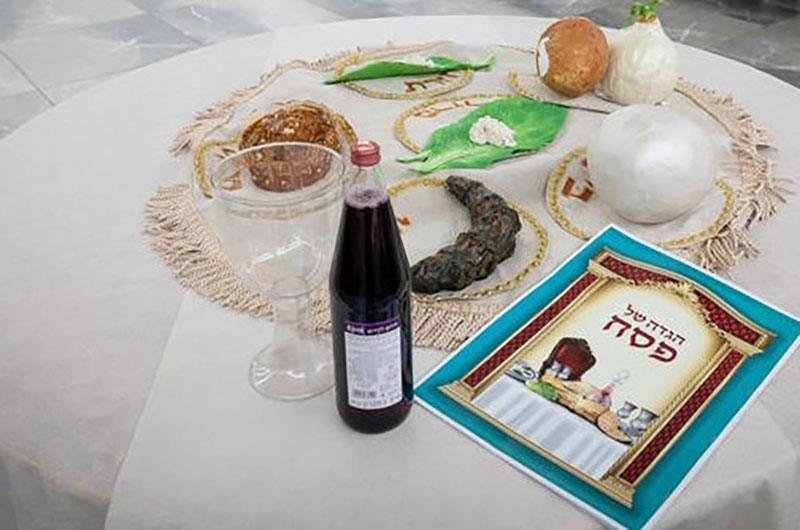
Think about all the hostages who have returned from captivity and who will be eating matzah, the bread of liberation, as free people. Think of the pilots who succeeded in eliminating those who “in each generation rise up against us to destroy us,” sitting down at their own Seder tables.

Adam’s essence had abandoned his body, so he was no longer conscious of the godliness that had inhered in him while in Gan Eden. Adam had become an empty shell of himself and was turning into an animal.
The choice is ours. When the siren goes off, should we read frightening news updates or a chapter of Tehillim? As we prepare for Pesach, should we communicate a sense of depression and despair, or try our best to create a cheerful atmosphere in our homes?

There is something grounding about that image in the week before Pesach. We are surrounded by fire. It is the fire of cleaning, cooking, burning chametz, deadlines, and expectations. But none of that is the eish tamid.

Like the poor, the kohanim had no possessions of their own. They were entirely dependent for their livelihood on the grace of G-d and the donations of the people.
Why couldn't HaKadosh Baruch Hu have commanded us to sacrifice the Korban Pesach two days before? A week before?
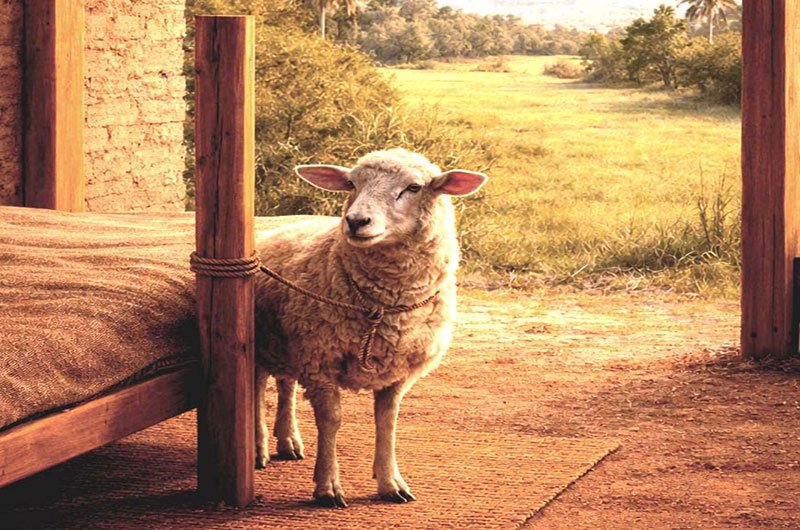
It is commonly understood (from the Gemara and elsewhere) that in the year that Israel went out of Mitzrayim, the process of bringing the Korban Pesach began with the taking of the sheep and tying it to the bedpost on Shabbat.
Another reason why the yetzer hara is firing on all cylinders is that of the entire year, the Seder night is the greatest opportunity we have for teaching our descendants.

Greater is the Kiddush Hashem of that day than all of the chillul Hashem of the Egyptian exile. Not only were the Jewish people redeemed physically; they were also spiritually redeemed.
Originally G-d wanted to transmit the Torah and all of its laws directly to the people. But the people beseeched Moshe to relay G-d’s words to them for if they continued to listen directly to G-d, they feared they would die (Shemos 20:16).

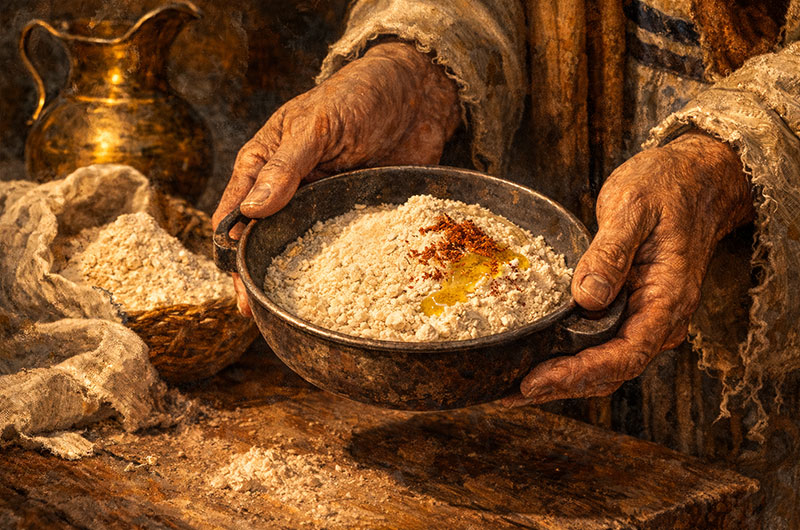
The Mincha is the simplest of all offerings – flour, oil, a measure of frankincense. Ingredients drawn from the rhythm of daily life. Nothing extravagant. Nothing that signals wealth or status. Nothing that would draw attention in the courtyard of the Mishkan.
Yet within the total destruction, a great miracle occurred: their beloved mother had been inside the house and survived. And it happened precisely on the yahrzeit of their father. In the midst of everything, the family felt they had received the greatest gift of all: life.
Why specifically on the second night? Bear in mind that we never say Eishes Chayil on Yom Tov. It’s only on Shabbos, so why the exception?

Although the construction of the physical universe concluded on the first of Tishrei, on the first of Nissan – and particularly on this date in the year following the Exodus – the rectification of mankind begins.
The Sefer HaChinuch cites the Ramban who expounds that the individual must appreciate the fact that the animal being sacrificed is really in place of the sinner. That awareness will inspire and compel the person to do complete teshuvah.
What does it mean then that HaKadosh Baruch Hu placed Adam in Gan Eden "Le'Ovda u'le'Shomra" if that did not involve Korbanot?

Each of us has his or her personal story about how this concept of an undisturbable day of rest, so counterintuitive to the ideals of the society we live in, has enriched and prolonged our lives.

There are really two kinds of religious life. The first is built out of inspiration... This second life is not built out of inspiration. It is built out of return.

I’ve always been struck by that phrase “nesa liban,” “their hearts lifted them.” There is something deeply human in it, a quiet rising of the soul toward purpose.
The test facing the Biton family is unimaginable. Yet many people in the room yesterday nodded in agreement. Each person drew strength for the challenges in his or her own life.
Philo’s discussion of the clothes of the Kohen Gadol is deeply fascinating, but also probably demonstrates some of the basis for Chazal’s decision to ignore his teachings in the Talmud.

The deeper reality is that Israelis tend to experience their identity primarily as members of a nation rather than as members of distinct local congregations.
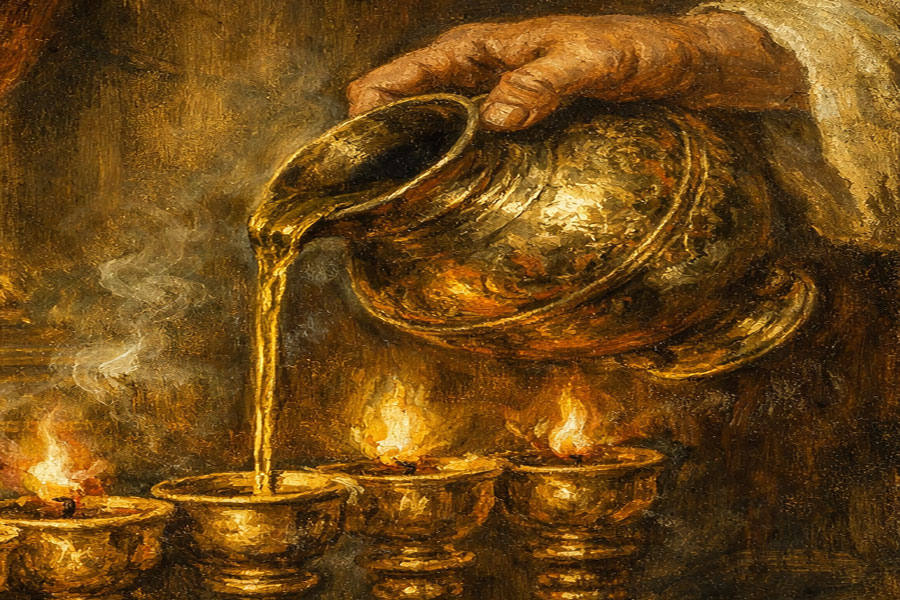
Ashrei is a very important prayer, and the most important pasuk in it is: “Poseiach es yadecha (You) open Your hand and satisfy each living thing according to its need.”
We should realize that at the Seder we are not just talking to our children. Actually, we are showing them how to make a Seder. We are investing in our grandchildren and generations beyond.

The blessing of an ordinary person should never be considered lightly in your eyes.
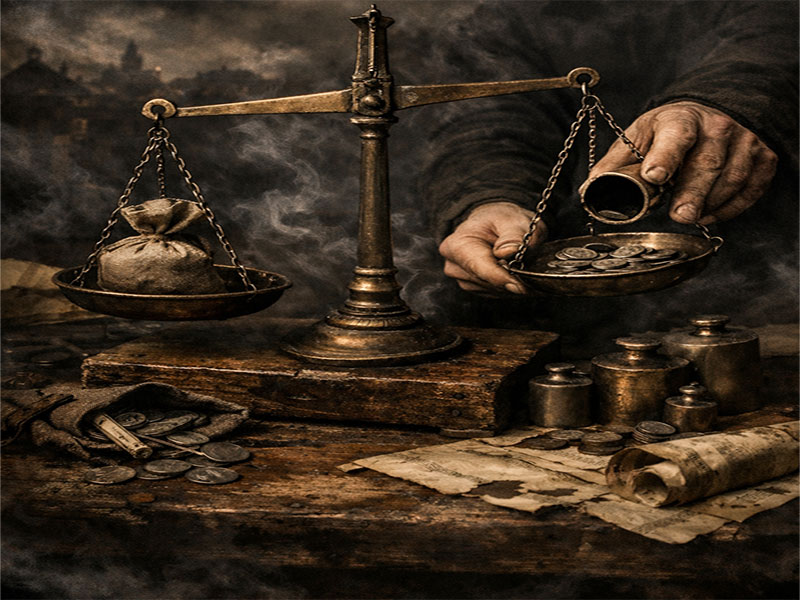
Counting can be a potentially dangerous thing. The Gemara (Ta'anit 8b) says that someone who weighs/measures/counts something will never see any blessing from that thing, because blessing only rests on something that is undefined/unseen.
Intellectually, of course, I always knew this. But suddenly, that day, I felt it in my heart as well. Fourteen-year-old Matania, with his gentle smile, interpreted reality for me better than any seasoned commentator could.

Being that their acceptance was under duress, the Jews had an escape clause. They could unilaterally revoke the covenant with G-d and abandon their status as the Chosen People at any time.

In the span of a few days, we move from Esther’s quiet courage in the shadows to Moshe holding luchot carved by the hands of Hashem. Two extremes of Divine presence. Two ways a people can tremble. Two ways a heart can break open.

The form of the world we know, like the forms of the letters engraved upon the Luchot, is that which was decreed on High when Hashem decided to create our universe.

Aharon assumed their desire for wealth would quiet their fears. He discovered instead that fear does not yield so easily. When people feel unmoored and uncertain, fear overrides calculation. In that moment, the people did not have the emotional strength to wait.
A person who lives in this world has not been privileged to see everything from the beginning of time. When he observes certain events, he doesn’t understand why one person has various challenges in life, or why one is successful while the other is not.
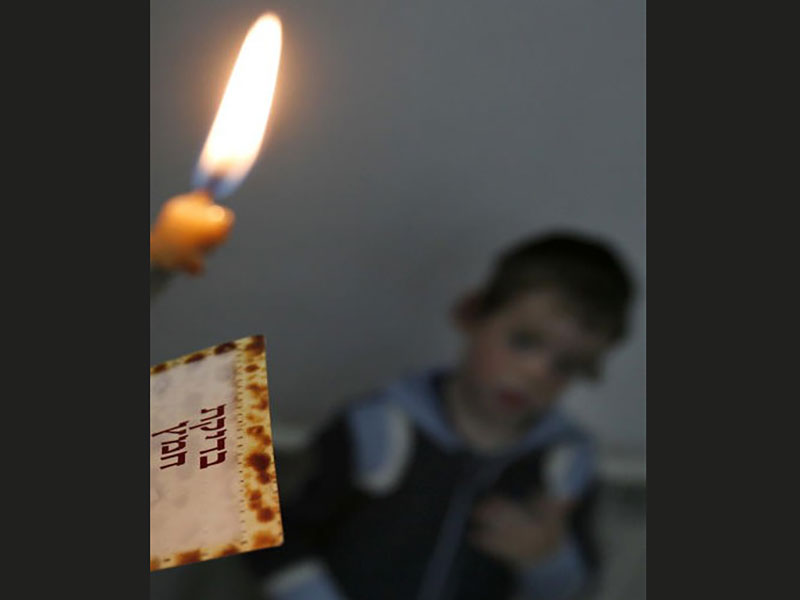
In our Seder right after the Ma Nishtana, we testify to this in the Haggadah, saying that if Hashem hadn’t taken us out, we, our children, and our children’s children, would have been subjugated to an Arabic, slave-like existence.
Instead of expressing gratitude to HaKadosh Baruch Hu for this abundance, the snake, the yetzer hara, preyed upon Noach's generation, who rejected HaKadosh Baruch Hu and became a depraved society worthy only of destruction.

There are weeks when I look toward that light and feel held. There are weeks when I look toward it and feel exposed.
The Choshen Mishpat atoned for miscarriages of justice. It was fastened so tightly that it would never stray from the Ephod (28:28).
Joy is not a fleeting pleasure that fades as quickly as it appears. Real joy connects us to something eternal. It is grounded in simple, practical actions: mitzvot and good deeds that anchor us in purpose.
Chazal say that Achashveirosh hated Am Yisrael even more than Haman. Achashveirosh was told by his soothsayers that he would eventually be succeeded by a Jew. Since he wasn’t particularly fond of Am Yisrael to begin with, he incorrectly assumed that the only way this could possibly come about was if the Jews staged a coup and overthrew him.
Individual humans upset the balance on their own, Rashi is saying, and thereby provide an opening for the enemy.

When I think of polarity, I think of a wife who wears a shmata when her husband comes home but gets dressed to the nines when she goes out with her lady-friends!
The Chofetz Chaim compares the rebuker to a merchant who is trying to sell his goods. Would the shopkeeper ever think that if he is hostile to the customers they would more readily agree to make a purchase?
The Chofetz Chaim compares the rebuker to a merchant who is trying to sell his goods. Would the shopkeeper ever think that if he is hostile to the customers they would more readily agree to make a purchase?

What personifies G-d’s presence in the Mishkan most of all? It is the Torah, in the form of Tablets of the Law. The Torah is G-d’s representative on earth. We communicate with Him by studying His words.

The Mishkan gives Bnei Yisrael predictability through clear instructions, agency through voluntary offerings, collaboration through shared labor, embodiment through materials and craft, and containment through a defined sacred space. It is the Torah’s first blueprint for communal healing.
A Guinness World Record has recently been broken in Israel. It’s a record of generosity and kindness. Last week, 2,000 kidney donors posed for a group photo at the International Convention Center in Jerusalem, forming the largest gathering of organ donors in history.
The reality of the Beit HaMikdash is very much alive and pulsating in our modern Jewish lives, we just don't acknowledge it as such. To us, it is just the normal Jewish routine.

Our calling is not merely to take in and reflect surrounding culture, but rather to shape it, to serve as a light unto the nations by embodying and promulgating the Torah’s Divine values.

Human nature is fragile, and our avodat Hashem can falter. Living a commanded life does not mean that we always succeed. It means that we accept all of Hashem’s mitzvot, without selectively embracing those we prefer and discarding those we resist.
On the evidence of his writings, Philo was almost certainly a Torah-observant Jew who believed in the Divinity of the Torah and the uniqueness of Moshe’s prophecy.
We can make the startling conclusion that the entire event of Purim, the intended genocide of the Jewish people and the miraculous reversal that led to the downfall of Haman and the Amalekis, all hinged on the slander and the snitching of the noblemen at the king’s gate.
In assessing the potential of every Jew, Rabbeinu Yonah writes that even an individual who does not show great promise can achieve exalted heights and become a tzaddik. The simplest and most humble person can merit the Divine presence.

The message of the Aron’s inclusion of three half-measures is that on its own, it is incomplete. We, the Jewish People partner with it (so to speak) and become whole.
We are also told that when we lend money, we may not charge interest. What? The whole banking system and world economy runs on interest. Why should someone else profit from my money free of charge?

The Torah’s language about the ger, the yatom, and the almanah is not sentimental; it is structural. These identities are not about eliciting pity but about embedding protection into the very framework of halacha.
In addition to all the riches that each member of Am Yisrael carried out of Egypt on 90 Libyan donkeys, Am Yisrael started adding another layer of loot on the donkeys from the spoils from the Red Sea. The purpose of all this material wealth was to develop a lust for money within Am Yisrael, which they would later redirect into a lust to study Torah.
It’s overwhelming, in the best sense. How do you even sum it up? And what does it mean for ordinary people like us, who aren’t heading out this morning to rescue Israeli backpackers lost somewhere in the Far East, but are simply trying to manage the morning rush at home and at work?
Because Mishpatim is the Torah code designed for living in the Land of Israel. Courts, damages, property law, social responsibility – these are not abstract ethics. They assume land, sovereignty, and society

The Torah deliberately places civil law alongside the drama of revelation. At the very moment when heaven meets earth – amid thunder, lightning, and awe – the Torah turns our attention toward human responsibility: how society is ordered, how power is restrained, and how justice is preserved.
Mystical Insights into the Redemptive Powers of the Half-Shekel.

The Medrash says that water is unique among beverages in that it is only beneficial if one is thirsty. With other drinks, we might enjoy them even if we’re not thirsty, such as a soda or juice. But water only has value when we are thirsty.
When a person is belittled and disparaged, his spirit is broken. He loses any hope of being able to atone for his wrongdoings.
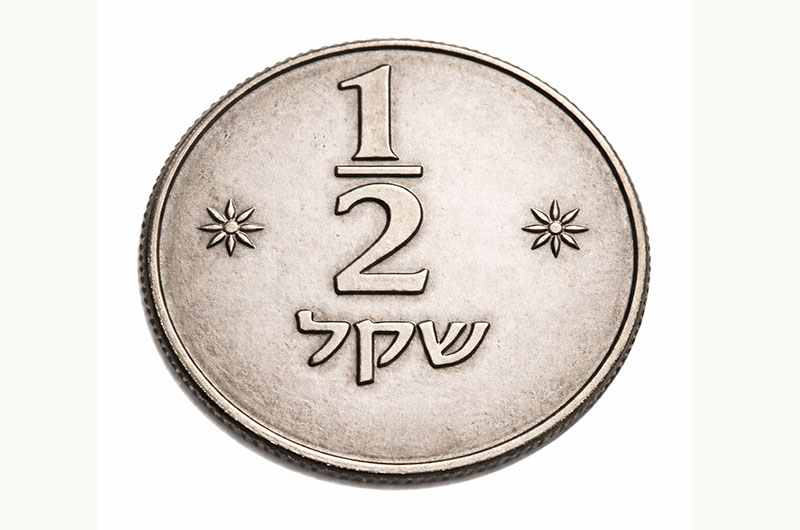
Mishpatim-Sh’kalim-M’vorchim occurs in five of the seven Shana P’shuta year-types, with a frequency of 55.53% – by far, the most common situation for Parshat Mishpatim and Parshat Sh’kalim.
The Jewish people did thank Hashem, but they waited. They waited for the sea to split, for the danger to pass, for the story to reach its resolution. And only then, in a powerful, collective, composed moment, they sang. It was magnificent. It was holy. It was exactly right.
It is an important call for individuals and humanity as a whole to exercise self-control, restrain impulses, and manage a world that has boundaries and red lines.
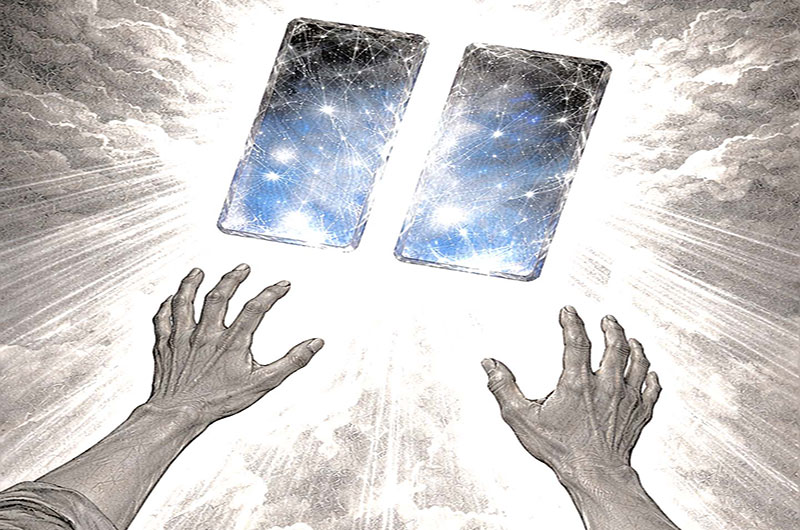
The Israelites have survived slavery, survived the plagues, survived the waters closing behind them. But survival is not the same as readiness. Freedom does not erase the patterns that oppression carves into the mind and heart. The Torah does not rush past this truth; it lingers in it.
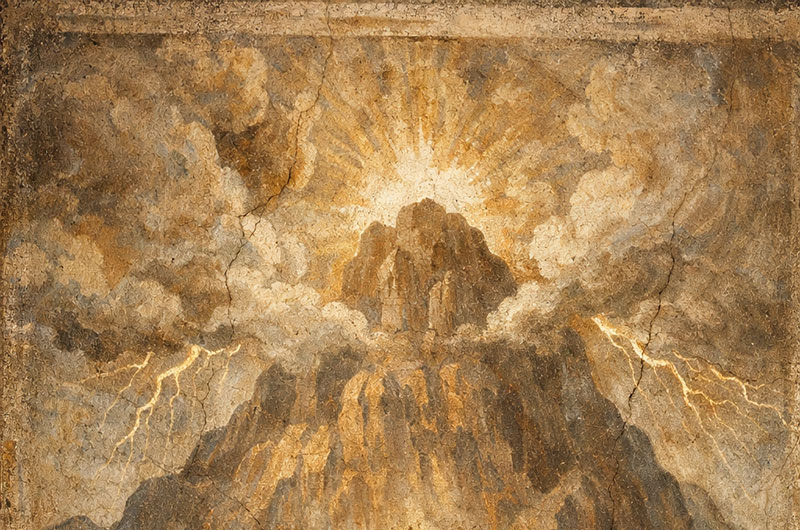
Yisro saw that the Jews were attacked by Amalek from behind, when they were weak and exhausted. The natural course of events should have resulted in their total defeat. But he witnessed G-d’s prescription for salvation.
I would like to explore the character that was R' Eliezer ben Horkenos, also known as R' Eliezer HaGadol, because of the important lessons we learn from him about Matan Torah.

Would it not have been more striking to open the section of Yitro with the thunder and fire of revelation itself? More iconic, more symbolic, to move directly into the moment when Hashem speaks?
Until Israel had accepted our collective purpose and come to embody the Will of the Creator to have a nation among nations to perform His commandments and act on His behalf, there were only tribes and families.
Why do the Ten Commandments not include the most important of all mitzvos, the study of Torah?
Alexander was a man of integrity and a proud Jew. He loved the Land of Israel and the Jewish people.

There’s a reason the man arrives before the Aseres HaDibros. A people who have only known extraction cannot receive law until they first learn sufficiency.

They needed another forty years during which time G-d would show them more indisputable miracles like splitting the sea, extracting water from a rock and raining manna from heaven.
There are different streams in the Torah world today regarding the Beit HaMikdash. The common denominator between them all is that they all want the third Beit HaMikdash to be rebuilt. The only question is how and when.
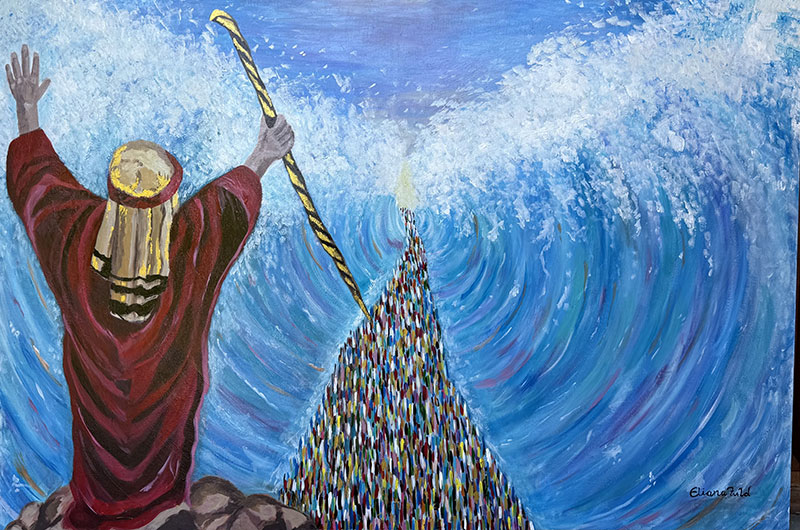
At the splitting of the sea, we learn that Hashem is willing and able to overturn the laws of nature as He sees fit to intervene on behalf of His chosen people.
This was measure for measure for the lachatzeinu, intense pressure, that the Egyptian taskmasters inflicted upon Bnei Yisrael nonstop.
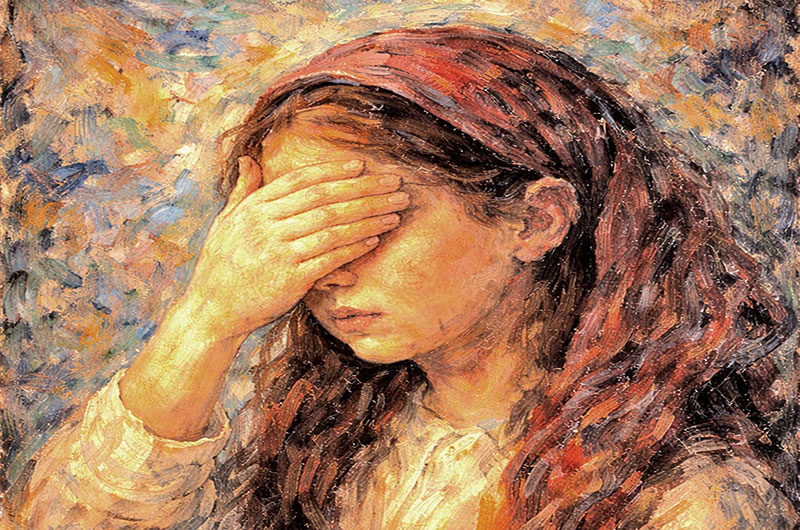
One who finds it difficult to daven all the tefillos in the morning – from the berachos through Aleinu – if he can manage to recite the Shema that would be sufficient. If he cannot say all of the Shema, even the recitation of the first paragraph would be good, or at least the first two lines of the Shema could still be powerful.

Unlike Moshe’s previous meetings with Pharaoh in which he was instructed by G-d to ask Pharaoh to release the Jews and threaten him with plagues in the hope that he would comply, in the opening scene of Parshas Bo, G-d gave Moshe no such instructions.

What has always struck me is that the Torah does not erase the plagues. It does not soften them. It does not pretend that the suffering did not occur. Instead, it asks us to hold the full truth...

The two chapters he dedicates to Parshat HaChodesh, which is found in this week’s parsha, contain profound and beautiful insights into the nature of the Nation of Israel and our unique relationship to the moon.
Rabbi Yeruchom Levovitz (1873–1936) of the Mir Yeshiva in Belarus told his students: Woe to the one who does not know his weaknesses, for he does not know what to fix.

An integral component of the exile from Egypt included an unmatched zeal and enthusiasm to flee, so much so that there was not sufficient time for the dough to rise. So too must eagerness and ardor be essential elements in our fulfillment of Torah and mitzvos.

As we familiarize ourselves with the concept of middah k’neged middah, it should be an incentive for us to adopt certain behaviors and inhibitions to avoid other behaviors.
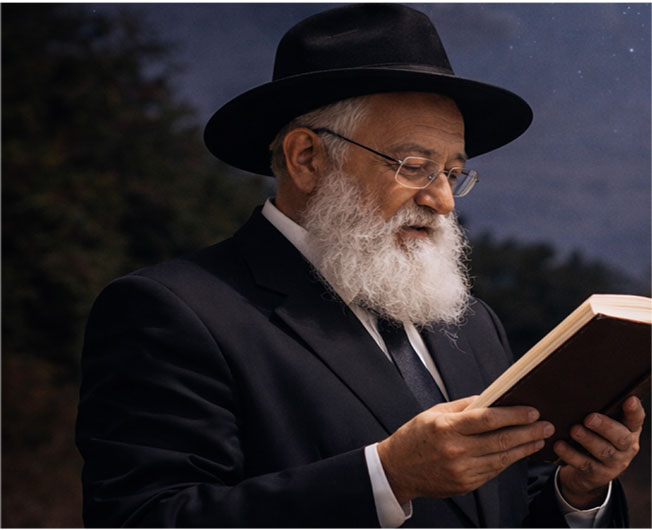
The mitzvah is to create a Jewish Calendar which is based on sanctifying each month by Sanhedrin’s declaration of kedusha of the first day of each month, and the periodic decision of Sanhedrin to intercalate the year (with an extra Adar) in order to adjust the years so that Pesach will always be in the spring season (and Sukkot in the fall).

When slavery began, we were cast as a threat to society. Pharaoh could only sell his genocidal policy to the broader public of Mitzrayim by turning us into a symbol of danger.
Ran went out to confront absolute evil. And it is the same evil we see today, asserting itself in Iran against its own people and elsewhere against anyone who stands for freedom and truth. We pray that this too will fall, that another hateful regime, another Jew-hating empire, will be thrown onto history’s scrap heap, just as others before it.
The plague of hail involved two opposing forces, water and fire. Under normal circumstances these forces cannot coexist peacefully, they are diametric opposites of each other. HaKadosh Baruch Hu miraculously made peace between them and unleashed them upon Egypt.
 October 16, 2026