יום חמישי, י״א חשוון תשפ״זThursday, October 22, 2026



Follow Us


If we would grasp how deeply one is impacted by his aveiros, we would appreciate the significance of the Beis HaMikdash and the spiritual cleansing that took place daily.

We sometimes forget that what is recorded in the Torah is not just telling us what happened way back.
Our relationship with Hashem, our moral conduct, our character, our relationships, our idealism, and our dreams and aspirations should define who we are.

The very person who wanted to destroy the Jewish people became the messenger who blessed them.
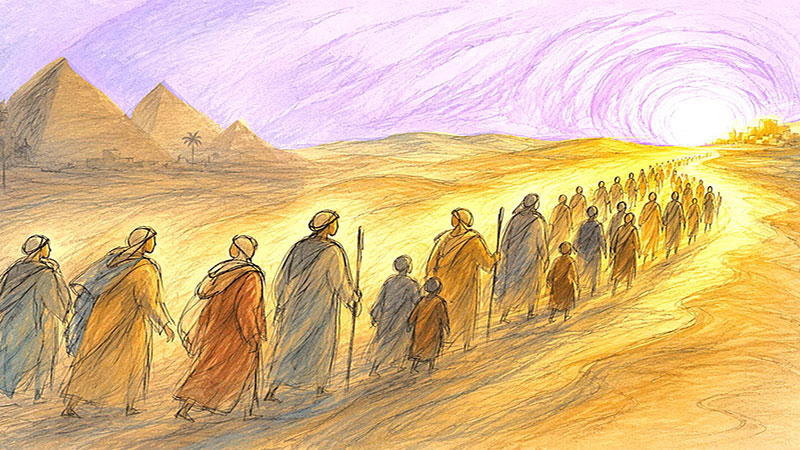
Since the goal of leaving Egypt was to go to Eretz Yisrael, why does the Torah say that they journeyed out of Egypt? It should have said they journeyed toward the land of Israel?
When Hashem created the universe, He saw fit to make it with Judgment counterbalanced by Mercy, so that the free choice and the efforts of humanity could bring about the final rectification of the material world.
The absence of Hashem’s Temple also allows for a universal spiritual deterioration where things can get so out of hand in the world that even the American Pledge of Allegiance and pride in our host nations can be ruled unconstitutional!
The Ben Ish Chai explains that Hashem does chesed with a tzaddik who cherishes his speech and is careful with his words. Even if his words can be interpreted in a bad way, Hashem adjusts them to be good.
If the directive is solid and is for our benefit, why allow us to defy it at all? Wouldn't the world be a better place without free choice? And the answer is no, it would not.

They are combined almost 90% of years in Chutz LaAretz, and almost 80% of years in Eretz Yisrael. This year, Matot-Mas’ei (M&M) are combined all over the world.
Mazal tov on the new school year which begins this week! According to Rabbi Yaakov Edelstein, the former chief rabbi of Ramat HaSharon, although summer vacation starts now, this is when kids’ education truly begins.

It is the job of the kohen to appease G-d’s anger even as it is stoked by the infidelities of His people.
Am Yisrael have full control over the determination of the festivals, which may also be influenced by their behavior! the good and the … bad.

Hashem wanted to glorify both Moshe and Aharon, who would, through the power of their speech, reveal the hidden power within the material world. At the same time, He wanted to highlight His own Creation of a world of true essences locked within the symbolic framework of the physical universe.
I think we can use the rule I once heard from the late Telzer Rosh Yeshiva, Rav Chaim Dov Keller, zt”l, zy”a: If something will not bother you three hours from now, just be quiet and forget about it. If, however, the issue is of a more lasting nature, you must discuss it at a time when everyone is more level-headed and not so defensive.
The Talmud (Brachos, 20a) discusses the reality that the earlier generations were wholly dedicated to the sanctification of the Name of Hashem, unlike the later generations.
Parshat Pinchas contains six of the 613 mitzvot, all positive; it is one of only six sedras that have only positive mitzvot.
The Torah gives one the energy to get up each morning and enjoy the day. Learning Torah, keeping it and loving it is the key to life.
As the Jewish people mark 50 years since the miraculous rescue operation, Shai says it is important to pay attention to the dates and events that shape our lives. That is why he held a special kiddush of thanksgiving in his home last Shabbat.
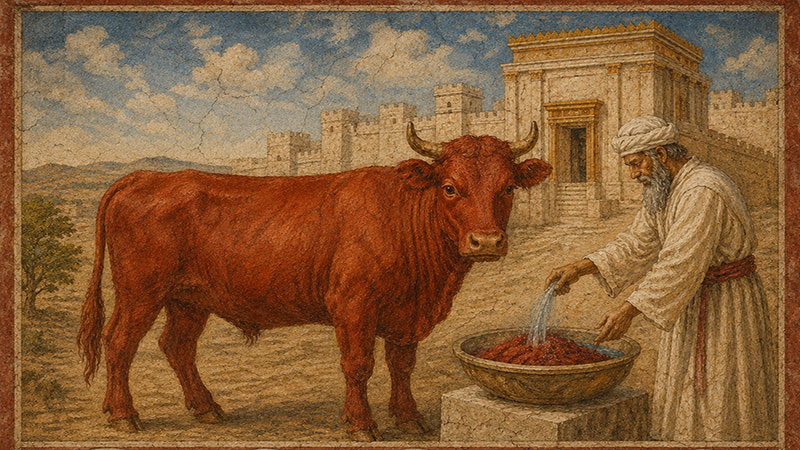
The purpose of the ashes of the red heifer is to purify someone who has come into contact with a dead body. The origin of death in the world was the result of Adam and Chava's sin.

It strains our credulity to imagine that such tremendous tzaddikim, especially after everything they have already seen and led us through, would be in any way lacking in belief.

If Korach was so great yet he nevertheless succumbed to the yetzer hara of machlokes, of fighting, what chance do we have?

Words don’t just leave our mouth and evaporate into thin air. They create a reality. They are keys that open the doors of blessing or can, G-d forbid, close them. A good word brings good.

The aloneness we experience today as a consequence of the wars being fought in Israel, and by those who defend and support Israel abroad, is built into Jewish history.
Let me summarize the out-of-sync sedra situation (again). Out of the seven pairs of sedras that are sometimes read separately and sometimes combined, three of the pairs serve to bring Israel and Chutz LaAretz back into sync.

"Arnold is a 101-year-old member of our community. In just a few weeks, we will be celebrating his 102nd birthday. On the last day of Pesach, he woke up, noticed the weather outside, and said to his wife: “I’m worried that there won’t be a minyan today because of the weather." So, he walked in the rain to join our minyan.
What Korach failed to understand was that both Moshe and Aharon were reluctant leaders. Moshe argued with G-d when G-d picked him as the leader.

Ramban notes that Korach’s brilliance lay in his ability to gather discontent from every direction and bind it with the language of righteousness. It is a pattern as old as humanity. A unity built not on covenant but on negation. A gathering without a center. A movement that cannot endure because it has no soul.
Only Moshe and Aharon are willing to sacrifice themselves and ignore their self-interest for the good of Israel.
Shmuel, who had devoted his life to shepherding the nation through its most turbulent years, may not have been able to invest with the same intensity in his own children.

Opposition to conscription on those grounds is understandable and coherent. But the call for broader charedi participation is not rooted in a sinister desire to weaken Torah study or undermine religious commitment.
Rav Aharon Yehuda Leib Shteinman, zt”l, whimsically says that a better segulah against anger is simply to keep one’s mouth shut!

It is a fact that when someone envies another’s wealth or property he is tormented until he is able to attain that level of materialism.
Korach was part of the family of Kehat, the bearers of the Aron HaBrit. This task was not entrusted to anyone who was not of a very high spiritual level. It was an extremely hazardous task and Korach, who at this point was over 50, had already completed a successful "tour of duty" in the Mishkan and emerged intact.

Say “Tamuz” to someone and the immediate association is Shiv’a Asar b’Tamuz, the beginning of the Three Weeks and a period of mourning. Not wrong, but not the whole picture.
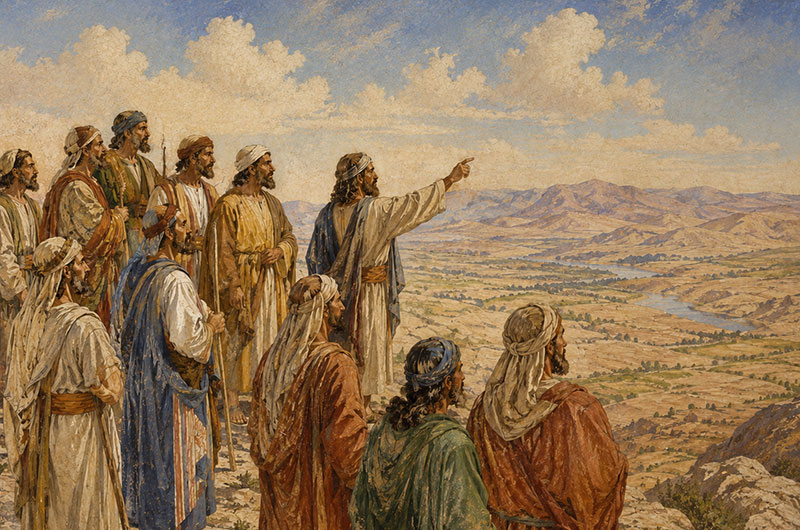
Chazal tell us that a person’s character can be found in his name. If one looks at the names of the spies, one can discern certain innate positive qualities, but one cannot be certain whether the bearer of the name will use those attributes for good or for the bad.

The words are brief, but they open a window into the inner world that shaped everything that followed. The land had not diminished them. The giants had not diminished them. They had diminished themselves.
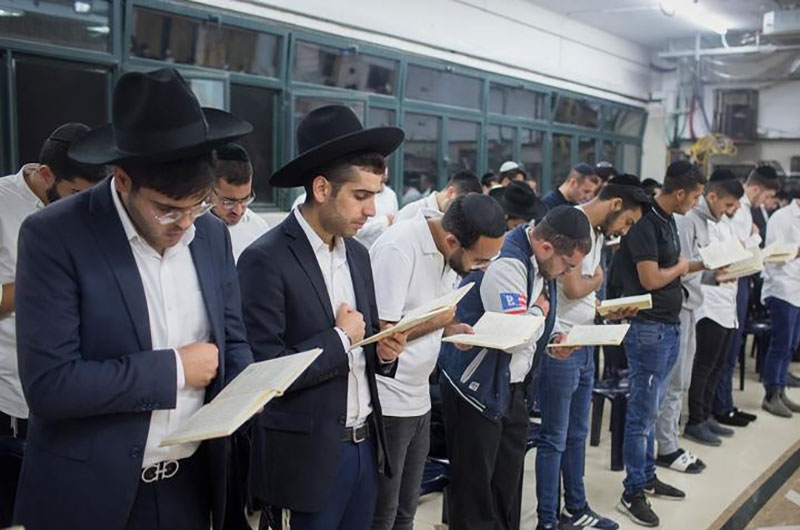
To whom is Hashem to show patience and slowness to anger if not to those who transgress against His commands?
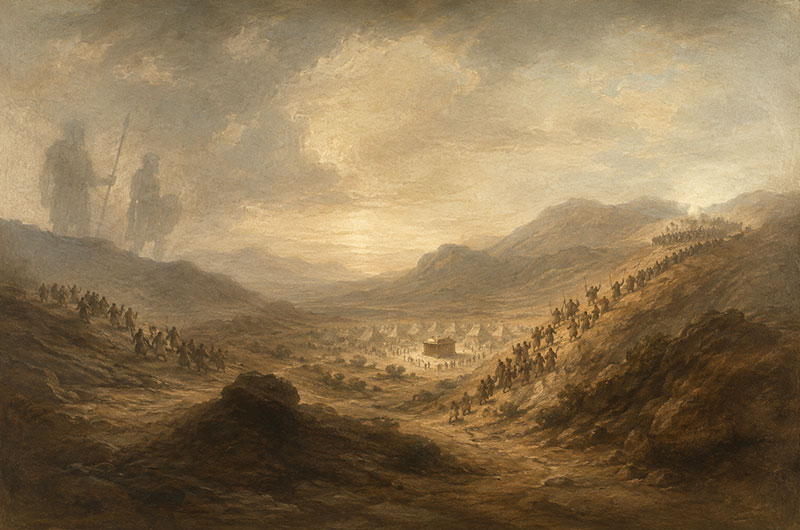
They were determined to reverse the tragedy. The land they had rejected only a day earlier now stood once again at the center of their hopes. Convinced that they could still set things right, they prepared to march forward.

To sum it up, if we don’t want Gehennom, if we want to avoid looking like a fool, if we don’t want to lose our wisdom, if we don’t want to render ourselves senseless, and if we don’t want to give ourselves over to an evil controller, we need to train ourselves that it shouldn’t be easy for us to get angry.
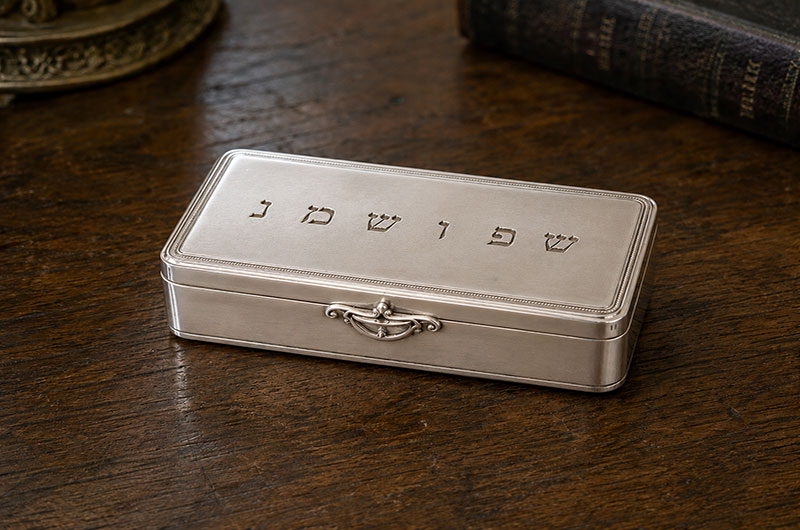
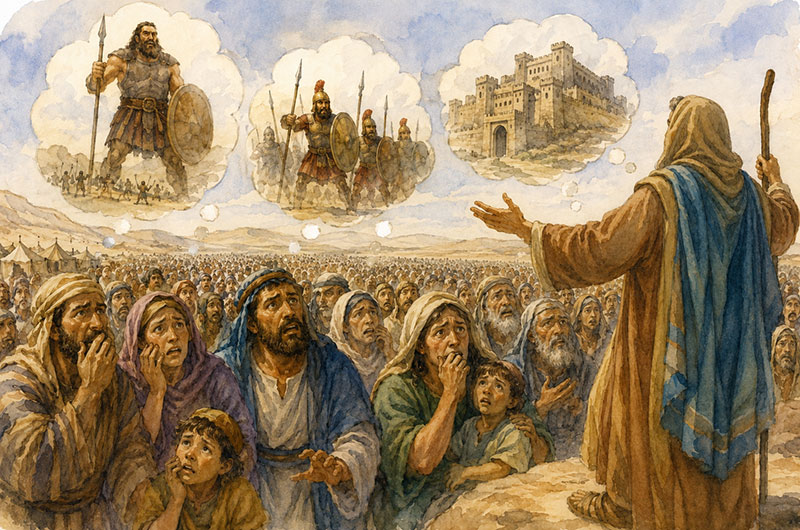
The question still remains: How can we equate slandering Moshe Rabbeinu, the greatest prophet alive, to maligning Eretz Yisrael, an inanimate object? Why would they take a lesson from Miriam’s fate?
The punishment for the sin of the spies was that the two future Batei Mikdash would be destroyed. What does the sin of the spies have to do with the Beit HaMikdash?
And what about the Rosh Chodesh we announce this Shabbat? It is always two days in our fixed calendar because Sivan always has 30 days.
That life gave them all the time in the world to study the Torah free from the worries of a livelihood. Now, however, they were about to enter the real world, where the physical and spiritual juggle and compete for space.

Our Sages ask us to note that most of the time during our journey through the desert, the problem is not an external enemy but our internal state: our unity, our faith, our motivation. When these are absent, it is impossible to keep moving forward.
The Menorah teaches that outward illumination is the last step, not the first. That leadership begins with the quiet work of tending your own inner flame.

We are all living through a period of profound uncertainty, both globally and within the Jewish world. On a global level, it often feels as if we are living in the calm before a storm.

In this week’s parsha, we receive the command to raise up its candles, and of course on Shabbat Chanukah we are very involved with the mitzvah of lighting candles.
The study of Pirkei Avos contains lesson after lesson on how we can improve our daily behavior.

It is explained that before we received the Torah, we were comparable to animals, so we bring the offering from barley.
When complaints become constant, there is usually something deeper taking place. The words people use are not always the whole story. Sometimes the frustration we hear is only the outer layer of a more painful sense of loss.
f you just stated the details of the korban once, with Nachshon ben Aminadav, and then said that the others brought the exact same korban (without listing the elements), this could arouse jealousy between the tribes.

It begins with counting. Order. Structure. Arrangement. But almost immediately the parsha shifts into the unpredictable terrain of human emotion.
On Shavuot it is customary to make a new commitment to Torah study. Our Sages explain that Shavuot is considered a “Rosh Hashanah” for the Torah, and that a new year of Torah study is about to begin.

Does Hashem desire that we sever ourselves entirely from the physical world, surviving on as little pleasure and comfort as possible? According to the Rambam, the answer is no. The Torah demands calibration rather than withdrawal.
The Aish Kodesh explains that in this world, a Jew can be identified by virtue of his rootedness in the supernal wisdom, but all the wisdom that reaches his consciousness comes through an extension of the Divine spirit into this material world.
When we follow their advice and pay attention to their criticism, they actually give us life in the World to Come.

When we fulfill the mitzvah of hachnosas orchim it doesn’t make a difference who the guests are. The halacha is to treat them like royalty.
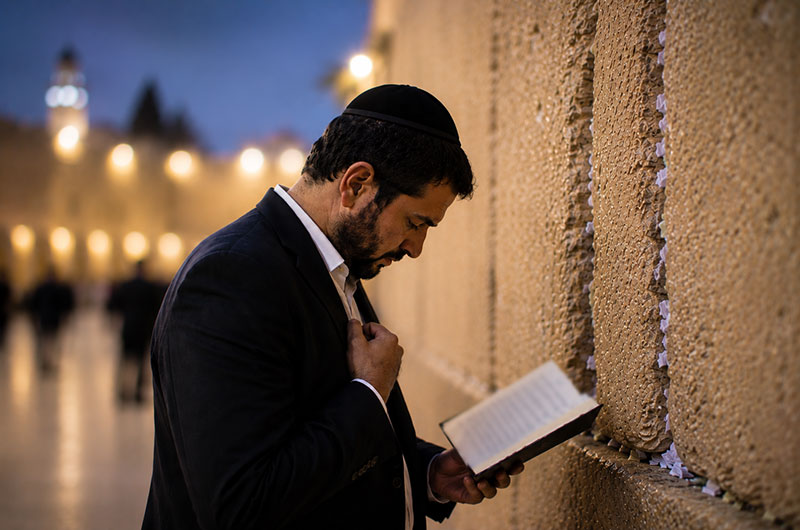
Parshiyot come in two flavors: p’tuchot and s’tumot, open and closed. A parsha p’tucha begins on its own line, with a blank space on the line above from the end of the previous parsha to the end of the line. A parsha s’tuma begins after a blank space on the same line on which the previous parsha ended.

It is not fear of having to account for one’s misdeeds after one dies that should be the motivating factor. It is the love of life that should inspire him, the love that is generated by keeping the daily mitzvos and learning His Torah.
The Torah begins with the most universal and global message: G-d created the world. But it ends with the most Jewish, national, and personal story: that same G-d, who gave King Cyrus dominion over all the kingdoms of the world, wants one House in Jerusalem, and wants us, with G-d’s help, to go up there.

Ruth’s story is not about conversion as a moment. It is about covenant as a life. Her geirus is not described as a ceremony. It is described as a relationship.

Of course, we know without a doubt that Hashem is One and His Name is One – and thus there is no question as to who spoke to Israel from out of the flame (ibid. 4:12) – but there is a question as to the mechanism by which the message was communicated and how it was experienced by all of us at Har Sinai.
Eliezer got up to speak and his shiur was so sublime and uplifting that angels descended from Heaven to listen to the incredible insights that Eliezer expounded.

The obvious question is that our commitment seems to be in the wrong order. Wouldn’t it be more sensible to say Nishmah v’Na’aseh, first saying “Let me hear,” after which I could then responsibly say, “I’ll be able to do it.”

What benefit was there then to all the miracles of Matan Torah, if everything returned shortly to the way it had been?
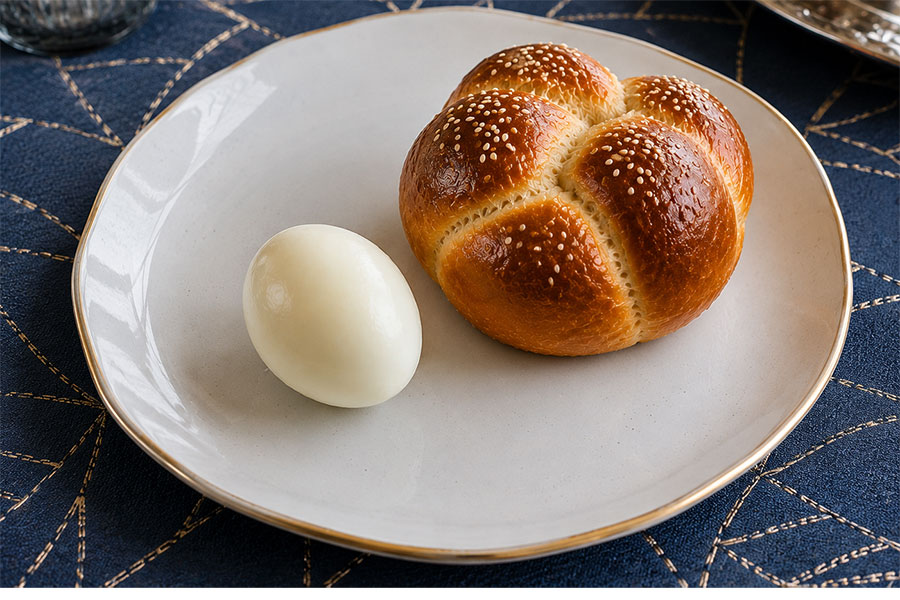
The point is that an Eiruv (any of the three kinds) cannot and does not permit something that is forbidden by Torah Law. It redefines a situation so that which was technically forbidden turns out not to be forbidden.
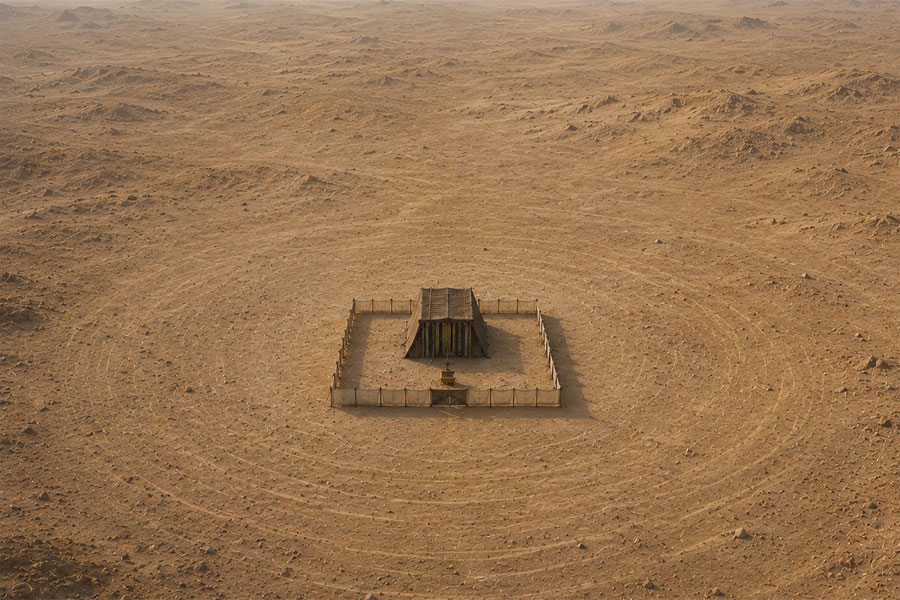
The midbar is often imagined as a place of danger and emptiness. The Torah presents it differently. The wilderness is not chaos. It is unwritten space.

It is this choice that everyone has between faith and cynicism, between optimism and pessimism that the opening words “in the wilderness of Sinai in the Tent of Meeting” address.
If we could teach ourselves to stop feeling as if we’re waiting for our “real life” to begin, but focus, instead, on what is happening here and now, not only will we, with G-d’s help, eventually reach our destination, but we will also benefit from all the gifts that await us along the way.
If the census was a labor of love, the term Beka Lagulgolet seems incongruous. A Beka also means a crack, a rift. How does HaKadosh Baruch Hu count Am Yisrael? By counting how many "cracks in the skull" they had?! It just doesn't seem fitting.

Religious perfection requires transcendence, an encounter with the Ribbono Shel Olam, a presence that does not conform to human categories.

The mitzvot are acts that we perform to refine ourselves and achieve our own potential, while the true object of our mental striving is to understand the acts that He performs and in what ways His greatness is made manifest.
Reb Eliezer tells us that on Pesach and Sukkos it is perfectly all right for one to devote the whole of the Yom Tov to learning Torah. One is excused from the celebration of the chag if he immerses himself in Torah study.

When the Satan intercedes, he is only successful when there is conflict, when everyone is confused and doesn’t know his place.
To put our calendar into perspective: We, the People of Israel, left Egypt on Pesach. We miraculously crossed the sea on the last day of Pesach. We arrived at Har Sinai on Rosh Chodesh Sivan. Before we even got there, we were blessed with miraculous a water supply, food from Heaven, and a military victory (not complete) against Amalek.

It is not passivity; it is a form of faith. It is the willingness to maintain the shape of a relationship even when the relationship itself is paused. It is the refusal to force a timeline that is not ours to set.

On Yom Kippur we ask G-d to waive the rights He has over us to exact retribution for our sins. Have we done for others what we are asking Him to do for us on this day?
The way we respond to every wounded soldier, every fallen life, every hostage – that is the real story. These murders were a desecration of human life, but the national response was not apathy. It was sensitivity.
We mistakenly think that Avraham's final test was sacrificing only Yitzchak, but it was not like that at all.

Creativity is natural to the human condition. When we create, we reflect our Creator. That impulse is not marginal; it rises from a deep place within the human spirit.

Even when we are in the darkest places and suffer terrible abuses that no other nation has ever endured, our concern first and foremost is for His Name and His Holy Shechinah, and that He should emerge from the darkness of exile that we precipitated.
One of the great lessons of Shavuos is for us to reaffirm our commitment to being a kind, loving people.

When the Jewish people received the Torah, they had risen to a very elevated level of emunah in Hashem. Hashem revealed Himself and opened the Seven Heavens, and everyone saw that “Hashem is G-d and there is no one but Him.”
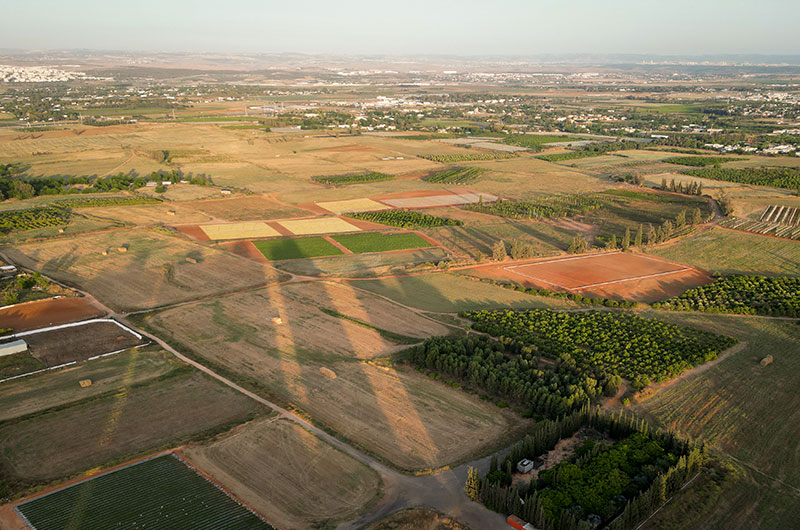
What does the Land of Israel have to do with Har Sinai? Indeed, it has everything to do with it. Many Jews today know that connection well. And sadly, many don’t.
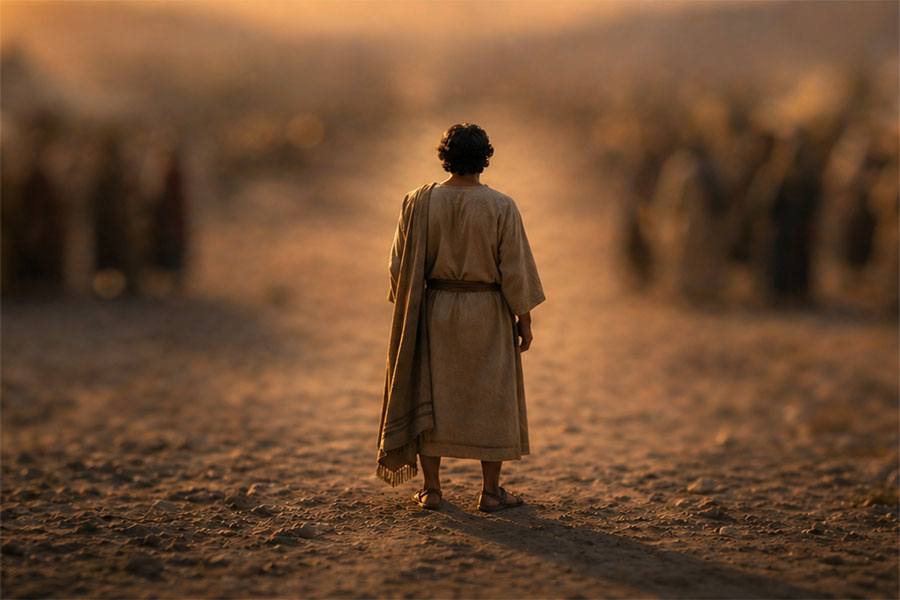
The tragedy of the mekallel is not only that he sinned. It is that his outcry came from a place of fracture that the community never addressed. He stands as a cautionary figure, a reminder of what happens when we fail to make room for those who are already inside our gates but do not yet feel fully held.
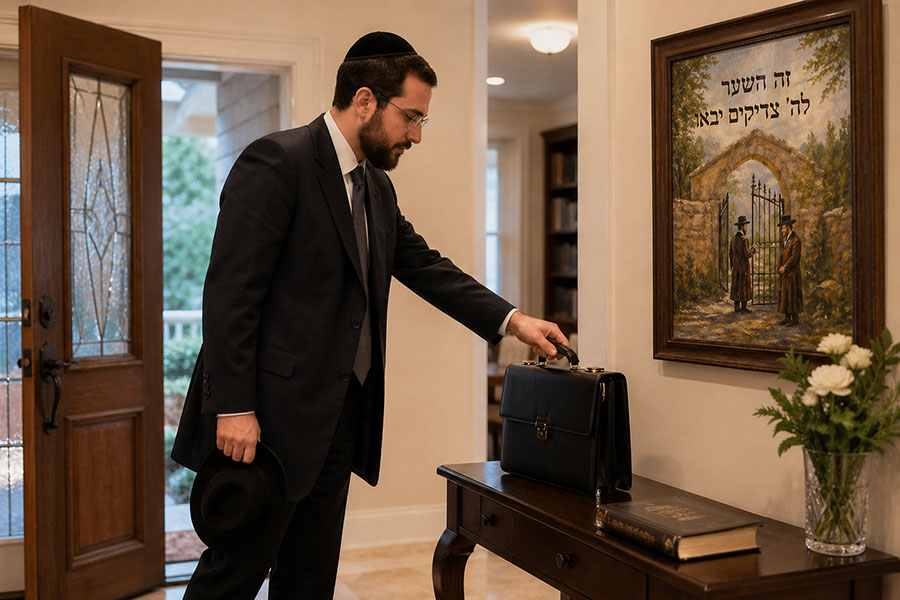
Why is Shabbat listed as the first mo’ed before the mo’adim of Pesach, Shavuos and Sukkos. which we usually associate with the word chagim (23:3)?
The children in the building hope to learn the laws of Shavuot at home. But this week, they taught me a lesson, too.
To be a student of Rebi Akiva, you had to be extremely gifted and super intelligent. There were other yeshivot, other rabbanim, but none matched Rebi Akiva’s for level of study and for number of students.

Ultimately, the wisdom, might, and wealth of an individual are only aspects reflecting his stature, but not essential to his character; the celebrated aspect may reveal itself in some situations to be superficial and not substantive.
We need to teach our children to honor the shul rabbi. The one who, on a regular basis, warns them about the evils of lashon hara, the dangers of smoking, vaping, gambling, and addictive gaming.
In addition to the opportunity we have of doing teshuvah when we know we have sinned – by acknowledging the transgression, regretting having sinned, admitting that we have sinned, making a commitment not to repeat the sin in the future, prayer and charity – we are fortunate to be able to attain atonement even when we are unaware that we have sinned.
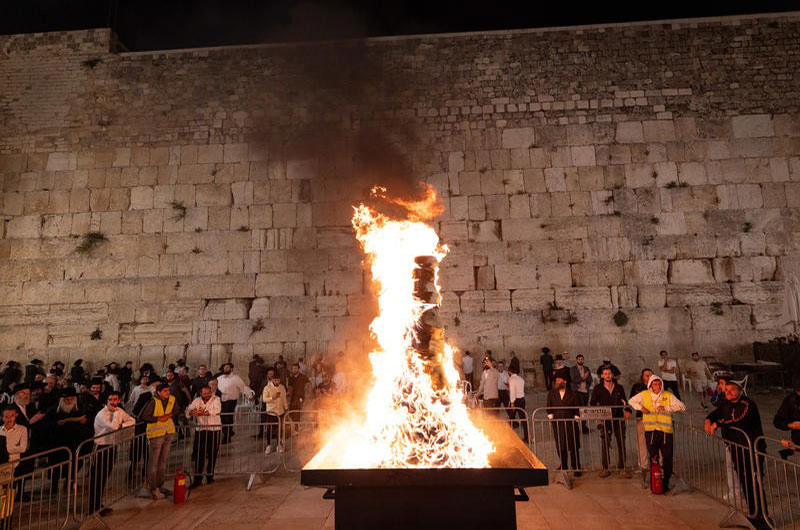
Pesach Sheni is counterintuitive because the Korban Pesach is very much a time-related mitzvah. And actually, it is not considered a make-up for the Korban Pesach. That Korban is brought only in the afternoon of the 14th of Nissan. Pesach Sheni is its own mitzvah.
Judaism is not like other religions – there is no turning the other cheek. You are allowed to pursue any legitimate recourse stipulated by the Torah for protection/justice/restitution.

Mussar teaches that character is not an accessory. It is a discipline. It is the daily work of noticing your impulses, your blind spots, your ego, your capacity to harm without meaning to.
Between Holocaust Remembrance Day and Memorial Day, Odelia reminds us that this is not only a private story. It is also a choice about how we tell our shared national story.
There was another way of explaining why the Jews resorted to worshiping the golden calf so soon after witnessing the presence of G-d at the Revelation. It was not that they had become Bible critics. They were simply giving in to their human urges, even as they believed in G-d and His Torah.

Avodas Hashem is shaped not only by obligation, but also by how we understand the human being, by the moral awareness embedded within us and by the way we see the world and our place within it.
It is interesting to note that all of these ideas really complement one another, and there is a unifying perspective where we can see that Nadav and Avihu did not really “fit” into the mold of their generation and to the needs of the moment.
Shimon HaTzaddik was so called because he was the most righteous person of his generation and yet, in Pirkei Avos, there is but one Mishna recording his teachings.
 October 16, 2026


