יום ראשון, י״ז אלול תשפ״וSunday, August 30, 2026



Follow Us


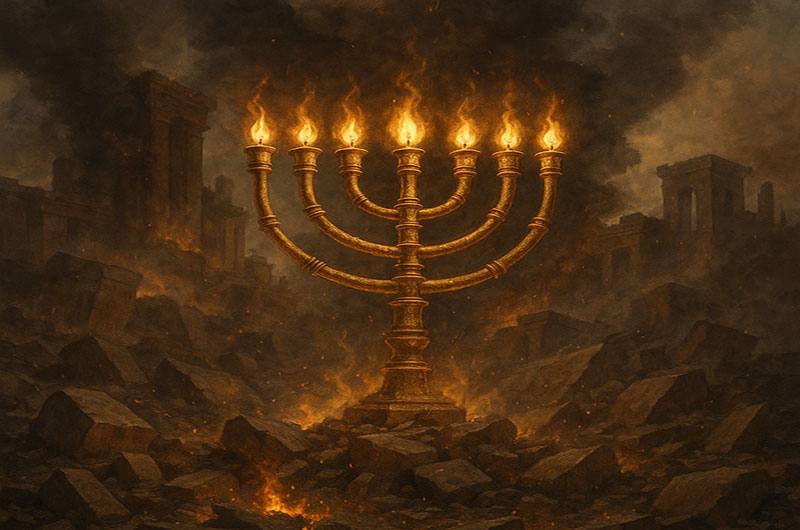
For us, the Children of Israel, the destruction of the Second Beit HaMikdash at the hands of Rome is still a raw memory, and we are still enduring the long exile that began on that day.

The greatest danger is not the hand of Eisav’s sword, but the hand of his friendship.

Rebbe Nachman of Breslov taught, If you believe you can damage, believe you can repair. Owning our story means believing in repair, even when estrangement or shame feels irreparable.

Maybe each of us really should be asking ourselves that very question: Who am I, and where am I a shaliach? Because in a deeper sense, every one of us is an emissary.
Having become an expert in the laws of Choshen Mishpat, Yaakov now felt ready to duel with Lavan.
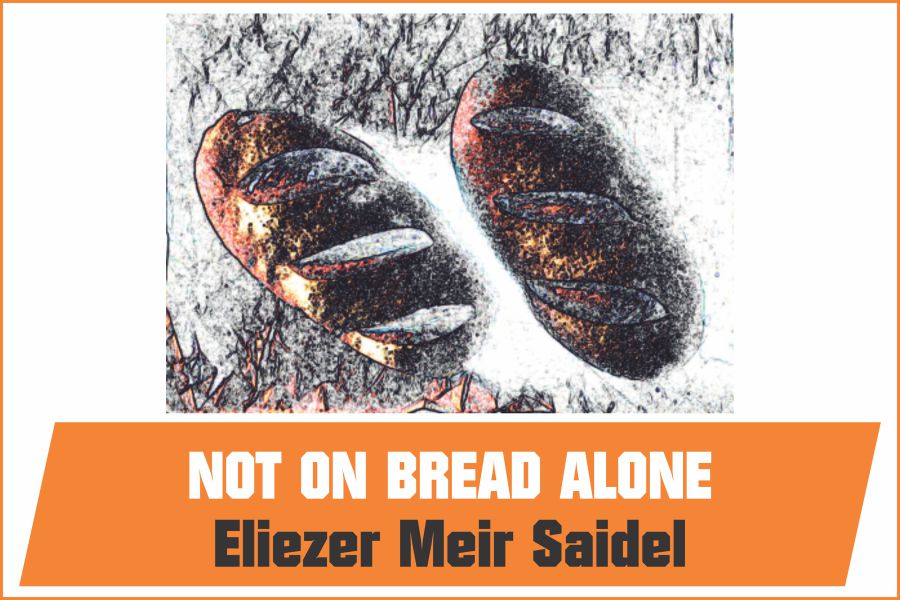
Often someone hosts a guest out of a feeling of obligation to perform a mitzvah, or out of sympathy when they see someone without food or lodging. Therefore, during the meal the guest cannot be totally certain if their host is hosting them with pure joy or because it is out of a feeling of obligation.
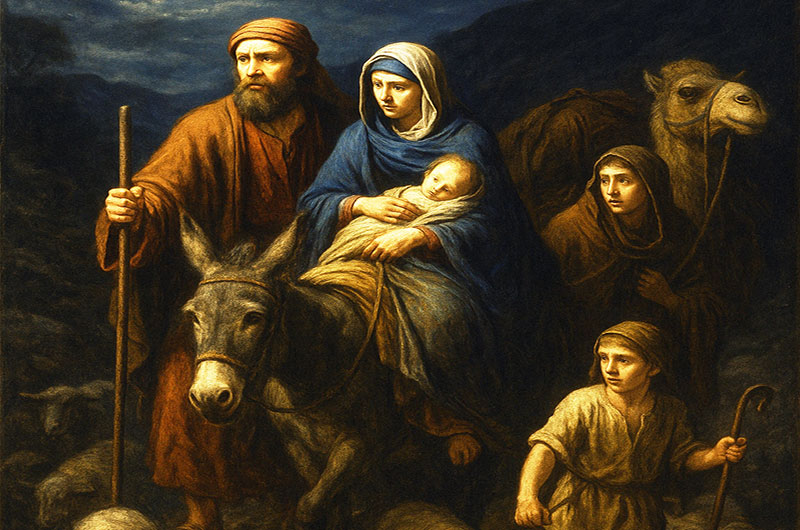
A theme we find pervading these parshiyot and the various commentaries upon them is the grudge that the enemies of Israel hold from past generations, as a consequence of which they are constantly seeking to torment and persecute and even exterminate us – or to dispossess us – in every generation.

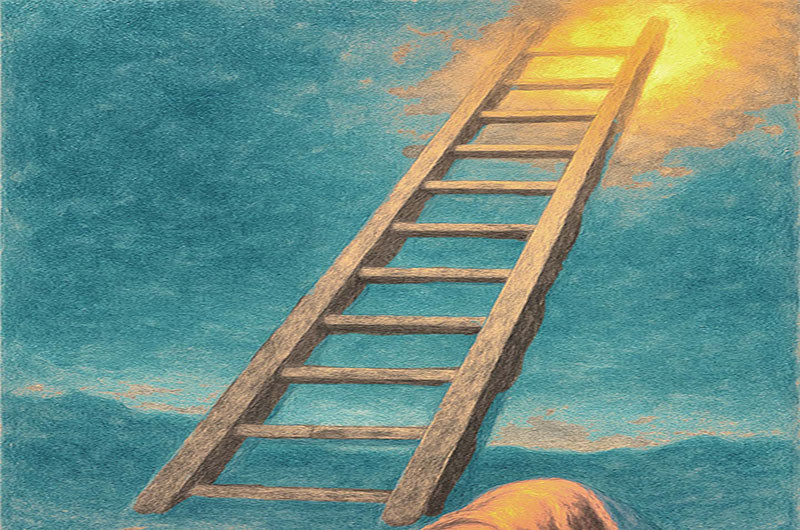
The Zohar teaches that sulam (ladder) and kol (voice) share the same gematria: 136. The ladder is not just a structure; it is also a sound. The ascent is not only movement, but utterance.
Moshe Rabbeinu was exceedingly humble, and consistent with his humility he was raised to one of the highest levels that a human can reach.
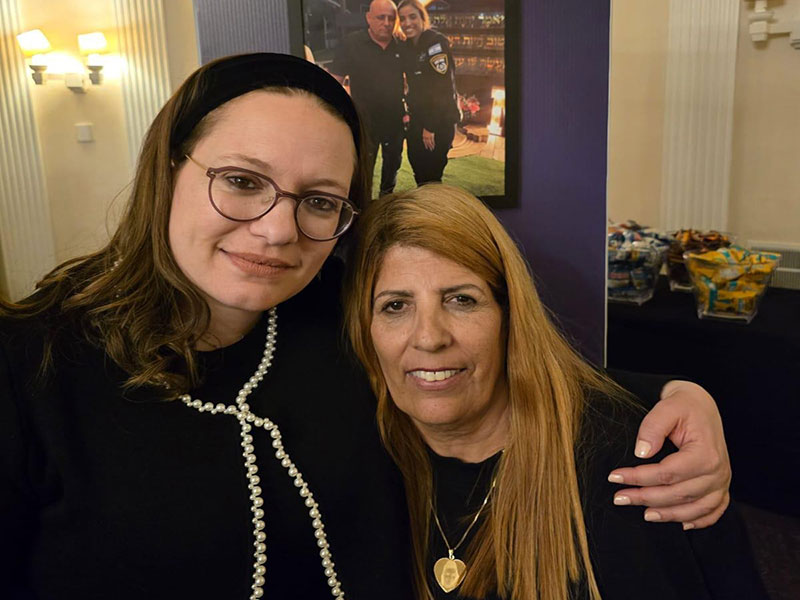
My answer to this double loss is one thing: do, do, do – and then do some more. Choose life. Hold on to routine. Act. Work. Wake up each morning and take on the day’s tasks.

That is our oxygen tank on this alien planet. If we discard that tank we will perish in accordance with the laws of nature.

If HaKadosh Baruch Hu was so extreme in His response to this mockery, then it cannot be such a trivial thing and we need to further explore why such drastic steps were necessary.

A lesson here appears on a national level, where we see that we will get further through strength and success than through patience for abuse. But how to apply such thinking is best left to strategists and political thinkers.
Rivkah hears the struggle inside her. It’s not a metaphor, nor a symbol, but the ache of nations colliding in her womb.
If Yitzchak would distance himself from Eisav and display his dislike, Eisav would surely not be influenced to improve his ways.

Maharal says that when Yitzchak was brought as a korban, his own status changed, elevating him to a higher level of kedusha. He was no longer just some person, even a very righteous one – he had become a designated offering and a part of the Divine Service.

The considerable amount of danger that is engendered by being in proximity to holiness is not simply a matter of historic interest. Rather, it pertains to every observant Jew in a very real way, every day of our lives.

As the military phase recedes, the struggle shifts to the diplomatic front and to the charged arena of public opinion. Here, too, our resolve is tested, as our principled defense of land and people is distorted and condemned.

Usually when someone dies, the first reaction is to cry. After drying one’s tears, one collects one’s thoughts and eulogizes the deceased. In the case of Sarah, however, we are told that the tears came after the eulogy.

Sometimes our deepest spiritual experiences come when we least expect them, when we are closest to despair. It is then that the masks we wear are stripped away. We are at our point of maximum vulnerability – and it is when we are most fully open to G-d that G-d is most fully open to us.

While it is true that Hashem is referred to as the G-d of the Land of Israel specifically at times (2 Kings 17:26, 2 Chron. 32:19), it is not immediately clear why Ramban thinks this notion is being highlighted here instead of some plainer explanation of the text.

Curiously, although Avraham Avinu completely trusted Eliezer as his administrator with regard to his estate and his wealth, when it came to finding a wife for Yitzchak, he made Eliezer take an oath to assure that he would carefully adhere to Avraham’s guidelines in choosing a wife for Yitzchak. Why?
We ask Hashem that the Satan should never succeed in causing us to regret having done a mitzvah.
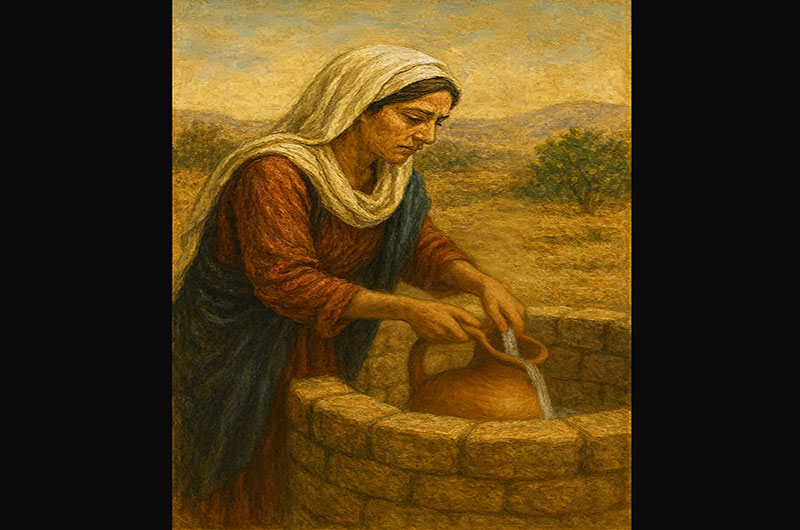
Living for yourself doesn’t mean acting selfishly. It means acting with integrity, even when no one is watching.
Why Avraham deferred the task of making bread to Sarah? If he was so meticulous and diligent in performing the mitzvah of welcoming guests and prepared the calf tongues in mustard sauce himself, why did he not also prepare the bread?

Some classical commentaries suggest that Avraham specifically wanted a wife to be chosen for Yitzchak from his own extended family in Aram Naharaim. A careful review of the text, however, reveals that Avraham never clearly makes that request of his servant. He simply tells Eliezer to return to Avraham’s land and birthplace and to search for a wife there.
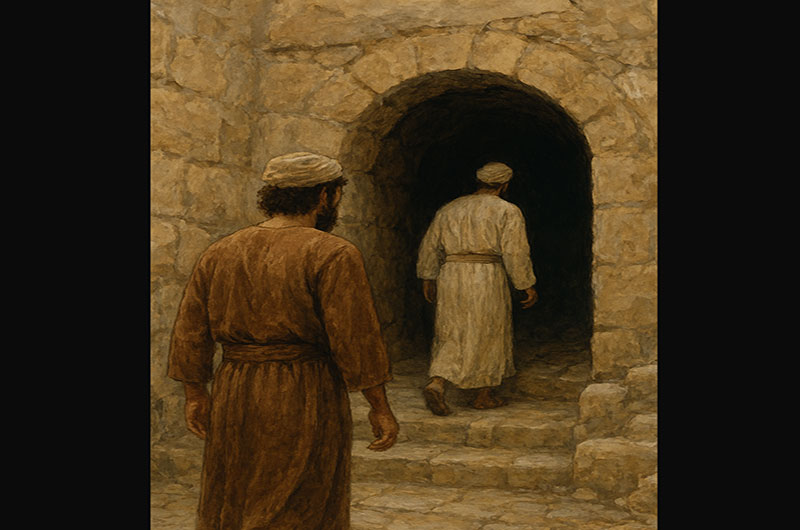
When the Torah relates at the end of the parsha (after already describing the death of Yishmael) that he fell before all his brethren on the approach to Ashur, Rabbi David Abuchatzera interprets this as a reference to the Purim story.

Even in mercy, we so often suffer. As much as we may always count on divine mercy, the divine calculus remains beyond our ken and we have been visited by destruction all too often.
Yishmael did not turn into the righteous son he had the potential to become. He mocked Yitzchak and this resulted in Avraham, on Sarah’s behest, banishing Hagar and Yishmael from his house.
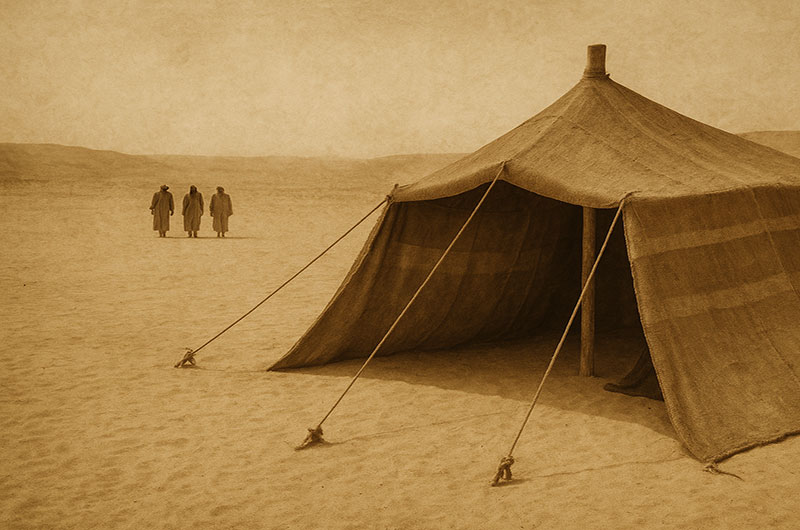
We are told that the encounter between Avraham and the three travelers took place on Pesach (Bava Metziah 86a) and that the “ugos,” the cakes that Sarah baked for them, were matzot. Here again the power of hospitality had its magical effect.
I instituted in my shul that once coats are hanging on the coat rack, the one who wants the window closed gets his way.
We live among people who espouse diverse philosophies. We are undoubtedly different, but it is that very disparity that empowers us to bring people closer to Hashem.
In Ramban's view, one simply can’t explain away every description of malachim in the Torah as a hallucination or lucid dream.

Leadership begins here. Not with command, but with disclosure. With the choice to let someone in. With the courage to be interrupted.
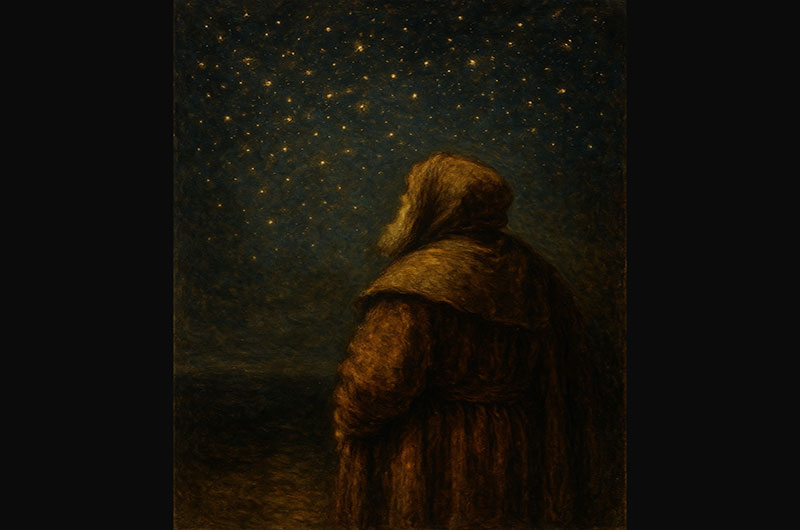
Avraham had complete trust in G-d. But he did not have complete trust in himself. G-d, after all, does not change, fail, or sin. But people do.

The prophet Yeshayahu describes an unnamed individual called from the east by G-d to achieve victory over numerous nations and bring an era of peace and prosperity to Israel. But is this an event that has already happened? Or one that is yet to come?
As a result of the gifts Pharaoh lavished on them, both Avram and Lot became extremely wealthy. But they related to their wealth very differently.
Undoubtedly being told to sacrifice Yitzchak was Avraham’s toughest trial and this is the reason we mention it multiple times in our daily tefillot.

Avraham didn’t lead with certainty. He led with movement. Yeshayahu didn’t promise clarity. He promised renewal.

We learn that if one successfully persuades a disenfranchised Jew to do even one mitzvah, that individual is rewarded in this world, for his entire life, each and every time the Jew performs that mitzvah.
Avram somehow seems to be consummating the spiritual process begun with Enosh, finally achieving the spiritual possibilities of humanity – in Hebrew also known as Bnei Enosh, the descendants of Enosh.
The word chein is the root of the word chinam which means free. If we merit to find chein in the eyes of Hashem, He will freely give us things even if we don’t really deserve them.
Today, various Jewish social justice groups protest against their own best interests to gain favoritism from the outside world. It’s nice to try and repair the world, but you need a Torah foundation.
There is no doubt, it is not even a question, that Noach was G-d-fearing. Noach was not part of the depravation of the world, he did not commit adultery, he did not steal, he did not worship idols, etc.

Shem refined his father’s philosophy. For Shem, life itself was compensation enough for one’s good deeds and he did not complain if he received nothing more.
Jewish tradition offers its own quiet rituals. The Baal Shem Tov teaches that entering the ark is a spiritual act or a retreat into truth. Cheshvan echoes that: not performance, but protection.

Even if it may have been clear to both men that theirs was the only way to assure any type of future, the isolation and opposition they must have encountered (as explored in many Midrashim) would have brought down anyone lacking the legendary fortitude of these two heroes.

Relying heavily on G-d’s promises to Noah to protect humanity from these realities is, simply put, relying on miracles.

G-d’s lesson through the story of Noach and the prophecy of Isaiah is that even in the face of all the difficulty and trauma, we must still recognize the blessings and opportunities that await us.
While corruption was more widespread and perhaps fundamental, the formal case against the generation of the flood was formulated on the basis of something they – and Noach, in particular – could understand: they were hurting each other.
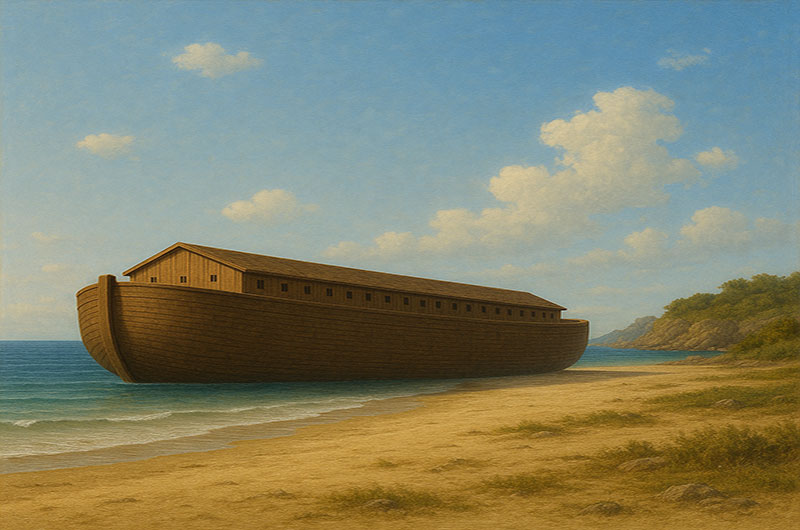
The Rebbe references the Hebrew name of the wood from which the teivah was constructed (gopher wood), which might be cypress but the etymology is unclear. What is clear is that gopher is related to sulfur (gaphror in Hebrew), and thus correlates to burning and simmering rage.
The tragic demise of mankind during the era of the flood was not just a punishment for that wicked generation. Even more so, it was perhaps a series of powerful lessons to be studied by G-d-fearing people throughout the millennia about behaviors that are so toxic that they can cause the absolute destruction of an entire world.

The Chofetz Chaim writes how important it is for a person to reinforce his middah (character trait) of judging others favorably, because it will facilitate his own advancement in attaining the level of a tzaddik, a righteous person.

Hashem does not perform miracles without intention. While it may be difficult to determine specific expectations, future responsibilities can often be articulated in personal terms.
Kayin understood that if Hashem would not help him, he had no hope of remaining alive.
Not only is the sukkah a sign of our emunah in Hashem, but when we hold the lulav and esrog in our hand and shake them back and forth we are declaring, Just as the species cannot exist without You, Hashem, so too we are totally dependent on You.

From our very inception, our existence was a miracle. Avram was unable to have children at his advanced age, but Avraham, the Av hamon goyim, the father of all nations, who spread the message of monotheism worldwide, was able to have a child.
If one does teshuvah because of his love for Hashem, then willful sins are actually converted into meritorious deeds.
When the Torah restates the mitzvot of Sukkot in Devarim (17) – although it doesn’t actually mention there the mitzvah of sukkah (!) – Rabbeinu Bachye discusses some of the hidden aspects of this mitzvah, particularly as they relate to the mitzvah of rejoicing on the holiday and in the context of all the major pilgrimage holidays under discussion there.
The Baal HaTanya writes that on Rosh Hashanah all the Heavenly Hosts sit in Shamayim and wait longingly to hear one Yid praise another. Why? Because in that moment when he does so, the angels take those good words and place them on his scale of merits.

We should not feel like we are martyrs suffering for our children, for, after all, Judaism opposes human sacrifice.

In a world fractured by fear, antisemitism, and isolation, Sukkos reminds us that holiness is not a status, it’s a practice.
Or, beseech, Hashem, I want to give more tzedakah this year. Can I have a bump in my livelihood so I can help my children more, or provide for my elderly parents? My wife has been wonderful. I want to be able to get her a nicer sheitel, some jewelry. Help me please, Hashem, to accomplish these goals.
Chazal say that for three days after Am Yisrael gathered all the loot from the Egyptians who drowned in the Red Sea, they neglected to study Torah, which set off a series of complaints and rebellions against Moshe and HaKadosh Baruch Hu Therefore, it was instituted that three days cannot pass without the Torah being read.
Clearly, Hashem could have created a universe in which there is no suffering and in which we can acknowledge and praise Him without having to overcome adversity. So, there is an inherent value to us, whether as individuals or as a species, in coming to this awareness through our own processes and gaining insight, and not just having it presented to us as perhaps the malachim do.

It’s sad. Our political-media discourse is stuck, narrow. A person is shaped by the landscape of their feed.
Did Mar Ukva crave the cheese so much that he couldn’t wait until the next day? On the other hand, there is no obligation to wait 24 hours before eating dairy. Why did Mar Ukva compare himself to vinegar, i.e. wine that has spoiled and has lost its value?
What Moshe was saying was that once G-d has forbidden him to do something, then even if he was physically able to do the forbidden thing, he was spiritually unable to bring himself to do so.

The shofar doesn’t sound to restore order; it sounds to rupture it. It doesn’t call us to purity; it calls us to have strategic clarity. It doesn’t ask us to return to innocence; it asks us to return to alignment. To choose life in systems that often don’t.
In order to enable free will, HaKadosh Baruch Hu hides Himself in His Creation. When I say hide, I mean behind a concept, for example The Laws of Nature. By hiding behind this "concept," HaKadosh Baruch Hu enables a person to see Him, or not.

Hashem is Hashem in the supernal realms in which He plans Creation as an ideal to be embodied, and He is Hashem in the physical world that He created and which we have inhabited since the first Rosh Hashana.
The only way to appease one’s conscience when giving in to one’s most extreme desires is to violate all the prohibitions of the Torah, even those that do not give one any pleasure.
Before the recitation of the berachos preceding the blowing of the shofar, the shofar is placed on the bimah and covered with a tallis. If the ba’al tokei’a has more than one shofar, and/or other congregants have brought their own shofaros, they too are covered with the tallis on the bimah.
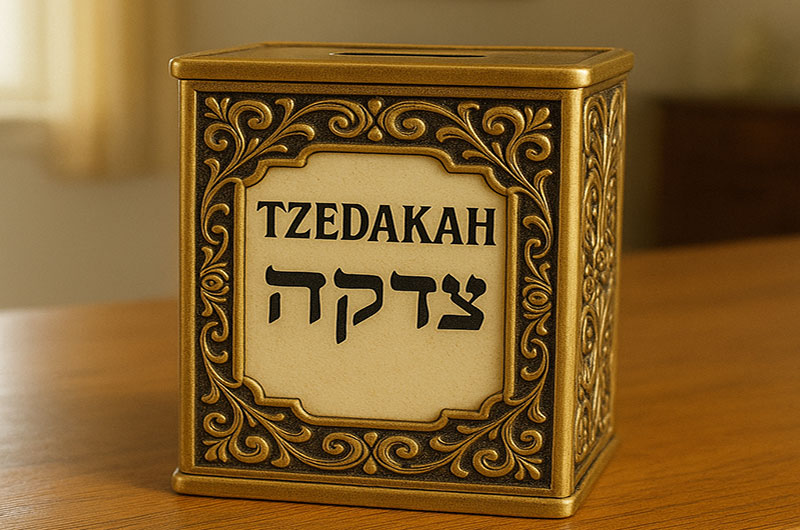
The protection of our charity extends to our children and grandchildren.

If a person keeps in mind that everything belongs to Hashem, and knows the money is only entrusted to him, it is easier for him to tithe.

Elul is the season of return. Not just to G-d, but to self. To what’s bruised, unfinished, still becoming.
If you examine the paragraphs of the curses, both in Bechukotai and in Ki Tavo, you will see that they are preceded by a paragraph of blessings.
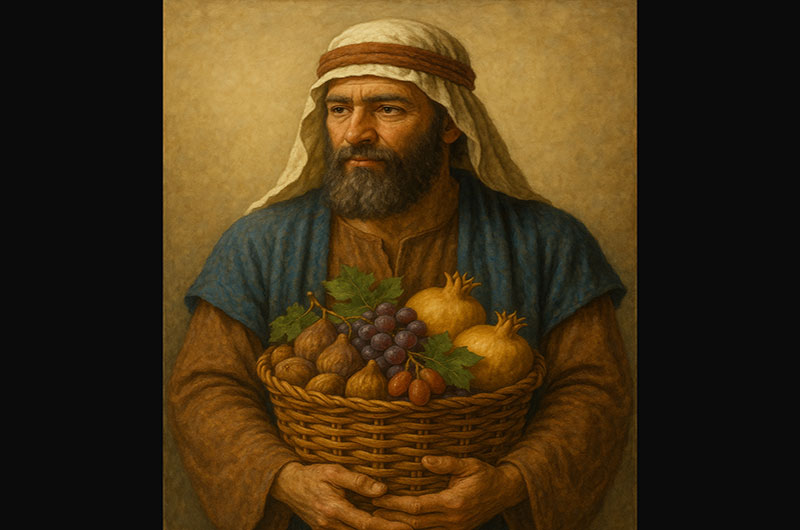
The gift of Bikkurim has to be wrapped in a way that is fit for a King. It must be offered in a beautiful basket.

The true national essence of Israel is not found in our markets, whether domestic or for export. In fact, Hashem made us with all the capabilities we require to subsist and even to thrive in our Land, which He endowed with all the ingredients we require to prosper.

As we recite this haftara, let us hope and pray to be deserving of a redemption that comes in a flash. The Jewish people of today, in Israel and outside it, has progressed spiritually beyond recognition in the years since the founding of the State.
We believe, of course, in the accuracy of the Torah. But it certainly strengthens our belief when we see the words of the Torah come alive throughout the ages.
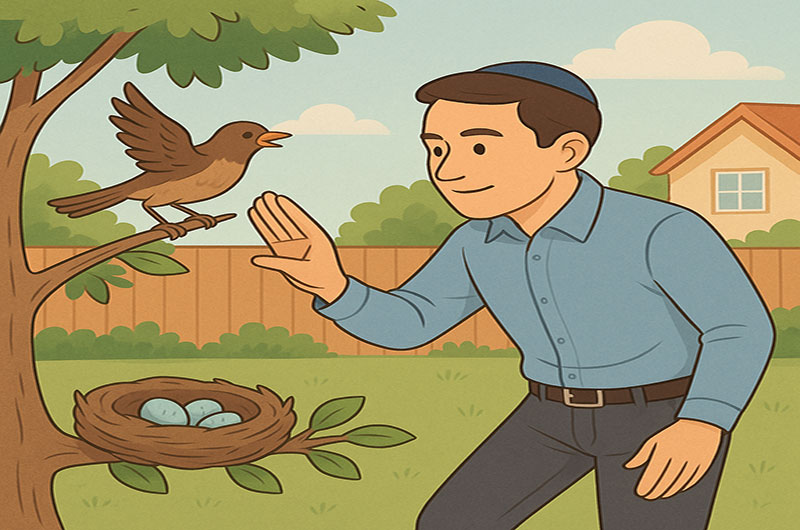
We know that it is already decided before one is born when and where one will die and there is no way of avoiding that meeting with the angel of death. If that is the case, why must one bother installing a fence? The accident is destined to happen anyway.
The Torah says about Sarah and Rivka that they were lovely (yefat mar'eh) but that Rachel, in addition to being lovely, was also beautiful (yefat toar). So, the only one of the Matriarchs that exactly matches the description of eishet yefat toar is Rachel.

Gold in Torah doesn’t just stand for just wealth, it’s also trust. And trust begins with math. With integrity. With the quiet promise that value won’t be manipulated for profit.

Ma’oz’s soul brought you together. He was your matchmaker. You studied in the same school for twelve years without ever having a real conversation. And yet, here you are – connected because of this Jewish hero, and through your shared love of Torah. This is not only Benji and Eliana’s private story. We are all part of something much greater.
On a spiritual level the rebbe is greater than the father, therefore his property is returned first. But with regard to the transgression itself, obviously that it is more egregious to hit or curse one’s own parent than the rebbe, and therefore the punishment is harsher.

Equally important is resisting the urge to retaliate. A sharp remark often provokes an even sharper response, and the tone can quickly descend into bitterness.
HaKadosh Baruch Hu does communicate “indirectly” with Am Yisrael, showing His pleasure/displeasure with us, by heaping abundance on us or withholding abundance/rain.
One of the hardest feelings, especially now, is uncertainty. We don’t know what tomorrow will bring, and so many people search for answers that can guarantee the future.

Once a month, on days meant to be marked by personal introspection, Hashem challenges us to recognize and value the quiet enablers in our midst.

The architecture of Shoftim invites reflection not just on governance, but on restraint. It cautions against excess and sanctifies balance. It insists that power must be regulated by humility, and that leadership demands a commitment to the law: not a manipulation of it.
The mitzvot of Parshat Shoftim are relevant to the governance and political practices of an Israelite (or Israeli) society ruled by law. The king is interchangeable with the elders, as we find in the present passages (Devarim 21:1-9), and stands in for the collective of Israel at large.
Although one may protest that he would never take a bribe the Mishna in Avos (2:4) states, “Do not believe in yourself until the day you die.”
It is not enough to read about it, even see pictures of it – in a book, in a video. Only when you are physically there and see it with your own eyes does it have the required effect.

What is the blessing that G-d bestows on us for keeping the mitzvot? It is that “tishme’u,” you will be able in the future to continue performing the mitzvot. There is a future to keeping mitzvot.
The Talmud (Shabbos 151b) expounds that anyone who has compassion on Hashem’s creatures will receive compassion from Hashem, and one who does not have compassion will not receive compassion from Heaven...

Other depictions of the redemption tend to emphasize the glory of G-d that derives from His redeeming His people at a time and in a manner which suits Him. But human beings, even those who are desperate and endangered, ideally don’t want to be given something they have not earned.
 August 28, 2026