יום ראשון, י״ד חשוון תשפ״זSunday, October 25, 2026



Follow Us



It was necessary to have an equal number of people going to war, as were assigned to pray. This was to highlight the awareness that it was not the strength of those fighting that determined their victory over the Midyanim, but the prayers of the other 12,000 soldiers.

I realized that although he was in his late 80s, he wanted to walk from the bungalow all the way to the parking lot – a great distance – in order to personally greet her upon her arrival. That left an indelible impression upon me, of how a husband is supposed to show a wife that she is wanted.
The last time the Torah mentions Aharon actually saying anything of his own volition, is when Miriam speaks lashon hara against Moshe. Aharon’s words are a plea for Moshe to pray to G-d to heal their sister.
An Egyptian whose ancestors committed genocide against our people may be accepted as a convert after three generations, but a Moabite and Amonite – who never gave us bread and water, they may never be accepted?
Moshe knows he’s running out of time, he wants to make his final request of Hashem.

How could we err and think, like the Jews of Hungary did, that the nations of the world will protect us during times of tribulation? When the inhumane policies of the evil Hitler, yemach shemo, had already affected most of the countries in Europe after four years, people still paid no attention.

The successful relationship between husband and wife makes the home into a sanctuary as it says, Ish v’isha shalom beineihem, Shechina shruyah beineihem – A husband and wife, if there is peace between them, then the divine Presence dwells between them.

What is the biblical source for not causing pain to animals?
In the human experience, there’s no guarantee of a safe and successful landing and return. What is critical is not the ultimate destination, but the values we bring to the journey of life.
When you feel that the world is going mad, it is important to return to our sources. Our Torah portion this week reminds us that what we are experiencing today has occurred before.

How important are failed plans and plots, such that the Torah needs to mention any of them at all?
Parashat Balak is a very interesting parasha in that it relates an incident that none of Am Yisrael observed directly.

Balak realized that the land of the Amorites, including the strip of land between the Arnon River and the Yabbok river which formerly belonged to Moav, was eventually destined to be taken over by the Jews in accordance with G-d’s promise to Avraham.

Ignorance, the root and stem of all evil. -Plato
Bilaam’s hope is to reduce the power of Israel by carving away at our fighting men through spiritual means, so that they will be removed from the army as they are condemned to perdition for their transgressions.

Not only is our disposition and attitude critical in disquieting circumstances, but every word we utter during challenging times is significant.

As you get better in chess, you just can’t rely on your opponent to make a mistake. Better players won’t make mistakes.

Yes, he looks rather ridiculous as he makes one poor decision after another, and that is rather the point.

What exactly did Moshe and Aharon do wrong in the incident of "Mei Meriva"?
In America, where he arrived from Europe in 1941, mitzvah observance had become moribund, increasingly disconnected from the modern world. The Rebbe reversed this trend by demanding more Torah, more Jewish brotherhood, more Jewish education.
The Torah tells us that Nadav and Avihu died because they brought a “strange fire” before Hashem (Vayikra 10:1). But Rashi says in the name of Rabbi Eliezer that they died because they taught Torah in front of their master, Moshe.
All men's souls are immortal, but the souls of the righteous are immortal and divine. -Socrates

Why weren’t Moshe’s prayers effective, as they were when he prayed for the frogs to be removed from Pharaoh?
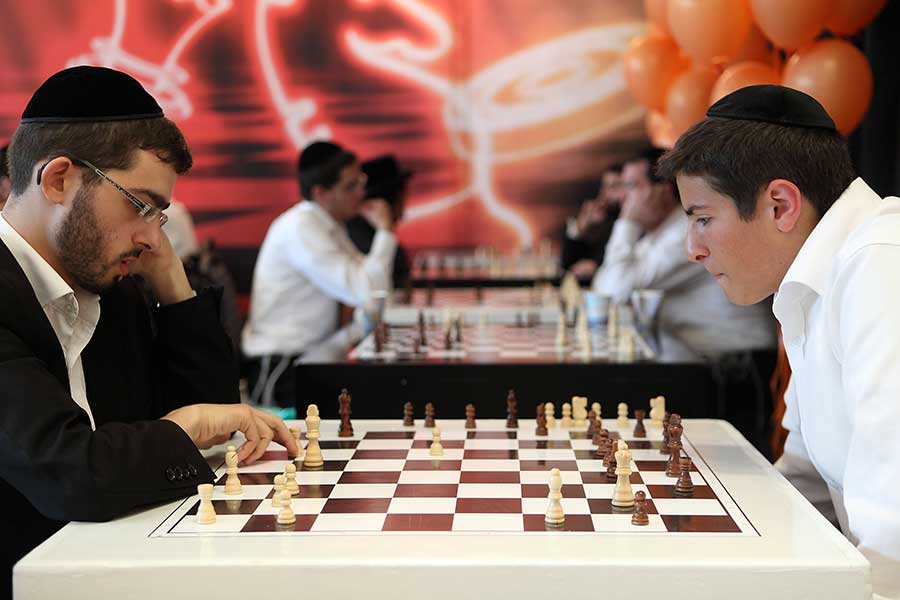
The smart player always trains himself to think what the other person on the other side of the board is thinking about.
The pastime of blaming faultless leaders is apparently not new.
Who are the sources of our information regarding the war? After five get-togethers and lectures in the United States that included difficult questions on the situation in Israel, I understood how important it is to check our information sources.
When God gets angry at the people, all Moshe can do is fall on his face in grief at his own responsibility about what was happening-- But Moshe doesn’t stay on his face for long.

The greater the power, the more dangerous the abuse. -Edmund Burke
It bears mentioning, tragically, that when judgment is rampant in the world and the angel has been unleashed for the purpose of destruction, it tends to consume the innocent alongside the guilty.

Outraged at Moshe and Aharon, they marched with Korach to stand up against Moshe, while Korach vigorously maintained that he was not doing this for himself; he merely wanted to save the people from being misled by Moshe and Aharon.

The pastime of chess, in a world where there are so many hobbies that can atrophy the brain – from vegetating in front of a screen to pounding feverishly the controls of addictive computer gaming – is a refreshing opportunity to activate the mind and train it in many beneficial abilities.

Korach and his group were fighting with each other at the same time that they were fighting with Moshe and Aharon.

Is remembering God's wrath the best way to commence every Shabbos?
When faced with uncertainty, confusion, or disillusionment due to current challenges, turning our thoughts positively towards the past and the future can empower us with perspective and inner strength.
There is a strong message in this week’s Torah portion and it is the call to return home, to make Aliyah.

A symphony must be like the world. It must contain everything. -Gustav Mahler
Being a real hero is not just about what we do, it is also about when we do it.
Even in the depths of our exile, we are never forsaken by Hashem, and the Gemara teaches that even the Shechina, the Divine Presence on earth, goes into exile to suffer with us until our ultimate redemption.
It is specifically when a person is in trouble or faces a serious challenge that he becomes vulnerable to the yetzer hara.

What is so exceptional about the blessing Magein Avraham that the Shulchan Aruch says that we have to say Shemoneh Esrei over again if we didn’t have kavanah? The answer is because the first blessing is the password to get into Hashem’s Palace, to have an audience with HaKadosh Baruch Hu.

The census, the camp, and travel scheme were all set, but then...
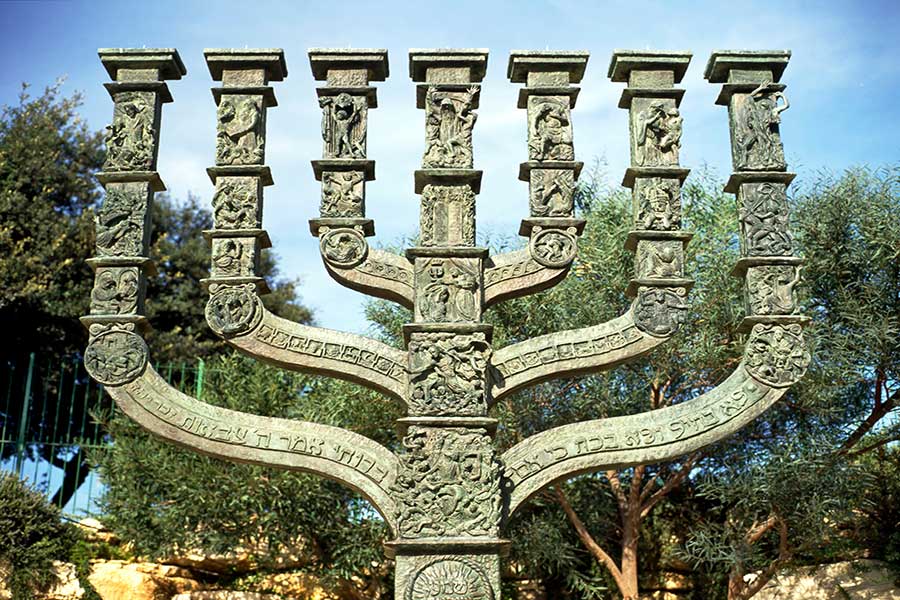
The seven stems of the Menorah symbolize the seven wisdoms of the world. They all emanate from the central wisdom of the divine Torah and they have purpose only when they too contribute to the Torah.

Not eating meat is a decision, eating meat is an instinct. -Denis Leary
These entities differ profoundly from one another, but they join together when they face the Menorah, the single individual divine source of all wisdom.

One may then raise the question of why should Moshe have gotten married to begin with
How could Hashem imply that the essence of every Jew is good (made of pure gold like the menorah) if there were sinners among them?

Swimmers should be cautioned about the absolute need for proper supervision and the great danger of going solo to the pool. Also, remember that long exposures to the sun can be unhealthy. Use a sun blocker!
Why are the wagons referred to as a Korban?
The Kohen is the one who will accompany these three alienated individuals and, by so doing, become their connection to the rest of society.
Love is a portion of the soul itself, and it is of the same nature as the celestial breathing of the atmosphere of paradise. -Victor Hugo

A Jewish student from MIT visiting Israel told me, after describing the hypocritical protests on behalf of Hamas that took place on her campus: What our world needs the most now is faith, vision, and a clear moral compass.

When we think this Shavuot about the revelation at Sinai, let’s remember that the Torah was given surprisingly in the midst of billowing smoke and blackness.
I asked My people to bless Me when they are sated, and they responded by blessing Me even if they only eat a portion the size of an olive (or an egg). They do so because they recognize that everything comes from their Father in Heaven, and they seek to give Me great pleasure in all that they do.
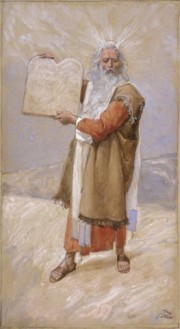
Judging from the sources in the Talmud, there is more than a tinge of ambivalence about the non-Jews being left out of Matan Torah. Though the Talmud was written in the context of a nascent Christianity that preached a gospel to all men, it was likely more than this that prompted the rabbis to justify […]

May you and all the wounded have a speedy and complete recovery, Michael. We can only imagine how many wonderful heroic acts like this are taking place each day in rehabilitation clinics throughout Israel.
The real theme of this book is how to live so that G-d will plant His presence among us, so that G-d will be with us and among us.
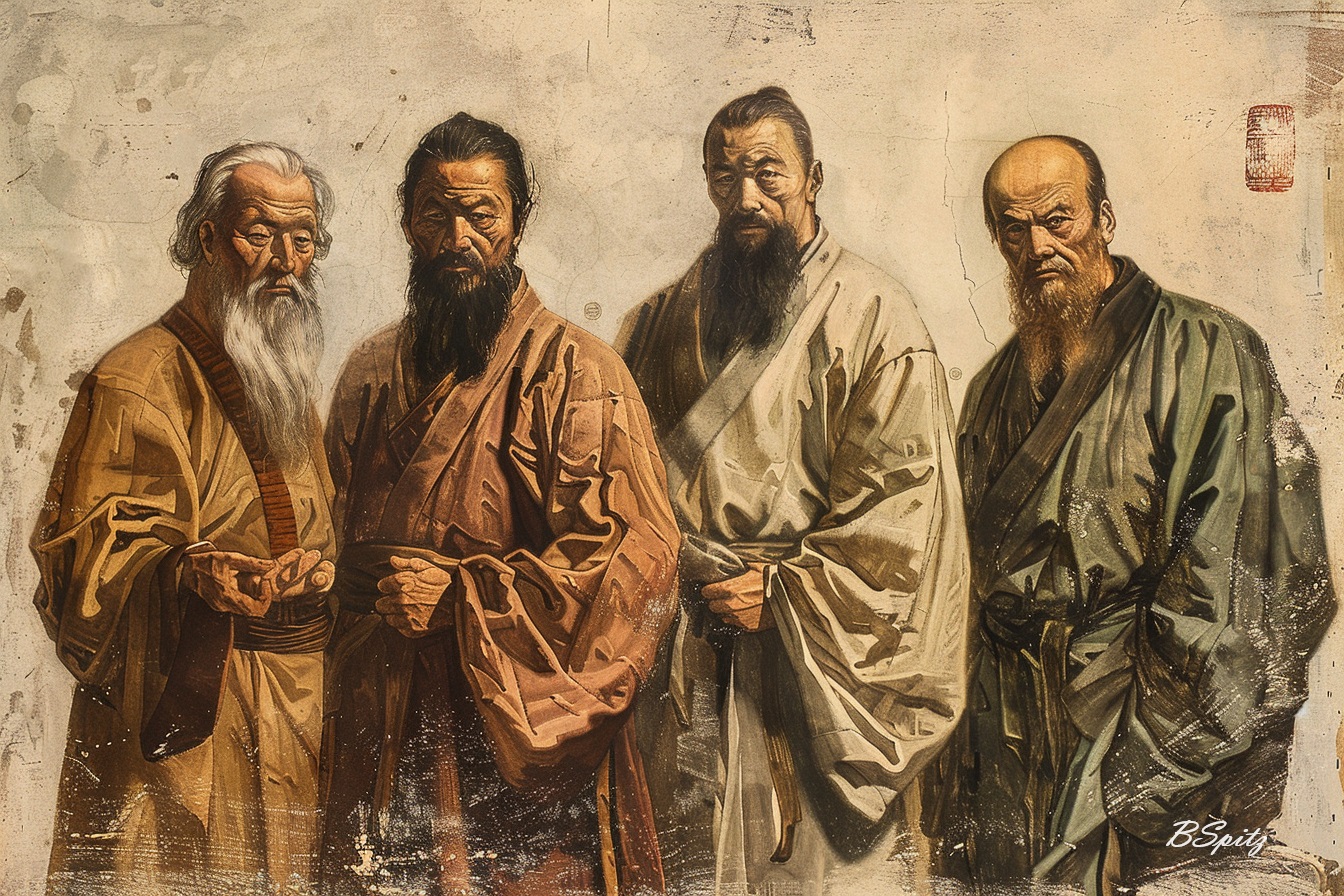
History is not everything, but it is a starting point. History is a clock that people use to tell their political and cultural time of day. It is a compass they use to find themselves on the map of human geography. It tells them where they are but, more importantly, what they must be. -John Henrik Clarke
The reason a person without Torah can never be truly free is because human beings are slaves to their passions and desires.
It is the supporters of Torah who provide the artillery to those involved in Torah study to win the war of holiness in this world.
This is vital information for parents and educators, to know how to direct their children to the right school and the correct teachers.
The UN security council stood for a moment of silence in his memory. What exactly were they thinking about during that moment of silence, which was also observed by the U.S. Deputy Ambassador to the UN?

Whatever we expect with confidence becomes our own self-fulfilling prophecy. -Brian Tracy

Avraham was a righteous individual in a mass of wicked depraved individuals and civilizations, and he was one single light in the face of a growing darkness.
Hashem gives us opportunities to do teshuva. He delivers minor punishments to put us on notice. However, if these signals are ignored, then the suffering becomes more and more difficult.
Please, return us the real thing which is bringing our sacrifices in the Beis HaMikdash.

Since historical events like these have the potential to challenge our faith, they create a religious imperative to search for God’s loving hand even in the face of tragedy and sorrow. That is an important part of R. Akiva’s legacy as well as that of R. Shimon’s.
The question is asked: If the miracle of the blessing will already be obvious, as our pasuk indicates, in the sixth year – when the land produces a crop that is sufficient for three years – why would the people be worrying any further?
A banker is a fellow who lends his umbrella when the sun is shining and wants it back the minute it begins to rain. -Mark Twain
A beautiful example of how heaven is exclusively a place of peace can be found in a Gemara in Maseches Sotah. We are informed of a fascinating fact: Daily, in the desert, together with the mon fell women’s beauty treatments because that which beautifies a woman fosters more love and harmony in the home, which promotes peace.
If one who wants to be wise begins to believe of himself that he is special, then he will no longer be prepared to learn from everybody.

In a Tel Aviv train station, I stood looking at the stickers on the walls. A common theme emerging from these stickers? The importance of remembering to smile.
As we continue to speak less, we will continue to have less room for defilement… and for sanctity
In Chovat HaTalmidim, the longest chapter concerns the struggle against laziness in students of Torah that the Aish Kodesh describes as the greatest blight upon a young mind.
May the gods grant you all things which your heart desires, and may they give you a husband and a home and gracious concord, for there is nothing greater and better than this - when a husband and wife keep a household in oneness of mind, a great woe to their enemies and joy to their friends, and win high renown. -Homer, The Odyssey
The Sefer Rishon L’Tzion cites the Medrash Shmuel, in the name of the Meiri, that when a person causes a chillul Hashem it is because he was not careful with the honor of Hashem.
The ensuing requests also fit nicely for we follow this up with the request, L’ma’an yeichal’tzun yididecha – In order that You deliver Your friends.

Be Holy - It's quite a challenge to achieve, but where should one start?
This past week in Israel we marked Holocaust Remembrance Day. Only three years following the extermination of one-third of our people, the Jewish nation rose from the ashes of the camps to declare an independent state. Such a revival needs to be our focus at the present time.
The sages teach that derech eretz precedes the study of Torah (see Vayikra Rabba 9:3, among others); this follows from human nature wherein the physical needs must be met before the intellect can be developed.
Shabbos is not a statute erected to commemorate that G-d created the world in the past, but rather it is an acknowledgment of His involvement in it in the present.
An individual can make a difference, but a team can make a miracle. -Doug Pederson
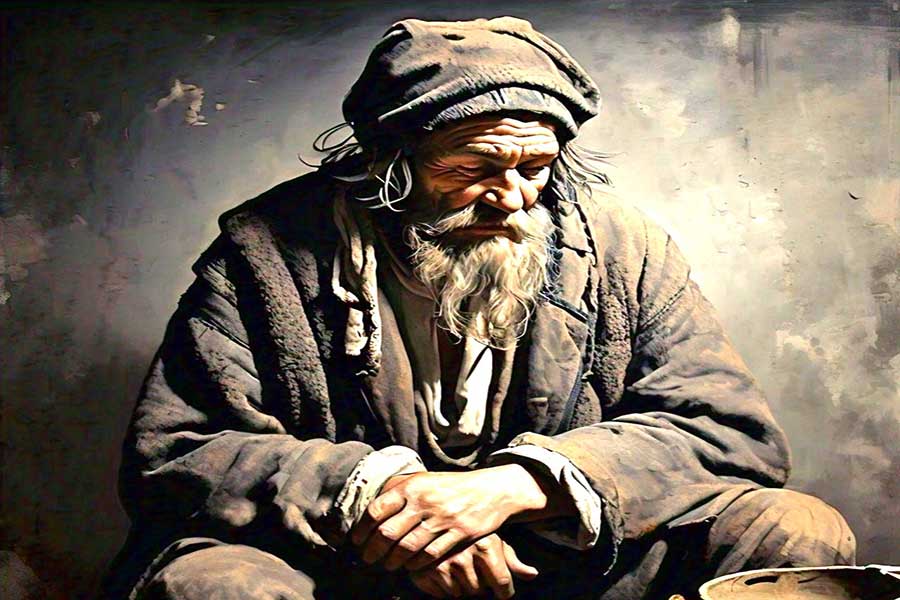
To his shock and dismay, he realized that the Rav was none other than the beggar he had beaten on the street.
I’d like to offer a mighty challenge. The next time you go to shul to pray, tell yourself that you’re planning to use your mind as much as your mouth in the synagogue – for proper service of Hashem has more to do with the mind and the heart than with the mouth.
On Yom Kippur, the Cohen Gadol wears linen.
We therefore first ask Hashem that we avoid sinful speech and forbidden thoughts, and then we can turn to requesting that our mouth be filled with the beautiful words of Torah and Its holy thoughts.
The nurse became very frustrated and told him in no uncertain terms that as long as he continued to wear the tzitzis he would not be taken in for his surgery.
All of this ultimately flows from Hashem. Hashem created Adam and Chava in the Garden of Eden, and He placed them there with the serpent so they could resist its charms. Only in that moment and in that place Adam and Chava failed.

Hashem tells Yechezkel to inform the bones that they are the house of Israel, fallen so far in exile it is as if they have been dead for untold eons. What seems beyond hope of recognition, let alone of restoration, is not beyond the power of Hashem to redeem.
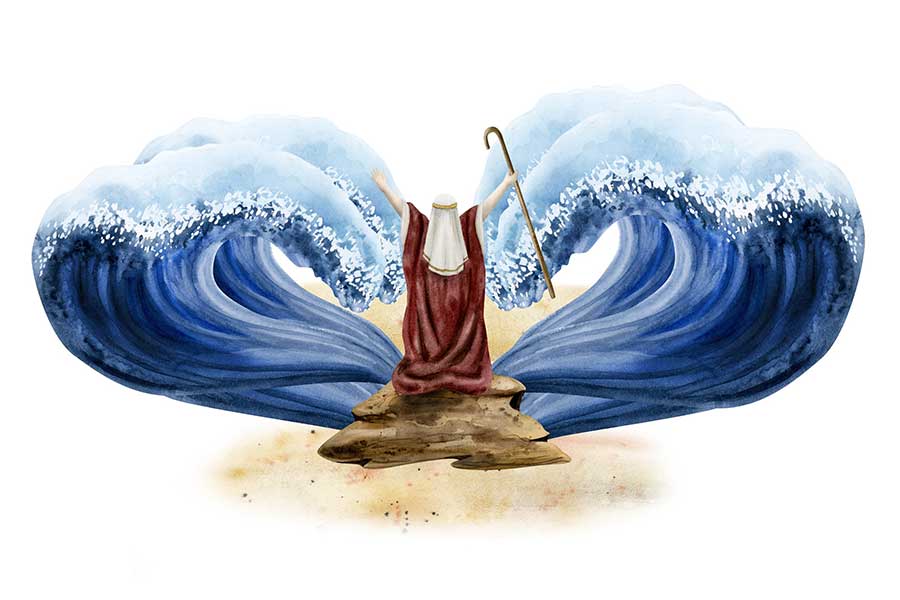
The Ramban and other Rishonim explain that once the plagues started Hashem’s protection over us never ceased. Indeed, even between the major plagues, Hashem peppered the Egyptians with other problems so that they wouldn’t trouble us further.

Despite the fact that G-d could redeem the Children of Israel without a human agent, He chooses not to. He waits for us, waiting for us to step up, volunteer, and lead.
They know that when Israel is faithfully performing the will of the Creator, then they have no power over us, but if, G-d forbid, Israel deviates from the proper course of action, they know their opportunity is at hand.

If we were faultless we should not be so much annoyed by the defects of those with whom we associate. -Francois Fenelon
It is well known that one of the causes for tzara’at is evil speech... However, the far more powerful example of the power of speech is the Torah’s conditioning the legal existence of tzara’at upon the priest’s declaration.
A person who tells disparaging stories of others that are untrue in order to find favor by others is punished from Heaven. He is afflicted with leprosy, he becomes impure, he has to be isolated and distanced from the rest of the Jewish people. In this way the person learns not to speak lashon hara anymore.

Just like when we head out on a trip, we have our Waze programmed so that we know each step of the way, or we get our AAA Tripkits, so too, when we navigate the Seas of Life, we should crystallize in our minds what steps we want to take and which vital pursuits we want to achieve in the mission of life.
When Moshe saw two Jews (Datan and Aviram) fighting and tried to stop them, they went and informed to Pharaoh that he had killed an Egyptian guard. Moshe then said, Now I realize why Am Yisrael are in exile in Egypt – it is because they speak lashon hara.
 October 23, 2026