יום ראשון, ט״ז תשרי תשפ״זSunday, September 27, 2026



Follow Us


During the past several weeks I have shared many of my own personal experiences and those of others. I am referring not only to my recent hospitalization following the breaking of a hip, but also to my series of articles on hashgachah pratis – events that befall us that can easily be attributed to random happenings but upon closer scrutiny and honest introspection testify to the ever-guiding Hand and mercy of Hashem.

By Ed Lion
Judaism holds that nothing happens by chance, that everything is orchestrated by Hashem. And so it was long ago on a Sunday morning, about a month after Pesach when my father ran an errand for his parents.

By Tzippy Klein
A week- seven days. That’s how long I spent in the dustbin of Jewish History that is Poland. I went there to learn about, and to see first hand, the country that housed the absolute horrors of the Holocaust, but I also went to see the places that had once housed such rich Jewish life. As such the trip focused, in my opinion, on three aspects of Jewish life in Poland: pre-war, the Holocaust years and then post-war.

There is a tradition from the Vilna Gaon that Milchemes Gog and Magog at the time of Moshiach will last only 12 minutes. In that short amount of time 1/3 of the world will be destroyed, 1/3 severely wounded and 1/3 will survive. Until recently this was incomprehensible - how could such destruction happen so quickly?
By Dov Shurin
Here we are again – Shavuos, the yom tov commemorating the giving of the Torah, God’s greatest gift to mankind. If someone were to say to me, “It’s unbelievable that Hashem gave us His amazing Torah,” I would respond, “That’s the wrong way to put it. ‘Unbelievable’ means ‘not to be believed.’ The correct expression is, ‘It’s beyond belief’ – meaning more than belief. Hashem loves His charming nation beyond words.”
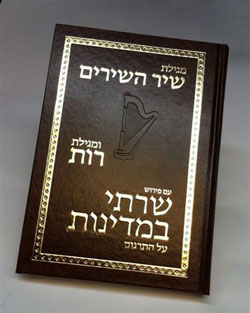
It’s refreshingly rare to welcome a new compendium on the targum of Megillas Shir Hashirim and Ruth (in one volume), just released by Rabbi Henoch Levine. This is the tenth volume in a series by the author, acclaimed for his expertise in targumic studies in general, and for his works on Targum Yonasan Ben Uziel Al Hatorah, in particular.

The Generation of the Wilderness was unique in the history of Israel, as Rabbi Avigdor Miller, zt”l, explains concerning the first verse of Bamidbar. Israel was slated for a special mission in the world, and this mission was begun with a special forty-year inauguration in which Israel gained an intense and unmatched closeness to Hashem.
By Rachel Weiss
Shavuos. How unremarkable a name for a Yom Tov that celebrates the very foundation of our existence. Actually, Shavuos is one of five names designated for this holiday, the others being Atzeres, Yom HaBikurim, Chag HaKatzir and Z’man Mattan Toraseinu.
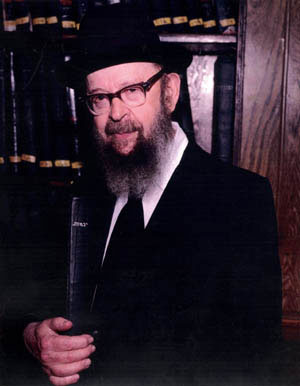
The truth is sometimes unpopular or uncomfortable. Thus, people who wish to dismiss the Hand of Hashem from history and human affairs may be taken aback by the assertion of Rabbi Avigdor Miller, zt”l, based on the beginning of this parshah, that the suffering that befalls Israel comes for a Divine purpose. Rabbi Miller finds this purpose explicit in the opening words of Bechukosai, and observes that this “wish” (to dismiss the Hand of Hashem from history) is not a Jewish way of thinking.

By Tzvi Fishman
Avraham Avinu packed up his belongings without saying a word and hastened to the Land, even though it was loaded with savage heathens, prostitutes, idol worship, murderers, and rapists, even though there wasn’t one synagogue, kosher butcher, or luxury villa to be found.

"In every generation they try to kill us, and the Holy One, Blessed Be He, rescues us from their hands." Every year, for centuries, Jews the world over say these words at the Seder. I paid particular attention this year as this phrase was sung by the golden-voiced Dudu Fisher, a chazzan and Broadway star, who led sedarim at Kutcher's Hotel in the Catskill Mountains.

By dvora
My daughter, son-in-law and three children had reason to move to Buffalo, NY from Brooklyn this past summer. As we watched our grandchildren’s cute little faces peeled and waving through the back window, we knew we were in for a huge adjustment. We knew we would obviously miss them but we also were aware that we gave our children wings to do as they saw necessary (and they saw it necessary to drive seven hours away to their new home).
The restrictions Yom Kippur places on each Jew are unique among the Torah’s holidays. Likewise, the intricate and detailed Temple service that was performed on Yom Kippur is unique among the services Israel performed for Hashem. As Rabbi Avigdor Miller, zt”l, teaches, this unique day was in certain ways a microcosm for every Jew’s connection […]
I have had much experience in bikur cholim – visiting the sick. Even at the age of six I would accompany my saintly father on his rounds to slave labor camps where young Jewish men were incarcerated by the Hungarians prior to the Nazi occupation.

The following is one unique halacha that is associated with arayos (forbidden relationships): Concerning most aveiros, if one is put in a predicament where he must choose between saving his life and fulfilling a mitzvah he must choose to live and transgress the mitzvah. The Gemara says that arayos are one of the three mitzvos that are yehareg v’al ya’avor (one must allow himself to be killed so as not to transgress the mitzvah), along with murder and avodah zarah.

Our Mission: When it comes to Chesed the Jewish people are at the front of the line. We’ve tackled Chesed and everyone is aware of the unbelievable work and generosity that we are involved in. Now it’s time to take on a new, more difficult challenge: Middot (character trait).

Is it really possible for any self-respecting New Yorker to love parking tickets? I have seen those orange rectangular pieces of paper become the nemesis of society. As a result, those trying to earn a meager living giving out these tickets have become Public Enemy Number One. We view them as “out to get us,” deliberately attempting to make our lives miserable.
I’m learning to walk again. Every step is painful. I go with a walker. There is a security belt wrapped around my waist which the physical therapist watches carefully so that in case I stumble she will be able to catch me. As I make my way, the nurses and other health care personnel smile and congratulate me: “You’re doing wonderful! You’re doing great!”

“Tell Bnei Yisrael, “These are the creatures you should eat.” – Vayikrah 11:2 Chovos Halevovos (Sha’ar Avodas Elokim 3) explains that Hashem created man out of two very distinct parts – a nefesh haschili (intellectual soul) and a nefesh habahami (animal soul). Each has its desires and inclinations, and each is competing with the other, […]
Question: I find it very difficult to understand the punishment of death that was meted out to Rabbi Akiba’s students. If he was so great, we can assume that his students were of a superior caliber as well. If so, why did they deserve such a harsh punishment? Zelig Aronson Queens, NY Answer: The Aruch […]

In this week’s parshah the Torah teaches us which animals are kosher to eat and which are not. The Torah says that the pig, although it has split hooves, is not kosher since it does not chew its cud. The medrash on this pasuk says that the reason that the pig is called “chazir” is because in the future Hashem will return (lehachzir) the pig to Bnei Yisrael and permit it to be eaten.
Several weeks ago I started a series on hashgachah pratis, or Divine Providence. Every believing Jew knows that events do not just unfold randomly; the story I told of two brothers named Yaakov and Yedidya clearly testified to that reality in a contemporary setting.
“And Hashem told Moshe, lift up thy rod over the sea and divide it”... And Moshe ordered the sea to divide. But the sea refused. “Why should I obey you,” it said, “You are but a man born of a woman and besides, I am three days older than you, I was established on the third day of creation, and you were created on the sixth day.”
Historically, one of man’s greatest shortcomings has been taking credit for Hashem’s work. Only too often does a man find success and, in his arrogance, feel his power and his might created his empire. The Torah warns us, Remember: it was Hashem who brought all this to be.
The miraculous splitting of the Sea of Reeds was one of the pinnacles of Israel’s closeness to Hashem. It raises a question, though: Why? Hashem typically hides His presence somewhat, conducting the world in a discrete way and never revealing His presence so openly. As Rabbi Avigdor Miller, zt”l, explains, this spectacle on the Sea of Reeds was performed with two great purposes in mind.
For the past several weeks I have been focusing on hashgachah pratis – personal, individual and national guidance that comes from heaven. Sadly, in our secular, high pressured, very often decadent society, many voices assail us and we have difficulty hearing the still small voice of G-d leading and prodding us.
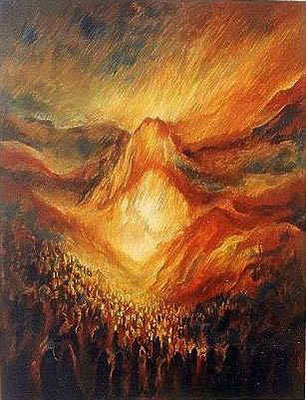
During Pesach we experience liberation from slavery, followed by the dramatic encounter with Pharaoh’s army at the Red Sea. Then we trek through the desert to the great moment at Har Sinai.
After months and months of rebellion, Pharaoh finally admitted he was wrong. The Dos Zakainim explains that the plague of barad moved Pharaoh more than any other. And it was because of one factor: Moshe had warned him that the hail would kill anything living. Again and again, Moshe cautioned Pharaoh to take his livestock and his slaves inside. Because Pharaoh was repeatedly warned to save the living creatures, he was moved and recognized his error.
Question: In the Torah’s description of the ten plagues Hashem inflicted upon Egypt, we find the Hebrew preposition “beit” [meaning “in” or “with”] only in connection with the plague of locust: "Neteh yadcha al eretz Mitzrayim ba'arbeh." Why is this so? And why do most of the commentators on Chumash ignore this question. Menachem (Via E-Mail)
I have been sharing personal testimonies on the subject of hashgachah pratis, chosen from a plethora of letters that have reached my desk. Each of these stories reflects a different challenge ranging from problems of health, parnassah, shidduchim and loss of dear ones (some of which I have yet to publish). These difficulties, to one extent or another, at one time or another, have challenged all of us.

By Rabbi Shimshon HaKohen Nadel
It has been said ‘It is easier to take the Jew out of the Exile, than to take the Exile out of the Jew’. While in Egypt, the Jewish people could not even hear Hashem’s promise of Redemption because of their “shortness of spirit.” Their bondage wasn’t merely a physical bondage, but a mental one. And so, while still in Egypt, Hashem began the process of taking the Jew out of the psychology of Exile, ridding him of his slave mentality.

In our March 16 issue we featured The Tyranny of Beauty: A Plea to Mothers Of Girls In Shidduchim, in which the author described a “Meet and Greet” for young women in a certain age and mindset (looking for young men who are sitting and learning) and mothers of the young men they could potentially date. The article received a tremendous amount of comments on our website and via e-mail. Below are some of the responses.
After a long and detailed description of the avodah (service) to be done in the Mishkan, the parshah ends with statement that “Aaron and his sons did as they were told.”
The evil inclination likes to tempt us to indulge in material delights. It is important to know that these delights may have another purpose, too: kedushah (holiness).
In last week’s column I shared the remarkable story of hashgachah pratis that two terrific young yeshiva boys, Yedidya and Yaakov, experienced. Their story evoked an enthusiastic response. Many were motivated to reassess their own lives and discover their own hashgachah pratis.
To the modern mind, korbanos may seem foreign or hard to understand. Yet they were a key component of the service of Hashem. Rabbi Avigdor Miller, zt”l, explains that offerings served many purposes, including a primary purpose of expressing thanks to Hashem. Thus, following the book of Exodus comes the book dealing with sacrifices as an expression of thanks for the deliverance from slavery in Egypt.
Most people have difficulty discerning Hashem's call since His messages are usually hidden behind many veils. On occasion however, hashgachah pratis – Divine providence – is so clear and obvious that even a blind man has to see it, a deaf man has to hear it.
Jonathan, who once wondered how he would ever get his son close to Hashem, now knows he wasn’t the only one who wanted it. Hashem had an interest in it as well, and made it all come together.
By Rabbi Yaakov Klass and Rabbi Gershon Tannenbaum
At most a navi, through prophecy, can institute a temporary modification of a Torah law. However, if he seeks to introduce a permanent change in the Torah or to add a new mitzvah, he and his prophecy should be rejected.
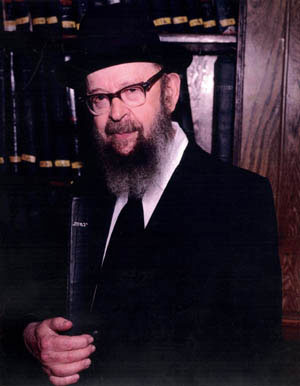
“And men of holiness you shall be to me, and you shall not eat meat in the field of a torn carcass (22:30). The expression “to Me” means “men of holiness that are Mine.” By being holy, they become close to Hashem.
In Parshas Mishpatim, the Torah delineates various prohibitions and punishments. With regard to stealing, we see something unusual. If a man steals a cow, he must pay back five times the amount he stole; however, if he stole a sheep, he must pay back four times the amount. Rashi is troubled by the difference in punishments. He explains that the difference lies not in the crime but in the mental state of the thief.
By Rabbi Yaakov Klass and Rabbi Gershon Tannenbaum
‘He Uttered Hashem’s Name In Vain’ (Temurah 3b)
By N. Schechter
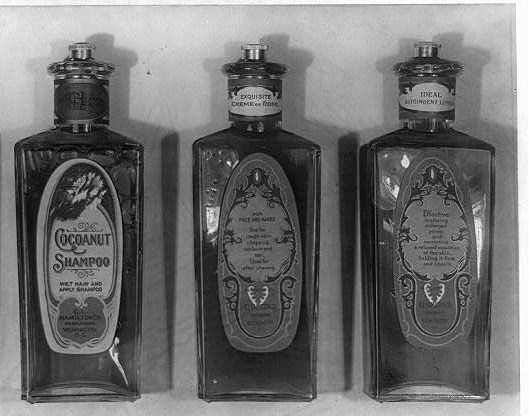
I thank Hashem that my daughters play “shampoo gemach", and I take pride in our community, which stresses gemachs and acts of gemilas chesed. Families try to find ways to help others, and people go out of their way to search for opportunities to practice kindness.
“And He does kindness to thousands of generations, to those who He loves and those who guard His mitzvos.” – Shemos 20:6 In the Aseres Ha’Dibros we are told Hashem pays back the wicked for four generations and the righteous for two thousand generations. Rashi explains the ratio of two thousand to four comes out […]
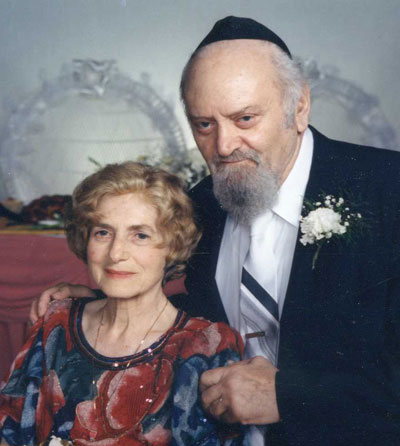
Dear Dad, A dozen years. It seems like a lot and it seems like a few. So many things have changed and some things never seem to change.


Tu B’Shevat is not just “another day.” It’s the Rosh Hashanah for trees, one of four roshei hashanah that occur in the Jewish calendar year (Mishnah Rosh Hashanah 1:1).
After a “natural” disaster, people speak with reverence. Even arrogant individuals, after living through a hurricane, tidal wave, or earthquake, have a sense of humility. Their reality has been changed, and they view life differently. Yet, when Pharaoh and Mitzraim experienced the makkos, that wasn’t their reaction.

By Anonymous
The following inspiring story was told to Rochelle Rothman by her close family member. It truly shows how Hashem runs the world, and helps us in all of our endeavors.
The Lithuanian sage is suffering from pulmonary edema.
After the Chasmonaim defeated the Greeks their descendants assumed the throne of Eretz Yisrael and ruled over Bnei Yisrael. In the first years of their reign, they followed the path of Hashem and He was good to them.
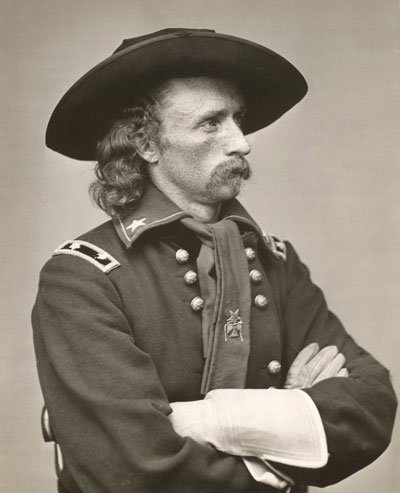
General George Armstrong Custer. The mere mention of his name evokes strong opinions of condemnation or admiration, depending on one’s perspective.
After Hashem commanded Moshe and Aharon to be the emissaries to free the Jewish people, the Torah lays out their lineage. At the conclusion, the Torah repeats the names of Aharon and Moshe, this time in reverse order, with Aaron mentioned before Moshe.
Here is an amazing story. I recently made a bar mitzvah for my second son. I went to have my daughter's hair done in Flatbush, and had to be at the hall two hours later.

Anglo political party threatens to bow out of municipal council if measures are not taken to prevent hostility between citizens - recommend a dialogue group of influential rabbis.
Master of the Universe, I am filled with remorse and compunction. My head is bowed in shame, my hands tremble, and my heart overflows with trepidation as I approach you with my abject confession of guilt.
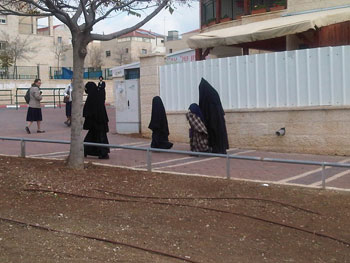
Charedi rabbinical leaders in Israel, and I imagine globally, are greatly perturbed, even horrified by the “chumrah” some Orthodox Israeli women have taken upon themselves – that of covering their bodies up in a manner similar to traditional Muslim women, who wear head to toe, shroud-like black burkas.
The opening pasuk in this week’s parshah states: “Vayechi Yaakov be’eretz Mitzrayim sheva esrei shanah… – Yaakov lived in Mitzrayim for 17 years…” The Gemara in Kiddushin 82a says that Avraham Avinu kept the entire Torah, even the mitzvos that may not have applied.
By dvora
It’s lately become a family joke. During the course of a day, something occurs that touches me. My kids see the wheels turning in my head and ask, teasingly, if I have another idea for one of my columns. It can be a simple kindness, or it can be one of the miracles that Hashem has wrought for us.

For the past few weeks my column has focused on the difficulties singles experience while trying to find their soul mates.
 September 25, 2026