יום רביעי, ה׳ תשרי תשפ״זWednesday, September 16, 2026



Follow Us


The paradoxical truth of a very, very good land--Israel.
"What's in a name?" Apparently, the essence of relationships...
Ultimately our job is not to overcome sin but to transcend the pitfalls and challenges of life.

This story is significant because Two-Gun Crowley wasn’t insane. He wasn’t a psychopath.
Constitutional democracy is a better form of spiritual government than either anarchy or totalitarianism. G-d wanted intellectual diversity and as close to universal accountability as possible.
Moses acted properly in his role of prophet but he failed in his role as a husband; he did not see Tziporah's suffering, her black cloud.
We know that every word, every letter, and every crown in the Torah is vital.
Many items in this world were created strictly for man’s enjoyment. One example is food.
Parshat Nasso and the issue of the sotah and coming face-to-face with our own responsibility and not just throw it on others.

When one taps into the forces and elements around us, to free ourselves of extraneous masters, we are able to acquire the wisdom, the insight, the light, the well-being and the strength that the Torah can impart.

Proper use of downtime is a concept familiar to all Bnei Torah. It is safe to say that nobody becomes an expert in his or her field only through what they learn in school.
Yes, Hashem gives free will to man – He gives us the ability to make choices – but He governs the outcome.
The magic of Sinai began when the people camped "with unified hearts and minds" facing Sinai. A single camp of shared purpose. I suspect that this is the message behind the Sages' teaching that Shabbat is the key to redemption: We do not share a common purpose other than a belief that the world can become a place of peace, a Shabbat world
Considering tzanua and achieving a balanced version of it in order to walk with G-d

We wash and raise our hands to Hashem, reminding and displaying to ourselves that we have nothing without Hashem Yisbarach.
A Jew is either rising or falling; he never remains in one place. It all pivots on Torah learning. If he labors in Torah, he rises to the heights. If not, he begins to fall.
Hoe the Torah establishes the value of the individual--and how that ensures humility.
If one's fear of sin exceeds wisdom, his wisdom will endure.

At all our significant life events we remind ourselves to continue working with the raw materials Hashem gave us, and to make something out of them.
Interestingly, it’s not just anger that colors our vision. Jealousy does too – as does greed, desire, and arrogance.
Some argue that when a Talmudic rabbi declares that a law “never was and never will be”, he is actually signaling a moral shift in which a Torah law is quietly put out to pasture. I am not convinced by this argument.

If a person is constantly preoccupied with his physical desires and needs he can't be a spiritual person.
If the merit of Avraham protected an entire nation, surely it will protect us, his direct descendants.
The true definition of holiness is to cross the boundary between heaven and earth. We are forbidden to combine species connecting their lowest common denominators, their purely earthly definitions. We are encouraged to make combinations that allow each world to meet beyond their highest common denominators so that, together, they can connect heaven and earth.
“Remove the blasphemer to outside the camp. All those who heard will rest their hands on his head. The entire congregation will pelt him.” I suggest that the blasphemer was not executed. Rather, he was taken to the scaffold and pelted with a single rock.
A healthy religious society has room for both chakhamim and chasidim, but knows that the latter are generally more to be admired than imitated.
Having an evil eye means that one has low tolerance for others, and especially for their success.
Hashem took us from under His throne of glory and put us into a body to give us a chance to grow, to accomplish and to change our essence. But, it wasn’t just us we were charged with perfecting.
Chag Sameach-Happy Yom Ha'atzmaut and Shabbat Shalom
Great leaders like Lincoln have the strength of character to overlook wrongs and see the broader picture.
Why should a person be rewarded for not doing something he wouldn’t have done anyway?
That man is more than flesh is obvious to the Torah, but the Torah’s task is to make it obvious to man.
why is gossiping worse than all three of the cardinal sins put together? Because a gossiper destroys all of these bonds, and more
This week's Torah portion contains the dramatic story of Nadav and Avihu, two of Aaron's sons, who bring a strange offering to God. This is so unacceptable that a fire consumes them on the spot and they die. The Midrash (Yalkut Shimoni, Parshas Shemini, Remez 524) suggests seven reasons why Aaron's sons deserved death: Nadav […]

Many commentators point at this command as the unspoken reason why Nadav and Avihu were killed: They entered the Tabernacle drunk.
Even the merit of the entire Jewish people was stupendous. While not every member had remained on the highest level, as a nation they had remained loyal to Hashem.
The retelling of the exodus at Pesach is meant to deepen our faith; and the excerpt from the Mishnah towards the beginning of the Haggadah presents a model for how to do that. It teaches us to follow the example of R. Elazar
Our problem is that in the daily bustle of life we hardly ever stop to smell the flowers.
We should never feel as if we are lugging around heavy suitcases of avodas Hashem.
Of course, Aharon didn’t veer to the left or the right. This was the avodah in the Mishkan he was performing, and the directives came straight from Hashem!
Judaism most certainly does not ascribe to the belief that there are powers other than Hashem who can stand in the way of His will.
Learning to give THANKS and preparing ourselves for Pesach.
Why is the act of sacrifice so powerful psychologically? Why do human beings naturally express themselves religiously through sacrifice, whether they are expressing fear or gratitude?
Obviously, sin and happy are not words that go together well. But, says Rabbi Yochanan, when people admit to and atone for their sins, that is cause for happiness.
No opportunity is too small to make a difference.
The Tabernacle was more dangerous than the Red Heifer because absolutely everything about its construction and functioning seems so mysterious
This is eye-opening, as it teaches us a fundamental concept. All growth requires change, and change requires energy.
Torah thoughts on this week's parsha, Vayakhel-Pekudei
This Rashi seems difficult to understand when we focus on whom these people were and where this was taking place.
Paradoxically, with Moshe’s desperate act, something positive happened. When the people realized what Moshe was responding to, it shook them to their foundations.
Some think that what a person wears classifies what type of person he or she is.
Is the way we celebrate Purim the ideal way to spiritually experience it?
The Maharsha explains that each mitzvah in the Torah has two angels appointed over it, one good and one bad.
There was once a scalding hot bath that no one could enter. Along came one foolish individual who jumped in. Although he was immediately burned, he cooled off the bath for others.
The questions about appropriate clothing should not begin with the externals, thecostumes, but with our inner lives, our growth, aspirations, beliefs; what do we see when we look at our souls?
One can claim with regard to specific halakhic issues that a tradition is binding even though it is not intellectually or spiritually compelling.
So long as we are alive, we have the ability to strive for higher and greater levels.
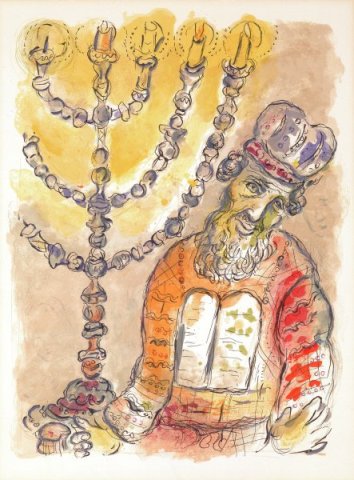
Clearly, creating the menorah was beyond human capacity. Why did Moshe need to have a clear image of what it was to look like?
We can achieve if we only reconnect to that belief that we can succeed only when we reach beyond ourselves rather than hide behind walls of fear-- and hesitation.
Seven is possibly the most significant number in Jewish Thought.
The Torah (22:27) prohibits people from cursing a leader. Rav Levine argues that people don't just point out the obvious and evident flaws of leaders; they tend to exaggerate them.
Hashem is more concerned for my good than I am. Hashem looks out for my interests more than I do myself.
Each prayer, each Shabbat, each festival, each mitzvah, is an opportunity to reconnect to that very different wedding at Sinai
The path from moral principle to moral policy is rarely straightforward. But the path from lack of moral principle to immoral policy often is straightforward.
May we each brighten the world in our own way and may we merit having and seeing children whose light will both burn brightly as well as kindle the light of others. Shabbat Shalom
Hashem created those sacs so that there would be another dimension to our enjoyment. The sensation of eating an orange would be different without this feature.

The art--and history--of Jewish communication.
So why sing it? If the second shirah does not add any new ideas or even words, what was its purpose?
The difficulty with this Rashi is that he lists all three reasons in same breath as if they are equal, and clearly they aren’t.
After Israel sings a song of thanksgiving, curiously, Miriam then leads the women of the nation in a second song. Why?
The religious state of nature does not enable the building of a religious society. Since human beings are social creatures, it follows that the state of nature does not enable human fulfillment. We therefore need a religious social contract. Cue Sinai; enter, the Torah.
They knew that if they performed acts of kindness with each other G-d would perform kindness with them.
We must struggle to understand, says the Rambam, the greatness and wisdom in the words of Chazal.
Even if the Egyptians prided themselves on ingenuity and advancements, they had to know they were most likely wrong when it came to accurately knowing when midnight was.
What growth can we achieve through the mitzvah of lighting special candles for Shabbos? What lesson does Hashem want us to learn from this mitzvah?
Pharaoh's stubbornness dooms Egypt. Had he let the Jews go at the first request, Egypt would have been spared from all the pain, death and destruction--the blame is his, neither Israel's nor G-d's
Understanding time, tefillin, and Torah and how they inexorably lead to: Empowerment

How did the Jews find grace in the eyes of the Egyptians, receiving gifts from their Egyptian neighbors as they left, when they were perceived as the source of all the plagues and destruction?
The Civil War was a conventional war with large massed armies arrayed against each other in set battles. These battles were more or less governed by accepted rules of war.
This story is compelling because Ford didn’t care about anyone but himself. He didn’t choose to be kind.
How seriously should we take frogs as halakhic authorities? On one level the answer is clear: not at all. Frogs do not have free will, or moral responsibility, and anyone one who thinks this midrash believes otherwise defames Chazal. Froggish martyrdom cannot teach us proper Jewish behavior, any more than froggish diet can teach us that insects are kosher.
A therapist will show the child a picture of a person’s face and then help her identify the emotion that person was most likely feeling.
A devar torah you can 'count on.' Shabbat Shalom from the Foundation Stone
In our day of media over-reporting, we often think that we should know everything about our leaders. Perhaps it is better to know too little than too much. For when it comes to ethics, the Torah spares no one in reporting what falls short of the mark.
Each one of us has his own role and path - so there is no reason to be jealous of another person.
For the next twenty years Yaakov was an unwelcome intruder in a culture alien to his nature, eating at the very table of a father-in-law who attempted in any way possible to swindle and cheat him.
There is a ubiquitous custom amongst the Jewish People to dress up in our finest outfits on Shabbos. This mitzvah is so special to the Jewish People that most Torah-observant Jews divide their wardrobe into two parts – Shabbos clothing and weekday clothing
His predecessor had heard from many dignitaries urging Shalom Morchechai’s release but did not act.
The second gathering will be that of the ten tribes during the final redemption, bringing together all the tribes of Israel after millennia of separation, something that we see unfolding before our very eyes.
The depths of Torah SheBiksav are grasped through Torah SheBaal Peh. Hashem commands Yechezkel to unite these two making them into one.
This Midrash is very difficult to understand. Every word Yaakov said was true. He did live a very difficult life. He was beset with troubles and distress. He suffered for decades.
There is no better way to inflame a situation than by answering anger with anger; and there is no better way to forestall a fight than to answer anger with calm.

If Ya’akov’s words to Pharaoh were just an exercise in self-mortification about what was too late to change, there would be little to learn from them. But if, as is more likely, they represented part of a strategy of how to continue improving, there is actually a great deal we can learn from them.
You cannot decide whether we should fight or not. We will... That decision is taken...
The Bach seems to be saying that all that was to befall the Jewish people was because we no longer approached the Avodah with the appropriate sense of purpose, and therefore it was taken from us.
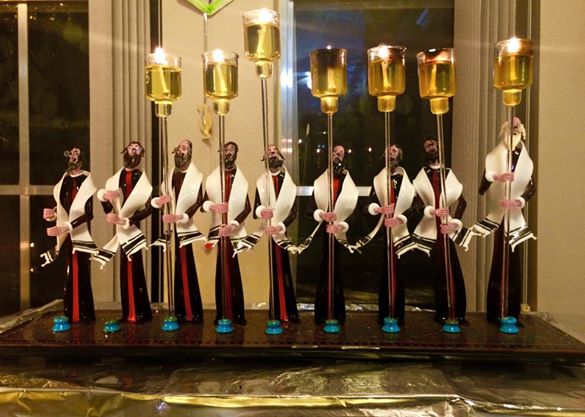
Like Yosef, the Chashmonaim were dreamers. Chanukah is the story of dreamers: defeating a mighty army, recapturing and rededicating the Temple, finding a single jar of ritually pure oil in the rubble
This new perspective helps us understand Joseph.

Imagine that the book of your life has already been written – and that you’ve read the chapter headings. How would your life be different? This issue is addressed by J.K. Rowling in the Harry Potter series. Not surprisingly, Rowling was preceded by the Torah
If Yosef was so brilliant, how is it possible he overlooked something as elementary as thinking about what his conduct would lead to?
 September 11, 2026