יום חמישי, כ״ח אלול תשפ״וThursday, September 10, 2026



Follow Us



In the very beginning of his introduction, the author writes that it is crucial for a person to trust in Hashem because if he doesn’t, then Hashem will remove His direct and special providential care.
The Torah tells stories of people who heard the voice of God and risked it all, However, for those of us who have not heard the voice of God, our sages suggest a more nuanced approach to risk.
Esau handled the meeting with Jacob far more grace than most people manage an argument with a spouse. Not bad behavior for a person we are taught is one of the most evil biblical characters!
Human interpretation of G-d’s work is always reaching beyond ourselves, and we should be suspicious of any theory that successfully explains everything in Torah – more likely we are imposing our own vision on the text.

At times it almost seems as if Hashem is deliberately sabotaging our well-laid plans for serving Him. And it doesn’t make much sense.
Jacob did not have problems with 'doorways.' He experienced one emotional earthquake after another, and managed to maintain focus. No 'event boundary' issues for our hero. How did he do it?
Ya’akov did not pray for Rachel to conceive because he did not believe in "forcing God’s hand." He asks, “Am I instead of God? God knows best whether to give children or not. All I can do is ask.”
Leaders often have to make difficult decisions of critical importance.
A man is approaching. Do I smile and nod, or do I look the other way? He’s looking at me; do I turn my head to respond or do I look out at the trees?
It is unwise to see contemporary events as exact replays of Biblical history, but it is valuable to recognize that Torah and tradition offer narratives of hop--as well as gloom--about Jewish national relationships
Sarah Imeinu was a strong, emotionally stable woman. She had unshakable bitachon, having lived through many trials and travails.
A dog that barks much is never a good hunter. -Proverb
Avraham and Sarah ended up in the land of Canaan. Canaan? The most debased and decadent society! Yet, there Avraham and Sarah build their destiny and shape world history. Canaan actually held the key to Avraham and Sarah's redemption.
Yishmael’s challenge was whether to come back at all. Having been so clearly rejected, why would he want to have anything more to do with his father Avraham?
That understanding is enough to evoke terror in any man’s heart, and we can certainly understand why he didn’t move.
Religion must face the question of how its followers should behave while members of a corrupt society. How should they relate to the norms of that society, especially when those norms are embodied in law?

Who are these beings? Why do they play such important roles in the stories of Genesis? Why are the stories of the beginnings of humanity so rich with characters so unfamiliar?
There are many potential spiritual hazards. How can we survive?
Avram’s father was not impressed with the cleverness of his son. In fact, he was so unimpressed that he took him to Nimrod the king, who pronounced him an enemy of the state and attempted to execute him.
The commentators agree that Hashem is the beloved and Shabbos is the bride. But why is Shabbos called a bride? Who is she marrying? And what do we mean when we invite Hashem to greet the Shabbos bride with us?
When we are driven out of our complacency by a wrong we don't know what the perfect world will look like. We only know that we can't allow the world as it stands to continue. The need to leave home is clearer to us than our destination. Lekh Lekha.
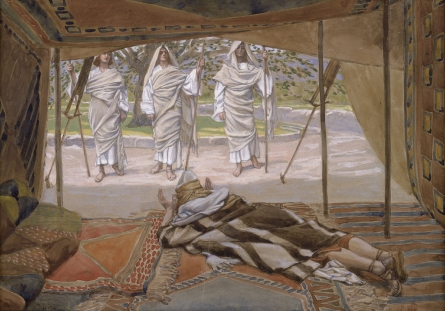
The benefits of sacrificing-but not TOO much
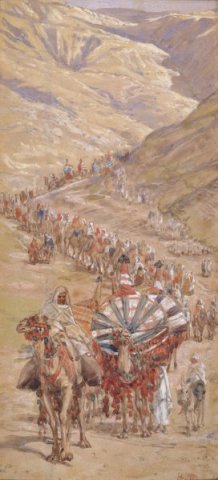
In the first conversation HaShem had with him, Avraham was told to live in Israel, or in modern terms, make Aliyah.
The purpose of the mabul was to recreate a world that had been infected with man's evil. After the flood, that changed and the world was no longer affected in the same way by man's actions.
Our hishtadlus (efforts) and our bitachon (trust in Hashem) have to be balanced.
But the question of Noach and global warming can be understood as a theological rather than a factual question: Are there any circumstances under which G-d would allow the human race to be destroyed?
What possible comparison is there between this simple mitzvah of leaving a portion to the poor man and the colossal mitzvah of bringing all of the sacrifices on each holiday?
Adam's two Fermatas resonate in the two Noahs, and the notes continue to reverberate in our souls as we struggle to retain our connection to the Garden,
Rather than keeping it only to herself, Chava showed her love for her husband by sacrificing her own consumption of the fruit, allowing him to eat part of it instead.
You’ve never stared down the barrel of a gun before – at least not a real one.
This is the perfect time to practice really enjoying mitzvos.
Sukkot is a holiday that brings a unique inner peace – a peace that would seem to resemble the messianic era, a universal acceptance of God’s moral and spiritual order; an order that is best advanced by helping the Jewish people serve God and further educate mankind.
During the subsequent Days of Penitence, we prepared for the awesome and holy day of Yom Kippur, begging our Father and King to grant us a tabula rasa, so that we can begin anew.
Why would Hashem allow such a man to do teshuvah? And even more, why would Hashem change nature to save such a lowlife?
The Spartans used their mistakes as lessons for the future. Pinocchio chose to ignore the lessons and continue to do as he pleased. Who are we on Yom Kippur, Spartans or Pinocchio?
What is the difference between religion and magic? Each makes the claim that events in the physical world can flow from metaphysically effective language. Mages recite spells; sages recite prayers. So why is it that the Torah bans magic yet mandates prayer?
Additionally, the day of Shabbos intrinsically carries with it a potential for spirituality and connection to Hashem that no other day has.
God doesn’t owe us anything, not even the breath we take.
Clearly, the sin was forgiven, so why couldn’t the Jews look at Moshe’s face?
When we understand that the greatest expression of God's might is God's compassion, we open ourselves to receive the gift of Lives of Compassion. Once we have been granted Lives of Compassion; compassion for others and for ourselves we can become a society united in compassion, and wickedness will evaporate.
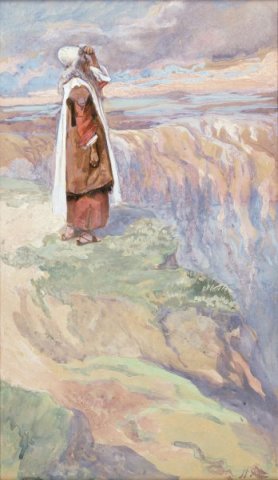
It seems important for the Torah’s central prophet to have been someone with whom gentiles could identify. And being buried outside of Israel may well have been part of that
In light of these approaches, we can also suggest that by walking around Moshe was able to check out the true pulse points of the nation.
There are many issues that affect the occupants of this planet. The entire globe is one multi-dimensional chess game, and Hashem, the Ultimate Grand Master, maps out the moves of the year to come.
We stand in the final moments of 5777, prepared to transition to 5778, perfect moments to offer our gift to God, honoring all we have gained over the past year, and how we intend to apply that growth in the future, using the coming year to grow in ways yet unimaginable to us.
The ideal Jewish leadership is predicated on a steadfast commitment to the Torah and a resolute determination to enact the principles of the Torah in our lives.
Rabbi Aryeh Klapper on parshat Nitzavim-Vayelech
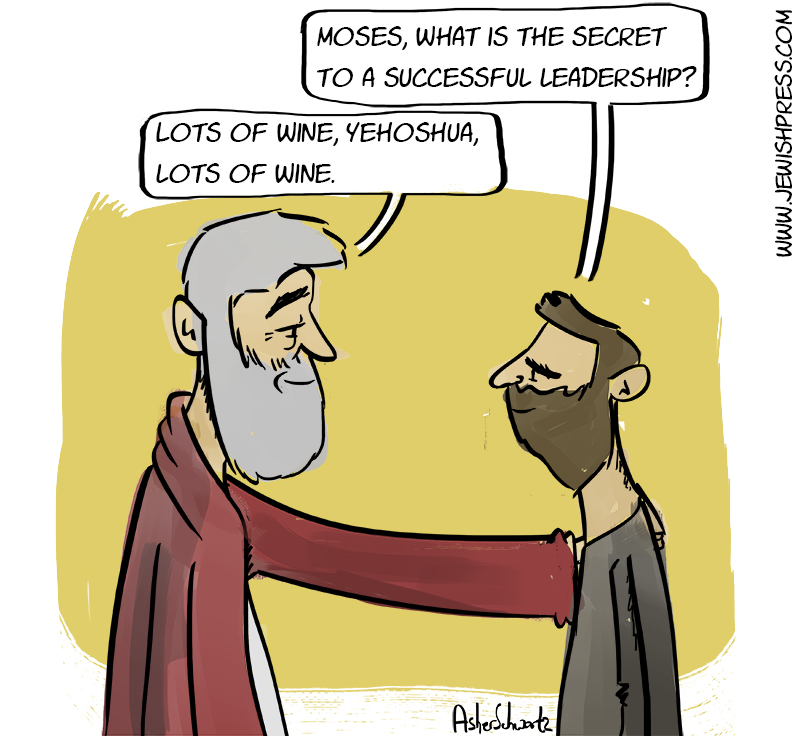
The Torah reveals to us, the good, the bad and the ugly of those who seek power and those who ultimately wield power.
Why are you running so fast and why are all these people following you?
How can the Torah command me to be happy? Being happy isn’t an emotion we can turn on and off like a light switch.
Moshe saw all the Jews as one whole, it was the ones in front of him who served as the representatives for all those who had lived and would live in the future.
Shema Yisroel, Hashem Elokeinu, Hashem Echod.
When a person sins, he is not planning ahead for his ultimate future. This is behaving like an animal. As such, a sinner is demoted from "Adam" to "Biheimah." But, when a person decides to do Teshuvah (repent), he is thinking ahead. Once again, he regains his title of "Adam."
A person is made in the image of Hashem, and it is an embarrassment to Hashem to leave His likeness hanging.
The year is coming to a close, and we now find ourselves in the final month before Rosh Hashanah – Elul. As we know, each month has its own avodah – its own distinct way in which we are supposed to serve Hashem for its duration. Let’s begin our journey and see if we can […]

The promise for long life only comes from 2 commandments; What's the connection between them?
Why is gluttony in one so young deserving of a death sentence? Rabbi Hirsch answers if the priority is the taste and quality of a meal and not the values and ethics instilled in the next generation, oblivion is the likely outcome:
There is a natural temptation to explain away the nasty and intemperate statements of the side we identify with, while setting upon the other side’s gaffes with ferocity. But in the end this asymmetry undermines our reputation for justice, and thus our capacity to persuade rather than overpower.
Everything you see – from the flower to the bee, from the oceans to the mountains, rivers and planets, the sun, the moon, and the stars – all just sort of happened. No designer. No creator.
The Torah's standard for convicting a criminal is set much higher than many contemporary systems of law, that accept one witness. In practice, that means the Torah prefers to let criminals off, rather than punish the innocent
What does it mean to be a student of Hashem? It means, at least in part, to study Torah for Him.
Leaders must be able to identify these existential, or Dunkirk moments, and act accordingly.
By Rachel Weiss
If we use this propitious time wisely, Hashem will forgive our iniquities of the whole year and grant us a new, clean slate.
While it is true that life is a battle, and exerting self-control is the primary vehicle of growth, Hashem created us to be happy.

Our attitude, how we see the world, how we perceive things, how we react, how we internalize the reality around us, that will determine whether we are blessed or cursed. It is completely in our hands.

This week's portion, Re'ei, speaks of our need for a sense of place, how difficult it often is to find, and how we must protect others' sense of place. It also addresses the sanctity of the Land of Israel
A society that structures its economic institutions to make all genuine partners fulfills the mitzvah of tzedakah. A society that institutionalizes dependence, no matter how reliably it provides for its dependents, has turned them into pierced slaves
We know Hashem metes out many life tests. But where have we seen that not having to struggle is a challenge?
Re'ei is about the opportunity to restore the 'Hearing To See; rejected by Adam and Eve, and again by Israel at Revelation. If we master the higher hearing of Eikev, we will be granted the clear Vision offered in Re'ei.
Is the source for saying Birkat HaMazon as obvious as we normally assume?
The questions have thus led us to at least two major hashkafic issues: the status of Jewish life outside Israel, and the connection between virtue and success in this world.
Sovereignty over any foreign land is insecure. -Seneca the Elder
Simply understood, this ballad is an ode to the Jewish woman - who is valorous in her great role of wife and mother.
Why does the huge, powerful horse submit to the will of the little, weak man?
The ninth of Av became a harbinger of the numerous tragedies we would suffer throughout the exile.
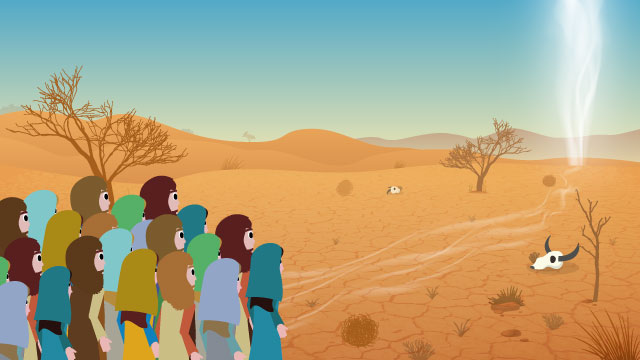
Drawing on the Maharal, Rabbi Fohrman gives us a novel approach to faith, and challenges us to rise to this level of intimacy with God and with each other.
As the Jewish nation and the Jewish state become more powerful, we have a greater responsibility to contribute more resources to developing nations. It would be a Kiddush HaShem.
PETA has a lurid anti-shechita history, They claimed Rubashkin the way the animals were slaughtered at Agri rendered them non-kosher. Rabbinic authorities and major kashruth supervisors deemed Rubashkin to be of the highest kosher standards--yet PETA declared otherwise.
Why was it so hard for Lot to admit subordination to Avraham
The mindset of risking one's life for the cause can only be acquired once the civilian mindset of self-preservation is unlearned.
By Rachel Weiss
How apt a reminder that this remorseful time will pass before we know it, and the next full moon will shed its light upon our universe on a joyful fifteenth of Av.
The Tribes of Israel knew that Moses would die because he told them. Why tell them and force them to confront their fear of life after Moses just BEFORE a major battle?
Yet it appears that if the shogeg killer would daven, his prayers might be answered, and the kohen gadol would die. Why?
The Torah is a book of great drama, why does the narrative ends with a seemingly-unnecessary story about a random conquest of some towns?
This week’s parshah, Matot-Masei- provides a powerful lens from the past to train on current events.
The reason we can’t even see the temptation is that we are judging the generation according to our social climate.
The Gemara says that anyone who mourns the churban will merit seeing the nechama.
Is Pinchas, the title character of this parsha, and Eliyahu, the prophet of Kings, really one and the same?
The challenge of these Three Weeks leading to Tisha b'Av? Learning to see the hope beyond the suffering,developing the vision of a healed world, so that we too can find the right words in our mouths to share our vision
Moshe was not able to see that Yehoshua was fit for the job. On some level, this seems strange considering their long-standing relationship.
Are they disparate events that coincidentally all occurred on the same day or do they perhaps share a common denominator?
Balaam, the dedicated thespian, could not overpower the prophecy of Moses because Moses was not a performer. Moses saw his role as building the stage on which his people, present and future, would perform.
Why did G-d use Bilaam to bless the Jews, if by doing so He enabled Bilaam to learn how best to attack us?
Lot and Avraham were related in their inner core, if not in what was open and visible to all.
Rashi tells us that because of this mistake, the Jewish people lost out on a great lesson.

Our portion is about lives in which we experience moments of greatness and moments of insignificance; accomplishments and failures; Torah is not only for the 'perfect' person; It guides and nurtures the rest of us as well.
The water supply in the wilderness had been dependent on Miriam’s presence. Hence, as soon as she dies, the Jews had no water. In turn, that lack brought about Moshe's disastrous interaction at the boulder.
 September 11, 2026