יום שלישי, כ״ו אלול תשפ״וTuesday, September 8, 2026



Follow Us


Clearly, G-d has spritual goals and plans for the non-Jewish nations of the world.
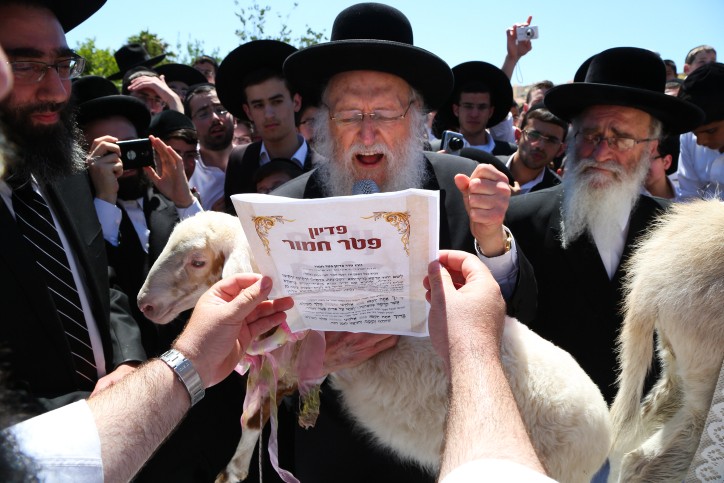
Why did the firstborn Egyptians die from the same experience that elevated the Israelite firstborns?
When G-d promised Avraham that his children would emerge from Egypt laden with great wealth, he was not referring to material wealth.

The sad reality is that we have become slaves to the whims and fancies of people who do not share our understanding of the holiness of the individual, nor the greatness of the human.
In this week's video, Rabbi Fohrman explores the 7th, the transitional, plague and argues that God played off of Pharaoh's ego to show Pharaoh, Egypt and the people of Israel only God is all-powerful

Why is the faculty of Shevat referred to as Le’ita instead of Achila?
When Moshe is told about the plague of the first born (4:22-23), God gives an explanation, something we do not see with any of the other plagues. Yet is it actually middah keneged middah?
Before each person is born, he is predestined to certain abilities and talents, a particular level of intelligence, and an exact disposition and temperament.
According to the simple meaning of the text, it seems God took Pharaoh's free will. Rabbi Fohrman argues that the precise language-- kaved/chazek--shows that God DID allow Pharaoh to pursue his vision
Why did Pharaoh consistently ask Moses to pray for a plague to stop, rather than himself pray? Wouldn't that have been simpler?
Moshe complained to God that even though he would have the best human understanding of the Divine will, he had difficulty bringing it down to regular people. That role-"turgaman/navi"-Aharon filled
By Rachel Weiss
The month of Shevat shares its element of air with the months of Sivan and Tishrei. During Sivan, the light of the Torah was revealed to us on Har Sinai.
The authors, based on their research, suggest leaders employ certain practices to allow their followers to grow and be inspired by their humility.
Rashi notes Moshe's use of the future tense when addressing the two fighting Israelites.
He explains that our nation is one unit – irrevocably tied together in a common fate. What happens to one affects another. The state of each individual impacts the whole.
Rabbi Fohrman discusses the medrash and suggests we put ourselves into the eyes of Pharaoh's daughter to help us see that when we want to achieve something, God will help us find a way to do it.

What we pronounce is very different from what we spell. It is like a kri u’kesiv, a word that is spelled one way in the Torah but which we have a mesorah to pronounce a different way.
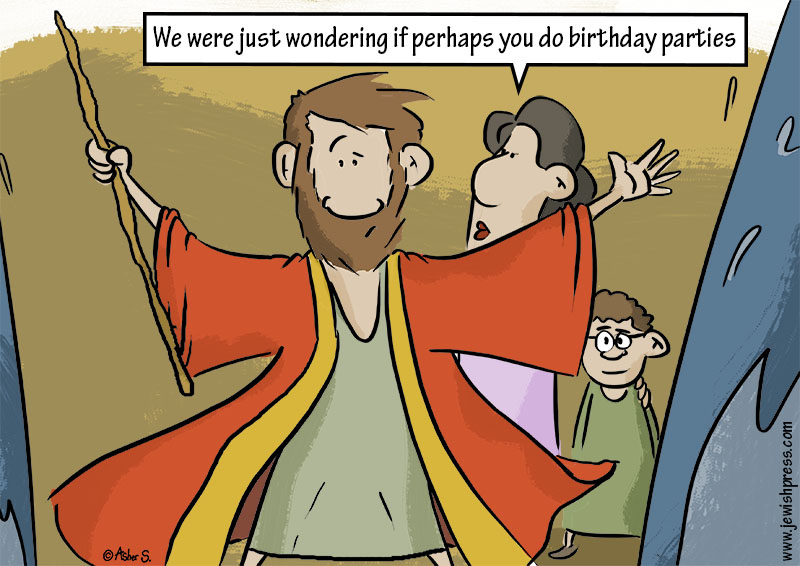
People who endlessly pray for miracles tend to ignore the message of Moses' staff. They do not realize that each time Moses uses that staff he is pointing to an opportunity of self-transformation.
While Moshe may have eventually become even greater than the avos, we must always strive for the faith of his predecessors and for the inner flexibility that such true faith brings with it.
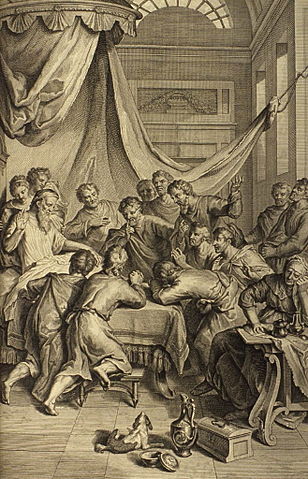
Lessons from Jacob's blessing.
When a tzaddik uses a part of the world, he provides that portion with its purpose in existence.
Each month is aligned with a mazel, with Teves matching up with G’di – also known as Capricorn the Goat. What do we know about goats?
Many believe that Bnei Yisrael, prior to mattan Torah, only had a status of Yisrael l’chumrah.
Jacob lives. He lives in all who can drop the heavy burden carried by all since Adam and Eve, the belief that our imperfections will block us from tasting Paradise.
Ya’akov decides to prioritize the younger son, Ephraim, over the older Menashe
It was only Yehuda who stepped forward to protect Binyamin because he had committed himself to the cause.
If we didn’t understand the implications of the moment, or if we didn’t view them as monumental, they would pass as any other of millions of events we live through.

There is also another distinguishing factor to consider. In all the above cases, the item is inherently of value only to one person.
Since Yaakov was in the middle of the first pasuk of Krias Shema he was unable to interrupt himself, even to inquire about the wellbeing of his son the king.
Before Jacob, animal sacrifices were completely consumed by fire. When he learned Yosef was alive, he offered a different type of sacrifice, the Shelamim, which is partially burnt and partially eaten
Yosef wanting to see his father Yakov again is understandable. Perhaps Yosef could not have left Egypt to do so. But did Yosef’s desire to see him justify making his father leave Israel for Egypt?
Am Yisroel exists to bring light, healing and peace to the world.
The mitzvah to recite Hallel that Chazal instituted regarding Chanukah was in fact a direct result of the miracle of Chanukah; however, its essence is not to publicize the miracle but rather to give thanks for the miracle.
The actual event for which we give thanksgiving and sing Hallel is the salvation of the Jewish people.
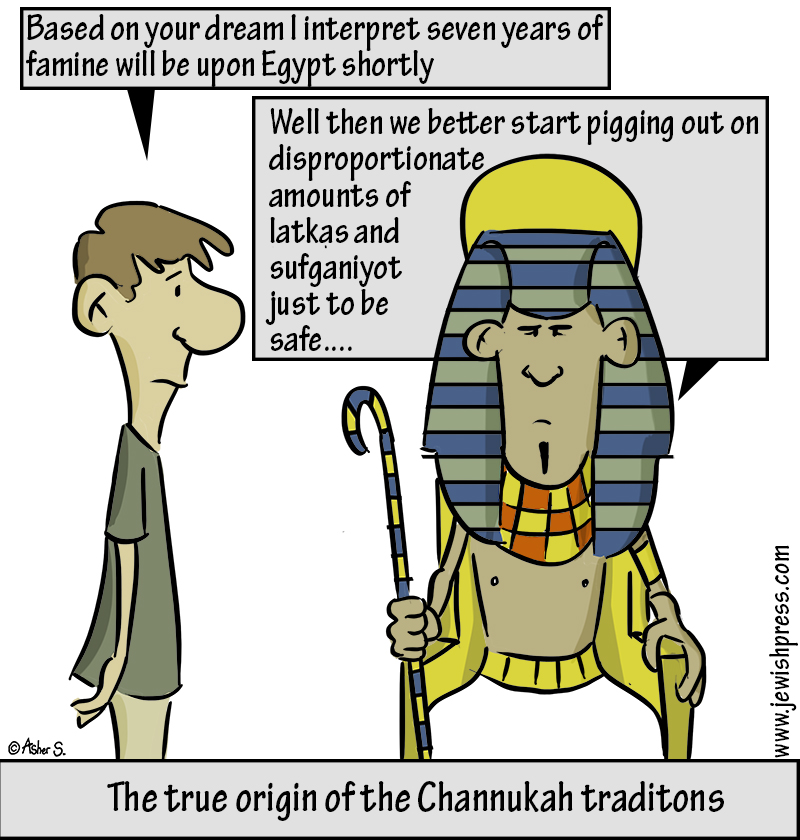
A balanced economic policy seems to have been exactly what Egypt needed and Joseph's policies insured that Egypt survived the famine.
We generally assume that Yosef, as a victim of cruelty and not its perpetrator, had nothing to regret. Yet a careful reading shows he had a significant role in creating the tension with his brothers
By Rachel Weiss
Yiras Hashem (fear of Hashem), a lofty objective we continuously strive to achieve, transforms the negative element of Teves into positive, spiritual fulfillment.
Leaders often find themselves with down time and time that the are down.
Why does Rashi feel we need a mashol to understand this concept?
This week's parsha course unravels the sale of Joseph and discusses the implications "blame." Where does responsibility begin? And most importantly, how do I make moral decisions?
Tosafos points out that this answer is not fully satisfactory since there are other mitzvos, such as affixing a mezuzah, that require having a house.
How could Ya’akov make the same 'mistake' as his father, to favor one child over another after all the troubles that plagued him resulting from Yitzchak favoring Esav?
What is the hint in this week's parsha?
How do we reconcile Jacob's behavior, tricking his brother and lying to his father, with our vision of Yaakov as an ish emet, a man of truth?
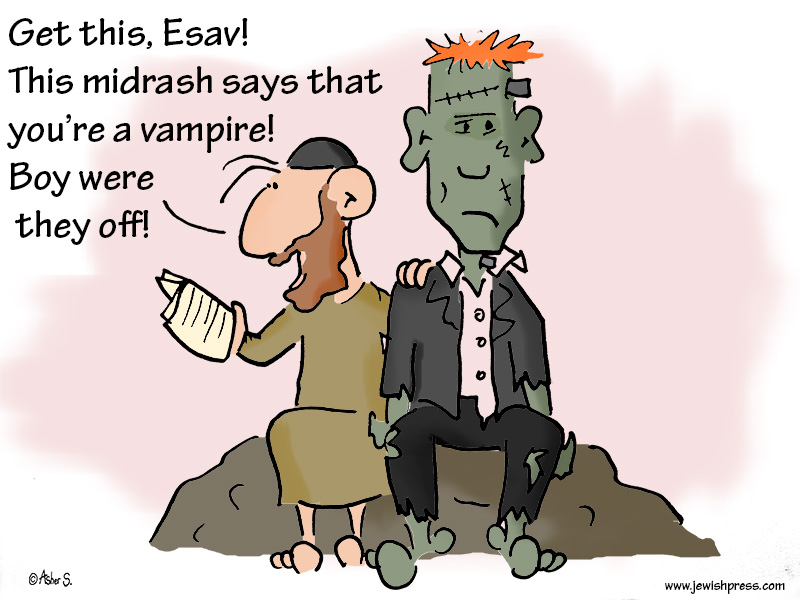
In Esav's world, thoughts follow action. Do first, think second.
Firstly, why did Hashem communicate His loving Presence specifically with oil instead of anywhere else along the way?
The Ramban adds that although Yaakov knew that when his sons told Shechem and Chamor to circumcise the entire city that they were not intending on actually marrying in with this city.
Though Hashem's incredible gift of the State of Israel (despite its flaws), we have truly entered into a new level of interaction with and relationship to the world around us-- "The Isaac Covenant.”
Jacob's power was powerless until it was used to empower his children. Talmud's great power to nurture complex thinking is powerless until it is used to empower us to think, question, and challenge
Rabbi Hirsch: "The goal of history is not that Jacob should be forced to merge into the mass of nations, but the reverse. The nations must come to understand that..."
The actual tale of Rivkah and Esav is of a mother who continued to care and love a delinquent child who became a problematic adult, proving she will always be his mother and he will always be her son.
For many years Rachel knew she was to marry Yaakov and be a matriarch of the Jewish people.
I want to suggest that although ma’ariv is a voluntary tefillah in its essence, it differs from a nedavah.
Laban’s behavior is the paradigm of anti-Semites through the ages. It was not so much what Laban did that the Haggadah is referring to, but what his behavior gave rise to, in century after century.
Like Rivkah before them, neither Rachel nor Leah created the situation that was about to have extraordinary influence on the rest of their lives and, ultimately, on the lives of countless others

Anyone can appear spiritual and holy when he is davening or learning Torah.
Rav Hirsch claims had Isaac and Rebecca developed a unique curriculum that took into account Esau's love of nature, strength, skills and courage, it may have directed him to become a mighty man of God
Precisely because she came from the house of wicked people and wasn’t negatively influenced, she was considered greater than if she had been born into a house of holy people.
If someone remembers during Minchah that he did not recite ya’aleh veyavo during Shacharis, he must similarly daven Shemoneh Esrei twice during Minchah.
On the one hand, we see that Rivkah was right about Ya’akov’s potential. On the other hand, we will never be sure who was right about Esav.
By Rachel Weiss
The Jewish nation thankfully emerged from their spiritual slumber just in time...
People were stunned, but they got the message.
Devar Torah on Parshas Chayei Sarah from the well known, Rabbi Aba Wagensberg.
Why does Lavan’s speaking before his father show that he was wicked? Disrespectful, yes. Rude, certainly. But a rasha?
The reason it would be pronounced gashem is because it is the last word before a pause.
Yitzchak, did not go to Be’er Lechai Ro’ee to pray or meditate. Rather he was on a mission, and that mission was to return Hagar to Avraham in marriage.
"A father of philosophy, the father of the Hebrews and his slave get together,,," sounds like the start of an ancient joke but read on...

Why is the kever of the Isha Hashunamis a special place for tefillos?
Avraham had many students, but there was only one who was truly devoted to knowing and understanding the ways of his teacher. That was Yitzchak.
I would assume that if Hashem appeared to someone, he would be obligated to remain in Hashem’s presence for as long as Hashem remained.
Abraham was not an isolationist concerned solely with his own interests. Regardless of how despicable the Sodomites were, Abraham started a surreal negotiation with G-d to save them.
Isn't it surprising that Avraham who prayed for Sodom's salvation did not protest God commanding him to kill his own son? For the Netziv, this was actually exactly what God wanted from Avraham. Why?
Abraham is a model of the Individual, of the non-conformist, of the person who will take a stand for what is right though it is unpopular. Indeed, Abraham carved his own path.
Why did Yaakov act strangely by crisscrossing his hands when he could have simply switched Ephraim and Menashe’s positions?
Is there any way to measure the value of life? Is it worth a million dollars? Ten million? A hundred billion? Is it even possible to put a value on our existence?
Why do we allow a Jew to shecht on Shabbos when there are other ways of providing the ill person with meat?
We meet two different Abrahams in the Torah text and the Midrash. The spiritual giant, hero, and Tzaddik of the Midrash is almost a phantom in the written text. Which is real?
While we read of tests of Avraham, it is clear that Sarah endured tests of her own. According to Ramban, she failed her test in her treatment of Hagar
Rashi is troubled that thievery is being treated as the pivotal point of the world’s existence. There are many sins that are worse.
The Torah itself presents parallel narratives of the same stories, thereby showing that the same events can truthfully be constructed in more than one way.
As long as an individual is still alive and his possessions are still intact, they belong to him – and one may not steal them.
While turning points do not often announce themselves with a clarion call, there are, nonetheless, moments in our lives when the potential for major change is evident.
Parshas Bereishis is not only the first but arguably the most difficult parsha in the entire Torah. Let's begin...
"Saper vedere," - knowing how to see - informs our lives. Have we changed with the opportunities brought by the holidays> Have we kept our new lenses?
Before there was physicality, there was nothing to measure, so there was no system to measure height.
Though a woman helps her partner and remains his equal, she nurtures and thereby becomes a man's superior. Paradoxically, therefore, woman may be just a bit closer to the image of God than man.
It was not enough for Moshe to die by himself, however; his separation from family and nation had to be total, even after his death. And so his burial spot would need to be hidden from all.
On Shabbos, says Rav Cohen, we exist in a world of mei’ein Olam Habah, a microcosm of the next world, a taste of Gan Eden.
Being happy isn’t an emotion we can turn on and off like a light switch. And how can we relate the effect of doing a mitzvah joyfully to the case of Reuven?
Why do we take the Four Species on Sukkos? What is their message?
God’s foremost desire is to conduct a relationship with the Jewish people built on love and commitment. The song of Ha’azinu reassures us that the relationship will never die.
Boundless Boundaries are the point of the imperfect structures we build as our Sukkot. The Sukkah is intended to provide the security we need to soar.
In this week's video, we close the entire Torah, and we ask ourselves, what lessons can we learn today? How can we be inspired by the Torah's messages, and fulfill our destiny as a people?
Moses teaches his final commandment, "Write this song for yourselves." Moses wants each of us to write a Torah, not as a book of laws or teachings, but as a song.
Rashi makes a critical observation: When Yonah was thrown overboard the pasuk says he was swallowed by a male fish. Yet when he davened to Hashem, the pasuk says a female fish spit him out.
As we approach Yom Kippur, it is time for us to think creatively, the willingness to chart a new path, about what we can do better.
By Rachel Weiss
Rosh Hashanah on the first of Tishrei comes to assure us that we needn’t despair, for Hashem, our Heavenly Father, is eager to accept our teshuvah and wipe our slate clean.
 September 4, 2026