יום שישי, ה׳ חשוון תשפ״זFriday, October 16, 2026



Follow Us


Even if he has committed sins that warrant his rejection from the community, he is never rejected by G-d.

Like Dempsey and Gates, leaders must always be cognizant of the costs involved in their decisions – even when the costs are less than human life
How do the pieces of this puzzle come together to help us understand how the Torah builds together?
Pekudei is the Hebrew word for reckoning. One way of understanding the meaning of a word in the Torah is to analyze the first time it is found.
By Rabbi Lord Jonathan Sacks z"l
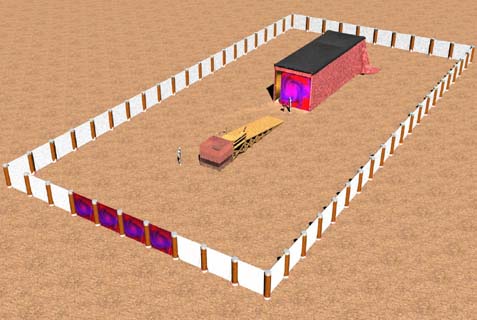
The account of the construction of the Tabernacle in Vayakhel-Pekudei is built around the number seven.

The Torah tells us that ancient Egypt had 49 levels of contaminating impurities and Hashem wanted us out before the fiftieth would become viral.

Question: How much time may lapse between Kiddush and the meal?

Is a shomer aveidah considered a shomer chinam or a shomer sachar?
By Rabbi Yaakov Klass and Rabbi Gershon Tannenbaum
The Flighty Customer ‘Scribes…Are Exempt’ (Sukkah 26a)

Today was one of those days. Shimshon was standing in the hallway during recess, talking to a friend, when Dan walked over and jumped on him.

The Panim Yafos asks: since invariably one of the seven days of miluim must have been Shabbos, how was Moshe able to erect the Mishkan on Shabbos?

Why does the Jewish leap year always consists of two Adars? Why specifically Adar? Menachem (Via E-Mail)

When a couple makes the conscious decision to have a baby, they use a system Hashem put into place to bring forth a child. They don’t claim to be knowledgeable enough in anatomy to synthesize the proteins needed for growth.

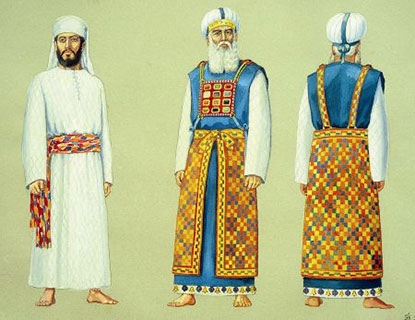
The Torah says (Exodus, chapter 28) several times v’nasa Aharon, Aharon was commanded to carry the responsibility of bnei Yisrael, represented by his wearing these garments. This was his masa, the koved, the heavy responsibility of being the intermediary between Hashem and the people. It is a difficult task indeed.

It is my family’s minhag, for many generations, to light the candles 30 minutes before shekiah, as opposed to the commonly held custom of 20 minutes. So I told my husband that those 10 extra minutes should not be an issue.

So goes the story about a man in the silly town of Chelm who visited a public bathhouse and found himself in a terrible predicament. Without the distinction of clothing, everyone looked alike. “Among all these men who look alike,” he said to himself, “how will I ever know which one is me?” He solved his dilemma by tying a red string around his big toe.

By Rachel Weiss
Readers who have kept up with this series since its inception will have noted a consistent emphasis on the role women have played in our rich heritage.

The Satan waits for opportunities to undo kedusha, particularly on erev Shabbos, when the potential to bring the Shechina into the world is great.
This exciting and daring video and challenges us to be more God-like in our actions.
The Torah's greatest manifestation of human creativity is the building of the Mishkan, which required human mastery over every creation.
By Rabbi Lord Jonathan Sacks z"l
Vayakhel is Moses’ response to the wild abandon of the crowd that gathered around Aaron and made the golden calf.
The Torah specifies that the washbasin in the Mishkan was made of copper taken from the mirrors that the women brought as donations. Rashi explains that by telling us where the copper came from the Torah is teaching a significant lesson.
By Rabbi Yaakov Klass and Rabbi Gershon Tannenbaum
It’s All About The Clouds ‘Have You Seen My Slave, Tabi?’ (Sukkah 20b)
Rabbeinu Bachya points out that of all the materials that were donated to the building of the Mishkan, we do not find the inclusion of meshi (silk).
"The Gemara [B.M. 25a] questions whether coins arranged in such a fashion serve as a siman – indicating intentional arrangement – or not," explained Rabbi Dayan. "The question is whether they could have fallen unintentionally in this way. This question remains unresolved in the Gemara."
Question: Is it permitted on the Sabbath or holidays to take a shuttle to synagogue? The neighborhood shuttle runs from 9-5 daily, is driven by a gentile, has a designated stop schedule, and is free of charge.
I was pretty open [and naïve] about accepting dating suggestions. There was the Israeli that spoke little English with whom I could barely communicate, the brilliant scholar who I discovered was manic depressive, the frum hippie that was still more hippie than frum, and a slew of others – all interesting, but not for me.
The difference between the intellectual and emotional approach to performing a mitzvah is most noticeable when analyzing the different approaches to giving charity. A person can readily comprehend and accept the intellectual rationale behind giving charity to the poor.
Question: Do Jews pray for Jewish political independence?
The young man could not go through with the marriage.

Granted, Hashem miraculously gave Betzalel unimaginable wisdom, but shouldn’t life-experience count for something?

King Achav reports back to his wife, Queen Izevel, thoroughly dejected. It seems Eliyahu has defeated them and their idolatrous practices. The nation would no longer worship Baal and return once again to serving Hashem. This threatened Achav and Izevel's entire hold on their kingdom.

The Jewish people commit the worst sin possible - worshiping a false god.
By Rabbi Lord Jonathan Sacks z"l
Sometimes, despite your best efforts, you fail. Such is life.
In biblical times the Jewish people never had a prison system.
Outside the school, a person stood selling waterproof knapsacks. A sign above him read: "SALE! Only $100 for a knapsack! Limited time offer." Mr. Wasser passed by and was intrigued by the knapsacks. He came over and asked the salesman about them.
Klal Yisrael was living in the desert. They neither worked for a living nor had any use for money. All their needs were taken care of. They ate mon that was delivered to their tents daily. They drank water from the be’er, the rock that followed them in their journeys. Their clothes were washed by the Clouds of Glory, and their shoes never wore out. They didn’t need money and couldn’t use it. How could it become their downfall?
The equivalent of the “OU” kashrut certification in England is that of the London Beit Din. There is also a competing kashrut certification called Kedassia. Those who eat Kedassia do not eat Beit Din.
By Rabbi Yaakov Klass and Rabbi Gershon Tannenbaum
What Constitutes Schach? ‘Schach Boards’ (Sukkah 14a)
One of the most extraordinary images in the Torah appears in this week's portion. Moshe requests of God: "Show me your glory." God responds that He cannot be seen by any human being. But, God tells Moshe, "Stand in the cleft of the rock” and "you will see My back, but My face must not be seen" (Exodus 33: 17-23). What does this mean?
Question: Is it permitted on the Sabbath or holidays to take a shuttle to synagogue? The neighborhood shuttle runs from 9-5 daily, is driven by a gentile, has a designated stop schedule, and is free of charge.
The Gemara says that Moshe lost his ability to pray and protest when he was ordered to descend. The Gemara uses the parable of the friend of the king to indicate that Moshe realized that Hashem provided him, despite his diminished status, with an opening and an opportunity to pray on their behalf to prevent their annihilation.
There are various requirements as to who can perform the shechitah. Optimally one should know the halachos involved and be a male over 13 years of age. If an individual is unfamiliar with the halachos of shechitah he should not shecht, as many problematic issues that he is unaware of can arise. He is also required to be an observant Jew.
Question: In Havdalah, we note that Hashem separates day from night and Yisrael from the nations of the world. Are these two distinctions similar in nature?
By dvora
Shimon’s early years were not easy ones. His mother struggled to support both of them. She never acquired the knowledge needed to help her son through school years filled with homework and tests.
The Israeli government is inviting Jews from around the world to participate in a 72-hour online conversation next week to help formulate strategies for strengthening the Jewish People and bolstering Diaspora-Israel ties The three-day event starts Sunday and will open the floor to all Jews to help formulate strategies for strengthening both Jewish identity and […]
Friday night corresponds to Shabbos Bereishis – therefore we discuss the creation. Shabbos morning corresponds to the Shabbos when we received the Torah, so in Shachris we mention that. And finally, Shabbos afternoon corresponds to the Shabbos of the World to Come, so in Mincha we talk about the Oneness of Hashem, which will be clearly revealed at that time.
One of the most striking features of this week’s parsha is the absence of Moshe Rabbeinu's name, an omission which occurs only once from the beginning of Sefer Shemos until Moshe’s death at the end of Sefer Devraim.
How can God be both outside of space and time, and in our physical world?
Question: Is it permitted on the Sabbath or holidays to take a shuttle to synagogue? The neighborhood shuttle runs from 9-5 daily, is driven by a gentile, has a designated stop schedule, and is free of charge.
One of the signs a diamond is real is that it has a flaw. While it may be a very minor imperfection and almost unnoticeable, all genuine diamonds have flaws.
By Rabbi Yaakov Klass and Rabbi Gershon Tannenbaum
The Face Of Holiness ‘Inscribed on the Tzitz HaZahav’ (Sukkah 5a)
"I've got to run," Yossi said to his friends. He turned to Nachman, who lived a few doors away from him. "Someone asked me to watch his backpack, with a laptop inside," he said. "Can you please take it home? I'll pick it up in the evening."
When the Rambam wished to give an example of how a non-kohen could light the menorah, why did he have to say that a kohen took the menorah outside of the Kodesh?
The Gemara mentions that the grape clusters refer to Moshe and Aharon, the paradigm of what a Jew can be.
Question: The Talmud (Berachot 33b) notes that it is improper to implore G-d: “Just as You have shown mercy upon a bird’s nest [with the mitzvah of shiluach ha’kan], so, too, may you have mercy and compassion on us.” Why is this prayer improper?
When we are on the move in life, exiled from place to place, we turn to God, our Partner, for the protection of His cloud. When we are given the luxury of settling down, God turns to us, His partner, for the protection of our walls.
By Naama Klein
The exact details of that nocturnal levayah have long since faded from my memory. However, one poignant story shook me to the core of my being – and remains with me still.
Even the judiciary has its limits, based on the principles set forth at Sinai by the Almighty.
By Rabbi Lord Jonathan Sacks z"l
In Judaism, monarchy had little or no religious function.
Hearing that someone has been divorced nowadays doesn't have the same connotations it used to.

Winston Churchill repeated a grade during elementary school. He twice failed the exam to the Royal Military Academy at Sandhurst. He later wrote, “Never give in, never give in, never, never, never, never – in nothing, great or small, large or petty – never give in except to the convictions of honor and good sense. Never, Never, Never, Never give up!”
The mishkan represents the 'face' of God.
The notion of a Temple, as either a temporary dwelling or as a permanent building at a specific site, is inherently difficult to understand. How can Hashem, the paradigm of perfect sanctity, coexist with our mundane, flawed universe? Infinity with the finite?
Nachum was doing a research project on the Rambam for one of his courses. He borrowed a number of sefarim from his yeshiva's library for a month while writing the paper. When he completed the assignment, he gathered the sefarim together to return them to the library, but noticed that one sefer was missing.
If karet is premature death at the hand of God, until what age can it strike and at what age can one celebrate emerging from the danger zone?
By Rabbi Yaakov Klass and Rabbi Gershon Tannenbaum
All For The Boss ‘Praiseworthy Is One Whose…Sins Are Covered’ (Yoma 86b)
Question: Is it permitted on the Sabbath or holidays to take a shuttle to synagogue? The neighborhood shuttle runs from 9-5 daily, is driven by a gentile, has a designated stop schedule, and is free of charge.
It should come as no surprise that the people offered their donations to the Mishkan with zeal and enthusiasm.
By dvora
There is not even a shadow of doubt that without Agudat Efrat’s help, this child would not have been born.
Although a mitzvah may not require kavanah, it may nevertheless require lishmah.

Maimonides believes that even after the Roman conquest of Israel the land retained its holiness.
With every word he spoke, I became more and more anxious.
By Rabbi Lord Jonathan Sacks z"l
So long as every crisis was dealt with by Moses and miracles, the Israelite default response was complaint.
Question: What is the message behind the most famous statement of Jewish faith: “Shema Yisrael”?

By Rachel Weiss
On this Shabbos Parshas Mishpatim, we bentch Shabbos Mevorchim Adar Rishon, Rosh Chodesh falling on Friday and Shabbos (January 31 and February 1). Mishenichnas Adar Marbin B’Simcha – with the beginning of Adar rejoicing is increased… by virtue of an extra Adar, our jubilation is extended this year.

G-d, accordingly, is encouraging Moshe to not just focus on reaching the top of the spiritual mountain but remaining there as well, thus fully capitalizing on his gains.

Once a person receives it, he becomes personally attached to the one who gave it to him - so attached that now he will view that person's position as his own... and a person does not see his own faults!
Worse, a female child, being sold by her parents!
One can serve with his or her hands or feet, but how does one serve with one's heart?
In Parshas Mishpatim, the Torah delineates various prohibitions and punishments. With regard to stealing, we see something unusual.
By Rabbi Yaakov Klass and Rabbi Gershon Tannenbaum
Point Of Ingestion “The Size of an Egg to Satisfy…” (Yoma 79b)
Question: Is it permitted on the Sabbath or holidays to take a shuttle to synagogue? The neighborhood shuttle runs from 9-5 daily, is driven by a gentile, has a designated stop schedule, and is free of charge.
Jonathan needed some extra cash, about $30,000 for his business. He applied to a number of banks for a loan, but they were being tight on issuing him credit and were also asking for more interest than he wanted to pay.
The two sons of Aaron, Nadav and Avihu, who, according to some commentators, ventured past the outer altar in a state of intoxication, paid for it with their lives.
Question: Is it okay to recite Kaddish silently?
Kidney transplants from a living donor are infinitely preferable over a transplant from a dead person. The chances of it being rejected by the body are much lower, the life expectancy of the newly transplanted kidney is twice as high, and the recipient’s life and diet can return to normal much faster.
This week’s parshah contains the source for the halacha of following the rov (majority). The pasuk states: “acharei rabbim lehatos.” The Gemara in Chullin 11a says that this pasuk is referring to the Sanhedrin where the halacha follows the majority opinion of the judges.
By Rabbi Lord Jonathan Sacks z"l
Two laws have to do with the Israelites’ experience of being an oppressed minority:
The link between iPod, iPads and smartphones and increased chutzpah and disintegration of families.
In the campaign to rob a consumer of any sense of contentedness, which translates into sales, strategy is often focused on confusing need with want and the illusion of being dissatisfied.

We specifically use our legs to celebrate to demonstrate our new completeness.
By Rabbi Lord Jonathan Sacks z"l
Only in Judaism was God’s self-disclosure not to an individual or a group (the elders) but to an entire nation.
The idea that those who are handicapped have a place in Judaism is fundamental to Torah.
 October 16, 2026