יום שישי, ה׳ חשוון תשפ״זFriday, October 16, 2026



Follow Us


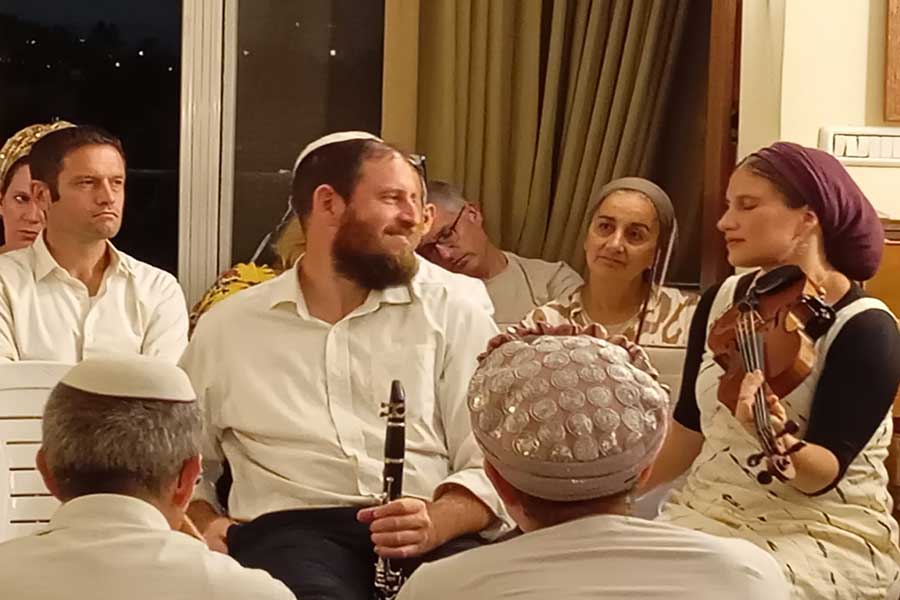
In these difficult times, we, too, turn to Rachel Imeinu and her contemporary namesakes, the two Rachel Goldberg mothers, and ask them all to keep crying on our behalf.
One unique feature of the Luchot is that there were two sets given to us. The original was created by Hashem and given to Moshe, whereas the second set was hewn by the hands of Moshe. However, the difference between these two sets is not simply practical; the two sets of Luchot are fundamentally different.
Specifically, the daf discusses inheritance rights, and we are not talking about what kind of economy a presidential candidate inherited, but simply a question of inheritance of a private estate.
We didn’t think much about it, and, in fact, we wouldn’t have even noticed that he didn’t bring anything. But then on Sunday night we discovered many candy wrappers on the floor and an empty platter on the floor in Shalom’s room.
Who said anything about tying Yitzchak up? Hashem certainly didn’t tell Avraham to tie Yitzchak up, He told him to offer Yitzchak as an olah.

From a halachic and ethical perspective, it is appropriate to use legal methods to reduce tax obligations. If the government considers a certain tax deduction or credit inappropriate, it has the authority to amend or eliminate it.

Rav Shagar points out certain thematic similarities between the trial of Avraham and that of Iyov. But Avraham excels and demonstrates his qualities by virtue of the outcome of his test while Iyov is criticized by Chazal for his responses.
With little choice, and even less time, I bought the clothes, thanked her and Hashem, and went to spend an uplifting Rosh Hashana, wondering if I’d ever see her again, and have the opportunity to pay her back.
Shulchan Aruch rules that a borrower is believed that he repaid an IOU, even if the lender still holds it, unless the IOU includes a clause granting credibility to the lender that it was not repaid (ne’emanus), replied Rabbi Dayan.
What Pidyon Haben? ‘To Me, Daughters Are Dearer Than Sons’ (Bava Basra 141a)

New prayer houses such as these, which mix and match different traditions of prayer and custom, continue to be created all the time in many places. It is thus entirely natural that the siddur bookshelf also be enriched with new siddurim expressing this new trend, with approaches to prayer which previous generations would have found difficult to imagine.

Question: Isn’t the father in serious violation of the Torah by neglecting his children and not making any effort to provide them an education? Name Withheld Via E-mail

Although many Israelis realized how important the reparations agreement was for the economy and safety of Israel, nonetheless, for survivors and non-survivors alike, the notion that money could somehow atone for the suffering and mass murder inflicted upon the Jewish people was utterly unconscionable.

I believe that if we take just one life lesson from this tragedy we have the ability to infuse purpose into the pain. We can see glimmers of light that shine through the shards of glass that cut into the very heart of our nation.

Hashem chose this precise juncture to teach us the importance of respecting a wife. This is to teach us that even in trying times, when under extreme stress, we must hold dear to the responsibility to cherish and treat with great care our soul mate.
Though we fulfill mitzvot for Hashem’s sake, He does not need our fulfillment, and it does not help or contribute to His existence in any way.

If we accumulate extraordinary merit, Mashiach will come before the destined time. Without such merit, at the appointed time Hashem will bring events that stir us to repent.
Despite all the awesome miracles that Og observed as the world was destroyed during the flood, and later at the time of the Dor Haflagah, he nevertheless remained a villain.

The goal of this column is to help you think about the spectrum of a topic in Torah and see the truth within every opinion of the sugya.

The beginning of wisdom is to call things by their proper name. -Confucius

By Rabbi Dr. Mordechai Schiffman
When people use visualization to think about their future selves, they are able to make better long-term choices in the present. The results are stronger when the conjured image is related to a specific goal and the image is vivid and realistic.
By Rabbi Lord Jonathan Sacks z"l
All four narratives are about the human condition as such. Their message is universal and eternal, as befits a book about G-d who is universal and eternal.

The inability to fully understand the destination of one’s own growth can be compared to a child’s inability to grasp a complex scientific or spiritual concept.

Hashem’s greatest desire is to bestow His kindness upon us and to rejoice in our success.

The words that the mesaymim (one making the siyum) recites beautifully laud the greatness of Torah and our privilege in meriting to study its timeless wisdom.
The former kind of humor that simply makes one laugh, without denigrating anyone or anything is OK and more than that, it is encouraged.

The fan was fine, Mr. Green told Mr. Abrams the following day. It just needed a new plug. Then I’d like the fan back, said Mr. Abrams. I disposed of it because I thought the motor went. It was in error.
A Dramatic Change ‘Where His Son Traveled Overseas…’ (Bava Basra 132a)
There seems to be an emphasis on preparation in the parsha of Migdal Bavel.
This ability to show respect for the entire life and accomplishments of an individual is essential if we want our children to have respect for our history and our past leaders.
Question: Isn’t the father in serious violation of the Torah by neglecting his children and not making any effort to provide them an education? Name Withheld Via E-mail

The Chofetz Chaim, zt”l, zy”a, remarked that the partnership between Sheker and Pachata is still thriving thousands of years later in our time so that any activity built upon falsehood, any business deal formulated through lies, is doomed to eventually end in loss and damages since it is handed over to Pachata who ensures its doom and ruination.

Reaching out to bring others close to Hashem, and to pray for them, is an integral component of the mitzvah of loving one’s fellow Jew.
For the Tower of Bavel, the punishment of scattering them and confusing their languages was, in fact, a punishment befitting the crime.

Practically, denial of the mitzvah means that one will never come to fulfill it. Even tzaddikim make mistakes from time to time, but because they recognize their sin as such, they eventually repent and repair their ways.

Every day, we get to choose who we are, what we believe in, and how we are going to live our lives. Each morning, we get to create our identity, begin anew. As Avraham Avinu says, Anochi afar va’efer – I am but dust and ashes (Bereishis 18:27).

Why did G-d decide to bring a flood? Why not an earthquake, a tornado, a solar flare?

By Rabbi Dr. Mordechai Schiffman
While being cordial to everyone is important, Rabbi Mathia ben Harash closes with advice as to who it is best to associate with over longer periods of time. It is better to be a tail unto lions, and not a head unto foxes.
In discussing the swords, the bows, and the arrows, we may also note that the only time we read of Jacob actually fighting in the Torah, in any depth or detail, he was fighting an angel, and with no weapon at all.
Ever since I first learned this Rashi (in third grade), I’ve been troubled by the apparent illogic of Yaakov’s argument. After all, if Yaakov's claim were valid in the legal sense, then by that reasoning, every firstborn twin should lose his rights to the second-born twin.
By dvora
Every generation of Jewish history had its own unique struggles and challenges. In our own generation, Jews live with triumphs and challenges exclusive to this generation

On this coming Simchat Torah, we will once again dance with our Torahs. But, as we well know, the singing and dancing will never ever be the same as prior to October 7th 2023. It will be tinged with a bit of sad reflection and daunting memory.
Question: My problem is that some question certain character traits of President Trump and his fitness for office. I really don’t think sitting out this election is a proper option. I read your columns and as such is it possible to present a Torah view in this matter. No Name Please Via email
Who’s On First? ‘Who Is Considered A Firstborn?’ (Bava Basra 126b)
It is the beginning – not only of our annual Torah reading which we recommenced with Bereishis – but the beginning of our efforts to effect lasting changes. It is the beginning of an opportunity to really make this the year we truly hope it will be.
When Hashem finally redeems His people from all our afflictions, crushing our enemies and “their high places” beneath us, then we will encounter the final unfolding and unfurling of His Name over all of creation.
Many people wait to review the parsha on Shabbos, and this is their undoing! Shabbos is at the end of the week and, if one gets busy or is too tired (a common occurrence), the week is over and its already time for Parshas Noach. Therefore, start making inroads on Sunday.
The world in which we live is an avenue to the spiritual; we can access the spiritual, transcendent world through the physical world because the two are intimately and intrinsically connected.
If the person decides not to buy the item, some consider him henceforth a shomer sachar, liable also for theft, like a borrower after the time, while others consider him a shomer chinam, liable only for negligence, since it turned out that he had no benefit (Sma 200:31).
Priorities ‘According To Their Wisdom And Their Age’ (Bava Basra 120a)
Simcha, Sason & Chedva, and the distinctions between them.
By Rabbi Lord Jonathan Sacks z"l
Not only are the four kinds and the tabernacle different in character; they are even seemingly opposed to one another. The four kinds and the rituals associated with them are about rain.

As a siddur meant for both religious Zionists and non-Zionist charedim, and much like siddurim of previous generations, the original Beis Tefilah also did not include the national prayers – those said every Shabbat and those said on Israel’s Independence Day, Memorial Day, and Jerusalem Day.
After the Nazis failed to murder them, Hezbollah tried to do so, but they won’t succeed either, wrote Yaron.

Our story takes place in Sault Ste. Marie, Michigan in 2014. What?! You never heard of Sault Ste. Marie? The very town of legendary native American fur trapper Ozhaguscodaywayquay.
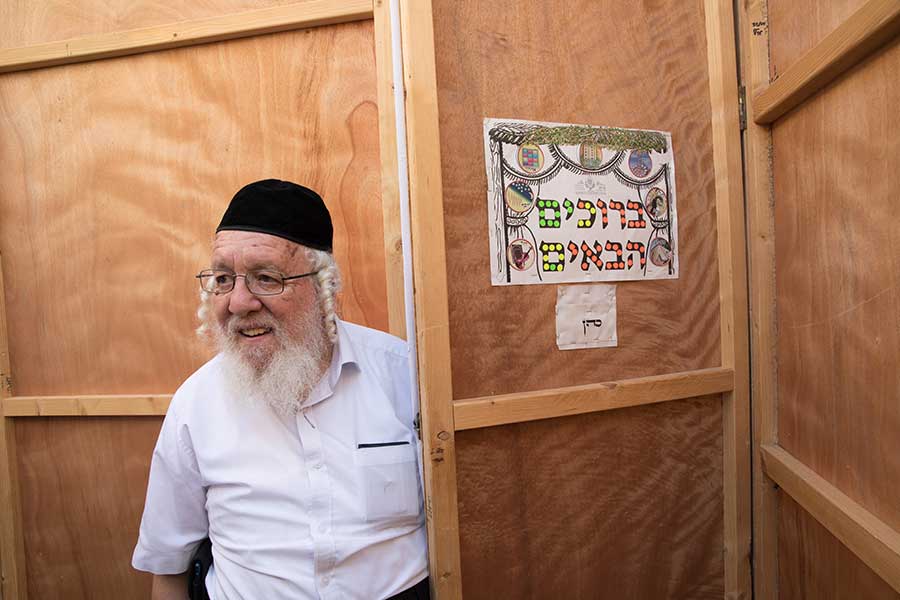
Question: What are the ushpizin and why are there two different versions of their order on Sukkot? Avrohom Zins (Via E-mail)
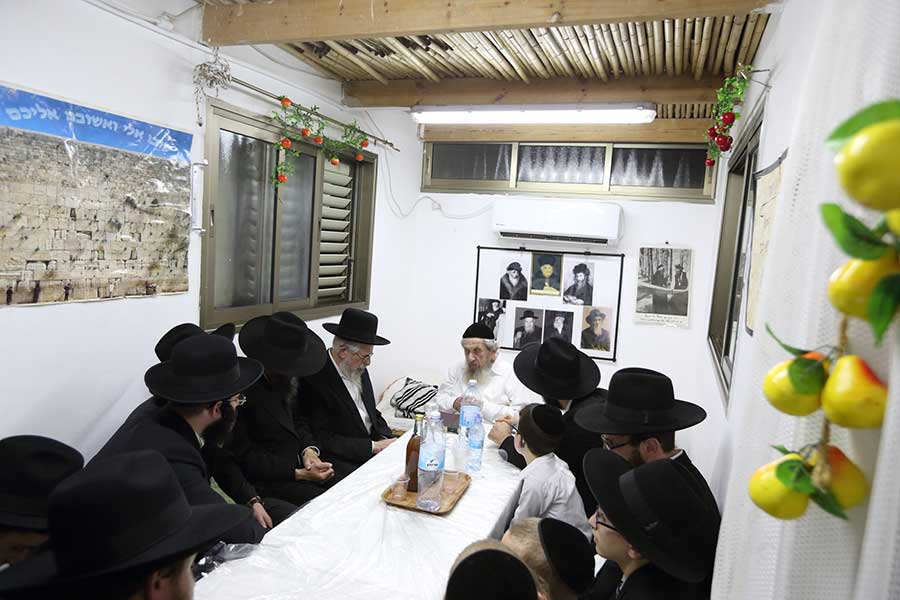
This commemoration is considered so vital that, while for most mitzvos it is sufficient simply to have in mind that one is doing the command of Hashem, this is not good enough when it comes to the precept of Sukkah.

We must remember that this world is merely the corridor to the palace (Avot 4:16), the gateway to the next world. This world and its pleasures are not the ultimate end goal.
We are commemorating the individual Jew, the lonely Jew, who was not connected to the nation in that moment, who felt alone, who felt broken, who felt lost, but who nonetheless was protected by G-d even though he or she was not surrounded by the clouds of glory.

So, this year we sit in our Sukkot with mixed emotions, recalling the glory days of the desert but also the dark days of the past year. As we sit within our fragile Sukkot, sympathize with the anguish felt by so many Israelis whose homes – once places of safety – proved incapable of protecting them.
Is it true then that one elevates oneself to the level of the most righteous simply by sacrificing one’s life for the sanctification of the Name?
One must not give one’s lulav to a child, even one’s own child, to shake on the first day of Sukkot. This is because according to Torah law, a child is able to acquire ownership of something (in this case, the lulav), but is not able to transfer ownership to someone else.

What emerges from these Acharonim, especially Magen Avraham, is that the regular proximity to one’s spouse, even if physical contact is prohibited, is comforting, and losing that proximity is discomforting – and this discomfort might be sufficient to exempt a person from sukkah!
We all know the verse "Serve Hashem in joy" (Tehillim 100:2), which seems to indicate that there is a positive commandment to serve G-d in joy. However, if you search Sefer HaChinuch, which lists and discusses all 613 mitzvot, for this specific mitzvah, you will not find it.

Rabbi Yoshiya, who holds that Eretz Yisrael was divided among those who left Egypt, is of the opinion that the Jews merited the land of Israel as a result of the increased suffering in Egypt.

...even though Avshalom the person might have been a wicked fellow, since his name has a positive meaning (father of peace, or my father is peace or something along those lines), it is still appropriate to use this name in naming our children.

The spiritual concept of beauty, and its relevance to marriage, is central to the connection we aim to develop through the process of Sukkos.
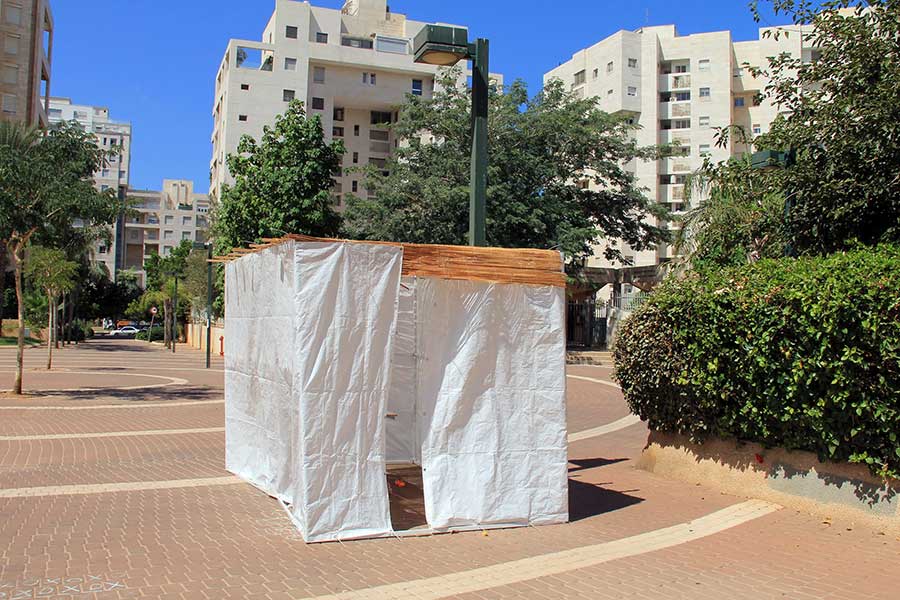
I am always intrigued by people who are handy. I am also intrigued by people who are artistic. I guess it’s because I’m so untalented in those areas.
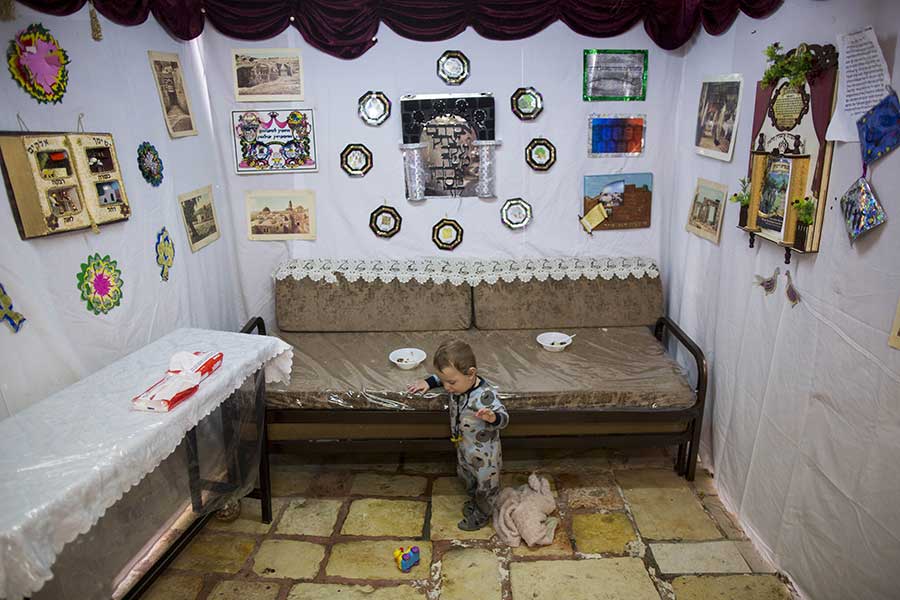
He places his fine furnishings and fine mattresses and couches in the sukkah as well as his fine drinking vessels, bottles and cups. However, cooking utensils such as pots and pans are to be kept outside the sukkah.
During the High Holidays we pray, Instill Your awe on all Your doings, and Your terror upon all You have created… and all of them shall be bound together to perform Your will wholeheartedly. When these prayers are answered, the entire world will, indeed, be able to dwell together, in peace, in the sukkah of the Jewish people.
Aharon took a seat in the back for Kol Nidrei. When Maariv began, after the Rav’s drasha, Mr. Neiss still hadn’t come. Aharon moved next to his father.
Final And Proper Honors ‘In A Grave Not His Own?’ (Bava Basra 112b)
The siddur itself was Sephardi for all intents and purposes, but its subheading – “according to the minhag of the holy community of Sefardim of the Ma’arav and the Mizrach” – hinted at Rabbi Aburbeh’s principled and consistent ideological line, which strove already at this early date to fuse all existing Sephardi and Mizrahi prayer nusachim into a single, unified prayer formula.
Question: I hope you will not mind answering several questions regarding the mitzvah of sitting in the sukkah. What is the reason for sitting in the sukkah? Are we required to sit in it whenever we eat? Is one allowed to travel during the week of the holiday to a place where no sukkah is available? Moshe Jakobowitz Brooklyn, NY
The Vilna Gaon speaks at length of the kedusha of the malachim in his commentary on the siddur. He explains that the malachim don’t wait for Israel to finish our kedusha below out of respect for us but because they have no right to attest to the glory of Hashem until they hear our mouths doing it – as they have no awareness of any other possible state of affairs.

Though many of us remain focused on Israel’s current war, the more general polarization in Israeli society and throughout much of the world that preceded it and continues to serve as its backdrop should be an even greater concern.
On this great day of Yom Kippur, the Heavenly prosecutors stand before Hashem as well, holding the black list of the Jewish people’s transgressions which they intend to reveal before Hashem. But then they hear the Jewish nation detailing those very sins themselves. When the prosecutors hear this, they feel superfluous and abandon their mission.
Is there a mitzvah to eat the night before Yom Kippur? If it is merely in preparation for the fasting, it is questionable whether the night before is that helpful.
Yismach Moshe explains that Avraham was concerned about his spiritual heir. If he had no son, the man who would carry on his teachings and his philosophy was Eliezer, his servant. While Eliezer was a righteous person and could have done some of the job, no one can carry on the legacy of a father’s teachings as well as a son.
The rabbis clearly concluded that if any information gets into the wrong hands, it can cause harm, but that doesn’t mean that devices or information for the benefit of humanity – or for the protection of innocent people – should never be invented, activated, or shared, even if there will be collateral damages.
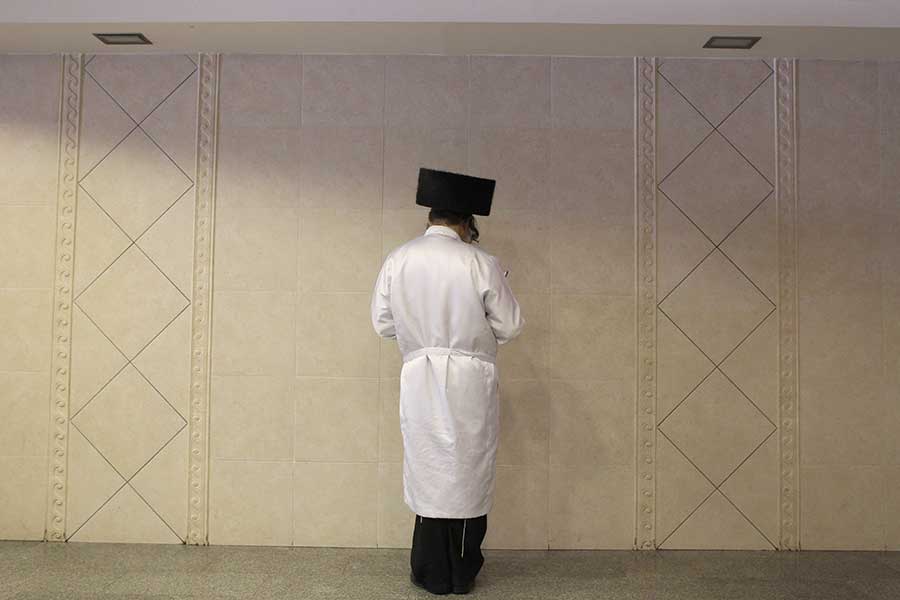
On Yom Kippur, the kittel takes on added meaning. In addition to reminding one of the day of one's death and arousing feelings of humility and repentance, kittels are worn to emulate the angels who, we are told, wear white.

This successful symbiotic cohesion between the “all,” the “one” and the “One” – the collective, the individual and G-d – was the real secret formula of the Ketoret.

As we approach Yom Kippur, we recognize that it is unquestionably one of the most important days of the year. And yet, in many ways, it is a mystery.
Shulchan Aruch rules in accordance with the Rishonim who maintain that the prohibition against wearing shoes on Yom Kippur applies only to leather shoes.

By Eliana Klein
After months of packing and many weeks of divesting themselves of furniture and other belongings, they were experiencing decidedly mixed emotions as their departure date approached. We were definitely feeling likewise, and dreading having to say goodbye.

There is no issue of ribbis in locking in the rental price through prepayment, certainly here where the price uncrease was not known when paying (see Y.D. 176:6; Taz and Nekudos Hakesef 176:7; Bris Yehuda 26:1[2], 26:4[13]).

At First Glance ‘While You Were Feasting On The Dates Of Babylon…’ (Baba Basra 107b)
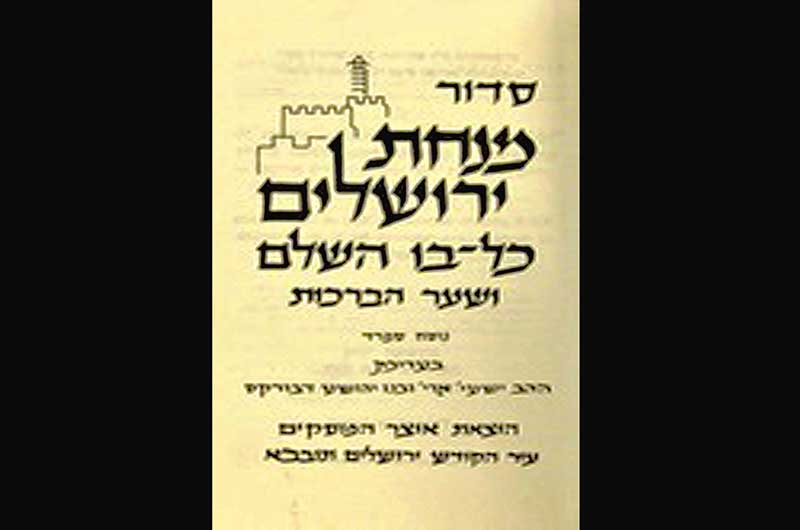
The prayers themselves, it should be noted, only appear after no fewer than 100 pages of prior content, and the book’s design is apparently based on the Siddur HaShalem previously published by Eshkol Press.

We as individuals and as a nation understand something is wrong and we are driven to fix it, even if we have no idea how to go about it properly. But it is precisely through this process, this “casting about” for something that will salve the pain of uncertainty and inspire us with a sense of purpose, that we connect through our teshuva with our higher purpose.
We must continue to dream big: The magnitude of the evil perpetrated against us on October 7 was shocking. It turns out, that we can also be surprised by the good.
We are allowing others to define us, blood libel us and tell our story. We must give our children Jewish pride, identity and roots.

Question: I am aware that there are five pleasurable activities from which we have to abstain on Yom Kippur. Can you explain them? Are they of equal importance? Martin Wainman Via Email
 October 16, 2026