יום שישי, ה׳ חשוון תשפ״זFriday, October 16, 2026



Follow Us


Historical perspective should humble us. It should make us realize how little we understand the true nature of what is going on around us. But it should also make us realize that things truly worthwhile have a staying power.

Another fundamental nafka minah is whether one needs to have kavanah (intent) in order to be categorized as a rodef.
The double language of reckoning also encompasses two aspects of the Divine Judgment that the true redeemer would have to know to invoke – Hashem will do good to Israel and lead us out of our misfortune, and He will also punish those who tormented us and hold them accountable.

By Rabbi Lord Jonathan Sacks z"l
Consider, now, the choices Moses faced in his life. On the one hand he could have lived as a prince of Egypt, in luxury and at ease. That might have been his fate had he not intervened.
The thought process of believing that rather than having a child murdered he would separate from his wife was incorrect. Miriam revealed the will of Heaven that the exact opposite was appropriate.
While the yeitzer hara has many arrows in his quiver, and his aim is focused on getting us to speak lashon hara and to fight with our spouse, to look at the wrong things, and to say hurtful words, there is nothing that the yeitzer hara tries harder to accomplish than to stop people from learning Torah.

Regardless of the interpretation, it is essential to recognize that the relationship between the parents of married children is not akin to the attachment one has with other blood relatives.
GRATITUDE, We don’t need to wait for something extraordinary to say thank you.
The Torah describes the voluntary gifts that the Jewish people donate toward the building of the Mishkan, the place where Hashem was most potently manifest in the physical world. The emphasis of these donations is their voluntary nature – Hashem commands Moshe to collect from Klal Yisrael whatever their hearts inspire them to give.
It’s one of the sad realities of life – we often fail to take advantage of the things closest to us. The things we can do at any time often become the things we don’t do at any time.
By Guest Author
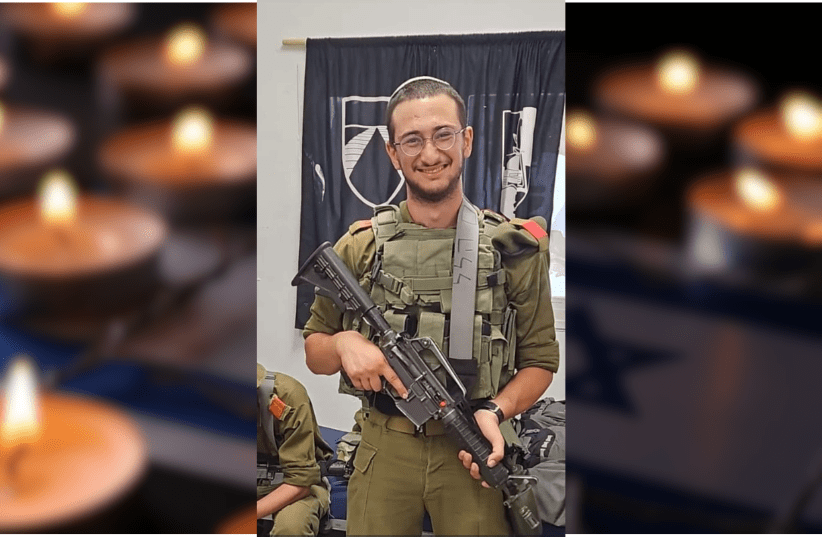
The students of Talmud Torah Netzach Yisrael in Beit Shemesh have launched a meaningful learning project in memory of a fallen soldier from Jerusalem that they never met.
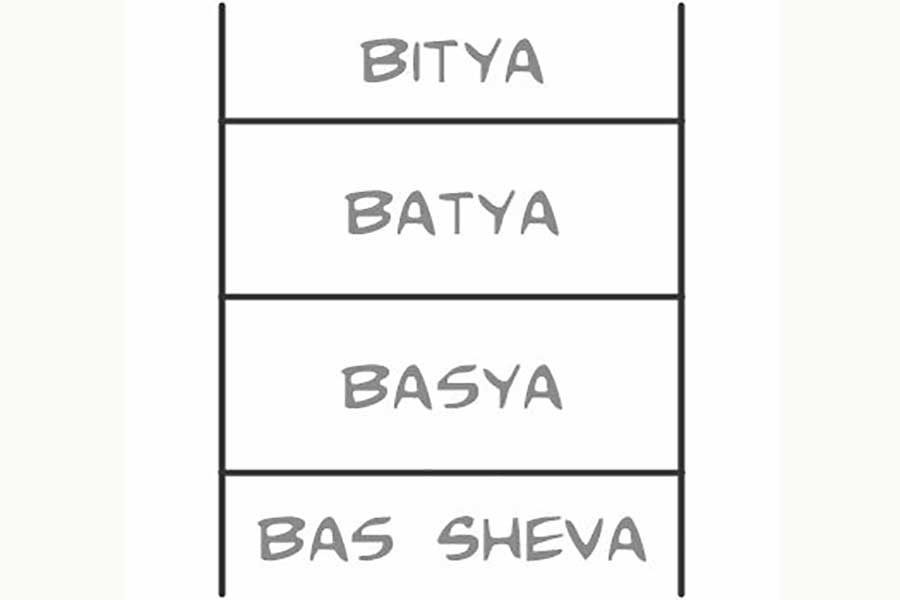
Interestingly, some argue the exact opposite: her original name was Batya, but she changed it to Bitya as an act of humility.
The Torah’s claim about the revelation at Har Sinai also reinforces our belief in Hashem (in addition to our faith in the Torah’s Divine origin). The claim that an entire nation (as opposed to a limited group) consisting of millions of people (as opposed to a small group) is hard to fabricate, as people would wonder why they had not heard about it from their own ancestors.
When Yosef entered, Pharaoh tested him – he said hello to him in Dutch, Greek, and Danish and each time Yosef conversed with him fluently in each language and ascended another step until finally he was on the top 70th step together with Pharaoh.
Sunday afternoon they dropped by for a visit. He had small pieces of shrapnel on his face and left hand, and he said that the surgeon told him that, over time, the body would rid itself of the shrapnel. That was comforting to know.

Indeed, the Torah requires redeeming the firstborn son (bechor), and also entitles him to a double portion in his father’s estate, but not in his mother’s, replied Rabbi Dayan (Y.D. 305:1; C.M. 277:1).

A Parrot Or A Lie Detector? ‘… We Admonish The Witnesses’ (Sanhedrin 29a)

It was difficult for him to write without errors, but his ambition was so extraordinary. It would have been worth it to me to stand there for hours in the sun or the rain just for the opportunity to help him in his quest.

Question: I live in a small community where it is sometimes a struggle to get a minyan together. When this occurs on Shabbos this is extremely upsetting. I am so concerned that I was wondering – may we ask some of the non-observant Jews who live in the neighborhood to join us to complete a minyan? Name withheld Via E-mail
Kind words are a creative force, a power that concurs in the building up of all that is good, and energy that showers blessings upon the world. -Lawrence G. Lovasik

By Rabbi Lord Jonathan Sacks z"l
On the surface, Joseph holds all the power. His family are entirely dependent on him. But at a deeper level it is the other way round. He still yearns for their acceptance, their recognition, their closeness.

We are actually doing a chesed for the rodef by preventing him from spiritually destroying himself. The rodef now gets to die without the blemish of murder tainting his soul.

When Lavan decided to trick Yaakov, and essentially Rachel too, Rachel nevertheless played along and gave the secret codes to Leah to enable her to succeed in the ploy. Rachel realized that what was happening must be the will of Hashem, and that it was not possible for Yaakov to have only one wife.
Even as Western society has become uncomfortable with religion, it has also become increasingly uncomfortable with its own discomfort.

Every individual who finds himself in challenging times only needs to know how to recognize the smile of Hashem from Above.

It’s always important to remember how different we are, and to thank Hashem that He allowed us the privilege to be part of this Holy Nation.

Because the person who is betting doesn’t fully commit to losing, and therefore, when the winning bettor collects winnings from the losers, he is essentially stealing their money.
How can it be that Hashem made a mistake – that He originally wanted to create the world with din but then changed His mind?

The doctor cautioned us that the treatment contained risks, including that it might not remedy the situation. He told us that we had to decide if we wanted to proceed with it or not.

Physical and political sieges are the results of spiritual separation. They are a continuation of the ancient pre-Churban siege and are due to and reflective of Hashem’s separation from us.

There is no question that they lied, but incredibly, the Gemara above says that they were right to lie because there is a special circumstance when one is permitted to lie and that is to make peace, what is known in English as a white lie.

For one agonizing moment, Meir thought his time in the world was about to end. But glancing at the note taped to his gun, he quickly murmured the words: Hashem Hu Elokim, ein od milvado. Then, a few meters in front of Meir, the missile changed direction in midair, as if it struck an invisible force field.

But today is 2 Teves, said the printer. I tried reaching you yesterday, but you were unavailable. Because it was a rush job, I corrected the Hebrew date. But we’re getting married at night, so the Hebrew date is 3 Teves, explained Aharon. Now the date is wrong!

Maintaining A Library ‘He [The King] Shall Write a Sefer Torah... (Sanhedrin 21b)


As has been noted elsewhere, Shlomo Tal originally sought to produce Rinat Yisrael based on nusach Sfard so as to unite people who had different traditions, but he found himself ultimately also producing siddurim for Ashkenazim and Mizrachi-Sefardi Jews.

Serving in the IDF can provide personal development opportunities for charedi men. Many who have enlisted report a newfound appreciation for civic duty and a broader understanding of Israeli society.

It is not enough to scream out from your pain and suffering. You must hear the cry of the person sitting next to you. You must open up the gates in shamayim for the aching hearts of those waiting for refuahs, yeshuas, simchas and shalom.

Question: I live in a small community where it is sometimes a struggle to get a minyan together. When this occurs on Shabbos this is extremely upsetting. I am so concerned that I was wondering – may we ask some of the non-observant Jews who live in the neighborhood to join us to complete a minyan? Name withheld Via E-mail

No guilt is forgotten so long as the conscience still knows of it. -Stefan Zweig
The sum of the whole is greater than the sum of the parts

People of deep conviction and burning passion are often swept away by the force of their ideals. Drawn to lofty principles and grand visions, they can lose sight of the day-to-day emotions of those around them.
As to the U.S. budget, strict judgment would require that money should be spent by the government on necessities. The problem is that there is no agreement on what is necessary; hence, the need for compromise.
By Rabbi Lord Jonathan Sacks z"l
Abraham prays for justice. Judah prays for mercy. Elijah prays for G-d to reveal Himself.
When Yehuda approaches Yosef, he touches his garment, and this is said to be a manner in which individuals may connect with Hashem when they are not at the level of achieving proper communion.
Even when Yosef believed he was right, he considered the possibility that perhaps he had done something wrong that warranted his excommunication.
Since the objective of marital unity brings the coveted blessing of the Shechina, the yeitzer hara tries mightily to block one’s marital harmony. We therefore must strive vigorously to maintain the magic of our oneness at all times.
Challenging times do not necessarily stifle spiritual growth or intellectual achievement.
Because G-d-consciousness is central to the Torah, it commands us to create and interact with objects that remind us of Him.
The first stage is a gift, a spiritual high. It’s there to help you experience the goal, the destination. It’s a taste of what you can and hopefully will ultimately accomplish, but it’s not real. It’s given as a gift and is therefore an illusion.

My family has been blessed to spend our summers at Camp Dora Golding in the Pocono Mountains in Pennsylvania, where I am part of the camp administration. The drawback was that as a shul rabbi it wasn’t easy to be away from my kehilla for two months.
Surely a gift that is given absolutely without any provisions one should have no qualms in re-gifting to another if it is not to one’s taste. But, as mentioned, take care not to give to someone who you think might give it back to the original party.

After Yosef reveals himself to them and they get over their initial shock, the Midrash says – they wanted to kill him! Kill him? Just a few hours earlier they were intent on rescuing Yosef, and willing to pay any price to do so. Now that he is standing in front of them, they want to kill him?
By Rabbi Lord Jonathan Sacks z"l
Jewish law rules that if we can only light one candle – the Shabbat light takes precedence, because in Judaism the greatest military victory takes second place to peace in the home.
I asked her about the baby’s name, and she said, yes, they had named him after Daniel in the Tanach, but they had also thought of my late husband Dan when naming him. She sent me several photos and videos from the bris. I was overcome with emotion as I watched the segment where the baby received his name.

Throughout Chanukah, Mr. Lichter and Shmuli lit in the glass case outside their door. On the last night of Chanukah, the flames burned brightly and warmed the winter night. The family was inside, enjoying latkes and jelly doughnuts, when suddenly they heard shattering outside.
Awaiting Elijah / ‘Semicha… Is Performed By Three’ (Sanhedrin 13b)
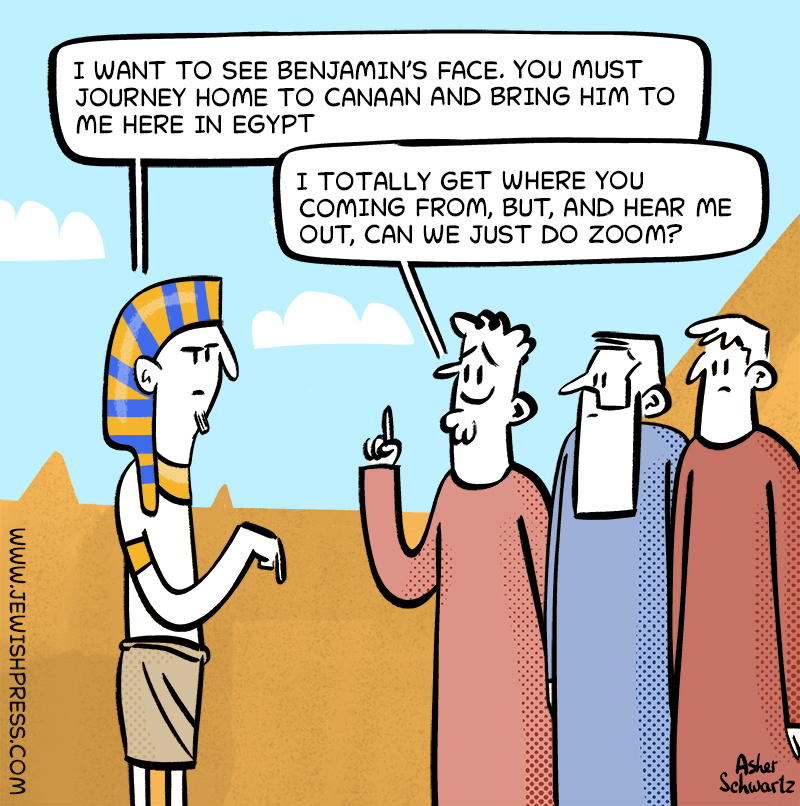
There’s short term and long term, and we must always take the long term into account.

Israel’s innovative, young commander of the Negev campaign was Yigal Allon. In order to break the Egyptian hold, he would have to get his troops to the south undetected. This was a significant challenge as the only surfaced road was bordered by several Egyptian strongholds.

Question: If one forgot to recite Al Hanissim on Chanukah, does he have to repeat the Shemoneh Esrei or Birkat Hamazon? Moshe Jakobowitz Brooklyn, NY

Certain truths can never be fully grasped without exposure to a perspective beyond oneself.
We know Yosef never forgot his father. Even though he no longer lived next to him, his father was an ever-present influence wherever he went and whatever he did.

It appears that killing a rodef is not only a complicated halacha, but only bidieved (a secondary choice). We are therefore left with a fundamental question: Why are we allowed to, or supposed to, kill a rodef?
By Rabbi Lord Jonathan Sacks z"l
Joseph is the center of attention whenever he is, as it were, onstage, and yet he is, time and again, the done-to rather than the doer, an object of other people’s actions rather than the subject of his own.
The siddur had a number of versions from the outset – one of which was meant for schoolchildren – and at least one of which appears to have had an attached translation into Ladino, all sold in New York stores during WWI.

The Targum Yonasan Ben Uziel explains that the dream of the Royal Butler actually alluded to the redemption of the Jewish people. This being so, Yosef understood that the redemption could only come about if he, Yosef, would be released from prison.

Today, amid the suffering caused by the war, we can sometimes feel callous if we take our minds off those most affected. However, a lesson of Chanukah is that there remains space for gratitude, even in the face of ongoing grief.

The reward for fulfilling the mitzvah of Ner Chanukah properly is great indeed. It is something we strive for every day. It is, comprehensively speaking, the goal of all our toil.
Where grains abound, so does baking knowledge and Egypt was also the first baking superpower. Much of our modern baking science is derived from the ancient Egyptians.
Before Adam sinned, he looked nothing like you or I do today... The Midrash says that he wore kosnos ohr (skin of light). When you looked at Adam, you didn’t see his body but saw Adam himself, i.e., his neshama.
As an interesting aside that only etymologists like myself could appreciate, the name Juanacita itself sort of has a connection to Chanukah. This is because that name derives from the name Juan/John, which is a Latinization of the Hebrew name Yochanan.
A story can be true in the sense that all the details are technically factual. Yet the way it’s conveyed may not be the way it happened.
In the secular society gift-giving on Chanukah was influenced by the Christian holidays. If the gift-giving mimics the non-Jewish world, it is definitely not proper. If, however, it is done to promote the joy and family spirit of Chanukah and done in modest manner, there doesn't seem to be a reason to forbid it.
By Bracha Goetz
The twenty-fifth makes her remember, Because it's Kislev - not December. She almost fell, like Hellenists of old. The twenty-fifth makes her remember, Because it's Kislev - not December. Once she, too, chose tinsel, not the gold.

When the shidduch Josh was in the middle of didn’t work out, he turned back to Moishy to hear about his sister. Eventually the couple met and realized that yes, it really was a match. When Josh and Sari got engaged, Moishy was the happiest of all.
They Ate Chametz On Pesach ‘Declared By A Beis Din Of Three’ (Sanhedrin 10b)
In terms of content, an organized and clear introduction was added to the siddur written by Professor Dov Rafel, and the prayers themselves were accompanied, as promised, by basic and brief halachic instructions, as well as midrashic and machshava passages which were included in the margins of each page, with clear lettering and in a different color.
There have been many events expressing unity and support that have taken place in the Jewish world in recent days, but many of them have not been reported in the press. It seems that only a rowdy demonstration, a fight on Twitter, or a sharp exchange in the Knesset are considered newsworthy.

Question: Because of the Torah’s sanctity, we do not place any object on a Torah scroll except for its mantle or a tallit during Torah reading. Is it a violation to put a siddur or other sefer (holy book) on top of a printed Chumash when these are placed on shelves or tables? Alex Poultman Via Email

When we are faced with adversity and challenges that are difficult for us to bear, it is a mitzvah to accept His judgment with grace and dignity.
Hashem equated His relationship with us to that of a father with his son. Though Hashem created all human beings in His image, He chose us as His children (Avot 3:14). All humans resemble G-d; we, the Jewish people, have a personal relationship with Him.
By Rabbi Lord Jonathan Sacks z"l
To be sure, a persistent theme of the patriarchal stories is the two promises G-d made to each of them, namely that they would have many descendants and that they would inherit the land of Canaan.

What if the person has full intent to not only take the action, but also cause the harmful result. However, in this case, the person has the wrong information, so he thinks that he is doing something good, when in fact, he is about to do something very bad.
It is surprising that the names are not in chronological order, for first Moshe Rabbeinu was saved from the sword of Pharoah and only then was he a fugitive in Midyan. So why did he give the name Gershom first?

Yosef was being taken away from his father’s house, sold as a slave to be taken down to Egypt, from which place no slave ever escaped. Yet Hashem grants him this great kindness that he should not be assaulted by the offensive odors of tar and petroleum? This would be comparable to indulging a person going to prison by giving him a ride there in a limousine.

Spiritual debate has been a recurring phenomenon since the beginning of time. Chanukah is when we tap into the spiritual debate between the Jews and the Greeks, as the Greeks specifically attempted to destroy our spiritual way of life.
By Rabbi Dr. Mordechai Schiffman
Rabbi Elazar’s frank realization that from the time we are born we are destined to die frames the entirety of the Mishna. This knowledge is meant to instill our awareness of G-d and His judgment, informing our religious decision-making.
Many people feel that they would know exactly what to do if they won the lottery. The many stories of lives destroyed by sudden windfalls notwithstanding, they feel that they would know how to proceed.
Yaakov knew even before Yosef was sold that he and his family would go down to Egypt. If not, why would he buy a future burial plot for Yosef – the first thing he did before settling in Eretz Yisrael?
To learn our holy and ancient texts properly, we must beware of idioms that deceptively translate but are not quite the same.
It goes without saying that greeting someone during their holiday promotes good will and therefore should be done.
By Naama Klein
In retrospect, I really should have been clued-in as soon as I entered the store. Despite the fact that it was erev a three-day yom tov, the store looked more like a regular Tuesday night than what should have logically been a typical Thursday night on steroids.
The Acharonim dispute the fundamental nature of kinyan kessef. Sma (190:2) and Avnei Milu’im (29:2) maintain that the money is compensation for the real estate, like the money Avraham paid to acquire Me’aras HaMachpelah.
 October 16, 2026