יום חמישי, ד׳ חשוון תשפ״זThursday, October 15, 2026



Follow Us


We shift from costumes and joy to cleaning and preparing. But if we only focus on scrubbing floors and kashering kitchens, we’re missing the bigger picture.
Many students of the Talmud never get that initial spark because the language barrier prevents them from ever experiencing the joy of exploring the text’s depth. I hope that this new English edition of the Talmud will provide that spark for countless learners
By Eliana Klein
What most people would have done is to leave all those items behind, to become the next guy’s problem. But my incredible in-laws are definitely not most people.
If I donate an average of $1,000 a month by credit card, that’s $12,000 a year; a 2% fee comes to $240, explained Mr. Freilich. Is this included in my maaser kesafim, or do I need to deduct this amount from my calculation?”
The Greatest Reward Of Public Service ‘…[He] Who Leads The Public Gently …’ (Sanhedrin 92a)
What was Moshe Rabbeinu was doing for those 40 days?
While the Rinat Yisrael siddur’s original editions relied on the support of the Religion and Education Ministries, the edition meant for Diaspora Jews was funded by the World Zionist Organization’s department for Torah education and culture in the Diaspora.
Question: I would like to have a better understanding of a practice that I and many others are a party to every year before Passover: How does the sale of chametz to a gentile take effect if it is returned to the original owner within a very short period after the Festival’s conclusion? M. Goldblum Via Email
In everyday life we frequently meet people who seem to be walking around in disguise. One is disguised as someone arrogant, another as someone vulgar, and a third as someone apathetic – but what we see is not a true reflection of who these people really are.

In the aftermath of this ordeal, Moshe seems to struggle with his understanding of the omnipotence of Hashem and the instantiation of His will in the affairs of men.
In other words, we are normally not allowed to kill one person to save another; however, because the rodef is engaging in an act of attempted murder, there is a special din of chiyuv missah on the rodef that allows for the hatzalas ha'nirdaf with the life of the rodef.
By Rabbi Lord Jonathan Sacks z"l
People think they are free because they have been taught that all morality is relative, and you can do what you like so long as you do not harm others.
By accepting the Torah, the Jews themselves became a Kingdom of Priests and a Holy Nation (Shemos 19:6). However, Chazal tell us (Shabbat 88a) that their acceptance of the Torah was under duress.

It seems like no coincidence, then, that we read Esther and Ruth at the beginning and end of this period in the year.

Hashem does not forgive anyone who ever shed a drop of Jewish blood. There is no question that justice will be served by Hashem Himself, as the Yalkut Shimoni states, upon anyone who participated in any way in this massacre.

The holy rebbe, Rav Yisroel of Ruzhin, adds that Purim is even more, for while on Yom Kippur Hashem forgives only with teshuva, repentance, on Purim He forgives as soon as we ask Him, as it says, Kol haposhet yad nosnin lo.
Amalek rejects Hashem’s connection to this world or any connection between the spiritual and the physical. Essentially, Amalek denies Hashem’s control of this world and the ability for man to uplift himself to the level of the spiritual.
There is a deeper meaning behind the custom of dressing up on Purim.
The father may indeed be a poor father, and his neglectful behavior may lead the child to reject him, but those reactions should stem solely from the dynamic between father and child, without anyone else inciting the alienation.

Of all the vessels in the Mikdash, the kiyor is something of a conundrum. Is it one of the main vessels in the Mikdash, like the Menorah, Shulchan, etc., or not?

When we think of who we are and what defines us we often think of our physical bodies. Ask someone who he is, and he will generally point towards his heart. But is that really who we are? Is our body what defines us?
Tefillah is central to our identity. It is an essential reflection of the human soul and part of what characterizes man as distinct from animal. Hashem provides for the whole world; only man appreciates and prays for it.

Purim is a day of celebrating with friends, family, community, and even strangers. It is a day of revelry and study, a day to give as generously as we can, a day of recognizing G-d’s watchful providence and love. Can we really do all of those things and work?
Every once in a while we are treated to the induction ceremony of soldiers which takes place in the large open area above the Kotel. Sweet and handsome, these 18 year olds solemnly swear to defend our country, promised to us centuries ago by Hashem to our holy Forefathers.
There is a dispute whether nowadays beis din is halachically authorized to enforce payment of ‘fire’ damage; many maintain that the answer is yes.
What You Pray For ‘… Acts As Befitting Your People’ (Sanhedrin 85a)

By Lisa Liel
Judaism is about making distinctions and Israel and Amalek are polar opposites.

The real question is where was man? Where was man when six million were being shoved into cattle cars and burned in the crematoria? We were waiting for someone to say something, do something, bomb the railway stations as we were taken to the concentration camps. No one did a thing. The world remained silent.

Question: If someone heard Megillat Esther in shul, and he then has to read the Megillah at home for his wife and other members of his household, does he recite the blessings again? Menachem Via E-mail

Israel’s mourning is not just for Kfir, Ariel, and Shiri – it is for every victim of terror, every life that was cut short in the name of hate and destruction.

Even after the pogroms of 1391 and the expulsion from Spain in 1492, those expelled from Catalonia maintained their customs and nusachs – at least partially – which they took with them to new places, including North Africa (primarily Algeria and Tunis), Italy, the Ottoman Empire, and the Land of Israel.

Nowadays, there is more than enough violence around even without drunkenness. And, of course, an all too contemporary translation of violence happens to be chamas (Hamas).
By Rabbi Lord Jonathan Sacks z"l
The word kavod – dignity or honor – appears sixteen times, but in fourteen (2x7) of these cases the reference is to the glory of G-d.

In the back of the Choshen Mishpat there was a slip of parchment, known as the Urim Ve’tumim, containing G-d’s ineffable name. G-d was behind every decision the judges rendered. Even those decisions, which in hindsight appeared wrong, were right, because G-d was behind them.
The nexus of all worlds, the point of conjunction of the physical and spiritual poles is the golden Mizbe’ach.

Our sages teach us, Words that exit from the heart [of the one who utters them] enter into the heart [of the listener]. This suggests that if someone does not truly believe or feel that which he is saying out loud it has no effect or impact on the listener.

The Megillah is called Esther, which means hidden. This is because the Divine Hand was cloaked under the guise of palace intrigue, and within the lust and caprice of the royal court.

Our Gemara on amud aleph continues its discussion of various indirect forms of murder, including the case of one who causes a snake to bite a person. There is a dispute regarding how direct this action is, and according to our Gemara’s analysis, it depends on where the venom is located.

If Esther failed to act, Hashem would find another way to save the Jews, but she and her family line would be lost.
Assimilation was quite prevalent at the time with many prosperous exiled Jews preferring a liberal, cosmo-political approach as opposed to a conservative, separatist approach. Very few remained true to the old teachings and values, like Mordechai, the former head of the Sanhedrin.
Torah is not simply a guide to living a life of truth; it is the blueprint and DNA of this physical world.

How often do we try to live life on our terms, even when the reality of the situation is clearly otherwise?

Even drinking for adults on Purim needs to be directed to enhance the festive nature of Purim and not be a cause of revelry or lead to inappropriate behavior.
When a person passes away, we tear our clothing. It’s a sign of mourning, of the unbearable loss. And when we are buried, we are dressed in tachrichim, simple linen shrouds. Clothing marks every stage of life – from birth to mourning to the final journey. And each type of clothing holds meaning.

We are now entering the season of faith-building that begins at Purim and ends at Pesach. More than at any time in our calendar, it is a season when we remember the long-term
Nadav and Avihu don’t only teach us about how to relate to God, but also how to relate to each other

By Naama Klein
Lo and behold, both my niece and nephew decided on an arrangement that I had rejected just a few minutes earlier! And although it was not particularly my taste, I was so beyond grateful that they both agreed that the style, the colors, the flowers, basically everything about it, would be to our mutual in-laws' liking.
The following month, Mr. Gold again approached Mr. Neuman for the money. What do you mean?! asked Mr. Neuman. You said that I don’t have to pay and that you don’t need my money. That was mechila on your part – you relieved me of the need to pay!
One’s Lifetime Partner ‘The Only Poor In Israel [Are] The Subtly Wicked...’ (Sanhedrin 76a)
Phillip Feldheim died in New York City in 1990. Ten years later the first edition of the siddur bearing his name – Tefilat Shai – appeared in Jerusalem.
The Jews that didn't make Aliyah relinquished their rights!
These anti-British forces formed a pro-German government, winning the support of the Iraqi Army and administration. They had hoped that an Axis victory in the war would facilitate independence for Iraq.
How the Mishkan preserves inspiration.

Question: If someone heard Megillat Esther in shul, and he then has to read the Megillah at home for his wife and other members of his household, does he recite the blessings again? Menachem Via E-mail

The air up there in the clouds is very pure and fine, bracing and delicious. And why shouldn't it be?--it is the same the angels breathe. -Mark Twain

Doge, the Department of Government Efficiency is in the process of cutting government programs, and openly doing so with a chain saw rather than with a scalpel, and it is clear that what is good and ideal to many of us is bad and wasteful to many others of us.
Mishkenei Elyon is a small but profound text that explains the spiritual significance of the detailed structure of the third Beit HaMikdash that was witnessed and reported on by the navi Yechezkel.
By Rabbi Lord Jonathan Sacks z"l
The famous Butterfly Effect – the beating of a butterfly’s wing somewhere may cause a tsunami elsewhere, thousands of miles away – tells us that small actions can have large consequences. That is the message the Tabernacle was intended to convey.
As we have previously mentioned, Rav Moshe Feinstein holds that a fetus is a full nefesh, and even though one is not chayiv missah for aborting a fetus, it still violates the issur of retzicha.
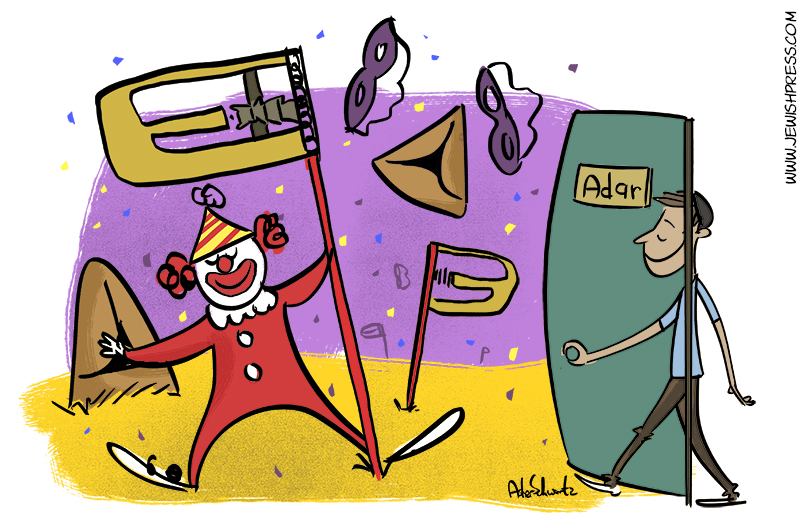
Adar has become a very beloved month to the Jews. I say become, because I don't think it was necessarily always that way.

When G-d created the world, He did it with words. Every action of creation was accomplished using words. And G-d said, Let there be light. And G-d said, Let us create man. Creation is realized by G-d using words.

It is a known fact that the yetzer hara, the evil inclination, is selective about which areas he strives to get us to stray. For example, the relationship he tries the hardest to wreck is the one we have with our spouse.

When the Kohen would light the menorah in the lower word, the menorah in the heavens was lit simultaneously, lighting up the lives of the Jewish people.
When you wake up each morning, the day holds infinite potential. You have the time to do anything, go anywhere, meet anyone, etc. But that’s only potential, for in reality, you haven’t done anything yet, and in reality, you can’t do everything, only something.
Clearly, the Torah anticipates that the gentiles will be impressed with the Torah’s laws, and they would not be impressed if those laws didn’t reflect common-sense morality and justice.
Over the past century, the desert has become an oasis, and the desolation a blessing. Israel has developed innovative agricultural expertise and water conservation technologies and has planted over 250 million trees. Eretz Yisrael is the only country that entered the twenty-first century with more trees than the century before.
In life, we are constantly seeking out the proper path to follow. But this world is somewhat fluid and unstable, with new challenges and vicissitudes arising constantly.
Jewish tradition does not shy away from acknowledging the importance of justice, and that includes expressing righteous indignation against acts of evil.
A tiny baby, a bright spark of light in the darkness. A reminder that even now, Hashem is weaving together the pieces of our redemption. That He has not abandoned us. That our story is still unfolding. That the day will come when the suffering will end, when the exiles will return home, not in sorrow, but in joy.
If you analyze the overall structure of the Mishkan (and Beit HaMikdash) you see that it is layered according to the level of holiness.
Several minutes after entering the hospital room, my father gave a tremor that sent them running for help from the nurse's station. The nurse called the doctor. The doctor told them that my father's systems were closing down, hinting that perhaps the respirator plug should already be pulled.

While the proliferation of technology and the distraction that comes with it is fairly recent, the struggle with being fully present is not a new phenomenon. Ask HaShem
What difference does that make? asked Mr. Isaacs. You’re not a relevant party to the case. Mr. Weintraub is not related to any of the relevant parties: lender, borrower, or guarantor!
Withholding The Rod ‘A Rebellious Son Never Occurred And Never Will’ (Sanhedrin 71a)

Loaning money is a greater Mitzvah than giving Tzedakah...
Question: As I came into the synagogue, they were about to recite Keri’at Shema. I had as yet not put on my tefillin. What should one do in that situation? A Reader Via E-mail
By Rabbi Lord Jonathan Sacks z"l
So slavery is to be abolished, but it is a fundamental principle of God’s relationship with us that he does not force us to change faster than is possible of our own freewill.
When Israel enslaves their own brothers, they are also enslaving G-d’s very image and likeness on earth.
Perhaps it is the nature of debate that blinds many from the wisdom of the opposing position, but our sages clearly advocated both approaches simultaneously.

This message of hope – that all is not lost and that one can always climb back from a spiritual morass without needing years to do so – is a vital lesson that is important to remember every day of our lives. This is one of the reminders of the tefillin.

One is not promised that he will live longer than the number of years that he was destined to live. Rather, one who worships Hashem will live out his days.

When we consider whether or not someone is an observant Jew, we usually ask whether he or she is shomer Shabbos. Why is this the defining feature of religious observance? What makes Shabbos a root mitzvah, why is its punishment so severe, and why do we see it as the measuring stick for all of Torah observance? What is the secret of Shabbos?

Clothing serves as a metaphor for how a human is cloaked. Just as clothes cover the body, the body itself is a kind of cloak for the soul.
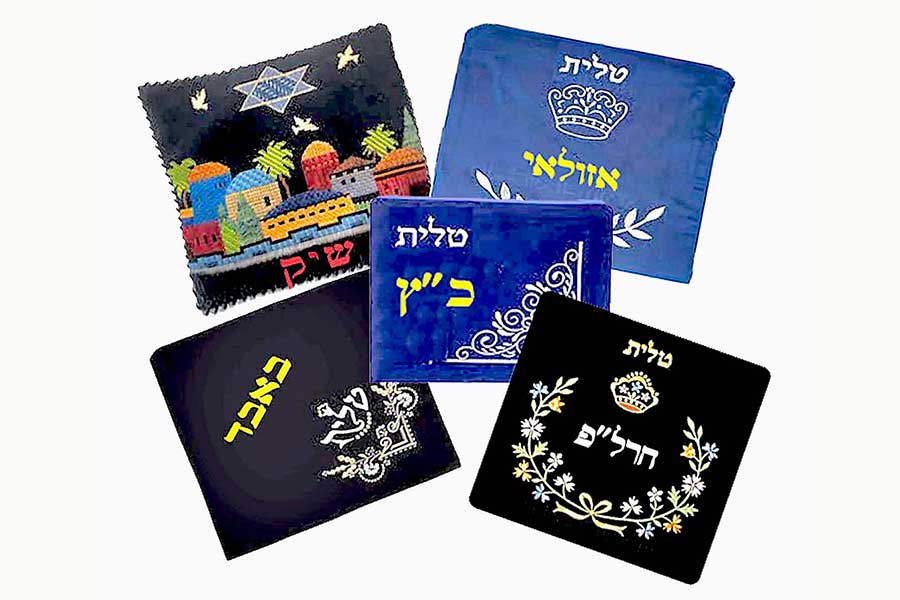
Just as acronyms serve modern convenience, they also hold a unique place in Jewish history and culture, where many family names actually derive from meaningful acronyms. These surnames serve as more than mere identifiers.

If you think that wealth is limited to your investment portfolio, you are very much mistaken (although money is one form of wealth). There are other forms of wealth, which many tend to regard as mundane, but which are often more valuable than all the money in the world.

The problem was that after years of being neglected by his father because of football, Mike didn’t have any love for the game. Still, despite his resentment towards football, he loved his father, and so after Joe’s passing, Mike began to attend every game.

Whether or not it is proper to go by one’s English name is not a question that can be answered in a vacuum. Whatever the case, I would strongly recommend choosing names that express high and traditionally Jewish aspirations for children and for ourselves. Ultimately, G-d desires our hearts more than our names.
As Jews, we hold onto the knowledge that Hashem is always with us. Just as He was with the hostages, He is with each and every one of us. Even when the world seems dark, we are never truly alone.

When walking down a sunny Jerusalem street with my father, he would attach clip-on sunglasses to his bifocals. When we would walk into an office or store, he would just flip them up so that he could let in the light. Perfectly practical and reasonable.

On the way to the store, though, Mr. Davis was accosted by two thugs, who beat him and forced him to hand over his wallet, which contained over $500. The thugs fled and were not caught. Mr. Davis required medical attention for his cuts but fortunately had no lasting injury.

Start Of The Yeshiva Semester “Today Is Propitious…” (Sanhedrin 65b-66a)
What can we learn from a seeming grammatical anomaly?
Shrem’s unique musical talents quickly earned him the right to serve as the chief chazzan at some of the most central and well-known Syrian shuls in the city: at Magen David and then Bnei Yosef.
I believe that Agam and her mother were bequeathed with the moral courage needed in these times from the days that our mothers stood tall in Mitzrayim.
 October 16, 2026