יום חמישי, ד׳ חשוון תשפ״זThursday, October 15, 2026



Follow Us


We see that cutting oneself out of overwhelming pain is a basic human response, not a new phenomenon. However, in different eras and cultures, mental illness manifests differently based on perceptions, beliefs, and ego defenses.
Do you ever wonder what people really think about you? Whether they think you’re brilliant, caring, and fun; or lazy, self-centered, and boring? The truth is that you’ll never know; people only talk about you openly when you’re not in the room.

There is always going to be times of maror in our lives. But we have to continue to wait and daven for the incredible seudah that is to follow.

G-d does not immediately punish us or strike us down with a bolt of lightning if we speak lashon hara. He warns us in stages.

Although the cart was stolen, when the renter is present and unable to save the item, she is not liable – certainly if she tried unsuccessfully to do so (C.M. 303:2,5).
A Threat To Life And Limb ‘How Many Lashes Are Given Him? Forty Save One’ (Makkos 22a-b)

Question: I read with much interest your Q & A columns, especially those that relate to tefillah. I have a related question: In shul I’ve noticed that at the conclusion of the Shemoneh Esrei, some people take three steps backward but then they do not take the three steps forward as required. Is this an actual sanctioned practice? Zelig Aronson Via E-mail
We ate matzah – boom! We received an injection of faith for the entire year. This dose of faith is absorbed into our bodies and souls. It doesn’t matter how we felt. Consciously or unconsciously, we have been transformed by this experience.
Of course, Hashem wants us to fight for ourselves and blesses us with the physical strength and heavenly assistance we need. We see this at the end of Parshat Beshalach in the wake of Amalek’s attack.

Aharon was silent out of pride in his sons.
Why was it preferable, then, for Hashem to penalize Nadav and Avihu for their wrongdoing on this very special day during the chanukas hamishkan when it certainly detracted from the happiness of all the people gathered?
By Rabbi Lord Jonathan Sacks z"l
After the Flood, G-d gave humans permission to eat meat, but this was a concession, as if to say: Kill if you must, but let it be animals, not other humans, that you kill.

There are instances in the Gemara where, though corporal punishment is accepted as a practice, there is a disapproving response when it is done unfairly or excessively...
When you do something – even something good – without being commanded, all you are reflecting is yourself. It is your personal form of avodah, self-contained, limited, and disconnected from Hashem.

According to one opinion, the second keruv on the parochet was not a lion but had the face of an eagle! This eagle was present in both the first and second Batei Mikdash, until they were destroyed.

Question: I have been puzzled by the fact that we do not recite the Shehecheyanu blessing when we start the counting of Omer (Sefirat HaOmer). What is the reason? M. Schwartz Via E-mail
Entitlements ‘Not Returned To His Former Prominence’ (Makkos 12a)
When Hashem judges us and confers upon us the things we deserve in this world, our Sages teach, He responds to us middah keneged middah, in a manner befitting the conduct we have exhibited.

It is interesting to note that while everyone assumes that the drowning of the Egyptians in the Red Sea was punishment middah k’neged middah for drowning our children in the Nile, this is really not such a simple explanation.
Often, people use hashkafa to refer to what distinguishes between different hashkafot (Litvish, chassidishe, modern Orthodox, religious Zionist, etc.). People are eager to understand and appreciate their unique approach. That said, most hashkafic issues, including most central ones, are things all Torah Jews agree upon.

Makkas bechoros was unique in that Hashem Himself performed this Makkah (Rashi, Shemot 12:12). The Ramban explains that all the principles of hashgacha pratis were displayed through these events. We were clearly then on an immensely high spiritual level.

I don’t remember when that way of talk began, but I’m pretty sure it was only in the twenty-first century. In our culture, being a thing has become the basic unit of cultural ontology.

Question: I have been puzzled by the fact that we do not recite the Shehecheyanu blessing when we start the counting of the Omer (Sefirah). What is the reason? M. Schwartz Via E-mail
I rummaged and rummaged through every pocket in the bag while the tag continued to beep. And lo and behold – while I was still trying to locate the tag, what did I come up with but two little packages of chametz snacks!

When a person forgot to sell his chametz and does not want to destroy it, the poskim write that he should grant it as a gift to a gentile, because this is a gift for the purpose of a mitzvah – to avoid the prohibition of possessing chametz on Pesach.
The Red Sea’s Argument ‘Elai And Toviah: Relatives Of A Guarantor’ (Makkos 7a)

Preparing grasshoppers for consumption is very easy. No shechitah is required. And while there is a dispute among the rabbis whether they must be killed before they are eaten, this debate can be easily circumvented by freezing and killing them, ensuring that they die painlessly.
On the Shabbat before Pesach, Israel risked everything to begin offering the Korban Pesach, and in doing so we made ourselves great, making G-d that much greater in proportion. This manifestation of the Divine light of redemption – in just the moment we most needed to see it – was the greatest thing Hashem could do for us.

Unlike the Olah which was entirely burned on the altar, only a handful of the flour, called the kometz, was burned on the altar (Vayikra 6:5).
Involving our bodies in the holiness of looking for chametz or preparing for Shabbat is something that can become a habit. That is not to say that we shouldn’t use our minds to superimpose even greater meaning on these actions while we perform them. But it does mean that accustoming our bodies to do good things has value unto itself

We are all believers. We believe in Hashem and all the Thirteen Principles of Faith. However, we are a work in progress, growing our emunah every moment of every day.

It is no coincidence that the seder night was when Yitzchak gave the blessings both to Yaakov and to Eisav, thus demonstrating his love for Eisav too!
By Rabbi Lord Jonathan Sacks z"l
If you want to be a great leader in any field, from prime minister to parent, it is essential to think long-term. Never choose the easy option because it is simple or fast or yields immediate satisfaction. You will pay a high price in the end.

Trauma therapists speak about the difference between acute trauma, brought about as a result of one traumatic event, and complex trauma, brought about over a period of time, almost imperceptibly, due to a constellation of factors. If trauma can develop gradually, healing can too.
We are living through exceptionally challenging times, and we need Hashem’s mercy now more than ever. The best way to reach Hashem is by making sure that His children are cared for.
The trial court denied the shul’s application for a tax exemption, concluding, among other things, that the property was not intimately related to the [petitioner’s] religious objectives.
Nothing in the physical world is objectively good or evil, rather, everything has the potential to be used for either good or evil. The choice is solely up to you!
We see, then, that not all sacrifices are rejected, nor are they rejected from all people.

What do Pope Benedict XVI, Barack Obama, Naftali Bennett, and Hosni Mubarak all have in common? Yes, they were all political leaders in the early 21st century, but this column is about names, not politics. So, my answer is actually that all their names are related to each other. Let me explain.

Notice that we do not speak in the past tense. Omdim alainu – they stand against us attempting to wipe us off the face of this earth. As we sit down to our seder, we discover the eternal secret of the Jew.

In short, not only is it proper to incorporate current events into the Seder, but it is likely a fulfillment or at the very least an enhancement of the mitzvah to recount the Exodus from Egypt. However, this is true only if we subsume those current events into the broader retelling and view them as part of an ongoing fulfillment of Hashem's redemption.

Fire is something that belongs in Heaven, that is its place. It is therefore not difficult to understand that fire came down from Heaven onto the mizbe'ach. What is difficult to understand is the mitzvah for us to add our own fire.

When G-d redeemed us from slavery he saved us from purposeless work and life without purpose.

In 2011 the Maxwell House Haggadah translation underwent its first significant update since its original publishing. “Art, thou, and hast” were replaced with more conversant contemporary English.

We should also recognize that mechirat chametz as it is performed today was originally intended for sh’at hadchak – it was an emergency measure necessitated by Jews owning large quantities of chametz, which was a particular problem once Jews had entered the liquor business.
This bag has got to go. Please ask a clear shaila, explaining what efforts you’ve already done and what the requirement is now.

While Dani was washing the floor mats, a branch fell from a tree and hit the vacuum cleaner, cracking it!
Without Warning ‘… But You Were With Us…’ (Makkos 2a)
Question: I would like to have a better understanding of a practice that I and many others are a party to every year before Passover. How does the sale of chametz to the gentile take effect if it returned to the original owner within a very short period after the festival’s conclusion? M .Goldblum Miami Beach, FL
Sometimes, because of the low spiritual state of Israel going out of bondage, there are intermediate steps in order for growth to be achieved. The Rambam understands the sacrificial rite in this spirit. He sees the korbanot as serving a practical purpose in weaning Israel off of the idolatrous customs of primitive civilizations.
When we perform a mitzvat aseh, like davening, putting on tefillin, sitting in the sukkah, keeping Shabbat, with full concentration, while putting aside all other thoughts and preoccupations, it pleases G-d no end, because it justifies His experiment in creating mankind.

Originally, Menashe behaved so badly that he seemed to have forfeited his place in the World to Come. But then he did such teshuva that not only did he earn a place in the World to Come, but G-d himself interfered with the nature He had created and made a special opening or tunnel through which Menashe could come into the World to Come.

The servitude we experienced in Mitzrayim should sensitize us to human suffering. We know what being a foreigner feels like and should thus care for those in similar situations.

The Gemara teaches us that one who has three traits can consider himself a true talmid, a disciple, of Avraham Avinu. One of these traits is ayin tova, a good eye, which means the characteristic of seeing the good in everyone.

Hashem told Avraham Avinu: You are the root of the Jewish nation. If there is a black spot – a small lack of emunah – then the fruit that you bear will be bitter, that is to say, there will eventually be no emunah at all among the people.
As human beings, we are naturally resistant to external instruction or direction, preferring to do things only when we want to do them.

A person should never bring himself to undergo a test of faith, as David, king of Israel, brought himself to undergo a test of faith and failed.
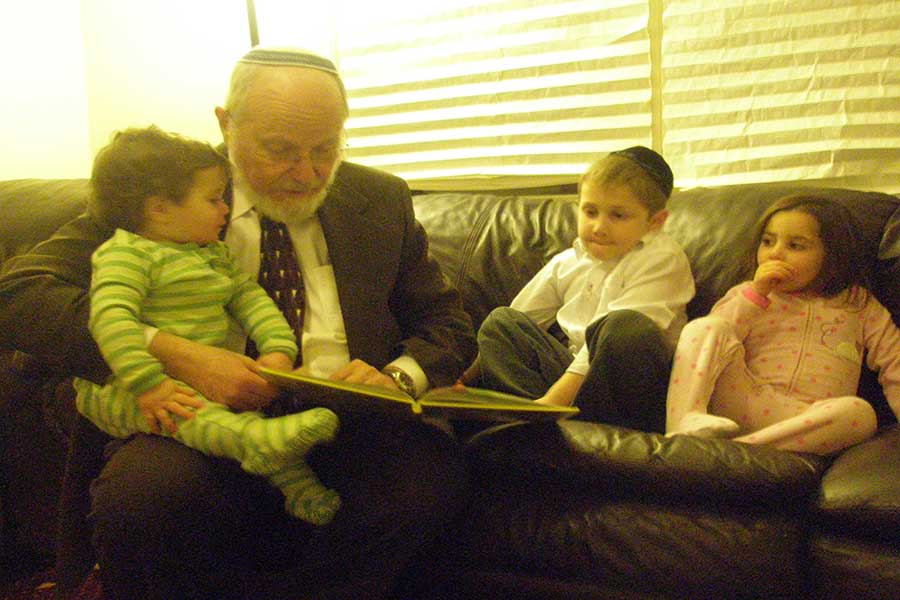
It was well known that Jack Benny celebrated his thirty-ninth birthday every year. When Benny died in 1974, he had turned thirty-nine a total of forty-one times.
As we sit at our seders this year, we are not only reliving the past; we are living in the present. We are living through a time when the Jewish people are once again fighting for freedom.
By Rabbi Lord Jonathan Sacks z"l
Physically, we are almost nothing; spiritually, we are brushed by the wings of eternity. We have a G-dly soul.

The Rambam (Sefer HaMitzvot, negative commandment 99) says that it is not permitted to bring a Korban that has no taste, it has to have an intrinsic taste and flavor that is not just palatable, but an honor to the King to Whom it is sacrificed, it has to be delicious.
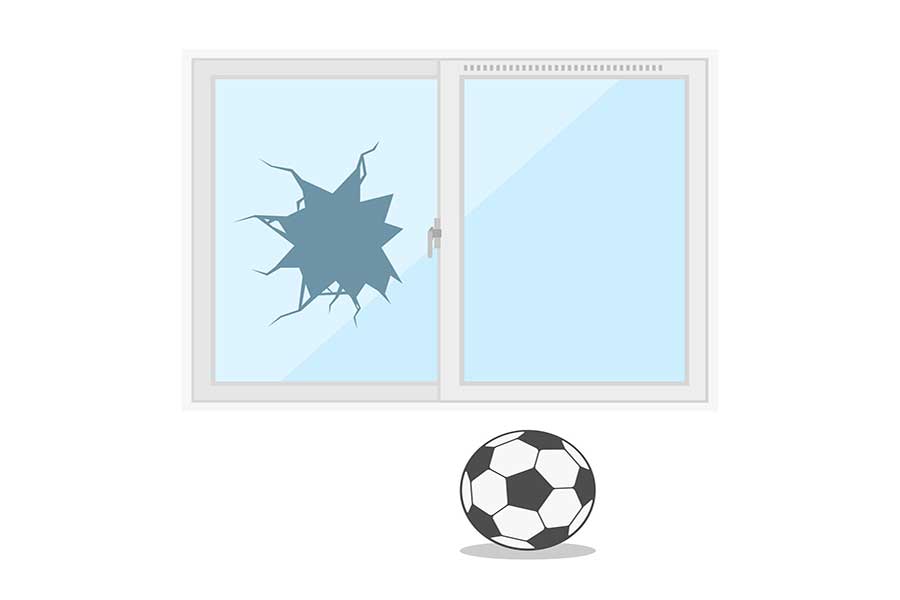
Even if it was my idea, if Reuven’s ball broke the window, he’s liable – not me! Shimon argued. Who’s to say that I have to pay?
Silence Golden? ‘Iyov, Who Was Silent…’ (Sanhedrin 106a)

Question: I would like to have a better understanding of a practice that I and many others are a party to every year before Passover. How does the sale of chametz to the gentile take effect if it is returned to the original owner within a very short period after the festival’s conclusion? M. Goldblum Miami Beach, FL
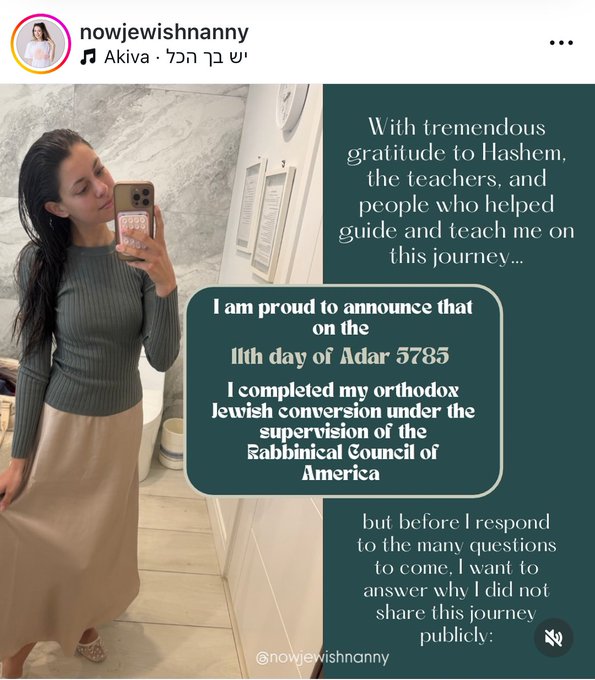
An important lesson of the Now Jewish Nanny’s journey and the families that inspired her is to ask ourselves, if someone worked in our home, lived with our family, was involved in our lives and lifestyle, would that draw them closer to Judaism or push them away?
More than one scholar has noted the absence of self-critique in ancient literature of all peoples except the Jews.

Etching the Torah in our hearts and minds takes an enormous investment of effort and time. We may fear that the long hours we spend on it displaces the time we need to meet our surrounding responsibilities, our commitment to work, to family etc. Miraculously, however, nothing gets displaced.

The innermost aspects of being are revealed in the interior of the Tent of Meeting in the Mishkan, or in the Hechal (or sanctuary) of the Beit HaMikdash.
Day by day we are building for eternity ... Every gentle word, every generous thought, every unselfish deed will become a pillar of eternal beauty in the life to come. -Rebecca Ruter Springer

With the mitzvah of tzedakah, there is the possibility of saving oneself even as the ship is beginning to sink. The mitzvah of tzedakah is especially unique in that it can protect the individual even if a Heavenly decree has already been issued to the contrary.

I will learn the art of saying I’m sorry, showing that I empathize with the damage I’ve done and demonstrating that I’m making concrete corrections so that it won’t happen again. This is very different than the But, I said I’m sorry already approach!

If one believes in a Divine plan and the natural ups and downs of life, they will feel less anxious and hypersensitive.

We all yearn for connection: to ourselves, to other people, and, of course, to Hashem. But connection is difficult; it requires time, patience, and constant effort. Genuine communication takes a lifetime to achieve.
The first generations of men made such sinful choices. Eventually, their sins corrupted the entire world. When man lost his way, other creatures followed suit. This man-induced reality caused Hashem to wash away all living beings.

Shlomo HaMelech is teaching that chinuch is not just about compliance, but more about instilling values into our children’s souls, so that it becomes part of them for life.
Hashem will show me the way, though I don't know how it will happen. But I know in my heart, that I am meant to return.

Chazal tell us that every component in the earthly Beit HaMikdash is paralleled by a "twin component" in the Heavenly Beit HaMikdash. Just as there is a Menorah down here, there is a Menorah up there. Just like there is a Shulchan down here, there is a Shulchan up there, etc.

Rare items, such as a Parah Adumah, do not have a definable ‘fair market value,’ replied Rabbi Dayan. Therefore, according to many authorities, there is no ona’ah (unfair pricing) claim (Hilchos Mishpat 227:29[28]).

As We Come Closer And Closer ‘… Like The Face Of A Dog’ (Sanhedrin 97a)

Question: I would like to have a better understanding of a practice that I and many others are a party to every year before Passover. How does the sale of chametz to a gentile take effect if it is returned to the original owner within a very short period after the festival’s conclusion? M. Goldblum Via Email

the Talmud speaks about His presence moving away from the Temple only gradually during its last days. So would it not have made more sense for G-d’s presence to also come down gradually while the Tabernacle was being builtT

Of all the 39 acts of work which are prohibited on Shabbat, why does The Torah single out the act of lighting fire? As we know, in the Jewish calendar, the night belongs to the next day. By burning the light at night, we extend the working day into Shabbat.
By Rabbi Lord Jonathan Sacks z"l
The Egyptians sought not merely to enslave, but also to put an end to, the people of Israel. One way of doing so was to kill all male children. Another was simply to interrupt normal family life.

The women had to be there and also the babies, not simply because that was how it was at Matan Torah, but for another reason. Neither the women or the babies were complicit in the sin of the eigel, they didn't have anything to atone for – it was the men.
Ramchal teaches that although the Kohen officiates in the offering of korbanot, the three groupings of Israel are all essential to the effective completion of the service in the Beit HaMikdash.
The righteous women not only saved Moshe; they also inspired him. And they inspired many others as well – including their own husbands.

One of the Ten Commandments outlaws kidnapping, though, unfortunately, the death penalty imposed by the Bible did not and is not likely to deter the forces of Hamas – even though they are subject to the Noahide laws which include setting up court systems which should theoretically mete out justice...
Mesiras nefesh does not only refer to extreme instances. It also includes acts that may require a degree of selflessness for others.
In the spirit of Passover spiritual cleansing which we are commencing, here is a list of fifty-two areas of life which perhaps could use some ongoing scrubbing and scouring.

What happens when you don’t eat? You become faint. What happens if you continue without food? You will pass out. And if you still don’t eat, your soul will leave your body and you will die. Eating maintains the connection between your soul and your body; it is what keeps you alive.
One major criticism of the Stanford Marshmallow Experiment is that it presupposes that the child trusts the adult conducting the experiment to actually deliver the promised reward.
Throughout sefer Mishlei, Shlomo HaMelech contrasts the fool with the wise man. According to the wisest of men, the fool doesn’t refer to one with limited intellectual capacities, but rather one who doesn’t think through the consequences of his actions.
I am anticipating a deluge of angry letters from people listing off important persons named Elimelech that I’ve ignored, but the truth remains that despite the continued use of that personal name since Biblical times, Elimelech was always a fairly rare name until the times of the Noam Elimelech.
One of the key concepts in Judaism is the idea of impartiality in judgment. In the context of leadership, the Torah calls for the appointment of leaders who are wise, understanding, and respected, without reference to familial ties.
 October 16, 2026