יום ראשון, י״ב אב תשפ״וSunday, July 26, 2026



Follow Us



During the years that I was a division head, 98% of the campers in my division who were homesick were completely fine and enjoying camp within a week. But that first week can be gut wrenching.
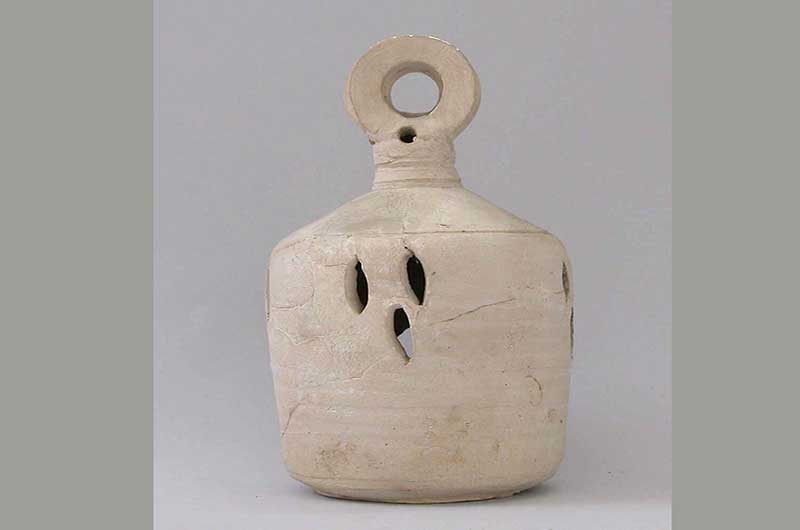
In principle, certain sins indeed leave a mark and are absorbed so deeply that the body must be destroyed. Yet, if the internal actions and repentance reach a level that rationalizations peel away – or at least significantly weaken – the vessel is reformed without actual destruction.

Even investments, which do belong to the person in his lifetime, should ideally be divided according to the beneficiaries. Although these investments are part of his estate, since the person designated beneficiaries, the principle of mitzvah lekayem divrei hames applies.
An Essential Agent ‘Set In The Skin Of The Rennet Of Nevela’ (Avodah Zarah 35a)

When someone makes shalom between rival parties, what does that mean?

Question: I recently returned from a trip abroad. When I entered my synagogue early one weekday morning, I asked the officers for an aliyah so that I could bless Gomel. I was informed that I could receive an aliyah; however, as per the rabbi’s instruction, I would have to wait until the Sabbath to bless Gomel. I was not given any reason for this and did not wish to display my ignorance, so I quietly acquiesced. Can you please explain what was meant? Name Withheld Via E-mail

We daven together in synagogues that feel familiar whether we’re in Toronto or Tel Aviv. We mourn together when tragedy strikes and we celebrate together when a lost hostage comes home or an aliyah flight lands in Ben-Gurion Airport.

Going out before the people and going in before them is one type of leadership. It is the leadership of the humble public servant who bends before the needs of his people.

Not every gut impulse is a moral directive. When we confuse conscience with certainty, we risk mistaking personal anger for sacred missions.
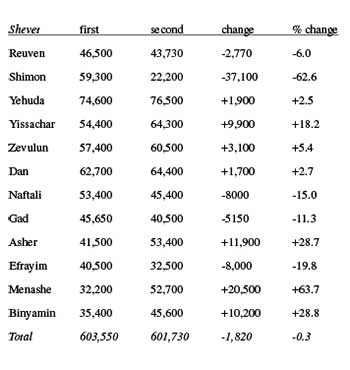
If Parshat Bamidbar showed why the Book of Bamidbar is called the Book of Numbers, then Parshat Pinchas confirms that name.

Rabbbeinu Bachye finds it problematic to accept the literal interpretation that Hashem somehow erred, requiring our intercession on His behalf. He explains that the real purpose of this mitzvah of the Chatat on Rosh Chodesh is to give hope to those who have gone astray but wish to return to the faithful service of Hashem.

Striking the right balance between Torah and one’s livelihood is a tricky business. Especially since making a living is a mitzvah in itself.

We might think ancient society was cruel to women – and in many ways, the ancient world did not sufficiently protect individual rights – but I can’t think of anything more cruel than the modern conception that a woman should feel obligated to compete in the employment marketplace and jump back into work six weeks or three months after the most profound experience of childbirth.
We don’t wait for spirituality to come to us; we proactively seek it out. We don’t let time wash over us; we actively ride the waves of time.
Working six days and resting on the seventh reminds us that Hashem did the same when He created the world. Shabbat is a weekly reminder of how the world came to be. It was created by Hashem, and is not just here on its own.
It’s that sense of altruism and unity that gives us hope that we will merit to witness Mashiach.

I understand that halacha frowns on engaging in personal needs before Shacharis, including travel, Eliyahu said. But I have a choice between davening at home and then fighting traffic, often getting late to work, or joining a minyan near work and avoiding traffic. Rabbi Dayan listened attentively. Eliyahu asked, Can I drive to work and daven Shacharis there?
A Matter Of Time ‘One Who Is Recognized As An Expert...’ (Avoda Zarah 26b)
We live such public and exposed lives today, yet in this week’s parsha we are reminded to seek the blessing of privacy.
Question: I recently returned from a trip abroad. When I entered my synagogue early one weekday morning, I asked the officers for an aliyah so that I could bless HaGomel. I was informed that I could receive an aliyah, however – as per the Rabbi’s instruction – I would have to wait until the Sabbath to bless HaGomel. I was not given any reason for this and did not wish to display my ignorance, so I quietly acquiesced. Can you please explain what was meant? Name Withheld Via Email

In Parshat Balak, Bilaam never saw the people he was meant to curse. He viewed them from a distance; abstractly, impersonally. His words came not from relationship, but rather from obligation, from politics, from agenda. And yet they could have reshaped a people’s destiny.

Balak realized that Midyan and Moav, the erstwhile enemies, would have to make a truce and gang up as allies against Israel. But since G-d was on Israel’s side, there was no way he could prevent the Jews from ultimately taking over the land.
Balak precedes the Fast of the Fourth Month (that’s what the navi calls Shiv’a Asar b’Tammuz) almost 80% of the time. That includes, in Chutz LaAretz, the years when Shavuot is Friday-Shabbat and the sedra right before the fast is Chukat-Balak.
Balak was evil – he did not want to elevate himself to the level of Am Yisrael, he wanted to reduce Am Yisrael down to his level, or even lower.

One may not sell lions to Gentiles, according to the Talmud, because lions can cause injury to the public (Avodah Zarah 16), to put it mildly.
His father told him: You decide which yeshiva you want to go to. Don’t tell me your decision. When the day comes to leave to yeshiva, take your suitcase, go to the yeshiva, and I don’t want to know where you are going.
By Rabbi Lord Jonathan Sacks z"l
According to he Netziv, If Jews live distinctive and apart from others they will dwell safely, but if they seek to emulate ‘the nations’ they ‘will not be reckoned’ as anything special at all.
Though the Shulchan Aruch agrees with the Rambam’s broad prohibition, his final clause might offer some room for an answer. It is permitted to note the beauty of an idolator if the focus of the comment is to praise G-d and not the person.
Idolatry is insidious and it sneaks into the hearts of the unwary by way of small compromises and prohibited acts that appear insignificant at first.

Rabbi Sauber told his class, We are about to learn about the greatest act of self-sacrifice that ever occurred.

The most obvious form of chesed is giving money, but this is far from ideal. Short-term monetary gifts do not usually solve a long-term struggle with poverty; the person will therefore remain dependent and poor.

If the borrower slipped payment through the mail slot without prior arrangement, and somehow it got lost in the household shuffle or some other manner, it is unclear whether this is considered valid repayment, replied Rabbi Dayan.
Exchanging Land? ‘Nor Shall You Show Them Favor’ (Avodah Zara 20a)
Is there a halachic source for the Mi Sheberach other than its presence in the siddur?
It is impossible to reach an agreement with Amalek, because the only thing that will satisfy them is our obliteration and…G-d's name in the world can never be complete until Amalek is obliterated.

Unlike the two previous sedras of Shelach and Korach, each of which were two-thirds story and a third juxtapositional mitzvot, Chukat’s three mitzvot are part of the same mitzvah topic – namely, para aduma (the red heifer), with the bulk of the sedra being a string of episodes in the Midbar-wandering period.
Because if it is corruption we are worried about, there is no greater corruption and source of impurity than the presence of death itself.

We are living in a world of chaos, never sure what tomorrow brings. As I write these words it is impossible for me to know what our days will look like by the time you read my message.
The attitude that one knows that you’ve got my back isn’t born overnight. It’s achieved with a persistent series of small acts and gestures where husband and wife demonstrate that you are first in my book.

Like many Israeli leaders, Netanyahu often peppers his speeches with biblical verses, usually used as cultural or historical touchstones rather than as expressions of personal religiosity. Keinon points out that Netanyahu’s use of the Shema prayer is less typical and perhaps indicative of a deeper religious arousal.
When one makes peace in his home, the Torah considers it as if he established peace among the entire Jewish Nation.

Perhaps the fullest picture of what is truly unfolding emerges only when we consider most, if not all, of these perspectives together.

Only when there is silence, and the complete absence of ego, can the truth be heard, understood, and accepted. The Torah is the absolute and whole truth and can therefore only be given when there is absolutely nothing else competing against it.
Obviously, staying up all night isn’t about qualitative learning, but about demonstrating excitement. One only stays up late, or all night, for something truly important or exciting.

Destruction and death come to those who do not serve G-d out joy but out of fear alone.
In place of conventional warfare, terrorist organizations have emerged that have taken terrorist activities to a new level.

We can learn from people with good character. And we can even learn from people with bad character how not to live our lives. We can extract true lessons when we hear how an enemy criticizes us. We can learn from children and those in all strata of society.

The common practice is to use silver coins, whether silver dollars minted in the U.S. or special silver coins minted now in Israel with the proper silver content, concluded Rabbi Dayan. Where this is not possible, though, you can redeem with other movable items or possibly even cash of the requisite amount.
To Have Or To Hold ‘Renting Is Not Owning’ (Avodah Zarah 15a)
I’m not sure whether people fully grasp the magnitude of the miracle. Just the day before, the floors of the building that was hit had been cleared. Entire departments had been relocated to reinforced areas.

Is there a halachic source for the Mi Sheberach other than its presence in the siddur?
Man’s fate is in his own hands – he decides for himself and for the world. Hashem did not create us as finished products, but with the need and responsibility to develop ourselves properly.
Someone who understands reality on such a level also begins to see that all of humanity is really bound together as a cohesive whole.

The rise in rank for words and letters is due to Korach being above average in words and letters per pasuk. Korach is a short sedra (in a sefer with many long sedras) with fairly long pesukim (in a sefer with lots of short-pasuk sedras).

The theological questions from October 7 appear to be answering themselves in a way we can more readily understand.
[Democracy] is contingent on both sides respecting each other and not crossing red lines. When that breaks down, democracy ceases to function and it degenerates into illegitimate anarchy.

Advice is like snow—the softer it falls, the longer it dwells upon, and the deeper it sinks into the mind. – Samuel Taylor Coleridge
A humble person does not take credit for his power, his riches, or his intelligence, because he knows it is all from Hashem.
I believe that Hashem is sending these unfortunate people to us as a gift to enhance and strengthen our prayers.
In a balanced and nurturing environment, sacrifice enhances rather than detracts from quality of life.
If the Torah does, in fact, require organization, why specifically divide it into five parts?

Who is the biggest victim of identity theft? Every one of us. One of the greatest tactics that our evil inclination employs is to confuse us about who we really are, and what defines us.

Of course, our monetary funds are limited. There are so many worthy causes and we cannot support them all. However, we have a responsibility, halachically and morally, to assist those in greatest need.

Israel has brought Iran to its knees—a tiny nation systematically dismantling a regional superpower in days. Then came President Trump's decisive strike, erasing Iran’s nuclear ambitions. These are not ordinary military victories; they are miraculous reversals our ancestors could only dream of. Yet aside from some overheated Facebook posts and WhatsApps from friends sharing gematrias […]

As long as the other side of the string remains intact, the tzitzis are still kosher. But you tore one of the expensive techeiles strands – these aren’t easy to replace.
Don’t Tread On Me ‘If One Consulted A Sage, He May Not Consult Another’ (Avodah Zara 7a)

It is no coincidence that Israel courageously attacked Iran in the week the Torah portion tells us: “When you are at war in your land against an aggressor who attacks you, you shall sound short blasts on the trumpets, that you may be remembered before your God and be delivered from your enemies.”
Is there a halachic source for the Mi Sheberach other than its presence in the siddur?
Shelach by the numbers: Total pesukim: 119, ranks 21st (of 54 sedras) Total words: Ranks 27th Mitzvot: 3, ranks 27th

This generation is truly remarkable. They do not flee from hardship. They strive for the elite units, the most dangerous positions, not because of ego or pride, but because they yearn to be protectors.

The Rogatchover Gaon emphasizes specifically that Eretz Yisrael is only acquired through tribulation (Brachot 5), noting how inappropriate it is for someone to expect to gain the fruits of the labor of another – especially when somebody has to go to war to defend the land and somebody else expects to just sit at home and benefit from this.

The last piece addressed our relationships with peers – including spouses, friends, and family. In addition to those relationships, we should also have meaningful relationships with the generations that precede and follow our own.
Many marriages have been ruined by the well-meaning but poor advice of friends.

The aveirah of the meraglim was their own lack of faith, and their determination to weaken the faith of the Jewish nation.

By Rafi Hecht
While a few, such as certain Amoraim and Natronoi Gaon, retained access, it became almost exclusive to non-Jewish royalty. The last known Jewish mention came from the Ramban in the 13th century, who noted that the Melech Goyim – possibly James I of Aragon – still wore it in his day.
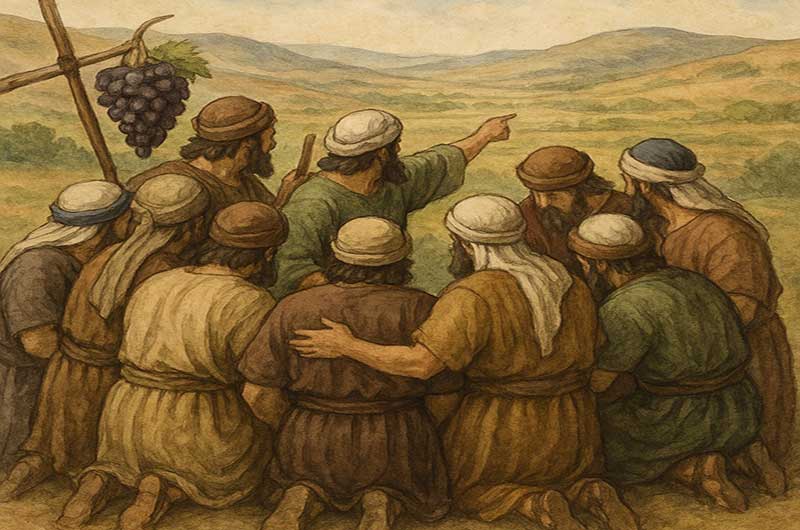
When the spies returned with a bunch of grapes so big it could only be carried by ten people and one fig which could hardly be carried by one person, instead of praising the land which grew such produce, they became concerned that the price of such opulence was too expensive and that they would not be able to afford to pay for it with mitzvot.

Everything, from quarks to consciousness, emanates from Divine will and intellect.

Think about this for a moment. They were just about to enter Eretz Yisrael and Eldad and Meidad's prophecy revealed that Moshe would die and Yehoshua would lead Bnei Yisrael into the land flowing with milk and honey. Did this phase Moshe? Not in the least.
The Beis HaMikdash is the point where the spiritual heavens kiss the physical earth…this is where the infinite and spiritual meet the finite and physical.

It’s vital that a fielder and batter know how many outs there are. Whether a fielder will make a play to second or decide to hold the runner, and whether a runner will be running if there is a pop-up, depends on how many outs there are.
I acknowledge that I shouldn’t have left the skateboard there, Simcha responded, but you should have looked where you were running. You sent the skateboard rolling!
Was She Really Married? ‘One Said Two… The Other Said Three…’ (Shevuos 48a)

Some 200 years ago, Rebbe Nachman of Breslov wrote a statement that I find amazing: The time will come when being an upright and simple person will be as revolutionary as being the Baal Shem Tov.

If one ate a quantity that would usually serve as the mainstay of a meal for other people, he blesses HaMotzi and recites Birkat HaMazon even if he was not satiated.
By Rabbi Lord Jonathan Sacks z"l
The trouble is that if the leader is a parent, then the followers remain children. They are totally dependent on him. They do not develop skills of their own. They do not acquire a sense of responsibility or the self-confidence that comes from exercising it.

If a person ploughs his field when it is time to plow, sows his seeds when it is time to sow, reaps his produce when it is time to reap , thrashes his grain when it is time to thrash and winnows the grain when it is time to winnow, when will he have time to learn Torah? (Berachos 35b).

We cannot totally control our sustenance – not the food we eat, nor the money we earn.

In our time, back in 1982, the costliest battle of the war in Lebanon claimed the lives of about 30 IDF soldiers on this date. Thus, the 20th of Sivan is indeed a tragic day. You can find Selichot written for the day in some siddurim.

This is Judaism’s unique gift: the slow accumulation of wisdom through repeated encounters with Torah. Not through theoretical lectures, but through real life examples.
Every time we discover a new Torah deMoshe MiSinai, an unprovenanced edict associated colloquially with Moshe, we are reaffirming our connection to that primary source of all Torah and to Moshe who passed it on to us.

Home is not where you live, but where they understand you.— Christian Morgenstern
He leaped off the jeep, shouting that he’d take the next one.

Know Hashem in all your ways – serious or inconsequential – for every ounce of success comes from Hashem.
 July 24, 2026