יום ראשון, י״ב אב תשפ״וSunday, July 26, 2026



Follow Us


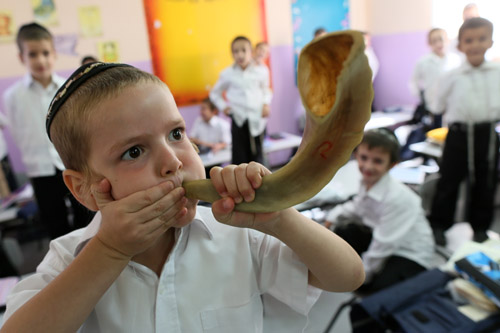
As the year is coming to an end, with endless days filled with doing the very same commandments, we besiege G-d on each remaining day, asking for one vital ingredient for the one yet to come: May we never get used to our routine.
By Rabbi Yaakov Klass and Rabbi Gershon Tannenbaum
A Two Way Street? ‘Joining Geulah To Tefillah Is Preferable’ (Berachos 30a)

The Talmud asserts that the rebellious son of the verse below never existed and never will. Nonetheless, the Torah relates this law to advise parents in the most difficult of issues – raising children. To Rabbi Avigdor Miller, zt”l, the law and its lessons help reveal Israel's greatness.
The pasuk from which most of the halachos of gittin (divorce) are derived is in this week’s parshah. The pasuk says: “Ki yikach ish isha… vechasav lah sefer kerisus v’nasan b’yadah veshilchah mi’beiso – If a man marries a woman … and he wrote her a bill of divorce and placed it in her hand and sent her from his house” (Devarim 24:1).
Question: What should the chazzan do when he reaches Kedushah and Modim? Some chazzanim say every word of Kedushah out loud and some only say the last part of the middle two phrases out loud. As far as the congregation is concerned, some congregants say every word of Kedushah and some say only the last part. Finally, some chazzanim and congregants say Modim during chazaras hashatz out loud and some say it quietly. What is the source for these various practices? A Devoted Reader (Via E-Mail)

Over the past several weeks I have featured tragic stories of family disintegration. Some of you might protest that “tragic” is a rather extreme word and that “sad” or “painful” would be more appropriate, but once again I emphasize tragic.
By Rabbi Lord Jonathan Sacks z"l
“Darkness cannot drive out darkness: only light can do that. Hate cannot drive out hate: only love can do that. Hate multiplies hate, violence multiplies violence, and toughness multiplies toughness...” (Dr. Martin Luther King).

By dvora
I felt ill at ease in a strange way when our daughter drove off in our old Dodge Caravan to pick up my son from yeshiva. She was new at the wheel, and there was plenty of traffic to maneuver around in Lakewood on Friday afternoons. An innocent, precious neshamah in my eyes who didn’t belong on the busy roads, she wanted to help out. So when I was called later to the scene of the accident, the One Above seemed to confirm that my assessment had been totally accurate.
It is hard to believe that Elul is upon us and that the Day of Judgment is only one month away. In a short 30 days we must face our Creator and have our deeds evaluated in the hopes of a receiving a merciful blessing for a good and healthy year. We spend the month of Elul focused on repentance, and we learn the holy books of mussar to inspire us to grow and change.

Mr. Morris was home one evening, when an acquaintance, Mr. Roth, knocked at his door. "May I have a word with you?" Mr. Roth asked. "Certainly, come in," Mr. Morris said, welcoming him into the living room. "Perhaps you've forgotten," Mr. Roth began, "but last year I lent you $500, which you never repaid." Mr. Morris scratched his head and thought for a moment. "I never borrowed from you," he replied.
By Rabbi Yaakov Klass and Rabbi Gershon Tannenbaum
No Cell Phones Please! ‘A Kerchief That One Designated For Storing Tefillin’ (Berachos 23)
Question: I understand that at a minyan, the chazzan is required to repeat Shemoneh Esreh out loud so that people who may not know how to daven can fulfill their obligation to daven with the chazzan’s repetition. What, however, should the chazzan do when he reaches Kedushah and Modim? I hear some chazzanim say every word of Kedushah out loud and some only say the last part of the middle two phrases out loud. As far as the congregation is concerned, I hear some congregants say every word of Kedushah and some say only the last part. Finally, some chazzanim and congregants say Modim during chazaras hashatz out loud and some say it quietly. What is the source for these various practices? A Devoted Reader (Via E-Mail)
In this week’s parshah the Torah discusses the halachos of eidim zomimim. The Gemara in Makkos 2a explains that eidim zomimim is when one set of two or more witnesses testifies against someone, and another set of witnesses testifies that the first set of witnesses was with them and therefore could not have known their testimony. The Torah says that the later set of witnesses is believed and the testimony of the first set of witnesses is disqualified.
By Rabbi Lord Jonathan Sacks z"l
There is a fascinating detail in the passage about the king in this week’s parshah. The text says that, “When he takes the throne of his kingdom, he must write for himself a copy of this Torah on a scroll before the levitical priests” (Deuteronomy 17:18). He must “read it all the days of his life” so that he will be God-fearing and never break Torah law. But there is also another reason: so that he will “not begin to feel superior to his brethren” (Kaplan translation), “so that his heart be not haughty over his brothers” (Robert Alter). The king had to have humility. The highest in the land should not feel that he is the highest in the land.
For the past several weeks this column has featured letters from parents who have experienced rejection and hatred from their children – as well as my suggestions on how to cope with such situations. This week I would like to share a letter that adds another dimension to the breakdown of so many families in our community. In this instance it’s not the children who have rejected the parents but a parent who has rejected her child.

By dvora
The other night, after having a truly bad day where nothing seemed to go right, I jokingly changed my Facebook status to “I have had one of those awful, miserable, terrible days! And there is NO chocolate in the house!”

I'd like to submit that anything Frequent in our life tends be Forgotten! Something we see every day does not rank high on our list of concerns, and therefore, we just naturally forget about it.

Prayer is always an avenue to God. But in the month of Elul, the last month of the Jewish year, and during the ten days between Rosh Hashanah and Yom Kippur, God lends a particularly sympathetic ear.
By Rabbi Yaakov Klass and Rabbi Gershon Tannenbaum
What About Ma’ariv? ‘The Bridegroom Is Exempt From Kerias Shema’ (Berachos 16a)
Question: I understand that at a minyan, the chazzan is required to repeat Shemoneh Esreh out loud so that people who may not know how to daven can fulfill their obligation to daven with the chazzan’s repetition. What, however, should the chazzan do when he reaches Kedushah and Modim? I hear some chazzanim say every word of Kedushah out loud and some only say the last part of the middle two phrases out loud. As far as the congregation is concerned, I hear some congregants say every word of Kedushah and some say only the last part. Finally, some chazzanim and congregants say Modim during chazaras hashatz out loud and some say it quietly. What is the source for these various practices? A Devoted Reader (Via E-Mail)
By Rabbi Lord Jonathan Sacks z"l
Having set out the broad principles of the covenant, Moses now turns to the details, which extend over many chapters and several parshiyot. The long review of the laws that will govern Israel in its land begin and end with Moses posing a momentous choice.

By Alan Magill
I was preparing a shiur to honor the memory of my father, Paul Magill, a”h, on the 20th anniversary of his passing, and I was looking at that week’s sedrah, Parshas Re’eh. I was struck by the words, “See, I present before you today a blessing and a curse. The blessing: that you hearken to the commandments of Hashem, your God, that I command you today. And the curse: if you do not hearken to the commandments of Hashem, your God, and you stray from the path that I command you today, to follow gods of others, that you did not know.”
The response to my columns regarding family breakdowns has been explosive.

I can probably read your thoughts: “Elul? I’m still in the Catskills! We haven’t even gone shopping at the Back-to-School sales yet!” That is true, but on the other hand, this week is Shabbos Mevorchim Elul, when we announce Rosh Chodesh Elul. Before you know it, we will be deep into Elul! Let us see how we can utilize this Shabbos to start getting ready.

Excitement was in the air as the 12th Siyum HaShas of the Daf Yomi cycle approached. Mendy, who had joined the Daf seven and-a-half years earlier, eagerly anticipated taking part in this major event at MetLife Stadium along with 93,000 other participants.
By Rabbi Yaakov Klass and Rabbi Gershon Tannenbaum
Kerias Shema Twice At Night? ‘When One Reads Shema’ (Berachos 8b)
On the sad day that Eliezer Lipman, Reb Elimelch and Reb Zusha’s father, passed from this world, his children gathered for the week of mourning. At the conclusion of the shivah the sons divided their father’s inheritance in the following way: Avraham received the cash and the house was given to Nosson. The jewelry and housewares went to Elimelech and the outstanding debts were to be collected by Zusha.
In this week’s parshah the Torah gives us the mitzvah of tefillah – davening to Hashem – for as the pasuk says, “oso sa’avod – you shall serve Him.” The Torah repeats this mitzvah several times, with another mention further in this week’s parshah: “uleavdo bechal levavchem – serve Him with all of your heart.” The Sifri explains that one serves with his heart by means of tefillah.
Question: I understand that at a minyan, the chazzan is required to repeat Shemoneh Esreh out loud so that people who may not know how to daven can fulfill their obligation to daven with the chazzan’s repetition. What, however, should the chazzan do when he reaches Kedushah and Modim? I hear some chazzanim say every word of Kedushah out loud and some only say the last part of the middle two phrases out loud. As far as the congregation is concerned, I hear some congregants say every word of Kedushah and some say only the last part. Finally, some chazzanim and congregants say Modim during chazaras hashatz out loud and some say it quietly. What is the source for these various practices? A Devoted Reader (Via E-Mail)

By Henia
I was going crazy. I couldn’t stand it another minute. Yes, I was feeling sorry for myself. I had been blessed, b’li ayin hara, with children very close in age. Surely having one child after the other was a blessing to be grateful for. I knew there were many people who would give a million dollars to have such a “problem.” But still, it was very stressful. But that wasn’t the hardest part, and it wasn’t the main reason for my feelings of despair.

This week I will share some of my own thoughts on the subject.
By Rabbi Lord Jonathan Sacks z"l
Something implicit in the Torah from the very beginning becomes explicit in the book of Devarim. God is the God of love. More than we love Him, He loves us. Here, for instance, is the beginning of this week’s parshah: “If you pay attention to these laws and are careful to follow them, then the Lord your God will keep his covenant of love [et ha-brit ve-et ha-chessed] with you, as he swore to your ancestors. He will love you and bless you and increase your numbers” (Deuteronomy 7:12-13).
Harav Matisyahu Salomon, the Lakewood Mashgiach, once related the following personal story: “When I was a young man I was a student in the Gateshead Yeshiva. The yeshiva had a 125 students - not large quantitatively, but qualitatively tremendous. The building was fairly small and the tables were so narrow that the volumes of Gemara overlapped each other. If a student wanted to turn the page he had to ask everyone around him to lift their Gemaras first. Yet despite it all we studied with tremendous diligence.
We’ve all seen the ads in the papers. Shabbos Nachamu is one of the biggest getaway weekends of the entire “frum” summer. There has long been a long-standing American tradition for people to go up to the mountains for Shabbos Nachamu.
By Rabbi Yaakov Klass and Rabbi Gershon Tannenbaum
A Hadran On Shas ‘Tam V’nishlam’ (Niddah 73a)
Question: I understand that at a minyan, the chazzan is required to repeat Shemoneh Esreh out loud so that people who may not know how to daven can fulfill their obligation to daven with the chazzan’s repetition. What, however, should the chazzan do when he reaches Kedushah and Modim? I hear some chazzanim say every word of Kedushah out loud and some only say the last part of the middle two phrases out loud. As far as the congregation is concerned, I hear some congregants say every word of Kedushah and some say only the last part. Finally, some chazzanim and congregants say Modim during chazaras hashatz out loud and some say it quietly. What is the source for these various practices? A Devoted Reader (Via E-Mail)
There is a fundamental difference between the times set for reciting the Shema and all other prayers. Whereas our sages linked the times for prayers to the times of the Temple sacrifices, the time for reciting Shema is fixed by the Torah itself – “beshochbechah uvekumechah” – when you lie down and when you get up.
By Rabbi Lord Jonathan Sacks z"l
Near the end of Parshas Va’etchanan, so inconspicuously that we can sometimes miss it, is a statement with such far-reaching implications that it challenges the impression that has prevailed thus far in the Torah, giving an entirely new complexion to the biblical image of the people Israel:

By dvora
The day following our oldest daughter’s wedding in Eretz Yisrael was the day we had planned for my husband to return to his job in the U.S. I was staying for another week in Israel with the rest of our children and my dear mother in order to participate in the remaining wedding celebrations.
In this week’s parshah Moshe Rabbeinu recounts ma’mad Har Sinai – the giving of the Torah on Har Sinai. Additionally, the Torah warns us earlier in the parshah not to forget the revelation that we witnessed at Har Sinai, for as the pasuk says: “Only beware for yourself and greatly beware for your soul, lest you forget the things that your eyes have seen and lest you remove them from your heart all the days of your life, and make them known to your children and your children’s children” (Devarim 4:9).
By Dov Shurin
I sleep every Tisha B’Av night on a narrow cushion in front of the Me’aras HaMachpelah in Hebron. I do this because the following chiddush came to me many years ago: When the spies went to Israel, the pasuk says “vayavo ad Chevron” – “and he came until Hebron.” He instead of they. Rashi says only Calev ben Yefuneh went to Hebron, to pray to Avraham Avinu that he not fall for the plan of the spies.
My previous two columns focused on the fragmentation that has affected one frum family. Many readers may consider the story described to be a rare occurrence. I wish this would be the case. To be sure, each family crisis is its own unique tragedy, but the common thread of hatred is always there.
A few years ago, I happened to be in Los Angeles for the fast of Tisha B'Av. Towards the end of the fast, between afternoon and evening prayers, the rabbi of the shul asked if I could say a few words to the congregation to explain the significance of the holy day and the fast.

They say that one mother can take care of five children, but five children cannot take care of one mother. One of the most challenging situations, and perhaps the most unnatural, is when children need to take care of aging or infirm parents. Why is this so difficult and why do so many of us fail at caring for our parents when they need us most?

Mr. Blank worked through the summer, so his family stayed in the city. "It would be nice to get away to the country for a weekend," his wife suggested.
Five tragedies occurred on Tisha B’Av. It was decreed that those who left Egypt would not enter the land of Israel, the first and second Temples were destroyed, the city of Betar was captured with thousands massacred, and Turnus Rufus plowed the site of the razed Temple. Consequently, Tisha B’Av was declared a day of national mourning and a fast day.
By Rabbi Yaakov Klass and Rabbi Gershon Tannenbaum
Sorrow And Joy ‘Proclaim Your Troubles So That Your Friends Pray For You’ (Niddah 66a)
Moshe's blessing to the nation of Israel is interesting in that a similar blessing, which Hashem had given Avraham and Yizchak, had already been fulfilled. Rabbi Avigdor Miller, zt”l, observes that among the greastest blessings is abundant offspring, and therefore this blessing was particularly auspicious – even the third time around.
Question: I understand that at a minyan, the chazzan is required to repeat Shmoneh Esreh out loud so that people who may not know how to daven can fulfill their obligation to daven with the chazzan’s repetition. What, however, should the chazzan do when he reaches Kedushah and Modim? I hear some chazzanim say every word of Kedushah out loud and some only say the last part of the middle two phrases out loud. As far as the congregation is concerned, I hear some congregants say every word of Kedushah and some say only the last part. Finally, some chazzanim and congregants say Modim during chazaras hashatz out loud and some say it quietly. What is the source for these various practices? A Devoted Reader (Via E-Mail
Question: Is it prohibited to listen to music in the privacy of one’s home (or car) during the Nine Days?

By Naama Klein
I know what you’re thinking. You have already concluded that this is one of those heartwarming stories about the anonymous tenth man who completes a minyan in some far-off region, under mysterious, if not downright miraculous, circumstances. Likely as not, he turns out to be Eliyahu Hanavi.
Last week I shared a tragic letter of family disintegration. What could have been a most beautiful mishpachah was torn asunder by one son and his wife who decided to sever all relationships with their siblings. Despite all the efforts on the part of the parents and the siblings, this son and his spouse remained refused to be reconciled. When simchas came – births, bar mitzvahs, weddings – the parents were invited but never the siblings. To add insult to injury the parents were treated disrespectfully on all of these occasions.
One may not perform several actions during the week in which Tisha B’Av falls. This is referred to as shavua she’chal bo. For example, one may not take a haircut or wash his clothing (Ashkenazi Jews are forbidden in these actions prior to the week of Tisha B’Av in accordance with the ruling of the Ramah). The Mechaber (Shulchan Aruch Orach Chaim 551: 4) writes that in a year when Tisha B’Av falls on Shabbos and is pushed off to Sunday (as it does this year) there is a machlokes as to whether there are any prohibitions during the week before Tisha B’Av. The Mechaber seemingly sides with the view that there are no halachos of shavua she’chal bo in such circumstances.
Question: Is it prohibited to listen to music in the privacy of one’s home (or car) during the Nine Days?

As a frequent traveler abroad, I rarely see a community where everyone is alike. Though the comfort of "living with your own" is understandable, there is much to be said for a Jewish community in which Streimlach walk on the same sidewalk with Kippot Serugot, and girls wearing heavy stockings walk to shul on Shabbat together with those wearing sandals without any socks.
By Rabbi Yaakov Klass and Rabbi Gershon Tannenbaum
Self Evident? ‘What Uncleanness Is There In A Nasal Discharge?’ (Niddah 55b- 56a)
In this week’s parshah the Torah writes about a prohibition on killing a murderer prior to his trial. As the pasuk says: “…v’lo yamus harotzeach ad amdo lifnei haeidah lamishpat – … so that the murderer will not die until he stands before the assembly for judgment” (Bamidbar 35:12). The same rule applies to anyone who commits an aveirah that is punishable by death; no one is permitted to kill him prior to his trial in beis din, including the witnesses that warned him and witnessed the aveirah. The Sefer Hachinuch (mitzvah 409) writes that if one kills a transgressor prior to his trial, he is regarded as a murderer.

In the confrontation between Israel and Midian, the Torah reveals the great void of virtue that separated the two nations. While Israel had fallen to great depths in the challenge of the Peor, Rabbi Avigdor Miller, zt”l, points out that it had risen again to great heights in the ensuing battle against a nation steeped in immorality.
Question: I was taught that due to our state of mourning on Tisha B’Av, we are not allowed to learn or discuss Torah – a topic that makes us happy and weakens our mournful state. Why, then, are we allowed to read from the Torah at Shacharit and Mincha on Tisha B’Av? Also, does the halacha of not learning apply to a regular mourner as well? Menachem (Via E-Mail)
By Rabbi Lord Jonathan Sacks z"l
During The Three Weeks between 17 Tammuz and Tisha B’Av, as we recall the destruction of the Temples, we read three of the most searing passages in the prophetic literature, the first two from the opening of the book of Jeremiah, the third, next week, from the first chapter of Isaiah.
Dear Rebbetzin Jungreis, This is the most painful letter I’ve ever written. I’ve been through many horrific experiences. My parents were survivors of the Holocaust; they were shattered people. I know you will understand this since you too are a Holocaust survivor.

By Henia
I’d like to believe that I at least have average intelligence. And when in need of inspiration or to learn something to facilitate my personal growth, I gain much from adult tapes and books. I’m greatly inspired by the words of the plethora of writers and speakers who target their words to adult audiences; their sentence structure and vocabulary meant only for us grownups. Their valuable lessons are often arrived at through a series of logical steps any adult with reasonable intelligence should be able to follow. And follow I do.
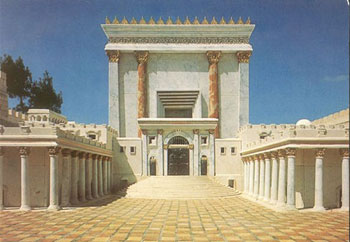
The story is told of a Chassidic Rebbe who stayed one night in the attic of a simple farmer. Promptly at chatzos (midnight) the Rebbe sat on the floor and began saying Tikkun Chatzos (a prayer said most nights by pious individuals, mourning the destruction of the Bais Hamikdash.) Immediately, a fountain of tears began to flow from his eyes, as he unabashedly mourned our great loss. Soon, his crying became so loud that it aroused the farmer and his wife from their sleep. The concerned farmer quickly knocked on the door and asked if everything is okay. The Rebbe answered that he is simply mourning the Bais Hamikdash.
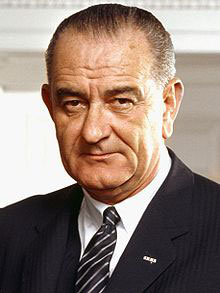
When national tragedy struck on November 22, 1963 Vice President Lyndon Johnson was inadequately prepared to assume the presidency. The Kennedy people had done their best to sideline him throughout the first three years of JFK’s term. Thus, he was not in the know in regards to many of the important initiatives Kennedy had proposed, but that would now become his responsibility. Additionally, there was substantial personal ill will between LBJ and Kennedy’s people - especially JFK’s younger brother Bobby, the attorney general.
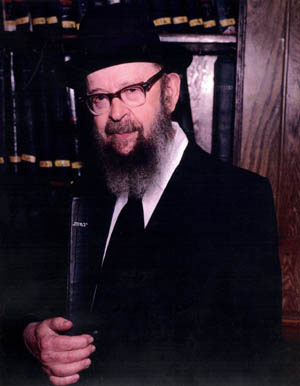
“Pinchas Ben Elazar Ben Aharon the kohen turned away my wrath from upon the sons of Israel by his zeal for my sake in their midst; and I did not bring destruction upon the sons of Israel because of my jealousy. Therefore, say, behold, I give to him my covenant of peace” (25:11-2). This is a special proclamation of acclaim. Though Moshe certainly approved of Pinchas, Hashem here teaches the necessity to render public recognition to the righteous.

The Alperts needed some work done around their house. The contracted Mr. Fixler, a general handyman, to do the job. While working on one of the fixtures, Mr. Fixler accidentally knocked his drill off the ladder. It landed with a thud on the floor of the entranceway, cracking a tile.

To the misnaged-opponent, chassidus was not perceived as a different strand of normative Judaism, nor as a movement to uplift downtrodden Jews – but as an existential threat to Judaism itself. And the threat was no longer viewed as a futuristic potentiality; it was a real and imminent danger, for the movement was no longer limited to just the commoner but had infiltrated the ranks of scholars.
By Rabbi Yaakov Klass and Rabbi Gershon Tannenbaum
Soul Food ‘It Comes To Include A Fragrance’ (Niddah 52a)
Question: I understand that at a minyan, the chazzan is required to repeat Shmoneh Esreh out loud so that people who may not know how to daven can fulfill their obligation to daven with the chazzan’s repetition. What, however, should the chazzan do when he reaches Kedushah and Modim? I hear some chazzanim say every word of Kedushah out loud and some only say the last part of the middle two phrases out loud. As far as the congregation is concerned, I hear some congregants say every word of Kedushah and some say only the last part. Finally, some chazzanim and congregants say Modim during chazaras hashatz out loud and some say it quietly. What is the source for these various practices? A Devoted Reader (Via E-Mail)
The Gemara in Baba Basra 119b relays the following conversation that took place in this week’s parshah: Moshe Rabbeinu was teaching the halachos of yibum when the daughters of Tzelaphchad approached him with the following question: Our father died in the midbar and did not have any sons. Why then is our mother not required to fulfill the obligation of yibum? And if the fact that he had daughters is the reason that she is not obligated to fulfill this requirement, why then can we (his daughters) not receive an inheritance – just like sons would?
I receive letters and e-mails every day from all parts of the world. Sadly, there is no shortage of problems. Pain and suffering abound. How to navigate the turbulent waters of the world we live in is a challenge for everyone.

By Alan Magill
Feeling more alone than at any time since arriving in New York, I looked inside myself for anything that could anchor me to bring me back to who I was, to move away from illusions of romance to my central sticking point. Suddenly and unexpectedly, being a Jew meant more to me than anything else in the world.
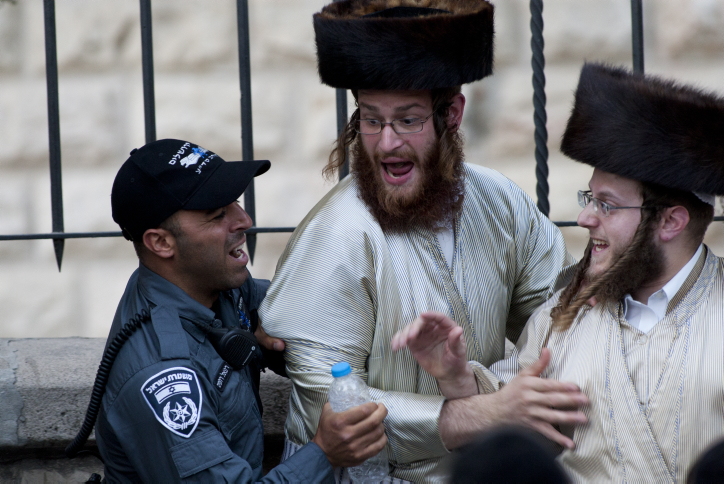
"Monopoly was created for a summer Shabbat and Fast Days…"! So I heard, time and again, in my early years. Years later, I know rather too well that while "Monopoly" has a place in the Jewish home, I am not sure about it's appropriateness to either Shabbat or a Fast-Day.

We often sit through the haftorah wondering, “Why do we read the haftorah anyway?” Krias HaTorah of the parsha makes sense—we read a portion of the Chumash each week so that we finish the entire Torah over the course of the year. But we’re not reading a portion of Navi each week so that we can finish all of it on some kind of schedule.
By Rabbi Yaakov Klass and Rabbi Gershon Tannenbaum
Can’t Have It Both Ways ‘A Minor Who Reaches Maturity’ (Niddah 46a)
In this week’s parshah Balak hires Bilam to curse the Jews. The Gemaras in Berachos 7a and Avodah Zarah 4a say that there is a very brief moment during each day when Hashem allows himself to get angry. The Gemara says that no one was ever able to exact that moment except for Bilam the rasha, as it says: “veyode’a das elyon – and he knew Hashem’s knowledge.”
One does not have to be superstitious to recognize facts. It is a historical fact that the period between the Seventeenth of Tammuz and the Tenth of Av was plagued by recurring tragedies.
Question: I understand that at a minyan, the chazzan is required to repeat Shmoneh Esreh out loud so that people who may not know how to daven can fulfill their obligation to daven with the chazzan’s repetition. What, however, should the chazzan do when he reaches Kedushah and Modim? I hear some chazzanim say every word of Kedushah out loud and some only say the last part of the middle two phrases out loud. As far as the congregation is concerned, I hear some congregants say every word of Kedushah and some say only the last part. Finally, some chazzanim and congregants say Modim during chazaras hashatz out loud and some say it quietly. What is the source for these various practices? A Devoted Reader (Via E-Mail)

In the aftermath of the episode of Zimri and the Midianite women, Hashem struck down 24,000 Jews. Yet immediately afterward, Hashem reaffirmed his tremendous love for Israel. Rabbi Avigdor Miller, zt”l, explains that this is in character with Hashem's quality of chastising severely the nation he loves so dearly.
Last week I published a letter from a thirty-eight year old single woman who lamented that despite her having become a ba’alas teshuvah, forsaking her secular life, committing to Torah and mitzvos, going to rabbis, receiving berachot – in short, doing all the “right” things – she has failed to find her bashert, her soul mate. She wondered where G-d was and what all her sacrifices were all about. She was angry at G-d and regarded all her efforts as having been for naught. “My joy in Judaism has disappeared,” she wrote. The following is my response.

By Alan Magill
You don’t become a ba’al teshuvah overnight. There were many events in my life that contributed to the deepening of my religious commitment, including a party I attended with young, beautiful church members who tried to make me one of them, and how I met their “Jewish priest.” (I’ll discuss both experiences during the course of this continuing column.)

I am deeply concerned that a new religion, though close to Judaism but not part of it, is being formed based on a so-called "frumkeit" not defined as a mere "Chumra" [stringency], but rather actually violating clear laws and regulations set down by God for the Jewish people to follow
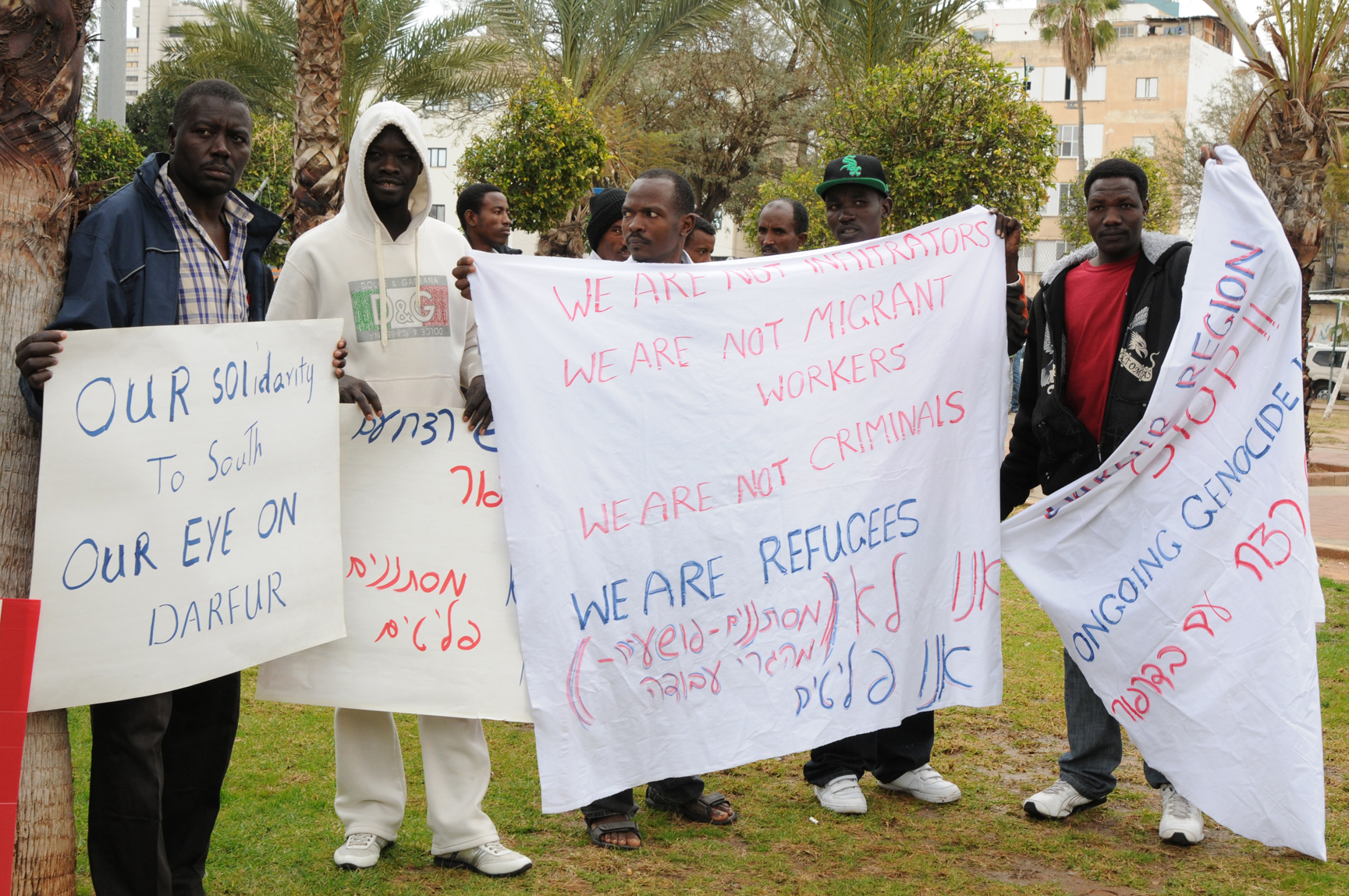
From elected officials to people in the street, from the highly educated secular upper class to yeshiva students to the working poor, numerous Israelis seem to share a lexicon and intellectual framework which denigrates and dehumanizes Africans, belittles their suffering, and trivialized their plight.

By dvora
We recently layned Parshas Naso which contains the Biblical source for the obligation of a married woman to cover her hair. An eesha sotah is a woman whose husband suspects her of having acted immorally. The Torah commands the Kohein to take various steps to demonstrate that the sotah has deviated from the modest and loyal path of most married Jewish women (Rashi 5:15-27). Among the procedures, the pasuk clearly states: “ufora es rosh haisha…” and he shall uncover the hair of the head of the woman (5:18).

On the 43rd day of the Omer I asked a child how many days there were to go. He immediately answered that 37 days remained. In response to my inquiry about his calculations, he excitedly announced that there were 37 days left to the school year! While all of us--he included--were counting down to the monumental day of receiving the Torah, he was also counting the days until he would be absolved of learning the very same Torah in the formal school environment!
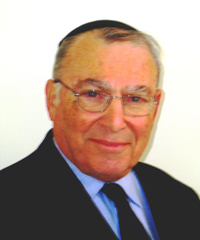
Question: It is known that some sephardim generally arrive at a simcha a few hours subsequent to the time noted on the invitation. Is there any logic behind this custom?
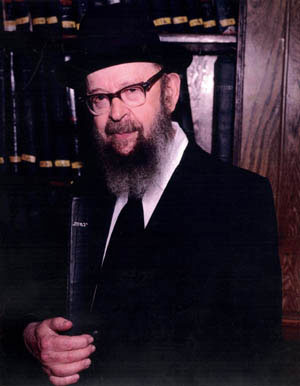
Hashem criticized His holy nation relentlessly, yet Rabbi Avigdor Miller, zt”l, observes that for 38 of Israel's 40 years in the desert, Hashem expressed no criticism at all. Herein is a lesson in Israel's greatness.

By dvora
JERUSALEM – A leading Orthodox rabbi in Israel has a revolutionary proposal for the harvesting of organs from a clinically dead patient. At present, his proposal not only has no support from other rabbis, it is also against Israeli law – but he is not fazed.
By Rabbi Yaakov Klass and Rabbi Gershon Tannenbaum
Rebirth Of Sorts ‘Immersing Contaminated, Emerging Pure’ (Niddah 42a)

The beginning of this week’s parshah discusses the halachos of a parah adumah (red heifer). The red cow is shechted and burnt, and its ashes are sprinkled on one who is tamei meis. The individual thereby becomes pure.
Question: I understand that at a minyan, the chazzan is required to repeat Shmoneh Esreh out loud so that people who may not know how to daven can fulfill their obligation to daven with the chazzan’s repetition. What, however, should the chazzan do when he reaches Kedushah and Modim? I hear some chazzanim say every word of Kedushah out loud and some only say the last part of the middle two phrases out loud. As far as the congregation is concerned, I hear some congregants say every word of Kedushah and some say only the last part. Finally, some chazzanim and congregants say Modim during chazaras hashatz out loud and some say it quietly. What is the source for these various practices? A Devoted Reader (Via E-Mail)

Mr. Meyers scurried around the wedding hall, making sure everything was properly in place; his son was getting married. "Could you please watch this envelope?" he asked his close friend, Mr. Koenig.
 July 24, 2026