יום ראשון, י״ב אב תשפ״וSunday, July 26, 2026



Follow Us


By Rabbi Yaakov Klass and Rabbi Gershon Tannenbaum
Triple Pray? ‘If He Did Not Say He Must Repeat’ (Shabbos 24a)

And Hashem said to Avram, “Go for yourself from your land, from your birth place, and from your father’s house to the land that I will show you.” – Bereishis 12:1 With these words begins one of the ten great tests of Avraham. The Ramban explains that these were trials by fire, designed to bring Avraham’s greatness to the surface, taking it from the potential to the actual. They helped form him into the singular tzaddik he became.
Question: I am a single mother of young children. Their father has shirked all his responsibilities to them. I do my best for my children, but it isn’t easy. Isn’t their father in serious violation of the Torah by neglecting his children and not making any effort to provide them an education? No Name Please (Via E-Mail)

By Ann Goldberg
Yael was tired of sticking the highchair together with glue or Sellotape. It had lasted through five children, a miracle in itself, but now it seemed to have given up all hope – and decided to self-destruct.
Question: What is unique about Modern Orthodoxy?
By Rabbi Lord Jonathan Sacks z"l
The call to Abraham, with which Parshat Lech Lecha begins, seems to come from nowhere: “Leave your land, your birthplace, and your father’s house, and go to a land that I will show you.”

My column on prayer last week touched sensitive chords in many hearts. It is apparent that in our troubled times people are struggling with the entire concept of prayer. Does it really work? Is there Someone listening, or is it a waste of time?
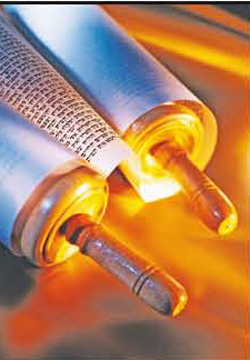
In this week’s parshah Hashem commands Avraham Avinu to perform the mitzvah of bris milah. The pasuk tells us that Avraham was 99 when he performed the bris milah on himself. The Pirkei D’Rabbi Eliezer (29) and Tosafos, in Rosh Hashanah 11a, say that Avraham’s bris was performed on Yom Kippur. The Pirkei D’Rabbi Eliezer adds that Shem, Noach’s son, performed the bris on Avraham. There are several explanations as to why Avraham had Shem perform his milah.
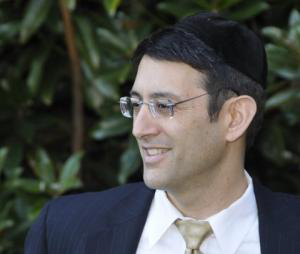
Twenty-five years ago, when kiruv was still a relatively new concept, a group of four young rabbis left Ner Yisrael with families in tow to head down south to Atlanta, Georgia. Rabbi David Silverman was one of those pioneers who founded the Atlanta Scholars Kollel. He is a powerhouse of kiruv – his charisma, sincerity and broad knowledge have helped him inspire thousands of Jews, including this writer.
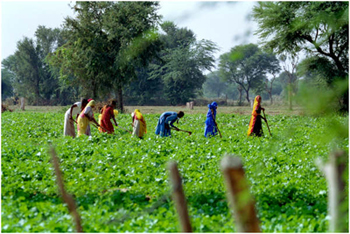
Rebbe Nachman of Breslov once revealed what he called a great secret - people eat for free and they work for free. He explained this with the following parable.

"I arranged with Simon Cooper, the plumber, to clear the blockage in the kitchen sink this morning," Mr. Laks told his wife. "Oh, great!" she replied. "I'll clean the kitchen before he comes."
Shabbat candles must be lit by (and preferably 18 minutes before) sunset. Once it is twilight, the time between sunset and nightfall known as bein hashmashot, it is too late to light. Bein hashmashot begins when the sun sets below the horizon and is no longer visible.
By Rabbi Yaakov Klass and Rabbi Gershon Tannenbaum
Crystal Clear As The Waters ‘Speak In The Manner Of One’s Teacher’ (Shabbos 15a)
Question: I am a single mother of young children. Their father has shirked all his responsibilities to them. I do my best for my children, but it isn’t easy. Isn’t their father in serious violation of the Torah by neglecting his children and not making any effort to provide them an education? No Name Please (Via E-Mail)
Question: What is unique about Modern Orthodoxy?
In this pasuk, Hashem appears to Noach, telling him the world has turned to evil and He will now destroy all of life. Noach, his family, and the animals that remained pure will be the core of a new world. The reason for this destruction is stealing – “since the land is filled with robbery.”
By Rabbi Lord Jonathan Sacks z"l
Is there such a thing as an objective basis of morality? For some time, in secular circles, the idea has seemed absurd. Morality is what we choose it to be. We are free to do what we like so long as we don’t harm others. Moral judgments are not truths but choices. There is no way of getting from “is” to “ought,” from description to prescription, from facts to values, from science to ethics. This was the received wisdom in philosophy for a century after Nietzsche had argued for the abandonment of morality – which he saw as the product of Judaism – in favor of the “will to power.”

Where I now work, there is a small kitchen where workers can have lunch. We take our lunch breaks at different times, and I usually take mine at the same time as an unassuming young man named Benny Green, a 25-year-old who works in the company’s stockroom.
Once again I must postpone the continuation of my Oct. 5 column, “Technology, Yom Kippur, Ahmadinejad,” this time due to the heavy reader response to last week’s column.

Toward the end of this week’s parshah Rashi quotes a Medrash that relates the familiar episode of when Avraham Avinu was thrown into a furnace. Rashi recounts that Avraham’s father, Terach, had reported to Nimrod that his son had broken all of his idols. Avraham was then thrown into a fire and was saved. The wording of the Medrash, however, is that Avraham had gone into the fire by himself (kesheyarad Avraham letoch kivshan ha’eish – when Avraham went into the fire, and in another place it says that Nimrod decreed that he should leireid lekivshan ha’eish – go down into the fire).

“Isn’t it ironic that kids whose parents fail to set and enforce limits feel unloved and angry? Although they tend to test and protest, we have learned over and over again that limits are what kids really want. Invariably, when we talk with out-of-control teenagers or adults who were juvenile delinquents and lucky enough to survive, we ask them, ‘If you could go back to when you were a child, what would you change?’ Most of them say something like, ‘I wish my parents had reeled me in when I was a kid. Why didn’t they make me behave?’
With the campaigns for the presidency of the United States in full swing people are beginning to imagine the inaugural address that will be delivered this coming January 20. Especially this year, when the candidates offer such different visions for America, rhetoric enthusiasts are expecting whoever wins to deliver an inspiring speech designed to provide a strategy and game plan for the country to move forward.
Question: What is unique about Modern Orthodoxy?
By Rabbi Yaakov Klass and Rabbi Gershon Tannenbaum
Where Beis Shammai And Beis Hillel Agree ‘One Must Not Sit Before A Barber Near Minchah’ (Shabbos 9b)
Adom HaRishon was given one mitzvah: not to eat from the Eitz HaDas. When he transgressed it, Hashem gave him the opportunity to do teshuvah. Not only did Adom not repent, he played the blame game – “It was that woman that You gave to me. You gave her to me as a helpmate and she turned out to be my ruination.”
Question: I am a single mother of young children. Their father has shirked all his responsibilities to them. I do my best for my children, but it isn’t easy. Isn’t their father in serious violation of the Torah by neglecting his children and not making any effort to provide them an education? No Name Please (Via E-Mail)
In 1648 and 1649 Bogdan Chmelnitzky and his hordes of Cossack warriors perpetrated an annihilation campaign against the Jews of Poland and the Ukraine. Almost 100,000 Jews and 300 communities perished at the hands of these murderous mobs. All of the Jews, including infants, were targeted for murder; the general populaces nearly always joined in […]
In this week’s parshah the Torah commands us in the first mitzvah: pru u’revu – be fruitful and multiply. We rule in accordance with Beis Hillel that one fulfills this mitzvah when he has fathered one boy and one girl.
By Rabbi Lord Jonathan Sacks z"l
It is the most famous, majestic and influential opening of any book in literature: “In the beginning, G-d created the heavens and the earth.” What is surpassingly strange is the way Rashi – most beloved of all Jewish commentators – begins his commentary:
I am postponing the follow-up to my previous column – “Technology, Yom Kippur, Ahmadinejad” – so that I might share with you a very personal experience.

Some 30 years ago a certain well-known rabbi in Manhattan came to Israel and brought much of his congregation with him, to a barren ridge where our forefathers and foremothers traveled to and from Jerusalem and Hebron. The rabbi and his followers left the ravages of assimilation and headed to the unknown. The rabbi swiftly gathered in Jews from all over the world and all over Israel to the cozy town of Efrat.
By dvora
Rosh Hashanah and Yom Kippur have come and gone. It is time to return my beloved Machzor to the bookshelf. Gifted to me by my beloved parents, of blessed memory, for my bat mitzvah, it is one of my most precious possessions.
Each year, amid the ebullient joy manifest during the holiday of Sukkot, we read the megillah of Kohelet. With its realistic perspective on the world, Kohelet provides us with the means to not only properly calibrate our joy, but to accurately understand the role of joy and happiness in the world.
We are all familiar with the famous midrash (Vayikra Rabbah 30, 12) that compares the four species we take on the holiday of Sukkos to the four different types of Jews: the esrog, which has both smell and taste, corresponds to those who learn Torah and perform good deeds; the lulav, which has taste but no smell, corresponds to those who learn Torah but do not perform good deeds; the hadasim, which have a pleasant smell but no taste, correspond to those who perform good deeds but do not learn Torah; and finally, the aravos, which have neither smell nor taste, correspond to those who have neither Torah nor good deeds.

Sam Berger and Moti Farber shared a two family house, with a joint driveway in front. The Farbers had an extensive family, whereas Sam was relatively young and just recently had his fourth child.
By Rabbi Yaakov Klass and Rabbi Gershon Tannenbaum
Lulav, Shofar, Bris “His Hand Is Not At Rest” (Shabbos 3a)
Question: I seem to see a lack of uniformity regarding the mitzvah of sukkah on Shemini Atzeret. What is the proper procedure to follow? Menachem Via e-mail
The Gemara in Megillah 31a says that on the last day of Sukkos the Torah reading is the parshah of Vezos Haberachah and the maftir is Vaya’amod Shlomo (Melachim 1:8). The Rishonim are bothered by the following question: the Mishnah in Megillah says that Moshe Rabbeinu instituted what portion of the Torah should be read on each of the Yamim Tovim. Each portion relates to that particular Yom Tov. What then is the connection between Vezos Haberachah and the last day of Sukkos?

Question: May one support kosher sechach in a sukkah by placing it on a davar she’mekabel tumah, an item that can receive impurity (i.e., metal)?

Have you ever been to an upsherin, a hair-cutting ceremony? I had never been to one until I was invited by my gentleman friend, Sy, to attend one in honor of his great-grandson, Gabriel, given by his grandparents, Steve and Robin Kerzer. Even Sy, an Orthodox Jew, had not heard of it. Both of us knew it was the custom not to cut a boy’s hair until he was three years old, but we had no idea what was involved.
As we Jews know, there are no coincidences, no random happenings. As a matter of fact, in lashon hakodesh, the holy tongue, the very word “mikreh,” translated as “it happened,” actually means “kara mei Hashem” – “it happened from G-d.”

Sukkos! What an exciting Yom Tov! So many different mitzvos, each with their own color and flavor. Dwelling in the sukkah, taking the 4 species, dancing at the simchas beis hashuava and on Simchas Torah … Nevertheless, there is one theme which runs through all these aspects. “Vesamachta bechagecha atah uvincha, uvitecha, ve'avdecha, va'amasecha, vehaLevi, vehager, vehayasom. veha'almanah asher bish'areycha - You shall rejoice on your festival along with your son and daughter, your male and female slave, and the Levite, proselyte, orphan and widow from your settlements” (Devorim 16:14).

Yom Kippur was but a few days ago and we were all feeling the closest to Hashem that we feel all year. And now it’s time to build the sukkah. But before we move on with the holiday cycle we need to see what we can do to retain at least some of those special feelings of Yom Kippur. This week’s haftorah guides us on just such a path.
Even Moses, who spoke with God one on One, was not allowed to see Him during his lifetime. “You cannot see my face, for no man shall see me and live.”
Question: Should a person recite kiddush standing or sitting on Sukkot? If he stands, should he sit down after saying the berachah of leshev ba’sukkah or remain standing?
By Rabbi Yaakov Klass and Rabbi Gershon Tannenbaum
Pomp And Circumstance ‘Endeavor to See the King’ (Berachos 58a)
Question: The Kitzur Shulchan Aruch states that an individual praying selichot without a minyan is not allowed to recite the Thirteen Midot or the Aramaic prayers. What is the rationale behind this halacha? Moshe Jakobowitz Brooklyn, NY
“When I proclaim the name of Hashem, give greatness to our G-d (32:3). When we hear a berachah, it is proper to exclaim "Baruch Hu u’Baruch Shemo" (“He is blessed and His name is blessed”) when Hashem's name is pronounced. But much more is intended. The mention of that most important word (in any language) should evoke the greatest reverence and love and devotion. How much should we exert ourselves in this function?

The Gemara in Sukkah says that the sechach that one must use for his sukkah must be detached from the tree in order for it to be fit for use. The Gemara (Sukkah 11a) discusses what a person must do if one put branches on his sukkah before they were cut off from the tree. The Gemara concludes that branches must be detached from the tree and he then must shake them.
In my most recent column I wrote about ways of improving family relationships, and raising children who have derech eretz and respect for their parents. I will continue on that same theme here.

On August 29, 2011, I took my three kids to a New York Mets baseball game and was sitting in the front row. During the last inning, my 12-year-old son Eliezer was hit in the face by a line drive (the clip is on YouTube, “Baseball hits boy, Mets-Marlins”). He was rushed to the hospital and received eight stitches; he was discharged the next day.
By dvora
We first met Shlomie (name and some details have been changed) over 20 years ago. He davens in our shul, and he and my husband share a love of photography. Over time, we got to know each other well.
By Rabbi Lord Jonathan Sacks z"l
Yom Kipper, the Day of Atonement, is the supreme moment of Jewish time, a day of fasting and prayer, introspection and self-judgment. At no other time are we so sharply conscious of standing before God, of being known by Him. But it begins in the strangest of ways.
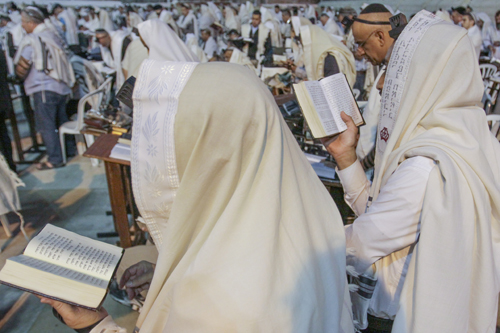
"It is a Sabbath of Sabbaths for you, and you shall afflict yourselves, It is an eternal statute” (Vayikra 16:31). This is how our Torah sums up the upcoming experience of Yom Kippur: a Sabbath of all Sabbaths. Rather than use the more colloquially known "Yom HaKippurim," The Day of Atonement, the Torah reading of Yom Kippur morning uses the above term to summarize the twenty-five hour experience we are about to step into.
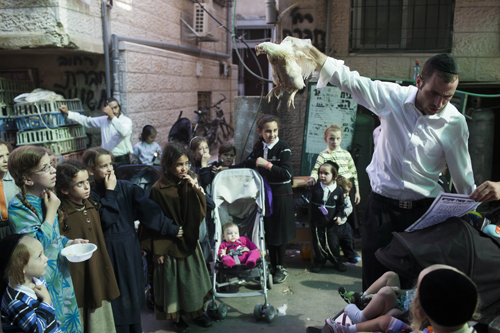
Notions of animal cruelty do not apply to fish under Jewish law, so by using a fish for the Kapparot ritual one would avoid causing unnecessary pain to an animal yet still have the benefit of using a live creature for the ritual.

I rarely take the extended warranty when purchasing new electronics. I figure that this warranty must not be worth much if they feel the need to pressure me into buying it. They must know what I have learned the hard way: there is no such thing as a real guarantee. In my more naive days, I purchased this "peace of mind," as they call it, but never cashed in. Usually, by the time the item broke, I had forgotten about the extended warranty and purchased a replacement.
By Rabbi Yaakov Klass and Rabbi Gershon Tannenbaum
The Lady Of The House ‘One Blesses First On The Wine…’ (Berachos 51)
Question: The Kitzur Shulchan Aruch states that an individual praying selichot without a minyan is not allowed to recite the Thirteen Midot or the Aramaic prayers. What is the rationale behind this halacha? Moshe Jakobowitz Brooklyn, NY
Question: A basic Jewish belief is that everyone ultimately will be judged. This final judgment is called din v’cheshbon, judgment and reckoning – see Avot 3:1. What is the difference between these two terms? What is din and what is cheshbon?
There is a machlokes between the Mechaber and the Rema concerning the berachos recited on the Yom Kippur haftarah by Minchah. The Mechaber says (Shulchan Aruch, Orach Chaim 622:2) that we take the Torah out and read the parshah of arayos and then read Maftir Yonah. He says that we recite the berachos of the haftarah before and after the haftarah. If Yom Kippur falls out on Shabbos, we mention Shabbos in the berachos. The Rema argues that we do not recite the berachah of “al haTorah v’al ha’avodah” by Minchah.

It was Yom Kippur eve. The shul began filling rapidly as the time approached for Kol Nidrei. Herzl Machlis sat in his seat, cloaked in his tallis and kittel, quietly reciting Tefillah Zakkah, composed by the Chayei Adam 150 years ago.
By Rabbi Lord Jonathan Sacks z"l
By now Moses had given 612 commands to the Israelites. But there was one further instruction he still had to give, the last of his life, the final mitzvah in the Torah: “Now therefore write this song and teach it to the people of Israel. Put it in their mouths, that this song may be My witness against the people of Israel” (Deuteronomy 31: 19).
We live in an age of conveniences – and dangers. Our affluence presents dangers to our quest for spiritual perfection, which the Torah cautions against and which Rabbi Avigdor Miller elaborates on in Parshas Vayelech.

Rosh Hashanah memories take us to our shuls, homes and families. They remind us of promises made about how we would change our lives and rearrange our priorities. There may also be memories of the delicacies we ate when we were children – the chicken soup, gefilte fish and great desserts. And one sound, the sound of the shofar blasting away with its shrill notes of tekiah, shevarim... and finally the long, very last sound – the tekiah gedolah.

By dvora
With memories of the Siyum HaShas still fresh in people’s minds, many Jews around the world have been purchasing a Tractate Berachot in order to take part in the 13th cycle of Daf Yomi, the daily study of one daf of Talmud Bavli.

By Rachel Pill
Yom Hadin is almost here and this time of year brings with it a range of emotions. Some people are excited - a new year, the start of school, new clothing. For others, Rosh Hashanah instills fear - the need to correct wrongdoings, to beg for forgiveness and make promises to be better. For still others, there is a feeling of being overwhelmed - either by the awe of the Yom Hadin or perhaps the reality of so many days of Shabbos, Yom Tov, Shabbos (that's a lot of cooking and baking). We are often so busy taking care of all the “things" that need to be done, that we don’t have enough time for spiritual and emotional preparation. It feels like most years I come to Selichos feeling as if I haven't done enough to prepare.

An elderly carpenter was eagerly preparing for retirement. When he informed his employer/contractor of his plans, the employer asked him if he could do him a personal favor and build one more house before he left. After so many years of working together the carpenter felt he could not refuse, and so he begrudgingly agreed. It quickly became apparent that the carpenter’s heart was not in his work. He resorted to shoddy workmanship and he used inferior quality materials. It was an unfortunate way to end a dedicated career.

We all know that there are some synagogues that, unfortunately, only reach full capacity several days a year. There is something about these days that arouses even many unaffiliated Jews to attend High Holiday Services. In fact, each one of us also feels the holiness, and it helps us to be on our best behavior. We make sure to come on time to davening and we daven slower than usual. We are extra careful in our observance of halacha and how we treat the members of our family.

Colin Powell, despite reaching the pinnacle of power, has never forgotten his simple roots in the Bronx. This proud connection to his past manifests itself in many ways, ranging from his work ethic to his love of hotdogs. It also manifests itself in his appreciation of what the “regular guy” brings to the table in every organization.
Why is Rosh Hashanah, the Jewish New Year, so different from other Jewish holidays? On the face of it, it does not seem to follow any pattern. It is celebrated for two days, not only in the Diaspora but also in Israel. Yet the Sages refer to the two days of Rosh Hashanah as one long day – yoma arichta.
“The life and the death I have given before you…in order that you should live, you and your seed.… And you shall choose life” (30:19). “Choosing life” is one of the highest accomplishments (Shaare Teshuvah III:17). This means that not only does Hashem allow us the free will to choose (a principle that materialist psychologists deny), He also gives us the information that we possess free will.
By Rabbi Yaakov Klass and Rabbi Gershon Tannenbaum
Shehakol Bread? ‘One Recites A Blessing On The Primary Food’ (Berachos 44a)
Question: The Kitzur Shulchan Aruch states that an individual praying selichot without a minyan is not allowed to recite the Thirteen Midot or the Aramaic prayers. What is the rationale behind this halacha? Moshe Jakobowitz Brooklyn, NY
The 10-day period from Rosh Hashanah-Yom Kippur is, as is well known, a time to begin personal introspection – an occasion to look back at one’s mistakes of the past year and plan the needed changes to improve oneself in the New Year. In the U.S. it is also a time for Americans to make positive “resolutions."

Wandering from town to village, the Holy Brothers neglected their physical needs and were sustained by meager coins or scraps of food that were donated along the way.

By Joshua Weiss
The incident occurred during The Three Weeks when work at my place of employment for the summer months came to a standstill. I was to meet with a couple of high school buddies of mine at the train shelter in Cedarhurst, from where we had planned to walk to the park.
The Mishnah in Rosh Hashanah 32a lists the Yom Tov’s berachos and the order in which we must daven on Rosh Hashanah. The Mishnah says in the name of Rabbi Akiva that we begin with the berachah of avos. We then recite, in this order: gevuros (atah gibor); kedushas Hashem; kedushas hayom (we incorporate malchuyos in that berachah); zichronos; and shofros. This is followed by avodah hoda’ah and birchas kohanim (sim shalom). The Gemara there brings a beraisa that cites a source in the Torah for reciting each one of these berachos.
Several weeks ago I shared a letter from a heartbroken mother whose children had shut the door in her face. Time and again she tried to open that door, but despite all her attempts she did not succeed. No matter how she humbled herself and begged, no matter how many people interceded on her behalf, it was to no avail.
By Rabbi Lord Jonathan Sacks z"l
Rosh Hashanah, the Jewish New Year, is a kind of clarion call, a summons to the Ten Days of Penitence that culminate in the Day of Atonement. The Torah calls it “the day when the horn is sounded,” and its central event is the sounding of the shofar.
Many passages in the Torah appear at first glance to be repetitious. Often, each iteration has a unique and deep message. Rabbi Avigdor Miller, zt”l, finds such a case (in the passage of the Blessings and Curses) in the Torah's instruction to keep Hashem’s commandments and walk in His ways. Also in the passage of the Blessings and Curses, Rabbi Miller highlights the great blessing of a long life.

Dr. Oren had a small psychology practice and rented office space from his colleague, Dr. Wieder, on Thursday afternoons. The rent amounted to $500 for the month. Since the two usually did not see each other, the arrangement was that Dr. Oren would leave the rent money in the top drawer of the desk.
By Rabbi Yaakov Klass and Rabbi Gershon Tannenbaum
A Vicious Cycle ‘Many Different Kinds Were Set Before Him’ (Berachos 41a)
There is a custom to say Selichos before Rosh Hashanah. Sephardim have the custom to say Selichos during the entire month of Elul, while Ashkenazim follow the custom of the Ramah (Orach Chaim 581:1) to only say Selichos for a minimum of four days prior to Rosh Hashanah – beginning with Motzaei Shabbos. The Ramah quotes from the Kol Bo that certain communities had the custom that the ba’al tefillah should also be the chazzan for the remainder of the day. The Magen Avraham explains that this is because of the general rule that when one begins a mitzvah he should complete it.
By Rabbi Nosson Dovid Rabinowich
A passage at the end of the Zichronot blessing in the Mussaf Amidah of Rosh Hashanah appears to have two slightly different versions. The Shulchan Aruch (Orach Chayim, 591:7) rules that this is the correct text: “V’akeidas Yitzchak hayom l’zaro tizkor.” It also rules and those who change the words and specify “l’zera Yaakov tizkor” are mistaken and guilty of changing the text instituted by Chazal. The source for this ruling is a responsum (chapter 38) by the Spanish and then Algerian Rivash (14th century).
However remote the prospect of acquittal, a Jew must never give up. God commands us to challenge indictment with prayer. And the rabbis urge us to confront sentencing with hunger strikes. And so, the Midrash tells us, when Moses stood before God, at a loss for words with which to defend the sin of the golden calf, God Himself donned a tallit, took to the prayer stand, and showed Moses how to pray and what to say:

By Alan Magill
The five-year-old boy was in a church in Puerto Rico with his parents. As they and his grandparents were Catholics, that made him Catholic – as far as his young mind could figure.
By Rabbi Lord Jonathan Sacks z"l
It would be reasonable to assume that a language that contains the verb “to command” must also contain the verb “to obey.” The one implies the other, just as the concept of a question implies the possibility of an answer. We would, however, be wrong. There are 613 commandments in the Torah, but there is no word in biblical Hebrew that means “to obey.” When Hebrew was revived as a language of everyday speech in the nineteenth century, a word, letsayet, had to be borrowed from Aramaic. Until then there was no Hebrew word for “to obey.”
“A himmel geshrai” is a Yiddish phrase that, loosely translated, means “a tragedy of such catastrophic proportions that the heavens themselves cry out.” Sadly, every one of the letters on family breakdowns I’ve featured these past several weeks can be summed up as “a himmel geshrai.”
The start of the Jewish New Year, the month of Tishrei, is filled with holy days, among them four foundational celebrations: Rosh Hashanah, Yom Kippur, Sukkot and Simchat Torah-Shemini Atzeret.
Phil and Mike were part of a team of construction workers building a skyscraper in the middle of the city. When it was time for their lunch break they sat down together with their feet dangling twelve stories from the ground. Phil opened his lunch box and peered in, “Peanut butter and jelly?! Again peanut butter and jelly! I have had enough! If I get peanut butter and jelly again tomorrow, so help me I’m going to jump right off this structure.” Mike then opened his lunch box and peered in, “Tuna fish?! Again Tuna fish! I can’t take it anymore. If I have tuna fish for lunch one more time I’m going to jump off with you.”
You will not have much time this week for your gathering - the haftorah is very short, only ten pesukim. (Let me be clear. I most certainly do not support Kiddush Clubs for a variety of reasons, not the least of which is the what should be obvious lowliness of leaving a shul minyan to go and have a whiskey party, and not being able to wait until after davening. Despite efforts to combat these gatherings, I know they still exist and figured I would warn “the guys” about the brevity of this week’s haftorah.)
 July 24, 2026