יום שני, ו׳ כסלו תשפ״זMonday, November 16, 2026



Follow Us


By Rabbi Lord Jonathan Sacks z"l
Your life seems to be coming to a tragic end, your destination unreached, your aspirations unfulfilled. What do you do? WWMD?
Sadly, the most common places we meet with love and hate is in family conflicts.
The word eichah is a word we heard from Moshe Rabbenu, calling us to realize we weren’t aiming as high as we could. We could have heeded it then, and put ourselves on a better path. We heard it centuries later, a call to see how we were setting ourselves up for destruction. Two calls we unfortunately ignored, leading to the third eichah, which continues to ring in our hardened ears.
In Hebrew, an egel is a male calf, while an eglah is a female calf. Calves are immature bovines that rely on their mother’s milk to survive and grow.
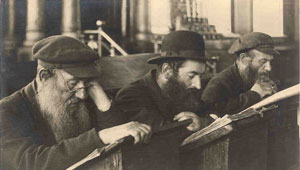
Was Shmuel Not The Greatest? ‘3,000 Halachos Were Forgotten’ (Temurah 16a)

A truly poor person can receive a large amount of charity at once, even beyond his needs, replied Rabbi Dayan.

The Jewish people’s affairs are connected with, and depend on, the Torah in its entirety...

The Baal Shem Tov told his disciples that all the dozens of journeys detailed in this parshah exist also in each person's life – from the day of his birth to the day he leaves this world. In every journey, one has to move upwards and learn something new.

By Naama Klein
Eventually I narrowed the selection down to a few interesting ones, with Barcelona, Budapest, and Venice being the top contenders.
By dvora
I realized how lucky we were that Hashem had woken me from my sleep in time to deal with the fumes which were slowly overtaking our house.
Question: Why is saying Shehecheyanu prohibited during the Three Weeks? How is it different than other blessings? M. Jakobowitz Philadelphia, PA
Before bathing, one must honestly assess whether or not it is needed for hygienic purposes. Failure to do so displays insensitivity to mourning the Beit HaMikdash and our nation's exile.
By Rabbi Dr. Mordechai Schiffman
Even though we generally abstain from taking oaths nowadays, figuring out other ways to up the ante and solidify our commitment is essential.
By Rabbi Lord Jonathan Sacks z"l
Moses’ implied rebuke to the tribes of Reuben and Gad is not a minor historical detail but a fundamental statement of Jewish priorities. Property is secondary, children primary.
Flattery is such a grievous avairah that Tosafos even discusses whether flattery is permissible in an emergency.
One of the more fruitless political debates in the United States is whether strict restriction of gun permits would add to public safety. One of the reasons it is fruitless is that both sides muster flawed analogies to other societies.
The overwhelming majority of machlokesim and acts of kana’us performed today are not l’sheim Shamayim.
When you’re davening in shul and fervently say, “Shema koleinu, Hashem Elokeinu – Listen to our voices, Hashem, our G-d,” think to yourself that everyone in shul is asking for something different.
Many people today are being sucked into the electronic and computerized devices. The youth suffer from this connection more than anyone else.
Should a frum Jew care if an animal species is endangered or goes extinct?

Asked if he ever thought of quitting, Rabbi Rosenshein said, “Never. You don’t live without it.”
Permission Granted? ‘Lo Yachlifenu B’Shel Acheirim…’ (Temurah 9a)
By Rabbi Dr. Mordechai Schiffman
One answer is that having this ruach is simply a gift from G-d. I either have it or I don’t. All I can do is daven and hope that Hashem grants me these abilities.
Ben-Gurion understood both the strategic and symbolic value of Yerushalayim.
Question: May a person eat leftover Shabbos meat in the Nine Days so as not to violate the prohibition of bal tashchit (wastefulness)? Rabbi Yaakov Spivak Rosh Kollel, Kollel Ayshel Avraham Monsey, NY
The Gemara [Bava Metzia 76a] states that if someone instructed an employee to work in his neighbor's property, the employer is liable to pay the person’s salary.
Utilizing our wonderful and brave IDF is a marvelous example of proper hishtadlus.
He then called out, “Zechariah, Zechariah, I have killed the best. Do you want me to kill them all?”
"Starting today, every child to us is like one thousand children." These words were said by Rabbi Herzog to the Pope after the Holocaust when he went out on a journey to find Jewish children who were transferred to convents and monasteries to avoid deportation to Nazi concentration camps, and were baptized to Christianity there. Rav Herzog wound up returning many children to their faith, people, and homeland.
Hashem gave us the Torah and we forged a connection with Him. The bond that existed after Har Sinai wasn't temporary, it was tamid, constant.
Devorah bravely faced the cameras to thank all the many people who were helping them to return to their home.
Moshiach, when he comes, will reveal the deeper reasons for every detail of Torah observance – why it is necessary to perform particular mitzvos in specific ways and what each detail accomplishes in the spiritual realm.
Another Hebrew word for tax is meches, appearing six times in chapter 31 of Sefer Bamidbar.
By Rabbi Lord Jonathan Sacks z"l
Dignity is not a privilege of birth. Honor is not confined to those with the right parents. In the world defined and created by Torah, everyone is a potential leader.
Hurting or upsetting any person is a very serious sin, especially in the eyes of the Creator who created us all and loves all of His children.
Location, Location, Location
I always go far into things. I’ve always been a seeker. I was looking for tranquility, peacefulness, and accomplishment.

Having a good eye means one is able to view others positively on an intellectual level.
The next time we face a rainy day, let's not feel down.
By Jolie Greiff
Ben Zion caught his breath and apologized to Rav Ahron for barging in on him at the airport.
If we would have received the entire Torah in written form then parents would not feel the urgency and the obligation to pass on our Torah to the next generation.
By Rabbi Ron Yitzchok Eisenman
Was this the final recognition of the Jewish people as the true Chosen People?
If we view this world just as a place to stay for 90 years, we might live only for the moment and seize fleeting pleasures.
Question: May a person eat leftover Shabbos meat in the Nine Days so as not to violate the prohibition of bal tashchit (wastefulness)? Rabbi Yaakov Spivak Rosh Kollel, Kollel Ayshel Avraham Monsey, NY
By Rabbi Lord Jonathan Sacks z"l
Tanach is perhaps the least self-congratulatory national literature in history. Jews chose to record for history their faults, not their virtues.
Higher than the question of our duration is the question of our deserving. Immortality will come to such as are fit for it, and he would be a great soul in future must be a great soul now. -Ralph Waldo Emerson
Unsaying Words 'He Uttered Hashem’s Name In Vain' (Temurah 3b)
I figured you were giving me a grace on the loan. Of course I will start paying you in monthly $1,000 installments starting from this month.
By Rabbi Lord Jonathan Sacks z"l
Why did God choose that Israel be blessed by Bilaam? Surely there is the principl “Good things come about through good people” (Tosefta Yoma 4:12). Why did this good thing come about through a bad man?
The pasuk in the beginning of Parshas Eikev says that when we will follow the laws of the Torah, Hashem will guard the bris.
If G-d told Balaam not to go with Balak’s men, why did He seemingly “change His mind” and later allow him to go?
During the Three Weeks, the Rebbe recommended learning more Torah, giving more tzedakah, and increasing activities of ahavas Yisrael.
R’ Yisroel Salanter noted that some people are very careful to observe rabbinic mitzvos…but do not take seriously a Torah prohibition like lashon hara.
When we make choices, we should try to see all the sides involved and not just our own point of view.
Is it necessary to say “Baruch Hashem” or “Thank G-d” every time someone asks you how you are?
In Judaism, since sin is not a foregone conclusion, we hold ourselves fully accountable for it. Likewise do we hold others accountable – if not to us, then certainly to God. And so the daughters of Tzelophad put this out about their father – and about everyone else.
By dvora
We were fortunate to start our trip home. What a thrill to call the insurance company and advise them, “Please cancel my service call.”
So why then are we not attentive enough to all of the signs that surround us? I have not the psychological training to analyze this question, but what seems clear is that slumber is not only restricted to our beds.
If Mr. Miller had admitted that he lent money only once, clearly one of the witnesses would be lying and his testimony would be worthless.
Too Little, Too Late? 'And Break Down the Door and Enter…' (Arachin 31b)
Hashem doesn’t ask a person, “What did you do?” He asks, “What are you able to do?”
Question: In the haftara for Parashat Naso, we read about Manoach’s wife (mother of Shimshon), seeing things that her husband did not. We are never told, however, what her name is. Why? Yossy Guttman
Classical writing requires ink and paper, which are technically separable. In engraving, the material being engraved becomes the writing.
It should have proven to them that the churban was upon them and should have caused a tremendous teshuvah movement.
Most of us are reactionary daveners and pray only when we need something. Hearing about sickness should remind us to pray not to become sick.
The Rebbe Rayatz, however, refused to leave. He considered it his duty to uphold Torah study and observance even under such trying conditions.
This coming Shabbat will be the 25th Yahrzeit of the Lubavitcher Rebbe. The mission and legacy he left for us is more relevant than ever
By Rabbi Lord Jonathan Sacks z"l
What made this trial different? Why did Moshe momentarily lose control? Why then? Why there? He had faced just this challenge before.
Whether people knew the Rebbe personally, or met him just once, or just read stories about him, each one feels a personal connection.
Bilam describes himself as yode’a da’at ‘Elyon, knows the mind of the most-High. Mockingly, the Gemara says “the mind of his own donkey he does not know, he knows the mind of the most-High?” [A line mori ve-rabi R. Lichtenstein zt”l used to invoke frequently, to warn us against glibly asserting we know why Hashem acts in various ways].
Even after all of the medical procedures, both Chaya and Daniel were left with medical problems.
People are particular about whom they wish to live with, so the remaining partner can claim he agreed to live with the initial partner but not with this new person – whether due to the person’s status or character.
Question: In the haftara for Parashat Naso, we read about Manoach’s wife (mother of Shimshon), seeing things that her husband did not. We are never told, however, what her name was. Why? Yossy Guttman
Through learning Torah we connect to Hashem, which immediately ignites our neshamos and causes us to move around, like a flickering flame that darts to and fro.
Korach and Haman were also both brought down by their wealth. Both were fabulously wealthy, and the Midrash informs us that very wealthy people become impudent.
Pleading The Fifth ‘Minors Are Not Obligated To Fulfill Mitzvos’ (Arachin 22a)
Most of Rashi’s comments derive from the Talmud or Midrash. But he almost always changes the wording or quotes specifically one of several versions.
Parshat Korach reminds us that seeing the good we have, and not coveting the good others have, is more urgent than almost anything else.
She argued that Moshe was fabricating his own laws until Korach finally became convinced…and organized a revolt.
The Midrash tells us that thousands of children in the desert were named Aharon because Aharon brought peace to their homes.
Our Sages tell us that if you want to overcome the hate that you have for someone, give them something – do for them a favor and ultimately the hate will transform to love.
By Rabbi Dr. Mordechai Schiffman
Rabbi Natan Tzvi Finkel argues that Moshe’s continual attempts to resolve the conflict teaches us that the prohibition applies even after the other party rejects an attempt at reconciliation.
By Rabbi Lord Jonathan Sacks z"l
The story of Korach remains the classic example of how argument can be dishonored. The Schools of Hillel and Shammai remind us that there is another way.
Rabbi Pappenheim maintains that “hayaven” is derived from the root yud-nun, which means trickery or deception.

Is there anything inherently wrong with a person spending vast sums of money on a wedding or bar mitzvah if he’s rich and can easily afford it?
The Torah teaches us that when it comes to controversy and dispute even the small children can be harmed. That’s how deep and internal the evil and poison of the dispute can be.
In contrast to the previous generation – and as we will soon see more clearly – this generation was really saying, “Let’s get to our land already.”
By Rabbi Lord Jonathan Sacks z"l
Whatever the subplots and subsidiary themes of the Chumash, its overarching narrative is the promise of and journey to the land. Jewish history begins with Avraham and Sarah’s journey to it. The four subsequent books of the Torah, from Exodus to Deuteronomy, are taken up with the second journey in the days of Moshe.
Something that is adin or adinah (see Isaiah 47:8) is sensitive, delicate, or dainty – it is susceptible to being over-stimulated by sensory overload.
Question: How does a person thank Hashem for giving him a child? Yossy Guttman
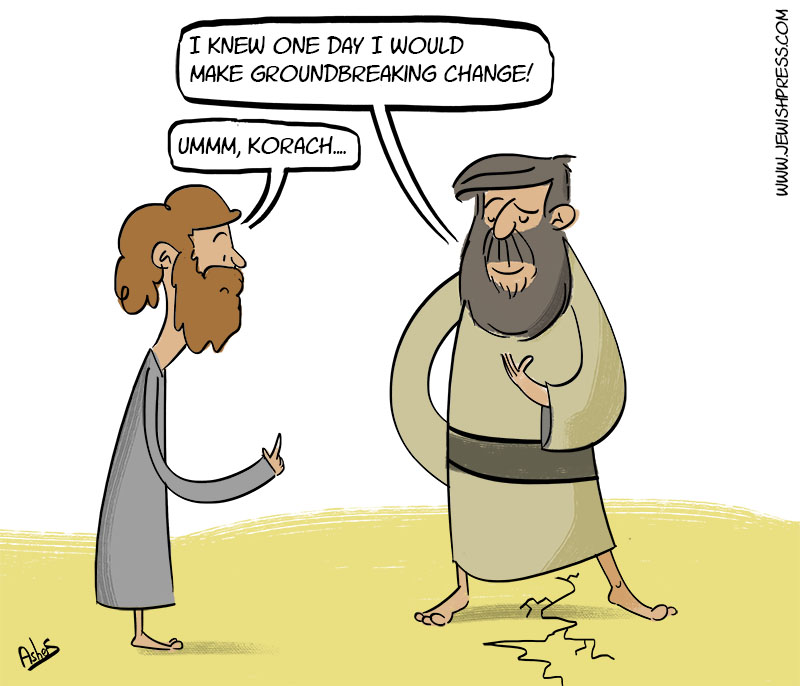
We assume we know as well as our leaders less because they have failed to prove themselves or have shown deficiencies than because of our attachment to seeing ourselves a certain way. And, as was true of Korach and his group, we do so to our detriment.
They considered themselves like grasshoppers, and did not believe they had the zechusim to conquer the land.
This week's parshah teaches us that there is almost no such thing as objectivity. We are all subjective. All of us speak from our own world of values.
By Rabbi Dr. Mordechai Schiffman
At its core techelet reminds us of our mission in this world, which is to serve G-d by doing mitzvot and avoiding sinning.
 November 13, 2026