יום ראשון, כ״ג תשרי תשפ״זSunday, October 4, 2026



Follow Us


As we fight an enemy on our border, it’s not walls that will save us and establish peace.
Just as Hashem opened Himself to be witnessed, we too have the sacred capacity to truly be there for each other. We can create space to hold another's story – their struggles and their greatness – even if we can never fully understand.

By Maayan Zik
For all the community love that was proposed, the few walls that were built surely declared the opposite. Once some of the walls were pointed out, the discussion went in a better direction.
We must remember that these walls are considered holy as they are frequented regularly by Jews from around the world who come to visit and pray.

Noting that the local paper mill in Vilna burned down and no paper was available locally, he apologizes for the delay in getting the process started as they were awaiting a batch of paper from Warsaw. Dismissing an option to print on low quality paper, the printer writes that in their vicinity such paper is not used.
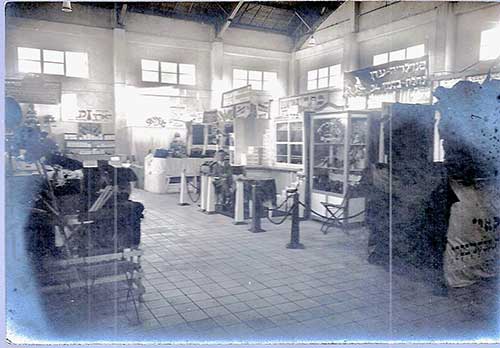
The 1934 Fair represented the largest and most prestigious concentration of buildings executed in the International Style up to the time; it made a crucial contribution to a local evolution of modern form and details, and it formed the basis for the definition of the content of situated modernism and its promotion in Eretz Yisrael.
A dash of hope In the darkness of night Akiva, you have comforted us
Most of us find ourselves squarely in the category of Rabbi Akiva’s students and the angels. Yet, Rabbi Akiva had such a remarkable and unshakable trust in G-d that he not only recited Shema but relished the opportunity even then.
By Avi Ganz
After the plague that wiped out his myriad students, Rabbi Akiva could have faced the harsh reality that they weren't worthy.
The Talmud Bavli and the Talmud Yerushalmi recount that Rachel, daughter to Kalba Savuah, one of the richest men in Jerusalem, recognized the potential in Rabbi Akiva, an unassuming, uneducated shepherd.
By Akiva Kra
Rabbi Akiva taught us that a fence to wisdom is silence, the potential pitfalls of humor, the greatness of man for being created in the image of Hashem, how to view free choice, and so much more.
Only recently did I realize that Hubby’s aversion to broken cookies was deeper than even he could admit.
It is dated 1866, and written by the famed Rabbi Haim Palachi (1787-1868), the rabbi of Izmir, and author of over 80 published works and many others lost to the infamous recurring fires in Izmir.

When Samuel arrived in Jerusalem to commence his term as High Commissioner, he was deeply moved by his greeting, as the Yishuv welcomed him enthusiastically, calling him “the First of Judea” and greeting him with a seventeen-gun salute and endless words of welcome.
Empowerment: She empowered the women to take an active role in the community, recognizing their value and potential.
When the Jews crossed the Sea of Reeds and the Egyptians didn’t, Miriam whipped out her tambourine. She played, sang and danced with the other women.
Rashi teaches us that they were so confident that they were destined to be redeemed that the righteous women of the generation left with their instruments in hand.

Miriam – a woman of water and wellness, in whose merit a miraculous well provided Bnei Yisrael with water in the wilderness for forty years, sustained the fledgling nation physically and spiritually.
First, the biblical Miriam. One of the great female prophetesses (Masechet Megillah 14a). She was part of Bnei Yisrael’s leadership team during Yetziat Mitzrayim alongside her brothers, Moshe and Aharon. Her faith never wavered, and she led the women to redemption, tambourine in hand.
I went back to my cooking. I swear less than 60 seconds passed before he started the whole conversation once again. He had no recollection of my previous response. I repeated it just the same. It also had no long-lasting results.
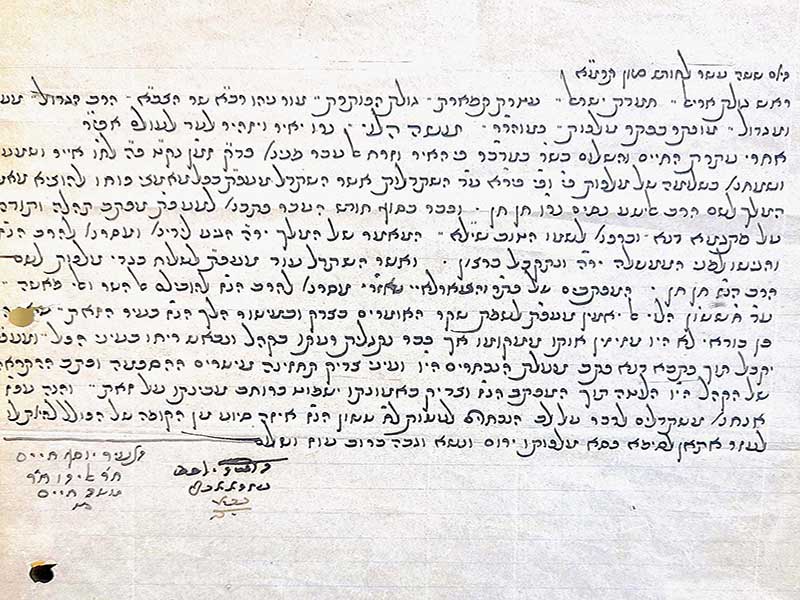
This letter was written in the month of Sivan, 1881, coinciding with the heat of chaos and turmoil that enveloped the Iraqi Jewish Community.
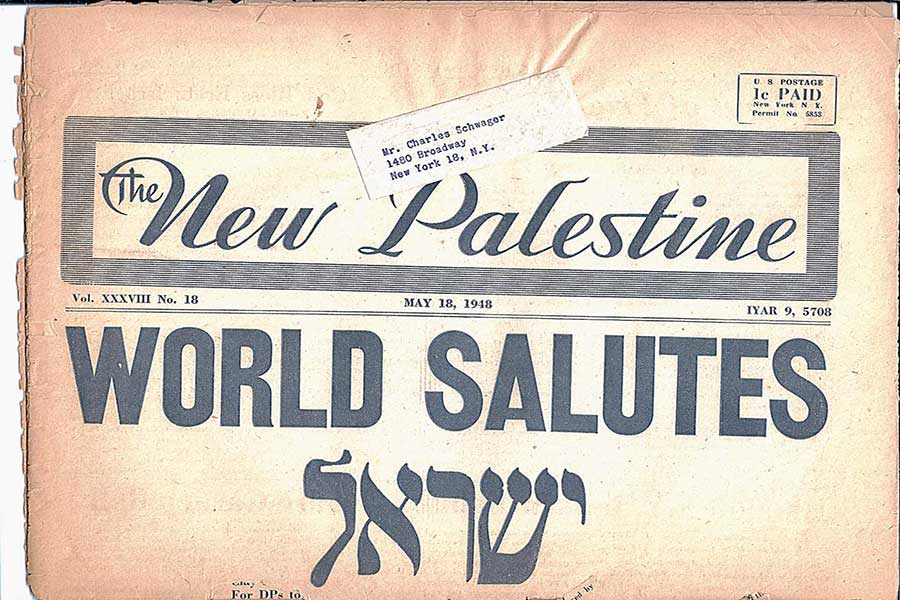
Interestingly, a proposed Knesset bill in 2012 proposed to simplify the structure of the celebration so that Yom Ha’Atzmaut would always fall on a Thursday, but the proposal failed because many legislators and citizens were unhappy about a summary dismissal of the significance of the fifth of Iyar, the date on which Israel had declared independence in 1948.

I think many people have that moment when they realize suddenly, profoundly, that life is not forever. For me, that realization hit when I turned 30. I recall thinking to myself – "30, then 60, then 90, and then...what?!?" While depressing at first, I grew to appreciate the idea that if life just went on […]
By Martin Bodek
The word chai actually initially appears in the second parsha in the Torah, Parshas Noach 11:12, when discussing the age Arpachshad lived to before begetting Shelach.
The reason movement is so important is that it is the basis of action; and it is ultimately this G-d-like ability to act that is equated with life.
By Ariela Davis
There is nothing more meaningful than living in Israel during this time, which is especially felt during this month.
G-d is life – absolutely. He is the source of life (Psalms 36:10). Everything alive receives its life-force from Him, in proportion to how much it is connected with G-d.
I keep saying that I will straighten out my bed, my clothing and my room, but it is the depository of my exhaustion. If only I had a day with nothing else to do.
Although some 4,000 volunteers – again, most of them Yishuv youth – went house-to-house collecting money from the public, the Tax for Our Defense failed to meet the goal of raising 2.5 million pounds within a month.
By JJ Eleff
Flowers are Hashem’s present to all of us. It is one thing in this world that you can pick up anywhere and take with you, a little gift saying I made this beautiful world for you, enjoy it!
The cycle of life, the importance of difference and the seemingly incongruousness are there to contemplate. While there is timing to be respected, a consistency that lets you know what chag is before you simply by looking around you, there is also surprise and wonder.

With tulips, it’s all downhill. They shoot up awkwardly after being under the blaze of your dining room table lights for 24 hours and soon lose their color, shape, and glory. They begin to die.

One of my all-time favorites is the bird of paradise. Until I moved to Israel I had never seen, nor heard of it.
What that phrase, Yesh prechim ve’ein bo peirot, means to me is, certain isms out there may look attractive and draw you to them – think of Jews in the 1920s flocking to Communism – but don’t expect to successfully transmit these ideas onto the next generation.
This was a very distressing situation. Hubby was holding his head as though it was about to split open. I called our private geriatrician who said he thought we should get Hubby a CT scan. Perhaps there was a bleed in the brain causing all the pain?
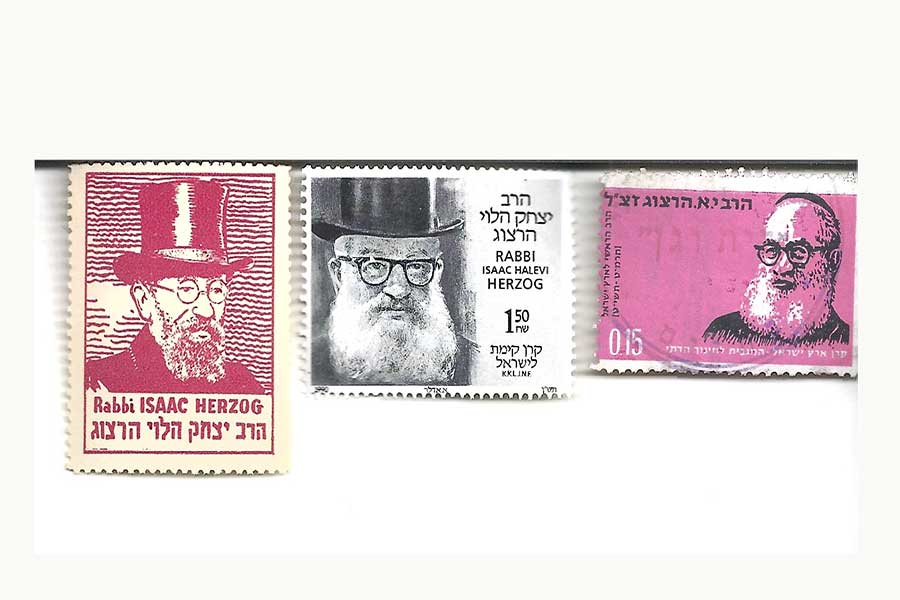
One of the first to foresee the impending Holocaust, Rav Herzog wrote countless letters to European Jewish leaders warning about the coming cataclysm and urging them to leave but, sadly, his entreaties went largely unheeded.
It was on the last moed that our world fell apart, terrorists tortured and kidnapped our brothers and sisters. Did we imagine that we would approach this moed of Pesach with them still in captivity?
Whether it's a time for growth, reflection, mourning, celebration, or rest, understanding the significance of moed encourages us to embrace the present moment fully, trusting in the divine timing of our journey.
By Keshet Starr
Moadim offer a parallel approach. We live our lives on the dance floor, and that’s okay – we are here to learn, to do, to give. But the opportunity moadim provide to go up to the balcony helps us recalibrate when needed, and notice the things that have crept up on us.

By Hillel Fuld
Judaism is about sanctifying every aspect of life including time. But the word muad teaches us that consistency is only positive, assuming that the act you’re doing constantly is a positive one.

We are looking forward to Mashiach coming and leading us through this time in history. We are looking forward to the third Beit HaMikdash being built and the ingathering of the exiles from all over the world.
The minute the food landed on the table Hubby was in full rejection-mode. I placed a few chunks of potato on his plate, two pieces of zucchini and one leg of the chicken. What the hell is this? You expect me to eat this? It will make me sick!

For this column, I thought I would share two Pesach Seder plates hailing from Germany that are in my personal collection.
Leeser is best remembered for his extensive English translations and prolific writing for the American Jewish community, having authored numerous books and translations, edited a newspaper and full translations of the siddur and Tanach in an era where books written by Jews in English were nearly non-existent.

There is an ongoing debate amongst scholars as to whether the earliest text of Dayenu was created before or after the destruction of the Second Temple.

By Tzivia Emmer
The Baal Shem Tov taught that we must learn from everything we see. Unexpectedly, seeing through eclipse glasses taught me something tangible about how change can work and especially how the unfolding of Jewish history is a trajectory along a path that leads to a radical switch.

We are humans, not machines. Perfection isn’t the goal; growth is. Even the greatest leaders in Jewish history, starting from Abraham and Moses, made some serious mistakes. No one is infallible.
During these crazy times with our hearts in Israel the four promises of redemption really resonate. Now more than ever we pray for Hashem to save us from Hamas, bring our hostages home and out of Gaza, bring them all back to Israel, and have our nation come together as one.
Motherhood is a fascinating rollercoaster ride and the ultimate tool for self-growth; nothing is as challenging or rewarding as being a mom.
By Solly Hess
According to the Gemara, the fourth letter of the Hebrew alphabet, daled, represents a poor person. When studied closely, we learn that rather than impoverished, it corresponds to selflessness.
By dvora
Four extraordinary mothers, women that shaped and molded our Judaic history.
Towards the end of the Seder, there is a song we sing that answers the question of how many matriarchs launched the people of Israel. Four.

If 90 Seconds was the book I couldn’t put down, Angels in Orange is the book I could hardly pick up. But it is a critical book for every Jew to have.
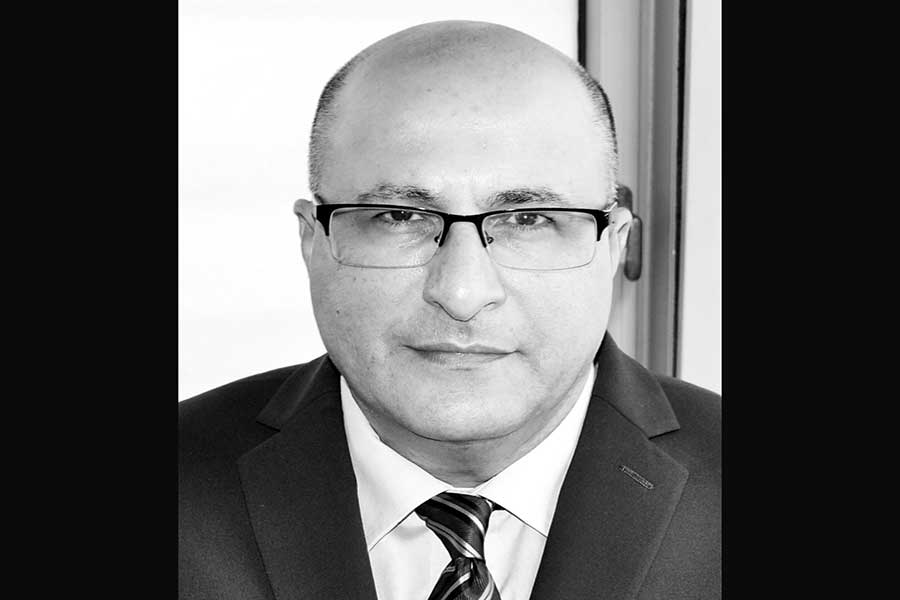
In his new role, Professor Aharoni Aronoff will teach the practice of business diplomacy and non-product branding to both undergraduate and graduate students and will represent Touro in public forums.

You might be scratching your head (do diaries have heads????) and wondering why this irresponsible wife did not call the paramedics and rush hubby to the hospital for CT scans and MRIs. That would have been the proper approach for a younger and healthier person.
Then I started working. I worked for two years at the sales office of Max Factor Cosmetics. Benno started working at Neutra’s, and then we, little by little, became very integrated into American society. And we wanted to. We wanted to become Americanized.

The map is rather rudimentary, with just a border and a few place names, but its appearance in print was a major achievement, anything other than text was very labor-intensive to include in the printing blocks of the day and thus costly.

Over and above his public welfare efforts on behalf of milk pasteurization and preventing tuberculosis, Straus’s largesse and contributions were by no means limited to Jewish institutions and causes.
By the time Pesach rolls around on the calendar, we’ve already been through some. We’ve endured slavery, built the golden calf, and begged for water in the desert. Our practical day to day has not always been easy – our cleaning is practical.
Although not present in my circles, it's hard not to admire the grandeur. It’s also hard to mistake the shtreimel as anything but a sign of proud Judaism.
By Jordana Baruchov Grreenfield
The shtreimel serves as a tangible connection to the rich cultural heritage of Eastern European Jews. By wearing the shtreimel, individuals affirm their identity and connection to their ancestors who also wore similar attire.
Shtreimel signifies pride in Judaism and in traditions. It’s pride in connecting our current to our past.
My shtreimel is my symbol of Jewish pride and not because it’s become trendy, but because I’ve been wearing it since the day I got married in the tradition that goes back in my family several generations. It’s my greatest honor and privilege to do so.
By David Curwin
Another possibility is that shtreimel is related to the Polish word stroj meaning uniform, clothes. Maybe it meant the “uniform” of those Jews wearing it, or perhaps it also had a specific association with head coverings.

Dementia is a bear. The questions he is asking are valid. The conclusions are not.
You didn’t have to be rich to have a cleaning girl in the house, a live-in. You always had live-in help because there were so many of those peasant girls who would come and… We would have sometimes two in the house.
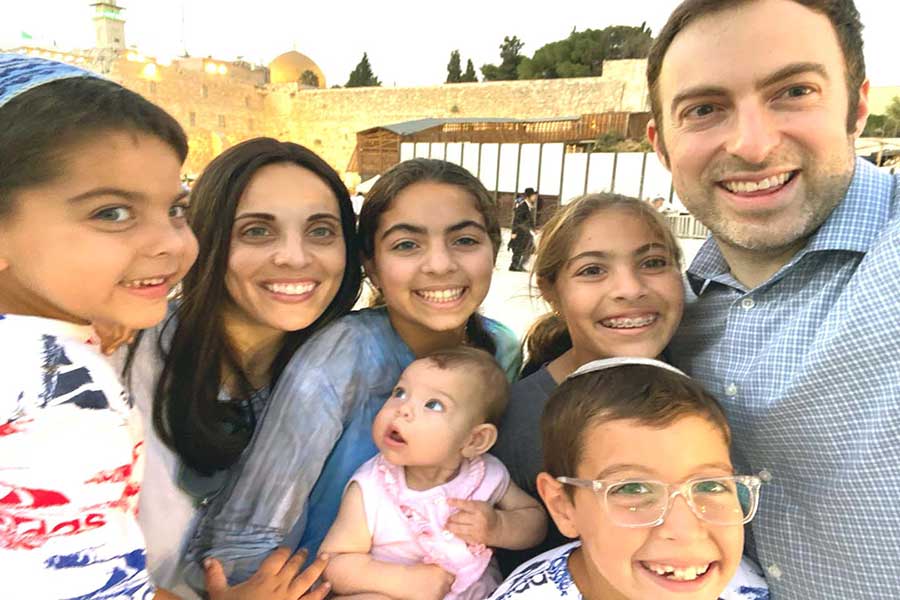
By Ariela Davis
The challenges of making aliyah on a short timeline and in the midst of lockdown were many, but Tali says, Once we made the decision, Hashem carried us on His back to our new life...
Another well-known example that I obtained recently is the first edition of the Shu"t Meshiv Davar, containing the responsa of R. Naftali Zvi Yehuda Berlin (1816-1893), best known by his acronym the Netziv, who served as rosh yeshiva of the Volozhin Yeshiva for decades.
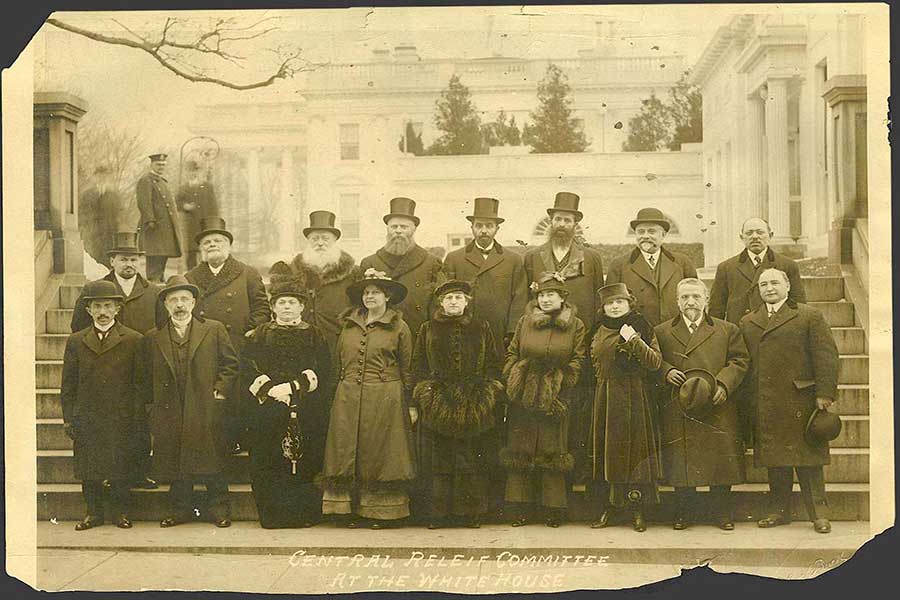
Wilson recognized in American Jews a spiritual force that had adapted itself to the American spirit and made broad contributions to the advancement of the welfare of the nation and of the world.
This partnership comes at a critical time, following the tragic events of October 7th, underscoring the urgent need for balanced and nuanced educational material that can counter the surge in global anti-Semitism.
My watch is eight years old, its age unforgettable because my husband bought it for me the year I was in aveilus for my father. His death had left me untethered, disconnected; the watch promised connection – no more missed phone calls and texts delivered instantly to my wrist.
These days, as was the case during many such difficult periods in our long history, doing the bris on the eighth day has taken on new meaning.
During the Pesach Seder, we say that eight is the days until the baby’s bris. But there is something else which also has the significance of the number eight, and that is Shmini Atzeres.
Have you ever considered that even the Hebrew word for eight, shemonah, literally means to nourish.
As my father, Rabbi Uziel Milevsky, of blessed memory, taught me, it is the number beyond the natural.

They say one mitzvah leads to another, and that is certainly the case with Tops Liquor. Cohen says the place has become a hub with customers now inviting him to their homes for meals, bringing over challah, and he was even gifted with a new pair of tefillin.

The Jewish community stood up and showed we are not going to be intimidated, we are going to stand up for our rights, and we’re not going to let outsiders interfere with our programming, said Steve Fox, president of the Jewish Community Council of Greater Teaneck.
On the one hand, I really do not mind if he is confused about these things. On the other, he is so anxious about the confusion that he tries to sort out the information by asking the same questions over and over again.
Suddenly in the minds of others you become somebody because you survived. You know everyone who died had stories up to the point of his death.

Although Brandeis has a student body which is now about only 35% Jewish – half of what it used to be in the 1970s, it still offers a rich religious and cultural Jewish life on campus.
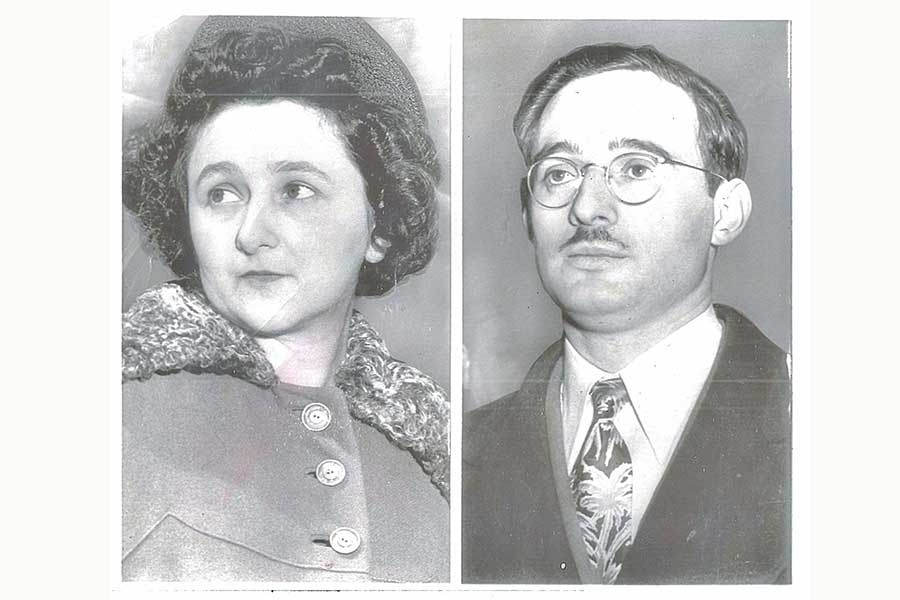
The U.S. government offered to spare the lives of both Rosenbergs if Julius provided the names of other spies and if they admitted their guilt, but they refused, saying that they were innocent and would not bear false witness.
By Eli Lebowicz
One perk is that on Simchas Torah, being a Kohen or Levi is like having TSA PreCheck. I know I just got here five minutes ago and I get an aliyah all the time, but I guess I’ll go straight to the front of the line.
The relatively small measure of honor paid to them is more of a historical reference to their ancestral heritage than a reflection of their personal celebrity.
Maybe it had to be that way. Maybe the lack of emphasis on wealth is baked into sharing Torah and sharing song.
It's an ancient Hebrew name, a tribal affiliation, that also confers social status and serves as a surname. This status is meticulously preserved through the generations – a non-Levi would not dare claim this status to obtain the second aliyah, and if one did, he would soon be discovered.
By Nachum Segal
Personally, I love the distinction of being a Levi. As a Levi you are encouraged to excel at tefillah and zemiros and there is an expectation that a Levi's voice will inspire and touch others.

Last night, I asked Hubby if he remembered the film. He did not. Still, as the film progressed, he began to connect with bits and pieces. He always loved Streisand’s voice and it touched him once again.

The camels all have names and most have been born and reared on the ranch. Ariel’s favorite is Golda, though he says he doesn’t like to play favorites.

For this column, I thought I would share some interesting items relating to Purim that are in a museum or are from my personal collection.
 October 2, 2026