יום ראשון, כ״א חשוון תשפ״זSunday, November 1, 2026



Follow Us


We just read in Koheles that there is a time for everything and it is our yearly reminder to be present and mindful during the full range of experiences we have throughout the year. However, the question is really if there is enough time for everything. With this question, I’m reminded of the student who […]
In Hebrew, z’man feels different. It's not just about the hour. It's about what makes that moment meaningful.

By Solly Hess
When I choose to actively participate, I become part of something much greater. A chag is something that happens. A z’man is something we have the opportunity to experience.
In between these regular z’manim, we have vacations called Bein HaZmanim from Yom Kippur until the end of Tishrei, the entire month of Nisan and from Tisha B’Av until Rosh Chodesh Elul.

The funny thing is that virtually all of us keep Rabbeinu Tam. Many of us just don’t realize it.

By Arnold Fine
In our day, who knew from blintzes with fruit filling? We were Litvaks, so in our house Mama made cheese blintzes with pepper and salt in the pot cheese.

She ignored her gut and backed off, trusting implicitly that the two most important adults in her life wanted only the best for her. Too young, too unsure of herself, she let them convince her they knew better than her what she needed.

For Jewish New Yorkers, the election is a chance to examine what each candidate proposes to do about the issues that affect their families, institutions, and communities.
By Martin Bodek
This word tried its best to make it into culturespeak via Mike Myers's Linda Richman “Saturday Night Live” skits, but I've never heard it spoken by someone in the general culture. It's a fit word, a useful and worthy word. Its day will come.
Everyone was effusive in their praise, which was well deserved. But I, his grandmother, was in awe and totally overcome with raw emotion – I was verklempt...

My sister and I would talk like Linda and record messages on our family's answering machine (am I dating myself?).

Verklempt is one of those words that conveys an emotion perfectly. It describes being so overcome with feeling that you become choked up and unable to speak.

When somebody who doesn’t exactly give me the warm and fuzzies about Jews, Israel, etc., cozily employs a Yiddish phrase, it ruins it for me. The word, I mean.
Chani was the first in the family to acknowledge the wisdom of renting out their home, and was more willing than the others to bite the bullet and do whatever was necessary to keep them afloat.
By Irwin Cohen
The gleaming silver bridge, named after the great Detroit hockey star, shortens the drive to Toronto. It took the girls an hour and a half to walk to the Canadian side, get their passports stamped, and return.
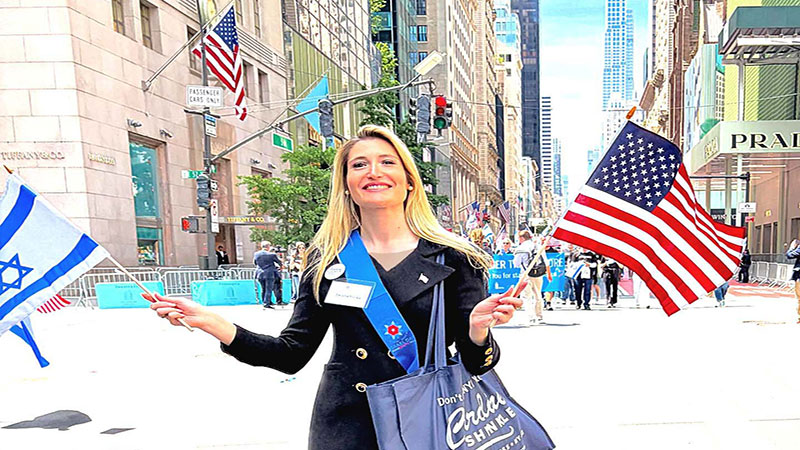
By Ita Yankovich and Ziona Greenwald
Shinkle, a Manhattan native, says she has no choice: “I will not leave the future of the center of Western Civilization, New York City, in the hands of incompetent hacks.”
Of course, the Hebrew word "Mar" also means "bitter." It is often assumed – and I was always taught – that the name of the month is "Cheshvan," and the "Mar" is added because Cheshvan has no holidays, thus embittering it.

In Cheshvan, due to the lack of holidays, Shabbos just feels more special.

Mar Cheshvan, for many of us, represents the first time since June that we have a fairly uninterrupted span of time when the children are in their own schedules, which, as we know, is so necessary for their development (and some structure at home).
For someone who appreciates the daily routines and clear expectations of everyday life, Mar Cheshvan is a bit of a relief.

Mar means bitter. Bitter Cheshvan. But I feel it’s not deserving of the reputation of being bitter just because it has no holy days nor holidays with special davening, atypical foods and partying with family and friends.
Family accountant Izzy had the idea that the Elmans should move to a smaller place and rent out their house to catch up on their debts.

We often hear about enormous organizations and the impressive individuals who created them. As those organizations become more successful, their founders can sometimes appear distant or unreachable. Eli Beer is exactly the opposite.
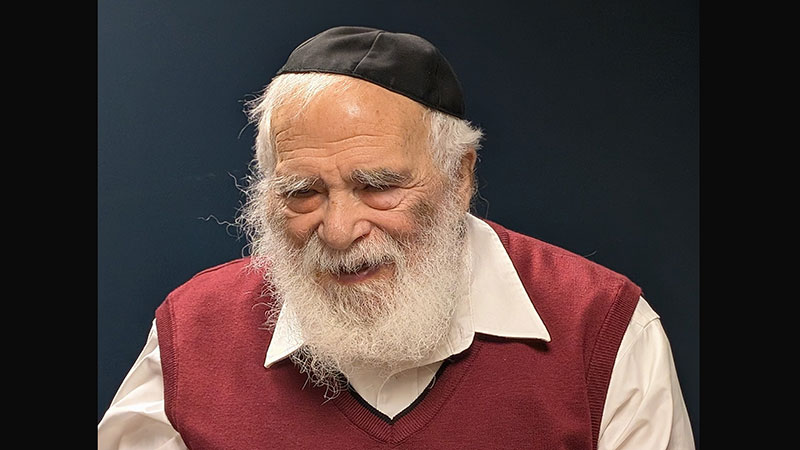
By Marc Gronich
“His pride and joy remain his school, Shabbos House, and the extended Chabad Houses within the Capital District,” Rabbi Bomzer continued. “I have lost a dear confidante, mentor, and friend, and his loss will be felt by all for many years to come.”

By Hillel Fuld
We famously refer to G-d as our father and our king, two identities that are usually somewhat mutually exclusive.
There is only one King in this world. Hashem is the King. He was, He is, and He will always be.
...we are to spend time reflecting on our relationship with G-d on an individual, communal and national level in order for the notion of Divine authority and leadership to be both real and advantageous to us.

I was so focused on what I owed the King that I never stopped to consider what the King owed me.

By Keshet Starr
Accepting a higher authority is not easy or comfortable – or fashionable. But without the ability to accept that what we want to do sometimes has to give way to the right thing to do, we have no hope of living a moral and good life.
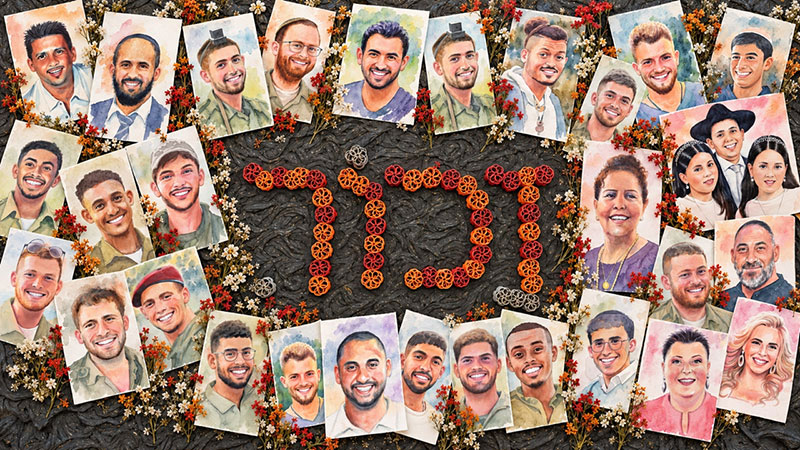
In the last three years, Beit Shemesh has lost 31 residents to terrorism: 17 soldiers, 4 people at the Nova festival, and 10 others to missile fire. “I just wanted to do something to be part of it,” Ackerman said.

Walk into any of the thousands of synagogues around the world on the nights of Sukkot today, and you will still find Jews dancing and rejoicing in celebrations bearing the same name.

The two women she connected me with in Lakewood to run the workshops even came to pick up the duffle bags full of cookbooks that came on the plane.
We share both characteristics of our Father in Heaven. Our body is to be firmly grounded and engaged in the world, while serving Him with the physical mitzvot. Our soul, our true identity, rests in our mind and heart.

All blessings come from Hashem, but how much blessing we can hold depends on the size of our vessel – and that size is up to us.

The streets dried quickly; the heat returned. But the unexpected deluge left something profound in its wake: a sense of wonder, of infinite possibility – and a reminder that G-d’s control of the world, and our lives in it, knows no limits.
Although I acknowledge the gifts that rain bestows on us, I tend to think of it more as a sign of G-d’s mighty wrath and maybe even his displeasure towards me.
Rain does not create the seed; it awakens what was already hidden inside. So much of healing works the same way. We are not necessarily becoming someone new. Often, healing provides the conditions that allow something buried within us to finally emerge.
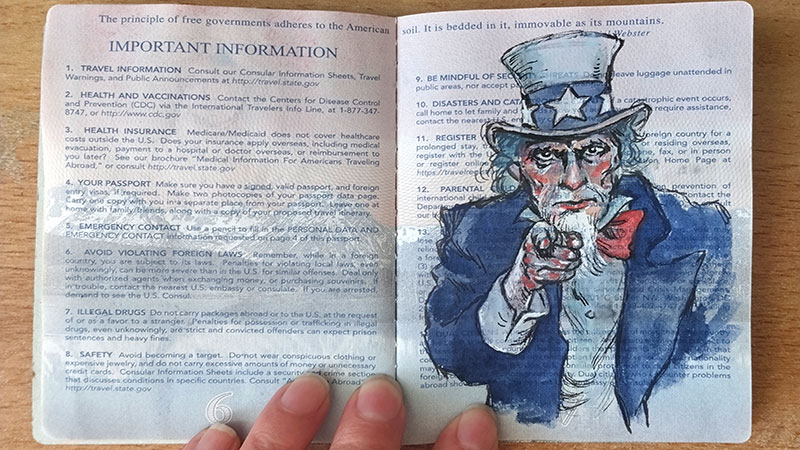
Ackerman has been drawing and painting since she was a child, and she sold her first commissioned painting for $300 as a teenager. But she didn’t turn her passion into a career until much later in her life, once she already had children of her own.
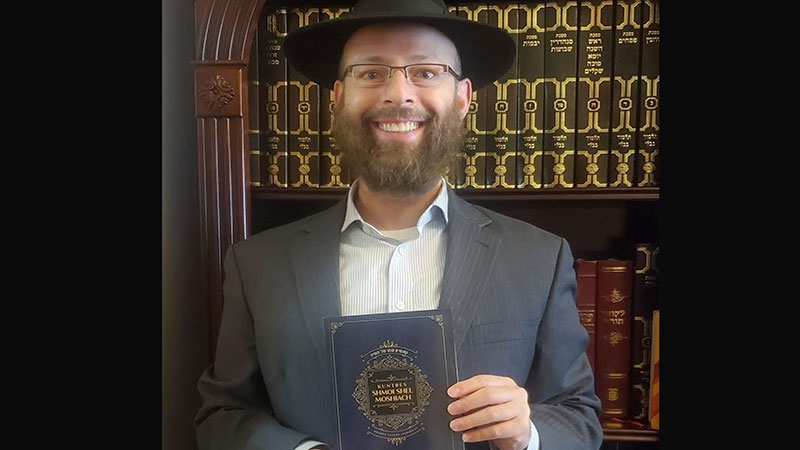
According to Rashi, someone who is raui lehyos Moshiach (“fit to be Moshiach”) is a person who is pious and has suffered. On the other hand, Maharsha says that someone who demonstrates rulership and has fear of sin is raui lehyos Moshiach.

The illustrations are soaked in traditional Jewish teachings – everything from representing the forbidden fruit of the Garden of Eden as a type of fig to capturing the ark-riding adventure of Og, King of Bashan.

Sukkot is the only pilgrimage festival that doesn’t commemorate a major historical event. Instead, it marks a paradox: G-d protected us in fragile huts during the most destabilizing period of Jewish history, our forty-year wilderness journey.
My Grandpa, Jack Shenkman, kept his etrogim long after Sukkot, storing them in a large decorative bowl on display throughout the year, like fine fruit. I still do the same, and every year I catch myself smiling at that bowl before I have even smelled what is inside.
A young man may spend less time deciding on a college, a career, or even a spouse than he spends selecting an etrog. For a week-long holiday, nothing but the very best will do.
The esrog and the tree that produces it are unique. For other fruit trees, the fruit tastes good and the tree does not. However, the esrog and its tree taste the same.
So this year, I'll still search for the perfect etrog. And I'll still inspect approximately 47 of them. But maybe I'll spend a little less time looking for perfection – and a little more time appreciating what I already have.

By Anat Coleman
Unlike the Crown Jewels, the etrog is precious not because it is kept apart or reserved for a privileged few, but because it is meant to be held and used.


Click on the image below to view a full-page version.
We talk about Jewish continuity, but for many Jews, the reality is that without observance, the likelihood of intermarriage skyrockets.
Angels can be actual humans, not in the sense that they are Hashem’s henchmen, but in their middah of extreme kindness; in going the extra mile in helping someone who is floundering physically and emotionally and financially.

If the words of our tefillot and zemirot have meaning, if they're not just a random assemblage of syllables off of which to hang a tune, then we should know what they are, what they mean, and sing them accordingly.
People are limited in their time and abilities, so machines can help them. But why would G-d not do everything Himself? Apparently, there are things more appropriate for G-d to do indirectly.
I don’t remember exactly what prompted it, but one Shabbos afternoon my grandson started to sing HaMalach HaGoel, and in the charming way that makes sense to a two-year-old, he sang, “HaMalach HaGoel O’sleep.”

By David Curwin
When we encounter malach in Tanach, we cannot tell from the word alone whether it refers to a divine or human messenger. In Yaakov’s dream, the malachim are clearly angels.
By Irwin Cohen
I face 41 days of straight Monday through Friday radiation in September and decided to start that process the Monday after Sukkos as I was hospitalized again after my wife took a look at me and took my blood pressure only five days after my Lakewood prostate surgery.
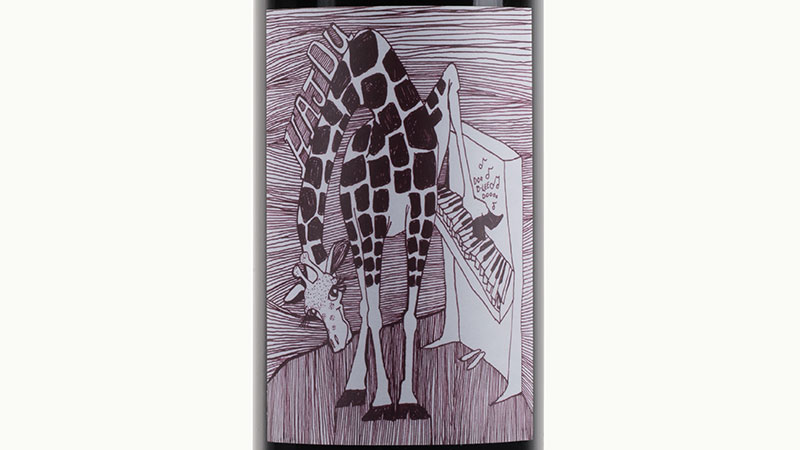
Whether you’re taking it easy or preparing menus for yom tov meals, these bottles deliver that perfect balance of summer chill and anticipation for a fresh new start ahead.
we may not be able to easily lift 200-pound barbells, hit a homerun, or body slam our opponents, but we show our strength, our endurance, and our stamina, in so many other more important ways.
By Maayan Zik
Communal koach is what happens when we recognize that we do not all need to have the same strengths. We simply need to bring what we have and make room for what others bring.

In verses such as Nachum 1:3 and Iyov 36:22, the word means something along the lines of absolute potential.
There are moments that call for compassion, patience, and humility, while other moments require courage, resilience, and unwavering resolve. True wisdom lies in recognizing which type of strength the moment requires.
In Yiddishkeit, when someone accomplishes something, we don't simply say, “Job well done.” We say Yasher Koach, may you have renewed strength to take what you have accomplished and use that strength for even greater good.
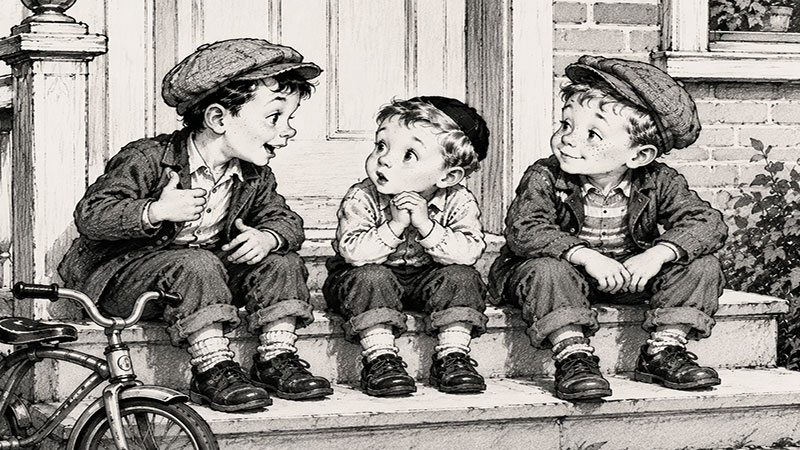
By Arnold Fine
Seymour, an alumnus of the nursery school fraternity, puffed out his chest and proudly exclaimed, “Yeah, yeah, that’s kid stuff. Wait’ll ya’ have to go to kindergarten – that’s real school!”
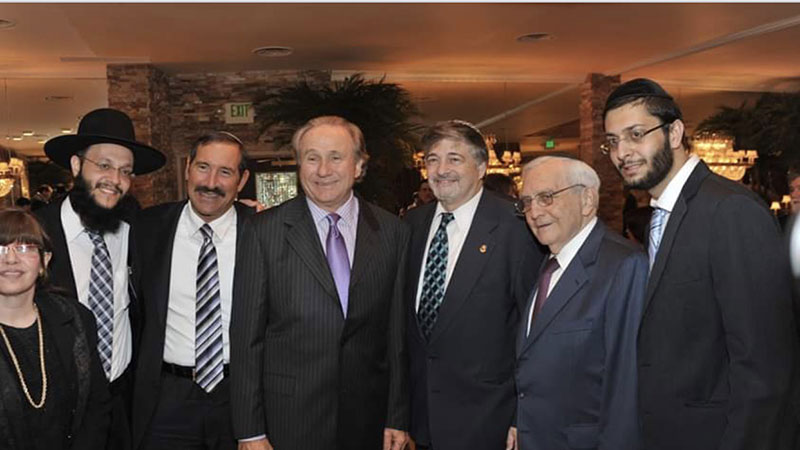
Together, Eugen and Jean Gluck devoted much of the success they achieved to charitable giving and improving the lives of their fellow Jews.

By Ruchi Koval
Sorry is a powerful and important word. It reflects the middah of teshuvah... It ought not to be squandered pointlessly. That tarnishes the value of the word.
A real apology asks us to stay for a few moments with an uncomfortable fact: I did something that hurt you.

Taking responsibility requires us to be able to hold two truths at the same time: I can be a good person who does good things, and I can also hurt people sometimes and I need to repair that with them.

Apologizing can feel like an act of weakness. But saying sorry is an act of strength.
What I love is that Judaism doesn't begin with guilt or punishment (although mom guilt is another story). It begins with the understanding that we're human, and humans make mistakes.

Navone broke back and took control of the fourth set, winning it 6-2, before racing through the deciding set 6-1 to complete the biggest victory of his career.
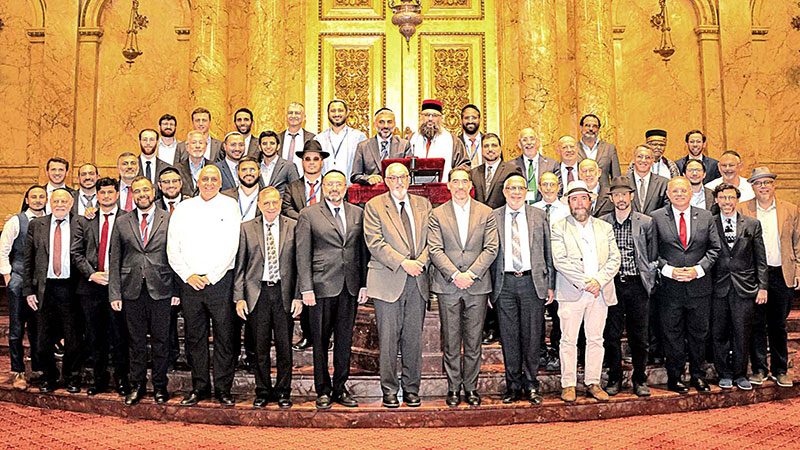
More than a professional rabbinic convention, the two-day gathering became a frank discussion about the challenges of leading a Sephardic community today and how to preserve the Sephardic mesorah as a living tradition.

Do we feel a profound longing to achieve our personal greatness? Do we feel empty until we achieve it? Or do we get caught up in the daily trivialities and forget to consider what our purpose might be?
By Nachum Segal
Having grown up with the voluminous Adler machzor I quickly learned that the length of the machzor helps determine the length of High Holiday services.
By Avi Ganz
More than 20 years since I started my career as a baal tefilah and just holding my machzor conjures up all of these images and so many more emotions that have accompanied us on our tefillah journey.

By Rabbanit Dr. Adena Berkowitz
The machzor may stay the same; but by davening from our machzor, and spending time in shul with our community, hopefully our neshamas, our souls, will be stirred to change as we stand before Hashem.
By Eli Lebowicz
There’s a certain joy we get realizing that the number of pages in the machzor is only half as many as you first thought because of the English translation.
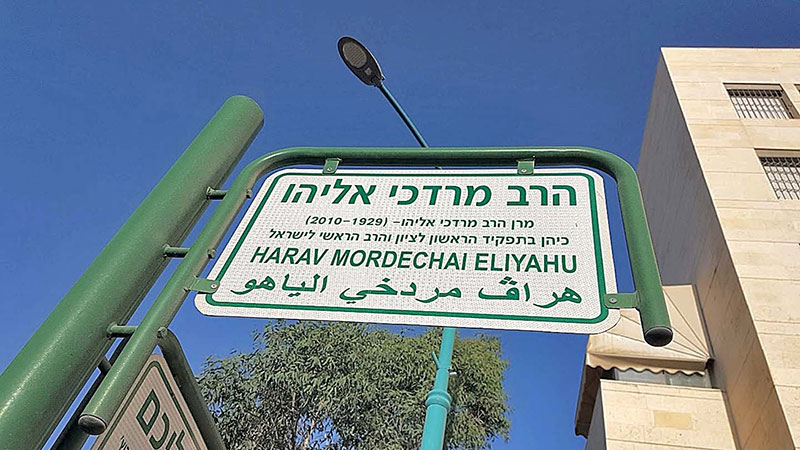
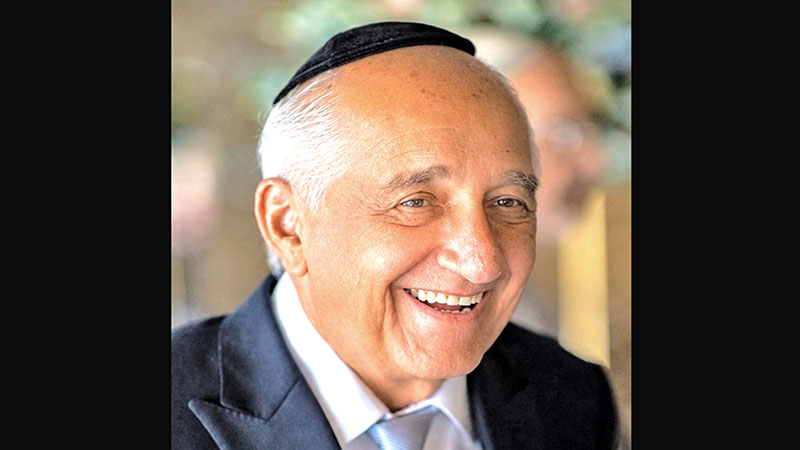
Rav Mordechai Eliyahu was born in Jerusalem in 1929, the son of a leading kabbalist. At just 28, he became the youngest member ever to serve as a judge in the Israeli rabbinical courts – an early recognition of his remarkable scholarship.
An Israeli artificial intelligence startup that was valued at about $4 billion only three months ago is now reportedly on the verge of being acquired for roughly $7 billion by Anthropic, the American company behind the Claude AI chatbot. The potential acquisition of Decart would be one of the largest-ever purchases of an Israeli technology […]
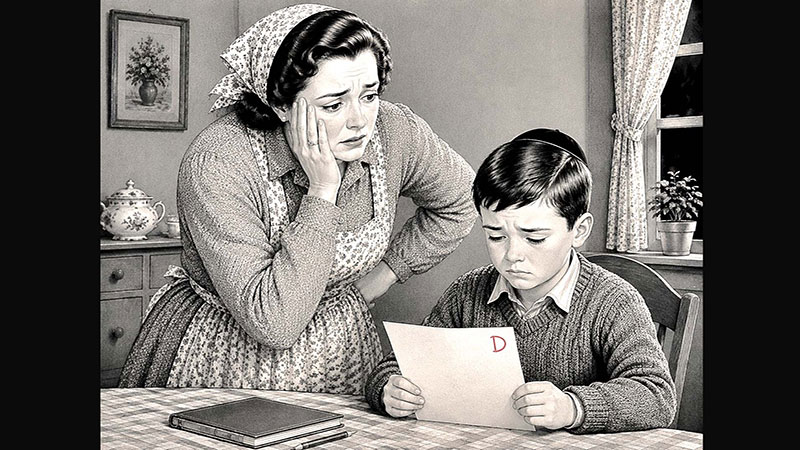
By Arnold Fine
I’ll never forget how Mama said “Ah broch tsu mir” and clapped her hands to her face when she saw my sister wearing lipstick for the first time. This really seemed like a catastrophe. Who knew where it would lead?

By Irwin Cohen
I'm willing to share the future as it will possibly help some readers also. I'm lucky to have a wife that pushed me to go to the hospital.
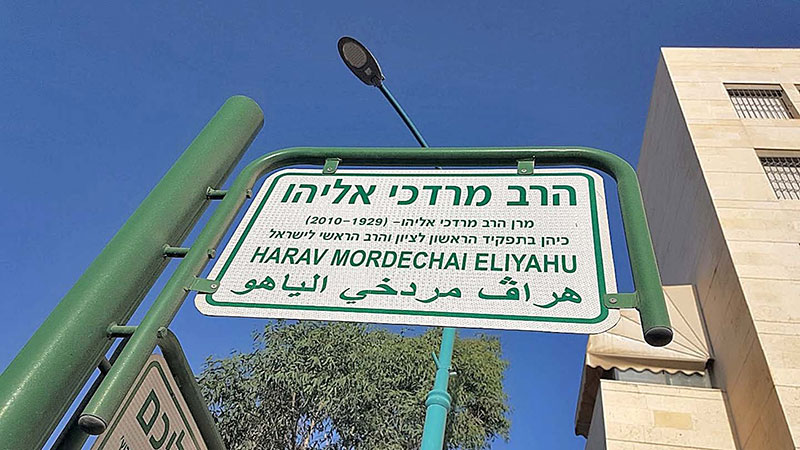
Rav Eliyahu was respected across a wide spectrum of religious communities in Israel – a rare figure whose authority transcended internal divisions.
By Avi Ciment
You met some pretty amazing people in your career. From Jackie Gleason, Frank Sinatra, Ed Koch, Simon Wiesenthal, Yitzchak Rabin, Shamir, Ariel Sharon, Menachem Begin, Bibi and Bill Clinton. Who impressed you the most?
I’m concerned that while our broader American Jewish community has managed to, baruch Hashem, make high-level kashrus a priority, we have sometimes sacrificed the quality of the ingredients that we put in our bodies.
When I think of honey I also think of the commentators who say that the mann that fed the Jews during the 40 years in the desert was honey on little cakes.

I save all the honey for Rosh Hashanah time when my family has this cute tradition where we sit around the table for a honey tasting and we sample all the honey from around the world.

By Jordana Baruchov Grreenfield
We know that in the year ahead, not everything will feel like honey. There will be disappointments, detours, challenges, and moments we would never have chosen or foreseen. But perhaps the avodah of Rosh Hashanah is learning how to dip those moments into honey.
 October 30, 2026