יום שבת, כ״ב תשרי תשפ״זSaturday, October 3, 2026



Follow Us


Some students may thrive in a secular university because they may be called upon to take on leadership roles in a religious capacity, such as to help make the minyan or to arrange Torah study opportunities, when they might not be able do so in a Jewish college setting when there are already plenty of minyanim and Torah study opportunities.
I have been going to Meron for so many years, over 20 years on this special day, I cannot imagine this day anywhere else but by Rabbi Shimon Bar Yochai's side. I felt hugged, I felt loved, I felt protected, and I felt like the heavens were opened wide to all my heart's desires.

While, it’s very sad that so many people have to wait so long for their bashert, predominantly, it isn’t their fault. We try to find reasons why people aren’t married and tell them if only they tried this segulah, that event, that matchmaker, this person… they would be married.
By Rabbi Dr. Mordechai Schiffman
The challenge is when perceived reality doesn’t map onto the system of justice. What do we think when confronted with a situation when someone seems to be suffering for no fault of their own?
Ben Azai teaches that it’s best not to consider which mitzvot are greater or lesser in value to the one who performs them because from beginning to do mitzvot one will add on more mitzvot, but if he does an aveira, then G-d forbid he may begin traveling down the other path.
Last year, when you made the bonfire, the smoke wafted heavily toward us, said Mr. Wasser. I found it quite intolerable!
The Impropriety Of Flattery “They Flattered King Agrippas” (Sotah 41b)
An individual who is miserly and jealous of others’ material prosperity will not truly want them to be blessed.
Even with night school, Avraham remained only nominally educated, but he was high on motivation. So high that he taught himself to become a CPA and then returned to the very office where he had started, at the very lowest rung.
Question: What if one counted the omer but forgot to utter the blessing – has the obligation been fulfilled? Why do we recite a blessing for this counting, when we find that for the zayin nekiyim – the seven clean days – there is no such blessing? Is the counting not similar? M. Goldman Miami Beach, Fla
When everyone studies the same thing on the same day, their learning is united across continents.
Being different from others not for the sake of Hashem is simply supercilious haughtiness.
Pesach Sheni constitutes the first Hebrew festival established 'from below' & sets the precedent for all the holidays that would later fill the month of Iyar.

In the years before my mother left this world she said over and over –‘kinderlach, children… I know what I am seeing. I know what I am saying. The world is on fire and we are sleeping.
Philosophy and logic are useful, often necessary, tools for approaching spiritual truths.

What Giannis and Frum Influencers Got Wrong
Other things may change us, but we start and end with family. -Anthony Brandt
Why do our possessions belong to Hashem? The simplest explanation is that Hashem’s ownership is rooted in His creation of the world and all of its content.
By Rabbi Lord Jonathan Sacks z"l
The account in Deuteronomy is about society. Moses at the end of his life told the next generation where they had come from, where they were going to, and the kind of society they were to construct.
The awareness that Israel is the national expression of HaShem in this world and that our conduct is a direct reflection of His Divine Ideal should fill us with a deep sense of tremendous responsibility.
Sometimes, it is not we who grasp a concept or experience; rather, some concept or experience grasps us.
One doesn’t die from a question
A person's self-perception is a strong factor in his ability to succeed in Torah study and the performance of mitzvos.
We need specially to ask Hashem to assist us in our Torah efforts for there is nothing that the yeitzer hara, the evil inclination, tries to stop us from accomplishing more than the study of Torah.
The origin of the bagel is older than you think...
It is believed that one who donates this Chai Rottel quantity of refreshments will be blessed with all forms of miraculous salvation.
Bridges do not remove the massive abyss that separates two bodies of land, but rather create specific points of connection. In a similar vein, sometimes our disagreements with other people or groups are valid, and we may not have the authority to overlook or forgive those differences.
The term sekilah appears in two instances of men who were stoned to death: Achan, who illegally took the spoils of war from Jericho (Joshua 7:25); and Naboth, against whom Jezebel and Ahab conspired to take his vineyard (I Kings 23:10-15).
Such public entertainment is similar to what people do during the rest of the year and thus completely undermines, and even vitiates, the mourning of the omer period.
The demonstrations from the left-wing, have been challenging. The air was filled with tension and anxiety and hate.
By Rabbi Dr. Mordechai Schiffman
To what extent are you in control of your own life? Many early psychological theories assumed that the answer to this question was not much.
The Burning of Kever Yosef “Alongside Shechem” (Sotah 32a)
I placed the printer in the apartment with intention that it should be Shimon's, said Reuven. He may have already acquired it! We are learning now in yeshiva about kinyan chatzer, acquisition through one's property.
We cannot bring these holy souls back to life, nor can we fathom the evil that is in the minds of the terrorists who committed these cruel and cowardly acts of terror, but we can take this moment to introspect...
I once went on a group tour of Mount Herzl and happened to meet Miriam Peretz there. She lost two sons to war and, turning to our group, spoke as follows: Stones and living water are not just meant as customs. They incorporate a perspective that we must take with us as we venture forth from this holy day.
What the Torah is telling us is that there are two roads that lead to sin and one can never be sure which path one took.

Question: What if one counted the omer but forgot to utter the blessing – has the obligation been fulfilled? Why do we recite a blessing for this counting, when we find that for the zayin nekiyim – the seven clean days — there is no such blessing? Is the counting not similar? M. Goldman Miami Beach, Fla.
The Mishneh Torah was not written only for great Torah scholars. The Rambam writes that he composed it in a clear, unambiguous style for all Jews – k’katan k’gadol – for the small as for the great.
The concept of seven refers to that which connects all the pieces together into a single unit. This is the unifying center, the unifying force that creates a physical form and vessel from the six disparate parts.
Such a filtering process is necessary but, as you may have noted, it is purely negative. It filters out but it does not tell us what to bring in. What should we, in fact, hold dear? How shall we make use of our time? Who will we choose to be with?
In reality, man’s purpose in this world is to do the will of Hashem by learning Torah and performing mitzvos, and the Talmud (Sanhedrin 90a) states that All of the Jewish people have a share in the world-to-come.
By Rabbi Lord Jonathan Sacks z"l
Moses’ intercession with G-d did not, in and of itself, induce a penitential mood among the people. Yes, he performed a series of dramatic acts to demonstrate to the people their guilt. But we have no evidence that they internalized it.
Yaras Daas writes that one should also have in mind for the Torah success of their children, their descendants and their disciples.

The Segula is Israel's inner Divine light planted within the collective Hebrew soul and revealed in human history through the Jewish people.
Every mitzvah is like a faucet that, when opened, releases Divine blessing into our world and elevates it to a level beyond where it previously existed.
People often see themselves as worth more than they actually are. Remembering our lowly origins and eventual demise humbles us.
Because when you reduce humanity to its essence, there is only the naked will and the Torah which complements it, so that man becomes a spiritual being, an enlightened consciousness.
Although one might think that a day of fasting and introspection would be in order for the yahrzeit of a tzaddik, as is the case regarding the yahrzeit of Moshe Rabbeinu, Lag Ba'Omer is uniquely different.
Because we are so blessed with material comfort and convenience, we need to remember that growth and greatness only come with exertion, persistence, and effort. Discomfort, and often pain, are par for the course.
Although the word shein usually means “tooth,” sometimes it refers to things made out of ivory, which is a material made out of teeth.
It is clear that the prohibition obtains only when one dyes his hair to achieve the same result as women who dye their hair.
As we moved around the country to different locations, every section had its own beautiful way of celebrating on this special day. I was so proud. And felt so honored to be living here in the holy land of Israel.
If we have seats, and charge someone for using them for Shabbos, answered Sol, perhaps it's like we're charging rent for the seats for the Shabbos games!
Incurring Lashes? “On That Day Rabbi Akiva Expounded” (Sotah 27b)
By Rabbi Dr. Mordechai Schiffman
Rashbatz adds that there is also a positive aspect to social pressure. Fear of social consequences can be an effective motivator to avoid ethical and spiritual violations.
Question: We celebrate two days of Passover in chutz la’aretz, the Diaspora, because we are unsure as to which is the first day of Passover. If such is the case, what is the basis for beginning the count of sefirat ha’omer in chutz la’aretz on the second night of Passover? M. Goldman Via email
Obviously, our awareness of the constant presence of Hashem’s “eyes” should have an even stronger impact. That is part of what makes religion a force for honest and altruistic behavior and mitzvah observance: the belief that G-d sees what we do.
Iyar represents the return to the mundane – going back to work after Yom Tov. At this point, it becomes difficult to infuse our Torah learning and mitzvah doing with warmth in a cold and mundane world.
We face Holocaust denial, ignorance, and forgetfulness, as well as claims that the Holocaust was not a unique or particularly anti-Jewish event. It is therefore more important than ever not only to remember what happened, but to make a commitment never to forget.

While it is unfortunate that even observant Diaspora Jews can be corrupted by the moral values of their host countries, the greater tragedy is that they are not living up to their full potential in life.
Teaching a bigger Torah would not only succeed in bringing back more disconnected Jews but also in advancing the Hebrew mission of illuminating the world with the light of HaShem’s Truth.
If you want to understand the origin of something, search for the first time it is mentioned in the Torah.
Hashem’s manifestations of holiness serve as a model for how we can be holy.
Mankind are an incorrigible race. Give them but bugbears and idols -- it is all that they ask; the distinctions of right and wrong, of truth and falsehood, of good and evil, are worse than indifferent to them. -William Hazlitt
By Rabbi Lord Jonathan Sacks z"l
What was the connection between the internal Jewish struggle and the Christian burning of Jewish books?
In truth, we are not counting down to Matan Torah, but rather are building toward it, ascending one day at a time.
Our commentaries say that if a person has animosity in their heart towards another, it would actually be better to be open and tell them about it rather than to harbor ill feelings and transgress this prohibition.
Maimonides (Guide for the Perplexed 1:9) writes that the idea of a kisseh implies importance and power, presumably because in ancient times ordinary people did not have chairs but merely sat on whatever flat surfaces were available.
Almost all contemporary halachic authorities rule that in our day, when sefarim are abundant and relatively inexpensive, it is permitted to ship or otherwise take sefarim out of Eretz Yisrael without exception.
There were some key phrases she used that resonated with me; quips such as, It’s a no brainer and Have your money do the work for you.
Dubai was so majestic and picturesque that it gave me clarity and strengthened my faith how royal I am as a Jew, and just how beautiful and wonderful the true and final Redemption will actually be.
Yehoshua was one of Israel's greatest leaders because he represented the ideal expression of the Yosef force - one consciously rooted in, guided by and completely subordinate to the Hebrew mission.
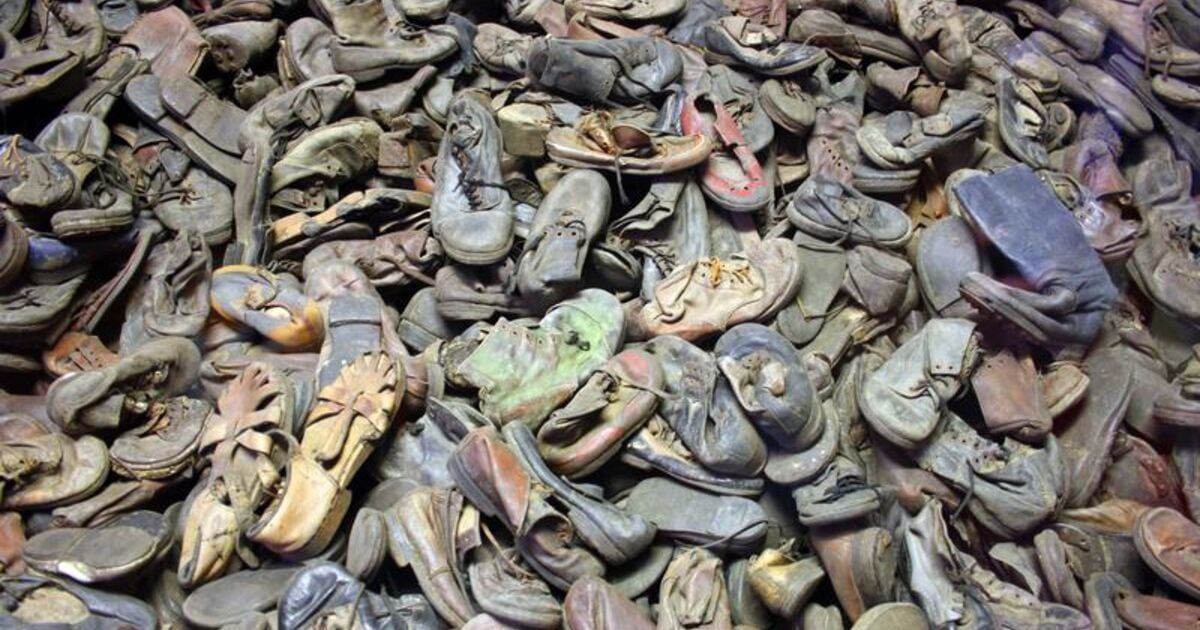
By Rabbi Lord Jonathan Sacks z"l
Reflections from Rabbi Sacks’ following his first visit to Auschwitz in 1995
During the day, except for the number which had been branded onto his arm, similar to what used to be done to cattle, no one would know that the smiling, sweet, hard-working Moshe had such a nightmarish past.
The Baal Shem Tov, the founder of the chassidic movement, was the first one to celebrate this meal, with an open door, allowing anyone who wished to partake.
A Special Syllabus ‘As One Who Is Exempt, But Nevertheless Does’ (Sotah 21a)
We are all shaken by the spilling of our brothers and sisters; innocent, holy blood.
Don't the korbanot themselves bring peace on their own? So why was it necessary for Aharon to bless the people with peace?
The Rambam saw the three pillars as modes of personal development. Torah develops our intellectual ability, gemilut chasadim our character, and avodah our observance.
Question: We celebrate two days of Passover in chutz la’aretz [the Diaspora – outside the land of Israel] because we are unsure which one is the first day of the holiday. If so, what is the basis for beginning the count of sefirat ha’omer in chutz la’aretz on the second night of Passover? M. Goldman Via email
On the night of the exodus, Hashem performed makkas bechoros (the plague of the firstborn), devastating Egypt and causing even Pharaoh to panic. Makkas bechoros was unique in that Hashem Himself performed this Makkah (Rashi, Shemos 12:12).
When an individual experiences yesurim – be they physical, monetary, or other forms of suffering – he should know that it is for his good. R’ Chaim Vital said: It is beneficial for one to be embarrassed for it is a rectification for his sins, and in that moment, it is as though he has died.
Israel is to participate in - and elevate - every sphere of national life in order to reveal the inner connection of all that exists to the Divine Ideal.
Israel was granted insight into HaShem's Divine plan for revealing Himself in Creation and bringing the world to its predestined state of perfection.
Judaism does not necessarily laud one who knows many facts. When the Torah refers to a chacham it refers to one who possesses a deep desire for knowledge.
On Pesach we convey to our children the great lesson of hakol kol Yaakov, the voice is the voice of Yaakov.
Maybe the family had decided to obtain some other tefillin. He didn’t know. But he was sure that Hashem had guided his steps to just this spot to save his father’s tefillin which had obviously been discarded in error.
Avadim hayenu – we were slaves in Egypt. I looked around the table, wondering what our new Russian friends were thinking, if they were recalling their time as Jews in the modern slavery of the oppressive, antisemitic USSR.
In every generation, a person is obligated to regard himself as if he personally left Egypt.
The Stepfather In A Kesuba “He Was the Stepson of Kenaz” (Sotah 11b)
If the Jew accepts responsibility for the chametz – that of shomer sachar or, according to some, even that of a shomer chinam – he violates bal yimatzei (O.C. 440:1).
Question: We celebrate two days of Passover in chutz la’aretz [the Diaspora – outside the land of Israel] because we are unsure which one is the first day of the holiday. If so, what is the basis for beginning the count of sefirat ha’omer in chutz la’aretz on the second night of Passover? M.Goldman Via email
Almighty G-d threatens to destroy the Jewish people for their grave sin. Moses intercedes and tells G-d, If you destroy the Jewish people, then delete me from your Torah as well.
 October 2, 2026