יום שלישי, ט׳ חשוון תשפ״זTuesday, October 20, 2026



Follow Us


By Rabbi Lord Jonathan Sacks z"l
What was the connection between the internal Jewish struggle and the Christian burning of Jewish books?
In truth, we are not counting down to Matan Torah, but rather are building toward it, ascending one day at a time.
Our commentaries say that if a person has animosity in their heart towards another, it would actually be better to be open and tell them about it rather than to harbor ill feelings and transgress this prohibition.
Maimonides (Guide for the Perplexed 1:9) writes that the idea of a kisseh implies importance and power, presumably because in ancient times ordinary people did not have chairs but merely sat on whatever flat surfaces were available.
Almost all contemporary halachic authorities rule that in our day, when sefarim are abundant and relatively inexpensive, it is permitted to ship or otherwise take sefarim out of Eretz Yisrael without exception.
There were some key phrases she used that resonated with me; quips such as, It’s a no brainer and Have your money do the work for you.
Dubai was so majestic and picturesque that it gave me clarity and strengthened my faith how royal I am as a Jew, and just how beautiful and wonderful the true and final Redemption will actually be.
Yehoshua was one of Israel's greatest leaders because he represented the ideal expression of the Yosef force - one consciously rooted in, guided by and completely subordinate to the Hebrew mission.
By Rabbi Lord Jonathan Sacks z"l
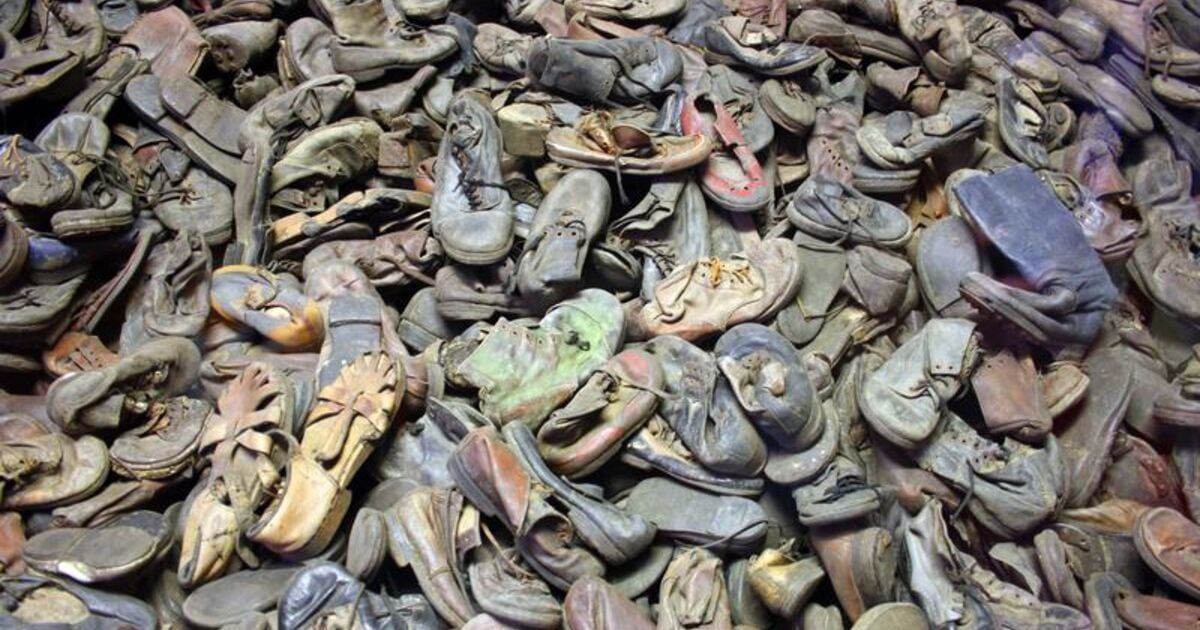
Reflections from Rabbi Sacks’ following his first visit to Auschwitz in 1995
During the day, except for the number which had been branded onto his arm, similar to what used to be done to cattle, no one would know that the smiling, sweet, hard-working Moshe had such a nightmarish past.
The Baal Shem Tov, the founder of the chassidic movement, was the first one to celebrate this meal, with an open door, allowing anyone who wished to partake.
A Special Syllabus ‘As One Who Is Exempt, But Nevertheless Does’ (Sotah 21a)
We are all shaken by the spilling of our brothers and sisters; innocent, holy blood.
Don't the korbanot themselves bring peace on their own? So why was it necessary for Aharon to bless the people with peace?
The Rambam saw the three pillars as modes of personal development. Torah develops our intellectual ability, gemilut chasadim our character, and avodah our observance.
Question: We celebrate two days of Passover in chutz la’aretz [the Diaspora – outside the land of Israel] because we are unsure which one is the first day of the holiday. If so, what is the basis for beginning the count of sefirat ha’omer in chutz la’aretz on the second night of Passover? M. Goldman Via email
On the night of the exodus, Hashem performed makkas bechoros (the plague of the firstborn), devastating Egypt and causing even Pharaoh to panic. Makkas bechoros was unique in that Hashem Himself performed this Makkah (Rashi, Shemos 12:12).
When an individual experiences yesurim – be they physical, monetary, or other forms of suffering – he should know that it is for his good. R’ Chaim Vital said: It is beneficial for one to be embarrassed for it is a rectification for his sins, and in that moment, it is as though he has died.
Israel is to participate in - and elevate - every sphere of national life in order to reveal the inner connection of all that exists to the Divine Ideal.
Israel was granted insight into HaShem's Divine plan for revealing Himself in Creation and bringing the world to its predestined state of perfection.
Judaism does not necessarily laud one who knows many facts. When the Torah refers to a chacham it refers to one who possesses a deep desire for knowledge.
On Pesach we convey to our children the great lesson of hakol kol Yaakov, the voice is the voice of Yaakov.
Maybe the family had decided to obtain some other tefillin. He didn’t know. But he was sure that Hashem had guided his steps to just this spot to save his father’s tefillin which had obviously been discarded in error.
Avadim hayenu – we were slaves in Egypt. I looked around the table, wondering what our new Russian friends were thinking, if they were recalling their time as Jews in the modern slavery of the oppressive, antisemitic USSR.
In every generation, a person is obligated to regard himself as if he personally left Egypt.
The Stepfather In A Kesuba “He Was the Stepson of Kenaz” (Sotah 11b)
If the Jew accepts responsibility for the chametz – that of shomer sachar or, according to some, even that of a shomer chinam – he violates bal yimatzei (O.C. 440:1).
Question: We celebrate two days of Passover in chutz la’aretz [the Diaspora – outside the land of Israel] because we are unsure which one is the first day of the holiday. If so, what is the basis for beginning the count of sefirat ha’omer in chutz la’aretz on the second night of Passover? M.Goldman Via email
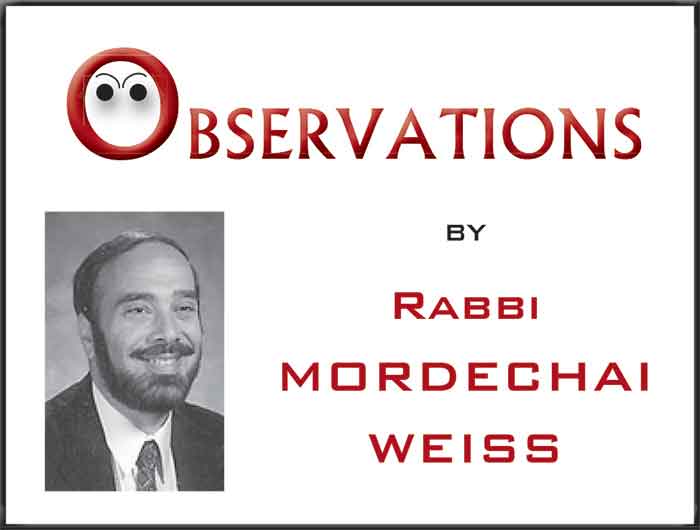
Almighty G-d threatens to destroy the Jewish people for their grave sin. Moses intercedes and tells G-d, If you destroy the Jewish people, then delete me from your Torah as well.
The Roman military may have made dispensations on Shabbat as well.
This alternative explanation highlights Hashem’s care for us more strongly. On that fateful night, he did more than just skip over our homes. He actively and personally protected us from danger.
The Seder is comprised of 15 steps, which is the same number of steps leading up to the Beis HaMikdash and the same number of "Shir Hama'alos" psalms – the songs of ascension.
“Behold, I accept upon myself the commandment of the Lord to love my neighbor as myself.”
It is my custom to pour the second cup of wine before the mah nishtanah. Most people do this. It begs the question though. Since the second cup is for maggid, and maggid starts by ha lachma anya, why don’t we pour it before this paragraph (which is indeed the minhag of the Shiboleh Leket and the Orchos Chaim).
2 questions and their answers are an enlightening approach
Rav Kook teaches that in the natural world as it appears to us, the light of kedusha is hidden deep inside reality. It is often hard work to find it and extract it, and the day-to-day matters of existence as well as the events of history seem to bury it further.
Before the Exodus from Egypt, when everything seemed stuck, when no solution had yet appeared on the horizon, the redemption began when the nation of Israel simply lifted its eyes towards heaven and cried out to G-d.
By Rabbi Lord Jonathan Sacks z"l
In Judaism, to be without questions is a sign not of faith, but of lack of depth.
None of the four sons depicted in the haggadah could be taught in an identical manner; the results would be catastrophic.
Even had Egypt’s dominance on the world stage declined later in history due to natural circumstances, the Pharaonic worldview would have continued to dominate the thinking of man.
When one is riding on cloud nine and feels that longing to be close with their prospective spouse he/she can spend hours working out minute details to enhance the experience even more.
The other purpose of charoset is symbolic. The traditional ingredients of the charoset mixture – nuts, figs, and apples – are used in Scripture to describe the Jewish people.
we need to first discuss the logical problem posed by chametz.
There are the other components of the Seder which we must consume: the wine, the maror and the matzah. Thus, if one does not consume any meat, fowl and/or fish, that will suffice as regards the evening’s requirements.
We see that the wine for Arba Kosot must be considered chashuv. Rav Moshe Feinstein, in turn, rules that grape juice is not chashuv.
By Bryna Conway
The first Shabbat after we moved into our house, we decided to go to shul. This was not out of any religious fervor, more an acknowledgement of our new start, a new phase in our lives – and curiosity to see what the people were like.
By Rabbi Dr. Mordechai Schiffman
One of Viktor Frankl’s most essential contributions to psychology was his highlighting the importance of self-transcendence and its contribution to a sense of meaning.
A Hot Air Blower “Whoever Eats Bread Without Wiping His Hands…” (Sotah 4b)
In any case, added Chaim, I assume that if you have a share in the chametz, you can include it in mechiras chametz. I don’t think I can simply sell my stocks the way I sell the liquor that I own, objected Mr. Krumbein.

Hashem took us out of slavery because a slave can never truly give himself over to a higher cause as he is not the owner of the self to give.
Why should we value the ability to control others? Even if that had value, what difference does that ability make if we cannot control ourselves?
Question: Now that we are doing our pre-Passover shopping, I notice in many of the kosher sections of the supermarket packaged products that are marked “non-gebrockts.” Perusing the travel pages of The Jewish Press, I also noticed that many of the caterers at the Passover hotels advertise that they are “Non-Gebrockts.” Could you please throw some light on this current trend? M. Schwartz Via e-mail
The Rebbe cared for each and every person of the generation, regardless of their background or upbringing. The Rebbe didn’t label any Jew. To the Rebbe, a Jew is a Jew; there is nothing more and nothing less.
Israel has dramatically returned to the world stage in what has so far been merely the introduction to a revolutionary process destined to free humankind from a global order that promotes injustice.
By Rabbi Lord Jonathan Sacks z"l
To love is to thank. To love is to want to bring an offering to the Beloved. To love is to give. Sacrifice is the choreography of love.
As we previously explained, the purpose of techeiles and tzitzis is to straighten the bent path and help connect us back to Hashem, our Source.
It was on the night of the Seder that Avraham was rescued from the four mighty kings. It was on this night that the Jewish people were saved from Sancherev and his 400 battalions. It was also on this night that Achashveirosh had difficulty in sleeping and the seeds of Haman’s downfall were sown.
When we heard that he was arriving, we all went out past the city limits to greet him. When the Chofetz Chaim saw me he asked me to come into the carriage with him. I entered the carriage and found him crying bitterly.
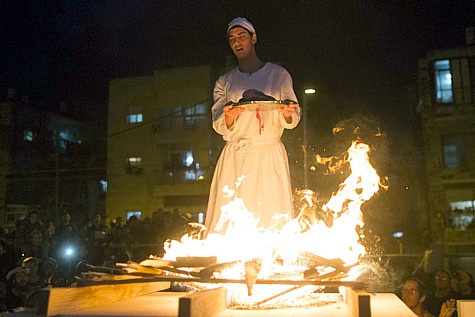
Every year, Jews in America join the rest of the nation in celebrating national Thanksgiving, on the last Thursday in November. However, we Jews have our own “thanksgiving” festival, it is called Pesach! On a regular (non-leap) year, Pesach is always preceded by parshat Tzav, (my bar mitzvah parsha). The Tur says that whenever there […]
After the presentation, I heard the latest news from Israel. But it seemed that in Italy tonight, we had somehow covered the current situation.

Four times we mention the word ‘baruch’ – blessed. Because we must know that every child is considered to be ‘baruch’ – a blessing. Yes, even in the most difficult situation, there is bracha to be found. Seder night gives us a new perspective.
Many other sources view the word Mitzrayim as a portmanteau of meitzar (narrow, border, strait) and yam (sea).
The ancient Egyptians worshipped sheep. When they saw that the Jews were tying sheep to their beds, they became enraged and demanded an explanation for this sacrilege.
If consuming these products are an enhancement of one's simchas Yom Tov and done l’shem mitzvah, they can be sanctioned with moderation.
By dvora
Mommie assumed that within three days’ time, I would forget what I had experienced, but through a series of different occurrences, I did, in fact move to Crown Heights, as a young married woman, with my dear husband, as well as my long-awaited kinderlach who are indeed brachas from the Rebbe!
By Risa Rotman
I knew the exact address was one of three buildings. I would just look for this unique family name on those three buildings’ entrances and I would find where to go. But just at that moment my mind froze, and I couldn’t think what that unique name was.
By Rabbi Dr. Mordechai Schiffman
Throughout Jewish history the advice to be suspicious of governmental authorities was sound and perhaps even life-saving advice.
Re-burial In Eretz Yisrael ‘If One Finds Three [Corpses]…This Is A Graveyard’? (Nazir 64b – 65a)

In the midst of our annual bout with chametz, in this week's Parshat, the Torah forbids us from sacrificing any leaven (שאר), or honey on the holy altar.
We are meant to focus our lives and attention on meaningful things. Though we often become distracted, we should never direct our attention to meaninglessness.
Shabbat does not only last 25 hours; Shabbat reverberates throughout the entire week and is meant to favorably influence our six days of work and other activities.
Question: Now that we are doing our pre-Passover shopping, I notice that in many of the Kosher sections of the supermarket, there are packaged products marked “non-gebrockts.”... Could you please throw some light on this current trend? M. Schwartz Via Email
The laws of the korbanot open with a korban nedavah, an optional offering that was voluntarily brought by someone who wanted to show his appreciation of G-d.
G-d took us out of Egypt in Nissan. After 210 years of suffering in exile, G-d took His nation out of Egypt.
The month of Nissan comes in the spring; after a long, cold, and lifeless winter, the world comes to life. The reawakening of Nature is (to anyone yet young in spirit and heart, and not soured by the years and embittered by time) a call from G-d to man.
Korbanot in Jerusalem produce a spiritual ripple effect that adds incredible blessing to the world – curing diseases, alleviating suffering & influencing random acts of kindness across the globe.

If there was a fire already upon the altar that descended from heaven, we must ask why there is a commandment to add a flame of our own to it in the first place.
The fact that Shlomo HaMelech was provided with a rationale for the Torah prohibitions actually contributed to his undoing.
By Rabbi Lord Jonathan Sacks z"l
For each of us G-d has a task: work to perform, a kindness to show, a gift to give, love to share, loneliness to ease, pain to heal, or broken lives to help mend.
In Heaven, everyone is programmed to praise Hashem. Thus, it is not so special that everyone is singing Hashem’s praises.
The story of Korach is often considered one of rebellion, but it can also be seen as a case of mistaken idealism, a philosophical challenge, or misplaced spiritual yearning.
In order for Hashem to defeat the power of Pharaoh and Mizrayim and take us out of our predicament, He had to both overthrow the audacity of Pharaoh and elevate the spiritual sanctity of Israel at once.
Rabbi Wein recounts that they imparted to his generation the need to appreciate being part of the eternal people and the responsibility it entails. He also speaks of our need to pridefully convey those messages to our progeny.
Many individuals have the custom to cover or remove any knives that are on the table before reciting Birkat HaMazon. This is because knives, reminiscent of swords, are items that shorten a man’s life, while the table, which represents the altar of G-d, lengthens it.
If I understood him correctly, Rabbi Pappenheim differentiates between zavit and pinah by explaining that a zavit refers to the inner part of a corner, while a pinah refers to the outer part of a corner.
During the seven years of plenty in Egypt and before the seven years of famine, the pasuk says that Yosef divided the land up into Kematzim, which Rashi explains as – stockpiling grains Kometz on Kometz, handful on handful.
In my opinion, what is at stake here is whether one can permit these acts since they represent only a professional interaction with no personal implications.
Eventually one of her daughters persuaded her to go to her doctor and after some tests he diagnosed early onset dementia. It was a tremendous shock to everyone, but the children realized that they would have to learn to help her and their father come to terms with this new reality.
By Adina Perez
Later at night I got a phone call from my younger sister that lives up north in Israel. She wanted to talk to me about an incident that happened between us, which she felt she had never really asked forgiveness for. I couldn't remember anything and it took me some time till I understood what she was talking about.
By Rabbi Dr. Mordechai Schiffman
We should be so engaged in meaningful and valuable pursuits that we don’t have time to sin.
The whole Jewish nation set their calendars and holidays based on the words of the witnesses. It was even permissible to come on Shabbos from afar to testify.
A Matter Of Health ‘He Who Rounds The Corners Of A Minor[’s Hair]…’ (Nazir 57b)
 October 16, 2026