יום שבת, ו׳ חשוון תשפ״זSaturday, October 17, 2026



Follow Us


Question: Why do we only count the Omer after the first day of Passover, and why for 49 days only, when the Torah commands “Fifty days shall you count?” Additionally, what is the reason for the special celebrations of Lag Ba’Omer? Harvey Abramson Via Email
The service of teshuva, however, requires us to reach beyond our limited, worldly frame of reference and express the unbounded potential of the godly spark within us.

Since historical events like these have the potential to challenge our faith, they create a religious imperative to search for God’s loving hand even in the face of tragedy and sorrow. That is an important part of R. Akiva’s legacy as well as that of R. Shimon’s.
The question is asked: If the miracle of the blessing will already be obvious, as our pasuk indicates, in the sixth year – when the land produces a crop that is sufficient for three years – why would the people be worrying any further?
A banker is a fellow who lends his umbrella when the sun is shining and wants it back the minute it begins to rain. -Mark Twain

Rebbe Yaakov’s teachings aim to help us develop the proper perspective on our world. We should realize that it and its pleasures are not the ultimate goal.
By Rabbi Lord Jonathan Sacks z"l
The Torah commands us in only one place to love our neighbor, but thirty-six times to love the stranger.
A beautiful example of how heaven is exclusively a place of peace can be found in a Gemara in Maseches Sotah. We are informed of a fascinating fact: Daily, in the desert, together with the mon fell women’s beauty treatments because that which beautifies a woman fosters more love and harmony in the home, which promotes peace.
If one who wants to be wise begins to believe of himself that he is special, then he will no longer be prepared to learn from everybody.
Three wars are being fought right now; the war in Gaza, the war about the War in Gaza, and the war of antisemitism against civilian Jews unprotected by human shields.

The truth is, as expensive and challenging as it is to construct a bridge across water, it is far more arduous and challenging to build bridges between people and nations.
Hashem did not change His mind, the people themselves changed. The only way to change a gezeirah (decree) is through teshuva and tefillah.

By Rabbi Dr. Mordechai Schiffman
Unlike niddah calculations, which may impact real-life halacha, the doubts and calculations in kinnim are generally removed from practical ramifications.
In plain English, there are people who are more comfortable with risk, and others with security. To succeed in most goals, ranging broadly from parenting to investing, there needs to be a balance of risk-taking and caution.

Had so much time already passed since I took him to an amusement park and he was tall enough to go on a virtual reality ride?
Mr. Green checked the contract. Our contract doesn't specify anything about subletting, he said. It doesn’t explicitly allow it, but doesn’t rule it out. I don’t see, though, how we can avoid telling the landlord about it.
Law And Order ‘R. Elazar b. R. Shimon Would Apprehend Thieves …’ (Bava Metzia 83b)

Roi and Adan relayed the horrific happenings of October 7. As they spoke, they often had to stop and collect themselves. Their hands were shaking while recounting coming face to face with terrorists who were shooting at them. One could not help but feel as if you were there with them, hearts pounding, trying to escape death’s door.

In a Tel Aviv train station, I stood looking at the stickers on the walls. A common theme emerging from these stickers? The importance of remembering to smile.
Question: In my synagogue, and I assume in most others, we all stand at attention as the rabbi or chazzan recites the blessing of Sefirat HaOmer and then proceeds to count the Omer. How can we recite the blessing afterwards when we already clearly heard it before (and thus, presumably, were yotzei with it)? M. Goldblum Miami Beach, FL
One of the goals of Judaism is to draw holiness into this world. A more important goal, however, is to elevate the world and the worldly aspects of man.
A remarkable occurrence is happening in the state of Israel today. The vast majority of the people living there, whether observant or non-observant, ultra-religious or not, observe the holidays as national or religious events in their lives.
As we continue to speak less, we will continue to have less room for defilement… and for sanctity
In Chovat HaTalmidim, the longest chapter concerns the struggle against laziness in students of Torah that the Aish Kodesh describes as the greatest blight upon a young mind.
By Rabbi Lord Jonathan Sacks z"l
According to the Torah, the first month of the year is Nissan. This was the day the earth became dry after the Flood (Gen. 8:13). It was the day the Israelites received their first command as a people (Ex. 12:2).
May the gods grant you all things which your heart desires, and may they give you a husband and a home and gracious concord, for there is nothing greater and better than this - when a husband and wife keep a household in oneness of mind, a great woe to their enemies and joy to their friends, and win high renown. -Homer, The Odyssey
The Sefer Rishon L’Tzion cites the Medrash Shmuel, in the name of the Meiri, that when a person causes a chillul Hashem it is because he was not careful with the honor of Hashem.
The Gemara comments that the prophet’s list increases in severity, making captivity the worst, even worse than death or famine.
The ensuing requests also fit nicely for we follow this up with the request, L’ma’an yeichal’tzun yididecha – In order that You deliver Your friends.
Being up at night without learning Torah is a misuse of the night. We work during the day and have free time at night; we should use this time to sleep or to learn Torah.
The seasons and cycles of the Torah force us to constantly face the passing of time.
The first night of Pesach was a gift, an experience of transcendence. This night was characterized by the miracles of makkas bechoros and yetzias Mitzrayim, which connected the Jewish people to a higher dimension of existence.
As with every question, the proper answer begins with "it depends."
By Rabbi Dr. Nathan Lopes Cardozo
The nature of the people of Israel is to live by a sacred mission. The existence of the people of Israel is dependent on its refusal to surrender to normalcy.
Yitzchak feels privileged to have been welcomed into Am Yisrael. Having been exposed extensively to the outside world, he understands that there is no other nation like ours.
Based on this, the Shulchan Aruch (Y.D. 332:1) writes that if there are no Jewish poor in the area, there is no need to leave these matnos aniyim. Rema adds that, therefore, the common practice is not to leave these matnos aniyim, since mostly they will be taken by gentiles.
Indeed, He Honored His Father ‘They Were Hired To Irrigate, But The River Dried Up’ (Bava Metzia 76b-77a)

Be Holy - It's quite a challenge to achieve, but where should one start?
This past week in Israel we marked Holocaust Remembrance Day. Only three years following the extermination of one-third of our people, the Jewish nation rose from the ashes of the camps to declare an independent state. Such a revival needs to be our focus at the present time.
Question: In my synagogue, and I assume in most others, we all stand at attention as the rabbi or chazzan recites the blessing of Sefirat HaOmer and then proceeds to count the Omer. How can we recite the blessing afterwards when we already clearly heard it before (and thus, presumably, were yotzei with it)? M. Goldblum Miami Beach, FL
I must admit that the simcha and tuv leivov (joy and gladness of heart) do not come that easily, if at all. Nevertheless, the directive of the Rebbe is to continue our mission with joy and with gladness of heart that baruch Hashem we are zoche to do what the Rebbe wants.
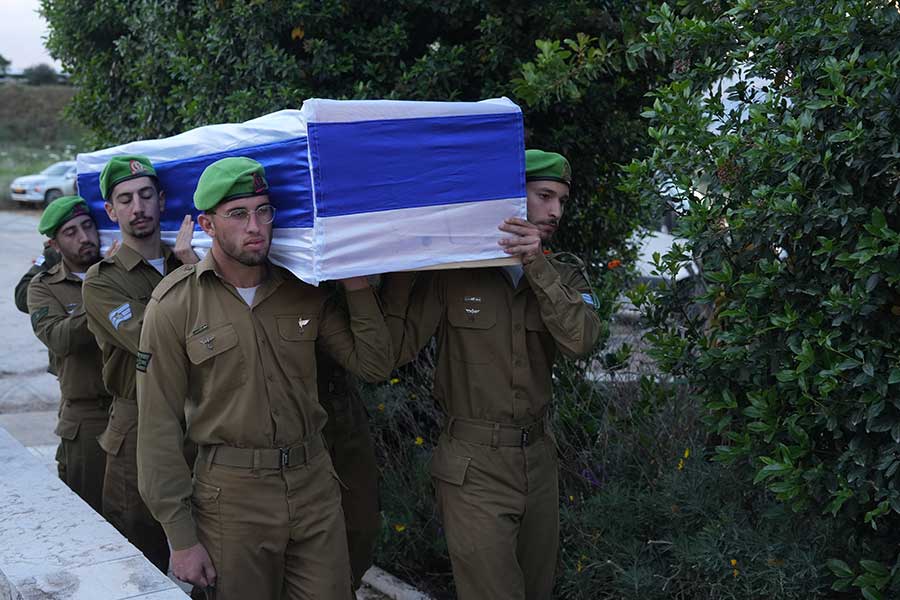
While these rituals may evoke strong emotions, they also raise important halachic questions regarding the propriety of adopting non-Jewish rituals.

What is not often noted is that the Talmud says that issuers of such insults are among the three categories of sinners who do not rise up from Gehinnom, even though this isn’t explicitly categorized as one of the 613 commandments, positive or negative (though it can be indirectly included in at least one of them).
The sages teach that derech eretz precedes the study of Torah (see Vayikra Rabba 9:3, among others); this follows from human nature wherein the physical needs must be met before the intellect can be developed.
Shabbos is not a statute erected to commemorate that G-d created the world in the past, but rather it is an acknowledgment of His involvement in it in the present.
Identification with Hashem’s will affects both the form and scope of our avodat Hashem.
By Rabbi Lord Jonathan Sacks z"l
There are holy times and holy places, and each time and place has its own integrity, its own setting in the total scheme of things.
An individual can make a difference, but a team can make a miracle. -Doug Pederson
By Rabbi Dr. Mordechai Schiffman
Wisdom is a broad term that can have numerous interpretations, including knowledge of Torah (Chazon Ish), spiritual ability to fulfill the Divine will (Rabbeinu Yonah), or a social intelligence wisdom (Sforno). Regardless of definition, wisdom needs the supplemental value of fear of G-d.
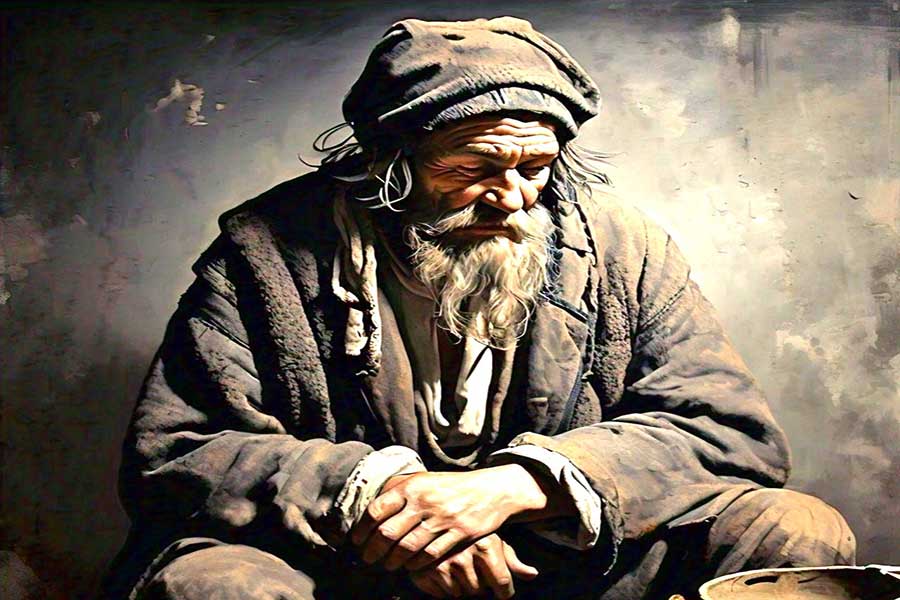
To his shock and dismay, he realized that the Rav was none other than the beggar he had beaten on the street.
I’d like to offer a mighty challenge. The next time you go to shul to pray, tell yourself that you’re planning to use your mind as much as your mouth in the synagogue – for proper service of Hashem has more to do with the mind and the heart than with the mouth.
This year we savor Jewish sovereignty more deeply than in the past, when we may have taken it for granted.
There are specific prohibitions and damnations that befall one who mistreats an orphan. The verse (Shemos 22:21-23) states: You shall not ill-treat any widow or orphan. If you do mistreat them, I will heed their outcry as soon as they cry out to Me and My anger shall blaze forth and I will put you to the sword, and your own wives shall become widows and your children orphans.
Because we are so blessed with material comfort and convenience, we need to remember that growth and greatness only come with exertion, persistence, and effort. Discomfort and pain are often par for the course.
In truth, we are not counting down to Matan Torah, but rather are building toward it, ascending one day at a time. We do not wait for Shavuos to arrive; we actively bring it ourselves through the time and effort we invest as we count the omer.

By Rabbi Shimshon HaKohen Nadel
The Chatam Sofer concludes that establishing a festival to mark a miraculous event is a biblical requirement, and one who does not do so is in violation of not performing a positive commandment (Teshuvot Chatam Sofer, YD 233).
Living in Israel one cannot forget the painful past since unfortunately we have constant reminders. The painful past is a part of our daily lives and not just a memory.
By Eliana Klein
Unfortunately, aside from my apparent penchant for misadventure, and ‘Midas touch in reverse,’ there is also my abysmal sense of direction. Add to that the fact that I get carsick on the local bus routes and consequently rarely use public transportation, and the scene was set with perfect precision for what transpired next.
The Mishna (B.B. 83b) teaches that when the seller provides the buyer a different item than he ordered, the transaction is null and void, so that either party can retract, even if discovered much later, replied Rabbi Dayan.
He's A Communist! ‘He Who Calls Another Rasha’ (Bava Metzia 71a)
On Yom Kippur, the Cohen Gadol wears linen.

Question: What if one forgot not only to recite the bracha on a Friday, but the actual counting for that day as well, and then after having gone to the synagogue to accept an early Shabbat, suddenly reminded himself? May he then count the missing sefirah before it turns dark so that he would be able to continue counting with a blessing? Pesach Bernstein Via Email
We therefore first ask Hashem that we avoid sinful speech and forbidden thoughts, and then we can turn to requesting that our mouth be filled with the beautiful words of Torah and Its holy thoughts.
The Rebbe wanted us to make a Sefer of Hadronim from the siyumim that had taken place.
The nurse became very frustrated and told him in no uncertain terms that as long as he continued to wear the tzitzis he would not be taken in for his surgery.
All of this ultimately flows from Hashem. Hashem created Adam and Chava in the Garden of Eden, and He placed them there with the serpent so they could resist its charms. Only in that moment and in that place Adam and Chava failed.
Torah is not the only pillar. Avodah is also important. Study alone is not enough to sustain the world and our existence.
I am back at my showroom working my appointments, it is now 3.00 p.m. and I still have not met anyone whom I could give these publications to. I am now walking the halls for about 5 or 6 minutes and lo and behold I see two women walking towards me.
Hatzalah And Other First Responders ‘Your Life Takes Precedence …’ (Bava Metzia 62a)
Question: Why do we read Shir HaShirim on Passover and more specifically the Sabbath of Passover? Also, being that it is one of the five Megillot, why don’t we recite a blessing over the reading of Shir HaShirim as we do for Megillat Esther? Menachem Via Email
I was a bit involved in the first siyum. I had a connection with the New York Hilton, where the siyum was held. So I had a little, but not much, involvement.

We might ask, why are these two things – giving up hope and aveilus – connected? After all, the likelihood of whether the loved one has died, which may be the more intuitive factor for beginning aveilus, does not change based on the subjective metric of losing hope, so why should this determine the threshold for commencing aveilus?

Hashem tells Yechezkel to inform the bones that they are the house of Israel, fallen so far in exile it is as if they have been dead for untold eons. What seems beyond hope of recognition, let alone of restoration, is not beyond the power of Hashem to redeem.
In order to live a spiritual life, one must escape the physical, completely rejecting their physical nature. Therefore, spiritual systems such as Buddhism prescribe meditation, abstinence, and the suppression of physical desire. In such a system, the ideal is to sit isolated on a mountaintop and meditate on our navel.
Judaism is not just about individuals understanding and worshipping G-d. It is about belonging to a people who descend from and still identify with their avot and imahot.
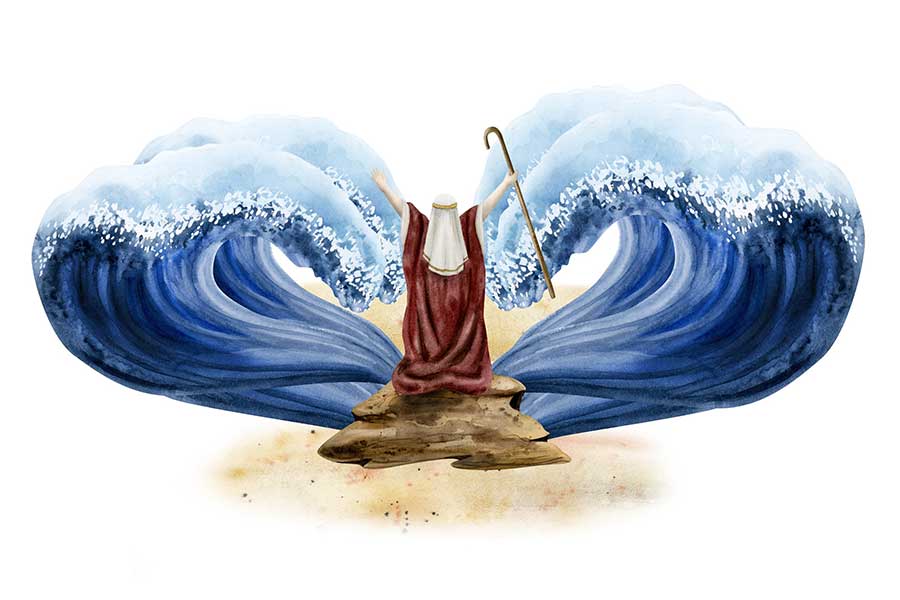
The Ramban and other Rishonim explain that once the plagues started Hashem’s protection over us never ceased. Indeed, even between the major plagues, Hashem peppered the Egyptians with other problems so that they wouldn’t trouble us further.

Ari Fuld discusses: What are we celebrating on Passover and what are the lessons to be learned?
To see God’s Hand in our world is represented in the “bread of faith” known as the Matzah. To lose sight of God’s Hand in this world is represented by the Chometz.

By Jewish News Syndicate (JNS)
Kindness is greater than charity; we must open our homes to those in need of connection.
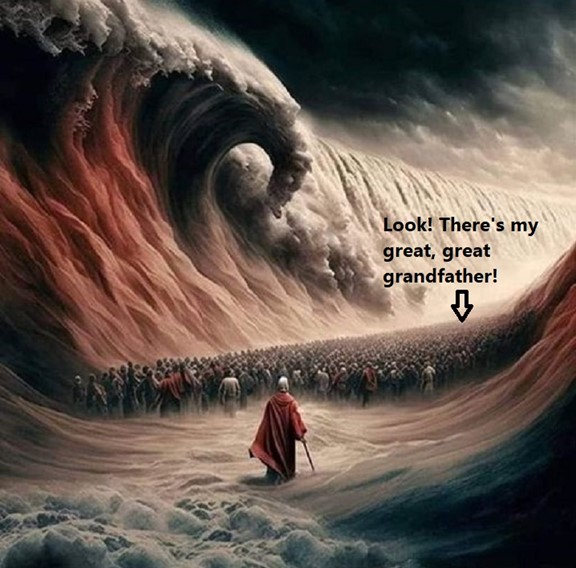
The Vilna Gaon says that the Haggadah is a handbook for the entire path of history the Jews will travel from Avraham to Messiah
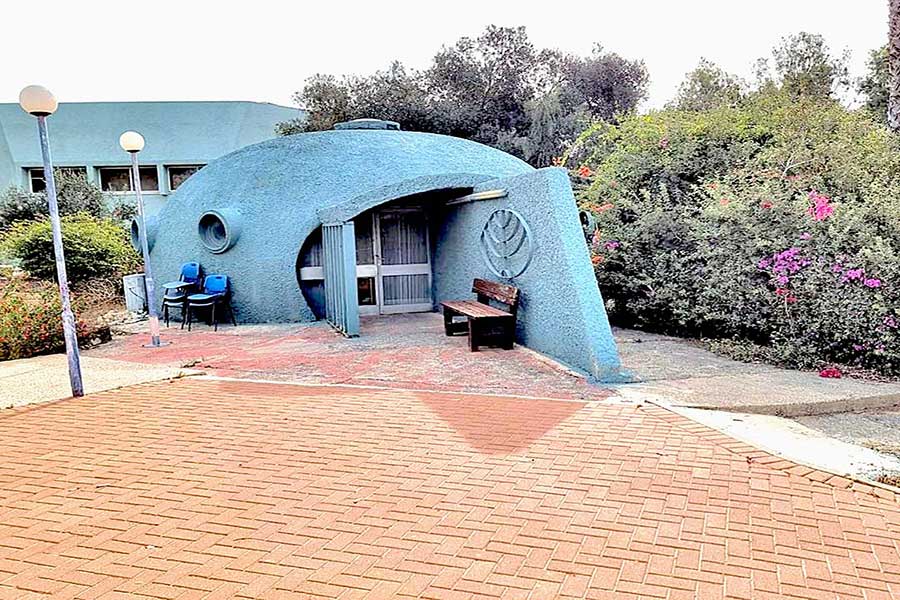
The shul was finally opened with air conditioning, furniture, and books, and has been serving Eshel for about 40 years. But that isn’t the end of Miller’s story.
By Rabbi Dr. Nathan Lopes Cardozo
I have dedicated my life to showing the relevance, beauty, and the profundity of Judaism. It is as clear to me as the sun that there is no place for indifference or lukewarm attitudes when it comes to Judaism.
It’s All In The Giving ‘… Five Laws Require a Minimum Peruta …’ (Bava Metzia 55a)
although Mr. Gross offered rental options for all of Pesach or per night; when Mr. Klein opted for the nightly rate and began the rental accordingly, that rate is binding. Thus, he owes $800 for the stay through Friday.

The Exodus is central to our belief system and antithetical to Avoda Zara.
Question: After the Amida on most mornings we recite Tachanun. It seems that there are many days, including the entire month of Nissan, when such is not the case. My question is, what are those days and why don’t we recite on those days? M. Solow Via Email
We can’t wait for him to knock on our door and say he wants to be at the Seder. What if he’s not going to knock? And if we are going to wait for him to knock, it may take a very long time.

Abarbanel’s unique method of Bible commentary is characterized by posing an extensive set of questions relating to a topical section.
Those looking to find the source of antisemitism often miss the massively disproportionate representation of Jews in almost every index of human achievement. Instead of learning and benefitting from the great success of a contributing minority, many choose a path of envy and jealousy, which leads to hatred.

Despite the fact that G-d could redeem the Children of Israel without a human agent, He chooses not to. He waits for us, waiting for us to step up, volunteer, and lead.
A person’s possession is not merely a thing, it is a means by which the world and he interact. Our possessions have an impact on us.
By Rabbi Lord Jonathan Sacks z"l
The disciples of Hillel hold that at a wedding you should sing that the bride is beautiful, whether she is or not.
They know that when Israel is faithfully performing the will of the Creator, then they have no power over us, but if, G-d forbid, Israel deviates from the proper course of action, they know their opportunity is at hand.

If we were faultless we should not be so much annoyed by the defects of those with whom we associate. -Francois Fenelon
It is well known that one of the causes for tzara’at is evil speech... However, the far more powerful example of the power of speech is the Torah’s conditioning the legal existence of tzara’at upon the priest’s declaration.
 October 16, 2026