יום ראשון, ט״ז תשרי תשפ״זSunday, September 27, 2026



Follow Us


One who writes his own Sefer Torah should never give that Sefer Torah away. This is because, according to some authorities, the mitzvah of writing a Sefer Torah also requires one to keep that Sefer Torah in one's possession forever.
By Rabbi Shimshon HaKohen Nadel
Historically, some challenged the permissibility of a modern aliyah, and later the validity in founding the State of Israel, based on the Three Oaths. They argued that we have no right to settle the Land of Israel before the arrival of the Mashiach; some even suggesting that the Holocaust was a punishment for re-settling the land prematurely.

If a deaf-mute and a fully rational person attempt to jointly acquire an object, neither ends up owning it. The deaf-mute cannot function as an agent for the rational person, so the rational person has no partner in acquisition.

How often in life do we think that if we only had that one more thing, then we would be truly happy and then we could really appreciate our blessings. It could be a new car, moving to a different neighborhood, having a little more money, a better boss, better employee, better behaved children, a shidduch, health, etc. That one missing commodity contains the key to our elusive happiness.

The sefer Ohel Yehoshua explains that in fact Hashem had two distinct plans for building the Mishkan. The original plan preceded the sin of the Golden Calf, after which a Plan B went into effect as a result of the Am Yisrael’s sin.

Today, IVF enables couples who, in the past, would not have been able to have children to become parents. This is an amazing blessing of our generation.
This woman of Israel. Have the fear and love of a Hashem in their heart, and in their soul. They shall be praised forever and ever.
By Naama Klein
For the two-plus years that I headed our block’s Vaad HaBayit, I was responsible to collect dues from the residents of my street and pay Avraham his monthly salary. I also brought him a drink every week when he swept our block, and I regularly purchased a modest gift for him, at my own expense, in advance of each of the Jewish holidays.

When the lender instructs the borrower to return his item or money through someone else, replied Rabbi Dayan, the Rishonim derive from the Mishna (B.M. 98b) that the borrower is exempt if the messenger loses it.
The Split “…If There Are Witnesses They Divide Without an Oath” (Bava Metzia 2a)
Question: Why does the Jewish leap year always consist of two Adars? And why specifically Adar? Menachem Via email

Adar gives us a message of empowerment. Ani Dar – I live with you; Hashem speaks to us. No matter where we are in the world. No matter the time, the country, the generation. We must know that we are not here alone.
Even though it is a custom, we recite a bracha on the communal lighting just like we make a bracha for the custom of reciting Hallel on Rosh Chodesh. The Rivosh adds that one does not fulfills his obligation with the menorah lighting in shul but that everyone must light again at home.
In addition to fulfilling mitzvot, we should want what Hashem wants, value what He values, and even feel what He feels.

By Rabbi Dr. Mordechai Schiffman
While the commentaries glean nuggets of wisdom from analyzing the various nuances in the metaphors and the word choice, the essential theme is that although we are free to choose how we act and what we consume, we must remember that there are consequences to our actions.

So, obviously, Hashem does not have a face and all the above descriptions are simply metaphors to simplify concepts to enable our human intellect to understand, even though the true reality is beyond our comprehension.
A mistake that nearly had catastrophic results for the entire people of Israel ultimately revealed Moshe's true greatness as a national leader.
The material world is everything outside of the Mishkan, as the Mishkan is a means for us to pursue transcendence, and for those who have been properly designated to traverse all of these worlds.
By Rabbi Lord Jonathan Sacks z"l
Moses’s motto was: Let the law pierce the mountain. Aaron, however, loved peace and pursued peace and made peace between man and man.
Mitzvot performed in Eretz Yisrael have far greater significance and impact. Living in Israel, as I do, one can feel the vibrancy of the Torah and how it relates to our daily lives.
Exposure to evil prevents us from an illusion of pleasant stability--and stability is the very thing that prevents the good from getting better.
The Talmud Yerushalmi (Taanis) speaks of respecting a physician before he is needed, so that when the person requires the services of a doctor, he will find one. It can be compared to honoring Hashem, the healer of all flesh, before one requires healing for his affliction.
The saintly Shaloh HaKodesh, of blessed memory, writes that you could break people down into two distinct groups. There are those who when they pray, they pray to Hashem; and when they bless, they bless Hashem. Then there are those who pray but Hashem is nowhere in their thoughts, and when they bless they are not focusing on blessing anyone.

Rabbi Yochanan was sitting upon seven cushions. When he could not answer Rav Kahana’s questions, he removed a cushion from under himself to demonstrate that he was lowering himself out of respect.
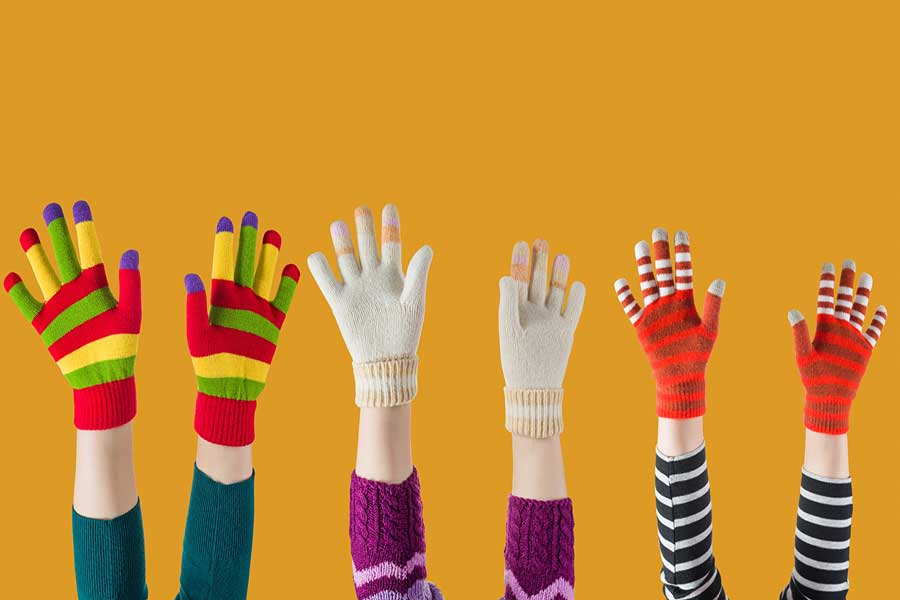
While it may not be halachically forbidden for a bride to wear gloves at the chuppa, there are several reasons why it is frowned upon. One reason is that the custom of using a ring at the wedding ceremony is intended to represent the relationship, the bond, between the bride and groom.
It seems strange, even ironic, to derive a source for marriage from a case in which a man’s wife dies. However, this is not ironic, nor is it a coincidence; it reflects the deep truth that marriage is eternal.

By Rabbi Shimshon HaKohen Nadel
Rav Avraham Borenstein of Sochatchov explains that Rambam does indeed consider settling in the Land to be a Biblical mitzvah that applies at all times. However, like in other instances, the Rambam includes it within another, more general mitzvah (Avnei Nezer, Yoreh De’ah 454:5-6.)
The one thing I can say about the flu is that it is very loving and friendly. I don’t know anyone/anything else that can tolerate being around me without a break for over two weeks.

Truth be told, we should do our best to engage even those gentiles we encounter in our everyday course of life who unfortunately commit antisemitic acts, mostly out of ignorance.

We know that we're living for something higher. We know that there is a king and that is Hashem. We know that He's looking down on us all the time and He wants us to go in the right direction.
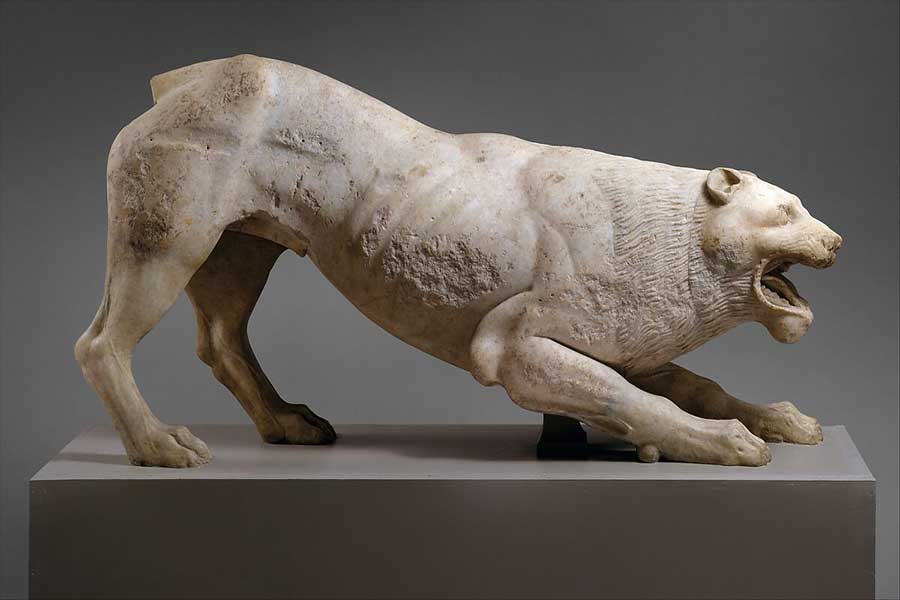
Somehow, what piques my interest about this more than anything else is how the King of the Jungle, symbolizing ferocity more than any other animal – or at least as much – could have possibly been relied on for protection, let alone could have reached an understanding about guardianship and payment for it.

‘Uncle’ Morris had told us that when he died he wanted our eldest daughter Rachel to have his wife’s candlesticks, but we brushed it off hoping he would use them for many more years as although not young, he was healthy and active.

A thief is required to return the stolen item when it is intact. However, if it got ruined or changed significantly, the Mishna (B.K. 93b) teaches that the thief is required to pay the full value of the item, and he is left with the ruined item.

His Silence Is Deafening ‘One Seized it in Our Presence’ (Bava Metzia 6a)
Why be committed to a life and lifestyle that don’t do anything for me? Why does Judaism even matter, why continue to fight for it? Why does Israel matter, why not pack it in, set up shop in Uganda or accept the invitation of America and the West to assimilate, integrate and leave our separateness and apartness behind?
Eight very different types of sins are atoned for by the Kohen's vestments.
The Mishkan’s construction is described at length, down to the finest detail. What, in fact, is the importance of these small details?
Question: Why does the Jewish leap year always consist of two Adars? And why specifically Adar? Menachem Via email
Although the Rebbe does not have to explain the reason for his directives, on Shabbos, the Rebbe spoke about it and explained it in a way that even we can understand.
Kavanah is also the great equalizer. Though we differ in terms of what we are able to invest and accomplish, we are all equally able to have the right kavanah.

If the events in this world emanate from the mazalos, how can we reconcile the fact that they foretold that Avraham would not have children? Chazal do not claim that the mazal changed, only that Avraham transcended it. How did this work?
By Rabbi Lord Jonathan Sacks z"l
All human authority needs checks and balances if it is to remain uncorrupted. In particular, political and religious leadership, keter malchut and keter kehunah, should never be combined.
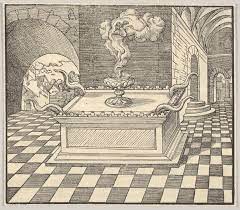
The incense that burned on this altar has always attracted special interest for its unusual life-giving properties
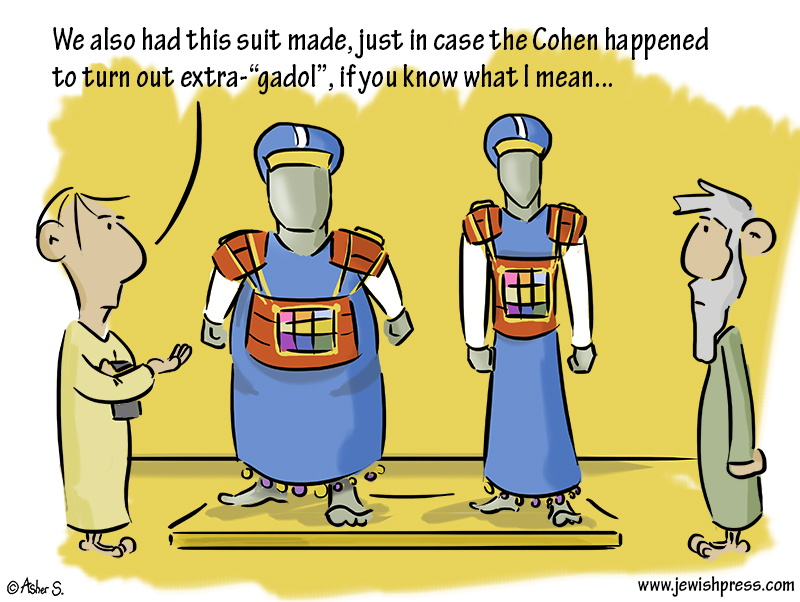
Was it not enough for Aharon to have the Jewish people on his heart? Why the shoulders too?
The bells, which have sound, allude to the voices of Torah; the pomegranates allude to speech which should be silenced, either because it is inappropriate or it is lashon hara.

I say, beware of all enterprises that require new clothes, and not rather a new wearer of clothes. -Henry David Thoreau
The worst violations of Torah law, corresponding to defects in the underlying character of the perpetrator, are three crimes due to which the first Beit HaMikdash was destroyed and which Rambam famously decreed one must be martyred for rather than violate: wanton bloodshed (i.e., murder), fornication, and idolatry.
The Olas Tamid adds that we should daven to be spared from death by the sword and by wild animals. We are taught in Masechtas Derech Eretz Zuta, in the chapter of peace, that if Hashem didn’t bless the world with peace we would be ravaged by the sword and by animals.
It is said that greeting people with Shalom aleichem brings people closer together.6 As such, a man should not greet a woman with Shalom aleichem so that they do not become overly social with one another. According to this approach, there would be no problem for a man to greet a woman with good morning or how are you?

By Rabbi Shimshon HaKohen Nadel
While generally travel is prohibited on erev Shabbat, the Shulchan Aruch rules that if one is ascending to the land of Israel and his caravan is leaving on Friday, he may leave with them because of the mitzvah of dwelling in the land of Israel (Orach Chaim 248:4).
By submerging individual identity into the collective Hebrew nation, the kohanim work to cleanse the children of Israel from all transgressions and to inspire the people with a powerful show of kedusha.
It was a very sweet and thoughtful gesture, and, thankfully I still have my teeth and was able to enjoy the cake.
For example, if you would normally buy an esrog for $100 and one year there are no esrogim available, if you were to give that $100 to charity, it would count as if you performed mitzvah of taking the esrog!
It is said that in Nissan we will be redeemed. It is also written that only with great joy can we be redeemed.
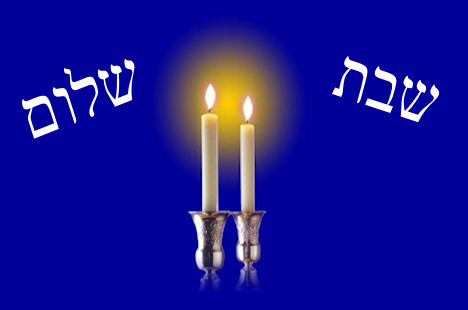
New York CityCANDLE LIGHTING TIMEFebruary 23, 2024 – 14 Adar I, 57845:21 p.m. NYC E.S.T. Sabbath Ends: 6:22 p.m. NYC E.S.T.Sabbath Ends: Rabbenu Tam 6:53 p.m. NYC E.S.T.Weekly Reading: TetzavehWeekly Haftara: Ata Ben Adam (Ezekiel 43:10-27)Daf Yomi: Bava Kama 113Mishna Yomit: Nedarim 2:2-3Halacha Yomit: Shulchan Aruch, Orach Chayyim 575:3-5Rambam Yomi: Hilchos To’en v’’Nit’an chap. […]
There are different opinions on how the Kohen Gadol would receive the answer to the question. According to one opinion, the letters on the stones were illuminated forming the words of the answer. According to another, the letters stood out and became extruded.
What chutzpah?! I thought to myself. I felt like a child being punished for taking a cookie out of the cookie jar.
Most of the drivers drove carefully and obeyed traffic laws, honoring the traffic lights and giving right-of-way to pedestrians. However, he did see his fair share of poor driving and near-accidents, whether between cars or with pedestrians. He also witnessed several accidents.

The Burdensome Beast ‘He Put His Donkey on the Ferryboat’ (Bava Kamma 117b)

Many people turned to Rabbi Kelemer not just because of his proficiency, but because he always knew precisely whom he was addressing, and perceived what they needed – without tampering with halacha.

Question: Please see my personal situation. If you have time to answer that would be great. I am seriously dating a girl who has a similar name to my mother. Would this present a problem? Name Withheld Via email

They are a reminder that everything can suddenly be turned upside down – and turn out for the best.
All her life she fulfilled the ideal of the Psalmist, The entire honor of a king's daughter is within.
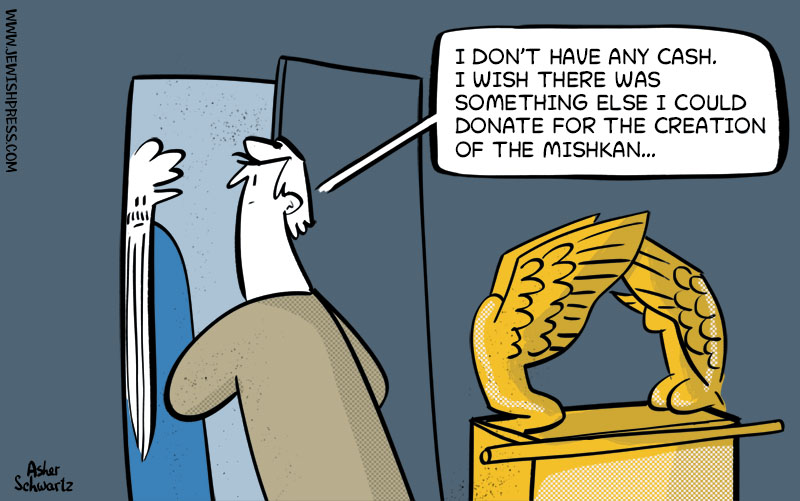
What can the Mishkan teach us about the ways Divine revelation is channeled into our world?
The measure of things...
There are only ever very few individuals who rise to this level, and even when all of Israel are serving Hashem faithfully and achieving our individual tasks, most people at best are just sparks of light and not enough to maintain an ongoing presence of Divine imbuement.
The inability to fully understand the destination of one’s own growth can be compared to a child’s inability to grasp a complex scientific or spiritual concept.
By Rabbi Lord Jonathan Sacks z"l
It is not what G-d does for us that transforms us, but what we do for G-d.
Why was it necessary to use specific wood from specific cedar trees? The other raw materials used in building the Mishkan were simply from the spoils that Am Yisrael took with them from Egypt – gold, silver, wool, linen, etc.
The vital Torah learning is that which the children are taught. When the Torah speaks of the wings of the Keruvim spread over the Aron it alludes to the learning of the children that covers and protects us from the nations of the world.
Like the prohibition against idolatry, chillul Hashem is one of the few aveirot we are commanded to sacrifice our lives to avoid.
During their courtship and their engagement, they were ablaze with giving. This created an atmosphere of love. After the chupah however, they sadly change tracks and shift into the taking mode – and that is when the love starts to dissipate.
At the beginning of bentching we thank Hashem who sustains the entire world with goodness, grace, kindness and mercy. It’s something to think about.

What is the meaning of Man being made in G-d’s image? G-d has no body or form: You saw no form at Mount Sinai, only a voice (Devarim 4:12).
By Rabbi Shimshon HaKohen Nadel
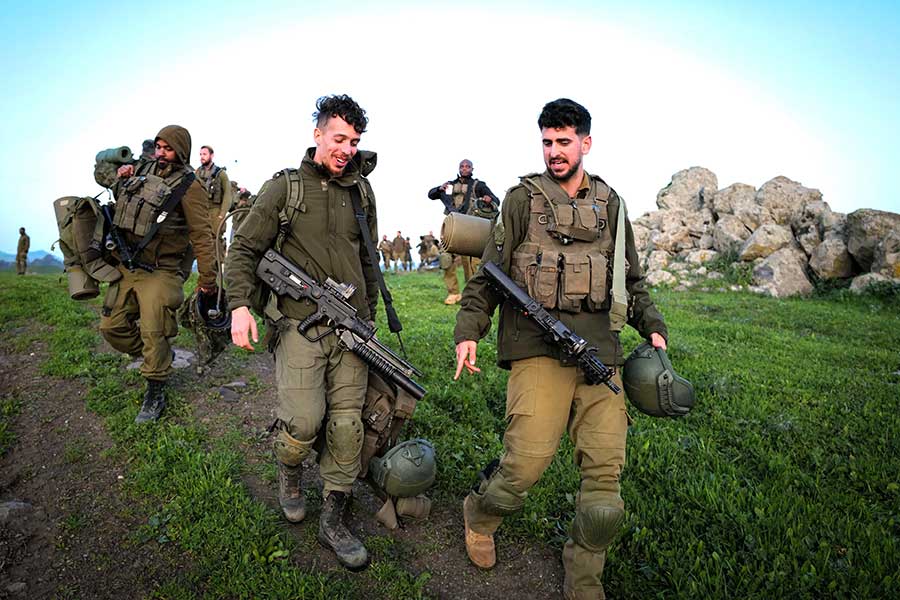
According to the Ra’avad and Ramban, there is no Torah prohibition to fear. Instead, the Torah promises the soldier that he will not fear (see their comments to the Rambam’s Sefer HaMitzvot).

The halachic authorities are somewhat divided on the need to mention the name of a sick individual when praying for them. Several authorities rule that mentioning the name of someone when praying for them is optional.

Secular music with lyrics that are inappropriate due to heresy or lack of modesty is obviously not permitted. Otherwise, it’s not necessarily prohibited – just as secular wisdom is not prohibited merely because its source is not Jewish...
Thoughts surged through my head. What to do? No point in getting to the Institute without the essential documents. But to get home, rush in, grab the folder, wait for the bus and train and then arrive late, when they may refuse to see me? I decided to take that chance.

If the store allows returns, I don’t see the problem, replied Eli. If you want, you can ask Rabbi Dayan. I normally wouldn’t bother just to save $2, but I am interested in knowing the halacha, said Shimmy.
The Messenger Or The Message? ‘How Do We View This Agent?’ (Bava Kamma 104a)
At a recent shiur, I spoke of my bubby and her endless nights of tears. I asked that each of us take the time to feel the pain of the mothers, the fathers, the bubbies and zaydies who are waiting for their children to come home from this battle for the existence of our land, and of our people.
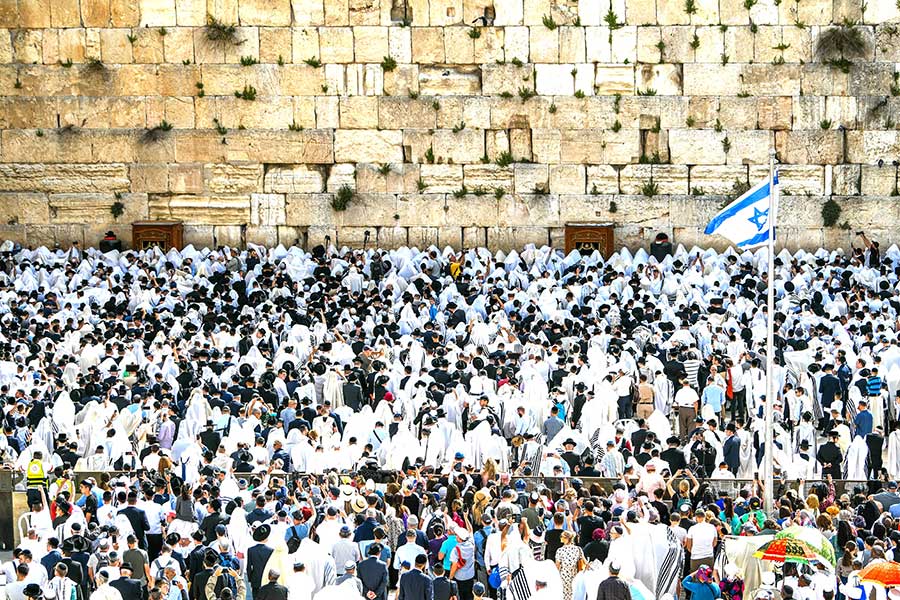
Question: Is there a special prayer or specific role for prayer when the totality of the Jewish people is in danger?
Cognizant of her wisdom and strength, her father involved her in much of his work.
It is explained that when an orphan is insulted or humiliated it calls painful attention to his plight. Not only is he anguished by the torment itself, but he is further distressed that his parents are no longer in his life to prevent this from happening, and he has no one with whom to share his pain.

How should we understand the difference between the Written Torah and the Oral Torah within the context of Israel's identity and development?
Parents are often looking for guidance as to what defines a good Day School. Before registering a child, what should a parent look for in a school? What will determine the effectiveness of a school for their child?
The idea that our recognition and service to Hashem help us grow is emphasized by Moshe’s description of Yirat Shamayim (fear of heaven).
By Rabbi Lord Jonathan Sacks z"l
If G-d does not want slavery, if He regards it as an affront to the human condition, why did He not abolish it immediately?

Love seems to be the ideal, but only on paper, as human nature also must operate from a degree of fear.
An executive is a man who can make quick decisions and is sometimes right. -Elbert Hubbard

I believe that the Torah is telling us something more nuanced. I think it is telling us that God wants the people to listen to Moshe even when he is wrong!
Every nation establishes its own code of ethics. One might think that we Jews also conceived our own ethics. To disavow us of that conceited notion, our Jewish book of ethics, Maseches Avos, starts out by reminding us that our ethics come from Sinai.
According to both schools of thought, the Ramban and the Rambam, illness and disease are the result of an imbalance caused by eating and drinking the incorrect food and drink, which upsets the biochemical balance in the body and lowers the immune system.
Of the righteous it says, V’atem hadevekim ba’Hashem Elokeichem chaim kul’chem hayom – You who are attached to Hashem your G-d (by living correctly) are all alive today. Thus, v’chol hachaim yoducha selah means all those who are truly alive will thank You.
 September 25, 2026