יום ראשון, ז׳ חשוון תשפ״זSunday, October 18, 2026



Follow Us


What chutzpah?! I thought to myself. I felt like a child being punished for taking a cookie out of the cookie jar.
Most of the drivers drove carefully and obeyed traffic laws, honoring the traffic lights and giving right-of-way to pedestrians. However, he did see his fair share of poor driving and near-accidents, whether between cars or with pedestrians. He also witnessed several accidents.

The Burdensome Beast ‘He Put His Donkey on the Ferryboat’ (Bava Kamma 117b)

Many people turned to Rabbi Kelemer not just because of his proficiency, but because he always knew precisely whom he was addressing, and perceived what they needed – without tampering with halacha.

Question: Please see my personal situation. If you have time to answer that would be great. I am seriously dating a girl who has a similar name to my mother. Would this present a problem? Name Withheld Via email

They are a reminder that everything can suddenly be turned upside down – and turn out for the best.
All her life she fulfilled the ideal of the Psalmist, The entire honor of a king's daughter is within.
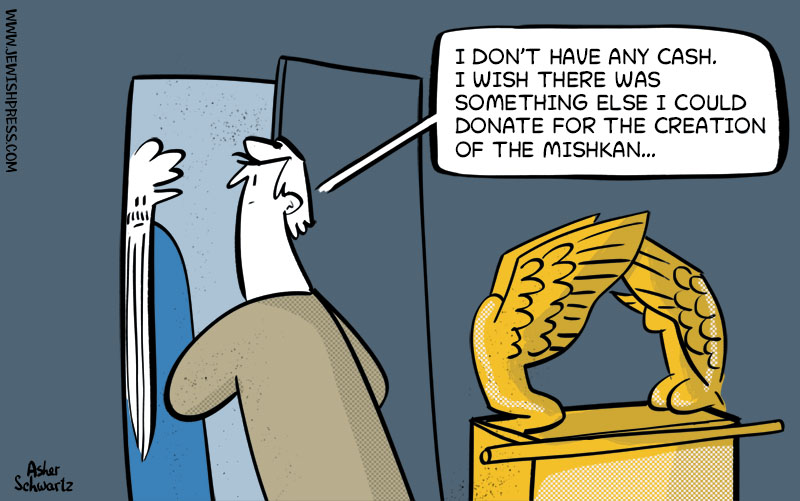
What can the Mishkan teach us about the ways Divine revelation is channeled into our world?
The measure of things...
There are only ever very few individuals who rise to this level, and even when all of Israel are serving Hashem faithfully and achieving our individual tasks, most people at best are just sparks of light and not enough to maintain an ongoing presence of Divine imbuement.
The inability to fully understand the destination of one’s own growth can be compared to a child’s inability to grasp a complex scientific or spiritual concept.
By Rabbi Lord Jonathan Sacks z"l
It is not what G-d does for us that transforms us, but what we do for G-d.
Why was it necessary to use specific wood from specific cedar trees? The other raw materials used in building the Mishkan were simply from the spoils that Am Yisrael took with them from Egypt – gold, silver, wool, linen, etc.
The vital Torah learning is that which the children are taught. When the Torah speaks of the wings of the Keruvim spread over the Aron it alludes to the learning of the children that covers and protects us from the nations of the world.
Like the prohibition against idolatry, chillul Hashem is one of the few aveirot we are commanded to sacrifice our lives to avoid.
During their courtship and their engagement, they were ablaze with giving. This created an atmosphere of love. After the chupah however, they sadly change tracks and shift into the taking mode – and that is when the love starts to dissipate.
At the beginning of bentching we thank Hashem who sustains the entire world with goodness, grace, kindness and mercy. It’s something to think about.

What is the meaning of Man being made in G-d’s image? G-d has no body or form: You saw no form at Mount Sinai, only a voice (Devarim 4:12).
By Rabbi Shimshon HaKohen Nadel
According to the Ra’avad and Ramban, there is no Torah prohibition to fear. Instead, the Torah promises the soldier that he will not fear (see their comments to the Rambam’s Sefer HaMitzvot).

The halachic authorities are somewhat divided on the need to mention the name of a sick individual when praying for them. Several authorities rule that mentioning the name of someone when praying for them is optional.

Secular music with lyrics that are inappropriate due to heresy or lack of modesty is obviously not permitted. Otherwise, it’s not necessarily prohibited – just as secular wisdom is not prohibited merely because its source is not Jewish...
Thoughts surged through my head. What to do? No point in getting to the Institute without the essential documents. But to get home, rush in, grab the folder, wait for the bus and train and then arrive late, when they may refuse to see me? I decided to take that chance.

If the store allows returns, I don’t see the problem, replied Eli. If you want, you can ask Rabbi Dayan. I normally wouldn’t bother just to save $2, but I am interested in knowing the halacha, said Shimmy.
The Messenger Or The Message? ‘How Do We View This Agent?’ (Bava Kamma 104a)

At a recent shiur, I spoke of my bubby and her endless nights of tears. I asked that each of us take the time to feel the pain of the mothers, the fathers, the bubbies and zaydies who are waiting for their children to come home from this battle for the existence of our land, and of our people.
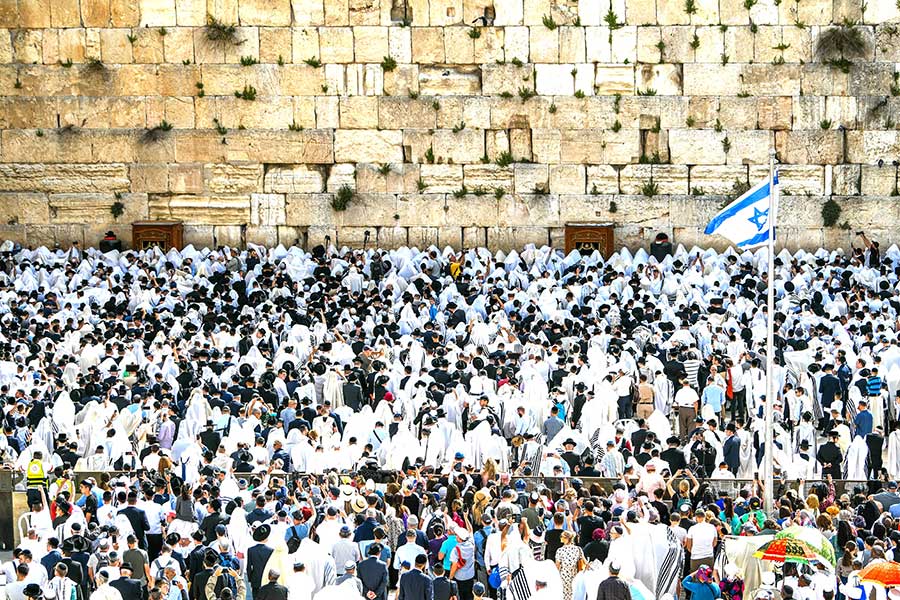
Question: Is there a special prayer or specific role for prayer when the totality of the Jewish people is in danger?
Cognizant of her wisdom and strength, her father involved her in much of his work.
It is explained that when an orphan is insulted or humiliated it calls painful attention to his plight. Not only is he anguished by the torment itself, but he is further distressed that his parents are no longer in his life to prevent this from happening, and he has no one with whom to share his pain.

How should we understand the difference between the Written Torah and the Oral Torah within the context of Israel's identity and development?
Parents are often looking for guidance as to what defines a good Day School. Before registering a child, what should a parent look for in a school? What will determine the effectiveness of a school for their child?
The idea that our recognition and service to Hashem help us grow is emphasized by Moshe’s description of Yirat Shamayim (fear of heaven).
By Rabbi Lord Jonathan Sacks z"l
If G-d does not want slavery, if He regards it as an affront to the human condition, why did He not abolish it immediately?

Love seems to be the ideal, but only on paper, as human nature also must operate from a degree of fear.
An executive is a man who can make quick decisions and is sometimes right. -Elbert Hubbard

I believe that the Torah is telling us something more nuanced. I think it is telling us that God wants the people to listen to Moshe even when he is wrong!
Every nation establishes its own code of ethics. One might think that we Jews also conceived our own ethics. To disavow us of that conceited notion, our Jewish book of ethics, Maseches Avos, starts out by reminding us that our ethics come from Sinai.
According to both schools of thought, the Ramban and the Rambam, illness and disease are the result of an imbalance caused by eating and drinking the incorrect food and drink, which upsets the biochemical balance in the body and lowers the immune system.
Of the righteous it says, V’atem hadevekim ba’Hashem Elokeichem chaim kul’chem hayom – You who are attached to Hashem your G-d (by living correctly) are all alive today. Thus, v’chol hachaim yoducha selah means all those who are truly alive will thank You.
By Rabbi Shimshon HaKohen Nadel
While the Talmud Bavli praises burial in Israel, the Talmud Yerushalmi is critical of bringing the dead from outside the Land for burial in Israel.
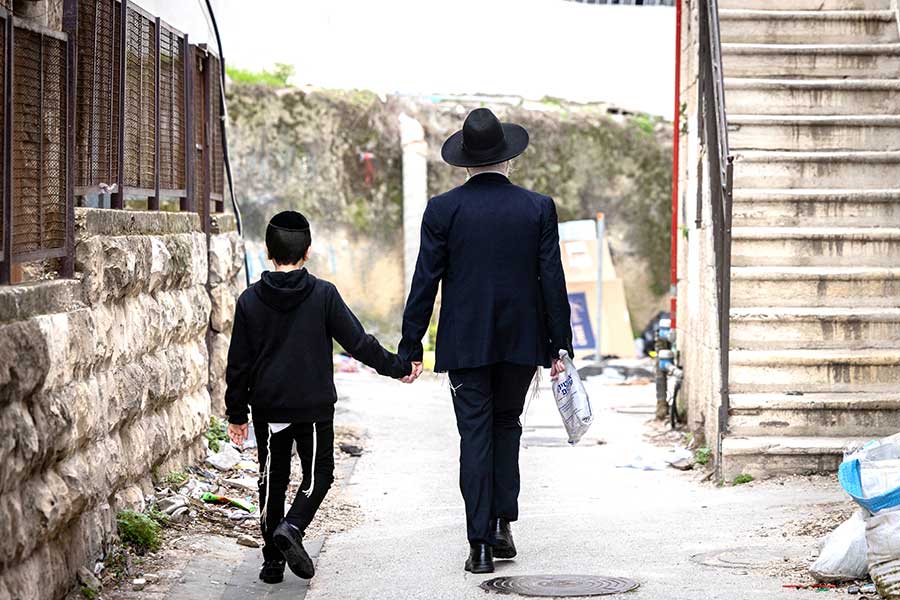
Ultimately, there is no color requirement for Shabbat clothes, and they may be of any color. The only requirement is that one have specially designated clothing exclusively for Shabbat that are as nice and dignified as one can afford.
A central question in the story of the mabul is why Hashem specifically chose to destroy the world through a flood. Hashem could have chosen any form of destruction, and yet, He chose water. Why?
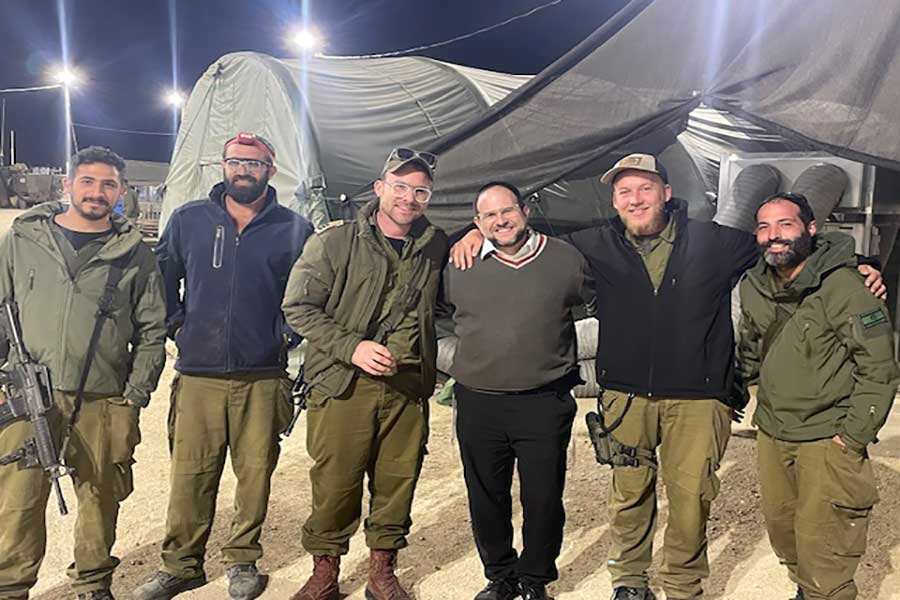
Every morning and throughout the day my phone would buzz nonstop with holy Jews on these groups looking to contribute in any way they could.
According to most, the leniencies that Chazal encourage relate to things that would otherwise be rabbinically prohibited. That is, we seek leniencies in these areas to overcome a deRabbanan, but not a deOraisa.
I then stood at my grandmother’s grave, suddenly the tears started rolling from my eyes, my heart opened up, and it was as if my grandmother was standing right there with me, talking to me and giving me strength. As I spoke the tears kept rolling down my cheeks. I felt like I could hear my grandma as if she was standing there with me.
By Adina Perez
I was in despair. I couldn't believe it, here was the exact job that I was looking for being presented to me under the condition of giving up my new principle. Could I just for the sake of money give in to my highest decisions.
The Gemara (Makkot 3a) teaches that once a witness testified, he is not believed to retract and say that he testified falsely as an eid zomem (conspiring witness), replied Rabbi Dayan. His testimony remains valid (C.M. 38:1).
Possession Is 100 Percent Of The Law ‘Stolen Chametz Became Forbidden Due to the Intervening Passover’ (Bava Kamma 96b)
Points to ponder include appreciation of current events, recognition and Hakarat Hatov, sensitivity to others, and creative problem solving.

One example of the special evaluations that school children in Israel have received in recent days is a Certificate of Heroism.
Question: When approaching the mitzvah of Kiddush Levana, should priority be granted to performing the mitzvah at the earliest time – Zerizin u’makdimin l’mitzvot – or to such time as the most people would be available to join in together – B’rov Am hadrat Melech? Michael Katz Via Email
Our free choice includes not just matters of personal growth but also all decisions about how to live our lives.
Why were the Hebrews so surprised by the sudden realization that they would receive the Torah as a set of laws & a mission for the rest of humanity?

In this week’s Parsha Yisro says baruch Hashem asher hitzil eschem miyad Mitzrayim, blessed is Hashem who saved the Jewish people from the hands of the Egyptians. The Gemara in Sanhedrin (94a) says that Yisro was the first person to ever recite these words baruch Hashem. I would like to share with you a question […]
I would say that animals are perceptive enough to pick up on their master’s sense of distress and may well realize that some doom awaits them.
When we show kindness to one another and demonstrate that we can be identified with the principle of attending to the genuine needs of another, we also make ourselves worthy of Hashem’s attention to us.
Throughout history, the Jews have not had many friends Faced with a hostile world, when they came across a truly righteous gentile, it was a bit of a surprise. Rare indeed was the gentile who would be kind not only to his fellows but also to the Jew. Thus, when the Jews met a highly […]
Matan Torah on Har Sinai was the second time the Torah was given. It was the first time for Am Yisrael, but preceding this, Hashem gave the Torah to Adam HaRishon in Gan Eden – the Tree of Life, Eitz HaChayim.

What loneliness is more lonely than distrust? -George Eliot
By bringing us to Har Sinai, and imbuing us with that unique gift of being able to fulfill the mitzvos as a united entity, He empowered us with the ability to achieve the mystical perfection of tikun habriyah – rectification of creation.
Miracles are those events that are outside the realm of tevah, that which is natural. Nifla’os, on the other hand, are the wonders of natural phenomena such as the intricacies of our equilibrium controlled by the inner ear, the marvels of the human brain, our wondrous heart, and so much more.

How is it possible for G-d to command us lo tachmod, that we must not enviously covet? Do we not covet in the way that Alice cries, so that it is quite beyond us? How could Hashem raise such an unreasonable expectation and foist it upon us?
By Rabbi Lord Jonathan Sacks z"l
Admittedly, the Talmud questions how free the Israelites actually were, and it uses an astonishing image.

It is interesting to note that although an aron kodesh must certainly be treated with respect and reverence, a number of authorities rule that an aron kodesh is not awarded any inherent or exclusive sanctity.
Like Adam, each of us has our own unique creation story.
One of my favorite moments was, when to the consternation of our cabdriver, someone honked him. He opened his window and screamed lamah (why) beep beep?
By Rabbi Shimshon HaKohen Nadel
As the blessing of Shehecheyanu is reserved for moments of great joy, it is appropriate only for close friends. But with modern means of communication – phones, email, WhatsApp, FaceTime, Zoom, etc. – it’s very possible that one will have seen or at least heard from his or her friend within thirty days.

A parent may make a request but they must realize that they cannot force any compliance or, if one prefers, any obedience from their married child, son or daughter.

On the morning of the day before the expected bris, he reluctantly cancelled the shul hall and catering when the baby's bilirubin count shot up to 18. The mohel tried to comfort him and suggested he take the baby again for a test in the afternoon to see if the numbers were going down. But they weren't.

Jonathan knew which trees were orlah, so the leniency of questionable orlah outside of Israel was not applicable, but his partner would not forgo these fruits!
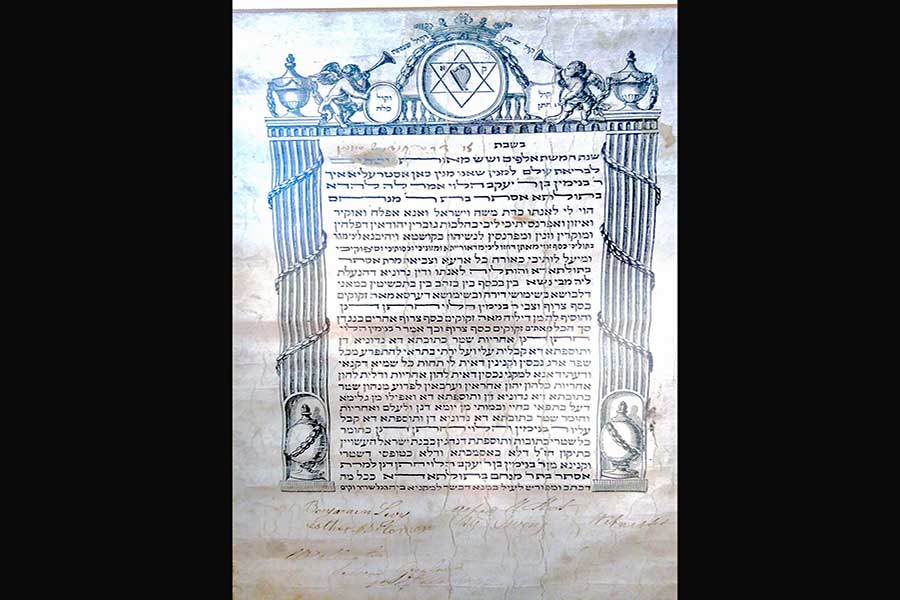
The Lost Or Relinquished Kesubah ‘A Couple May Not Live Even One Moment Without a Kesubah’ (Bava Kamma 89a)
It's about unity.

Without telling anyone that he was going, Rabbi Kelemer had driven for hours to sit with this old man, who was not his congregant and had been non-verbal for many years. The rabbi was obviously embarrassed when the grandson walked in and found him there.
While my uncle at times remarked that my writing style differed from his, he nevertheless would also note that the Torah has 70 facets (Zohar, Bereishit 47a) and is thus a vast resource for countless opinions.
After the Holocaust, the Jewish community was left broken, licking their wounds, mourning their dead. The Rebbe set out to strengthen and rebuild the Jewish world.
By Rabbi Shimshon HaKohen Nadel
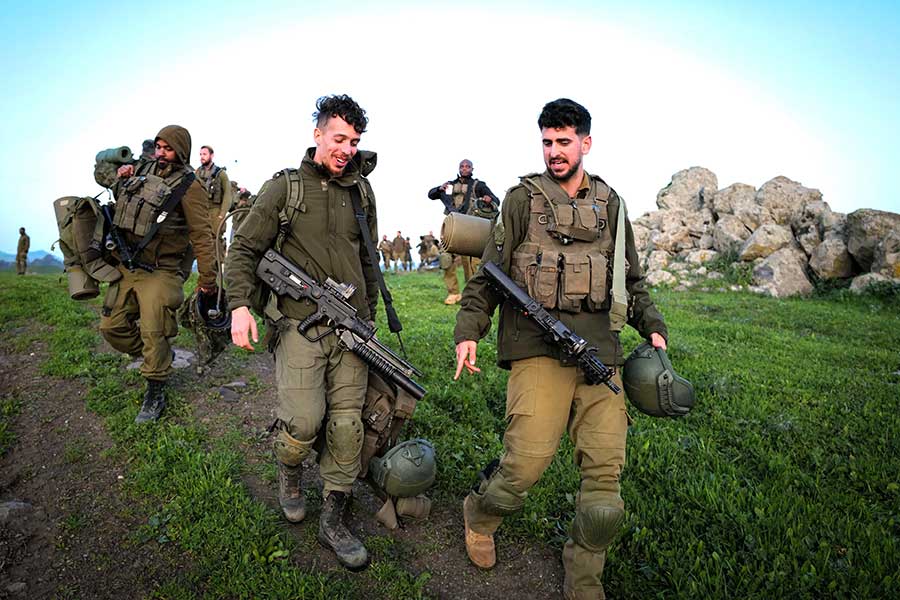
While some poskim rule that a soldier or reservist returning from war – even one who did not see combat – should recite Birkat HaGomel, as he was in potential danger, Rav Shlomo Zalman Auerbach limited the obligation only to a soldier whose life was in imminent danger (Halichot Shlomo 23:1).
By Rabbi Dr. Mordechai Schiffman
According to Rabbi Yom Tov Lipman Heller, Beloved is man because he was created in the image of G-d refers not just to the Jewish people, but to all humanity.
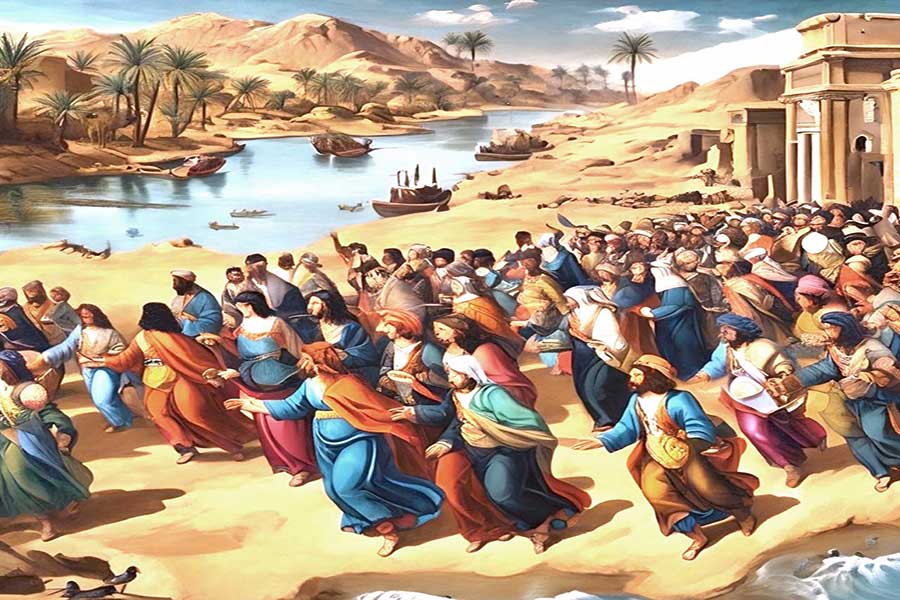
Between the smashing of Egypt's military at the Sea of Reeds and the war against Amalek at Rephidim, the Hebrews had to develop a national perception of Emuna in preparation for receiving the Torah.
In fact, the Torah is filled with these sorts of fail-safes – plans to keep us from failure when failure is on the table, ways to make us less likely to fall prey to certain errors or sins.
No matter how bad things get you got to go on living, even if it kills you. -Sholom Aleichem
During the first stage of history, Hashem revealed Himself openly, and the world was replete with miracles, prophecy, and clarity. Little effort was required to find Hashem or to connect to that which is higher. This was the time of emes.
Leading by example must be calculatedly visible, not only from a point of view of where it is done, but even when and how it is done. Doing something privately is not an act of leadership.
As an integral part of this process, which is an integral aspect of natural law, wisdom increases both above and below in preparation for humanity to transcend its debased state.
We say in our tefillos kadsheinu b’mitzvosecha – sanctify us with Your mitzvos, for with every mitzvah that a person does he adds holiness to himself, and particularly to that limb that corresponds to the mitzvah.
The Da'as Zekeinim, Avudraham, and Kolbo reveal that the gematria of the word modim is 100, referring to the one hundred blessings where we thank Hashem every day.
By Rabbi Lord Jonathan Sacks z"l
In Bereishit Rabbah, it is indicated that the division of the sea was, as it were, programmed into Creation from the outset. It was less a suspension of nature than an event written into nature from the beginning, to be triggered at the appropriate moment in the unfolding of history.
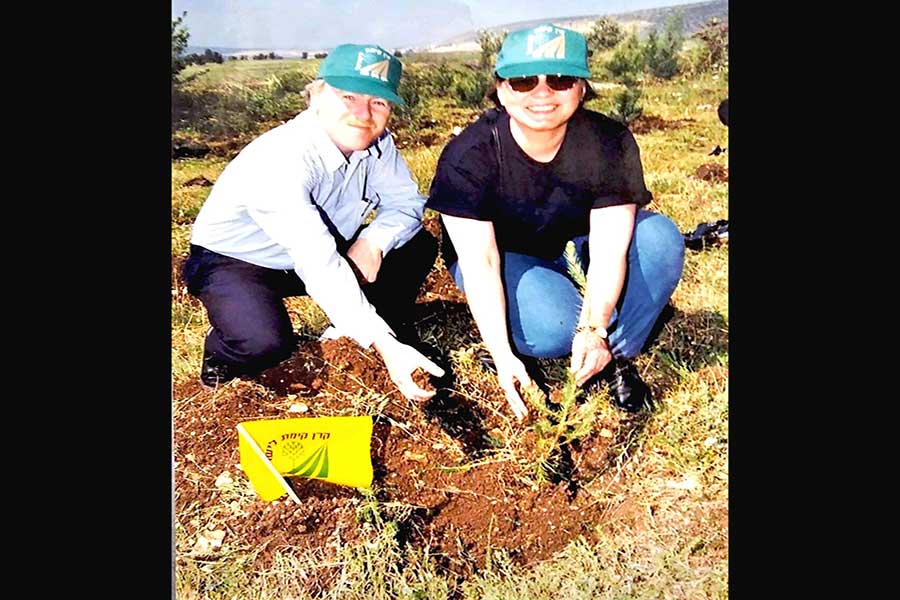
The quintessence of the story is that Abraham wanted to make it well-known to people that they should recognize G-d as the Creator and be grateful to Him. In order to get the audience for this message, he planted an eshel tree to make his place known and easily found.

Those honored with hagba and gelila on weekdays should first remove their tefillin straps from their hands. This is both for comfort as well as to avoid having an interposition between one’s hands and the Torah.
Though our work does not determine how much we earn and we should avoid overworking, we are meant to work hard.

What happened between the high point at the Red Sea and the low point in Refidim?
Should a child with moderate to severe depression be treated inpatient? Should a child with moderate learning disabilities stay in a mainstream school, or in a more supportive environment?
It's not enough to be motivated to accomplish; one has to be motivated enough that he is ready to deal with the inevitable challenges.
You taught me so much about love and respect. About the glory and pride of being Jewish. You taught me to never give up, even if I feel that I'm standing alone, since I'm never really alone, Hashem is always there by my side helping me do the right things always.

My father and his brother Paul survived inside a hollow tree, in the extremely cold Polish winter. How?

It is wonderful to go to Israel anytime, it is particularly meaningful to go during this time.
 October 16, 2026