יום שני, כ״ד תשרי תשפ״זMonday, October 5, 2026



Follow Us



Question: How has it been that in such a world where we are but a very small minority, and after so many generations though the world keeps changing, yet the Jew remains and is the same constant whipping boy? What is the miracle of our survival? Gedalia Estra Via Email
A man of lesser stature as a Talmudist could not have undertaken such a mission, for the opposition included some of the most illustrious scholars of the time.

Happiness is a natural result of living life the way it should be – of being the people we ought to be, following the road map provided by Torah and halacha. It cannot be a destination but is instead a result of the journey of an inspired life process.
We should try, to the best of our human ability, to grasp the essence of Hashem and emulate it.
The ten plagues were part of a deliberate process to educate not only Egypt and Israel but also humanity.
By Rabbi Shimshon HaKohen Nadel
While one may not intend to imbue the secular calendar with any religious significance, the prohibition of Do not follow their statutes (Vayikra 18:3) includes mimicking gentile customs or practices that have no explicit reason, as they may have originated among idolaters (see Rema, Yoreh De’ah 178:1, citing the Maharik).
Rabbi Akiva said: For what reason did the Torah say that a thief who slaughtered or sold a stolen animal pays the fourfold or fivefold payment? It is because he has become entrenched in sin by slaughtering or selling the animal he stole.

I hear my mother’s voice, in the final years of her life, that she sees her childhood visions haunting her. The world is on fire and we are sleeping, she would insist over and over again.
By Rabbi Lord Jonathan Sacks z"l
The aspect of G-d that appears in the days of Moses and the Israelites is radically different, and it’s only because we are so used to the story that we find it hard to see how radical it was.
Certainly, Hashem has the power, if He wills it, to bring about redemption in a sudden fashion, as He did in Mitzrayim. However, if after our many centuries of exile we are still not worthy of redemption in our own merit, there are natural processes at work in the universe that will bring it about inevitably.
The beginning of wisdom is to call things by their right names. - Chinese Proverb Sun and Moon
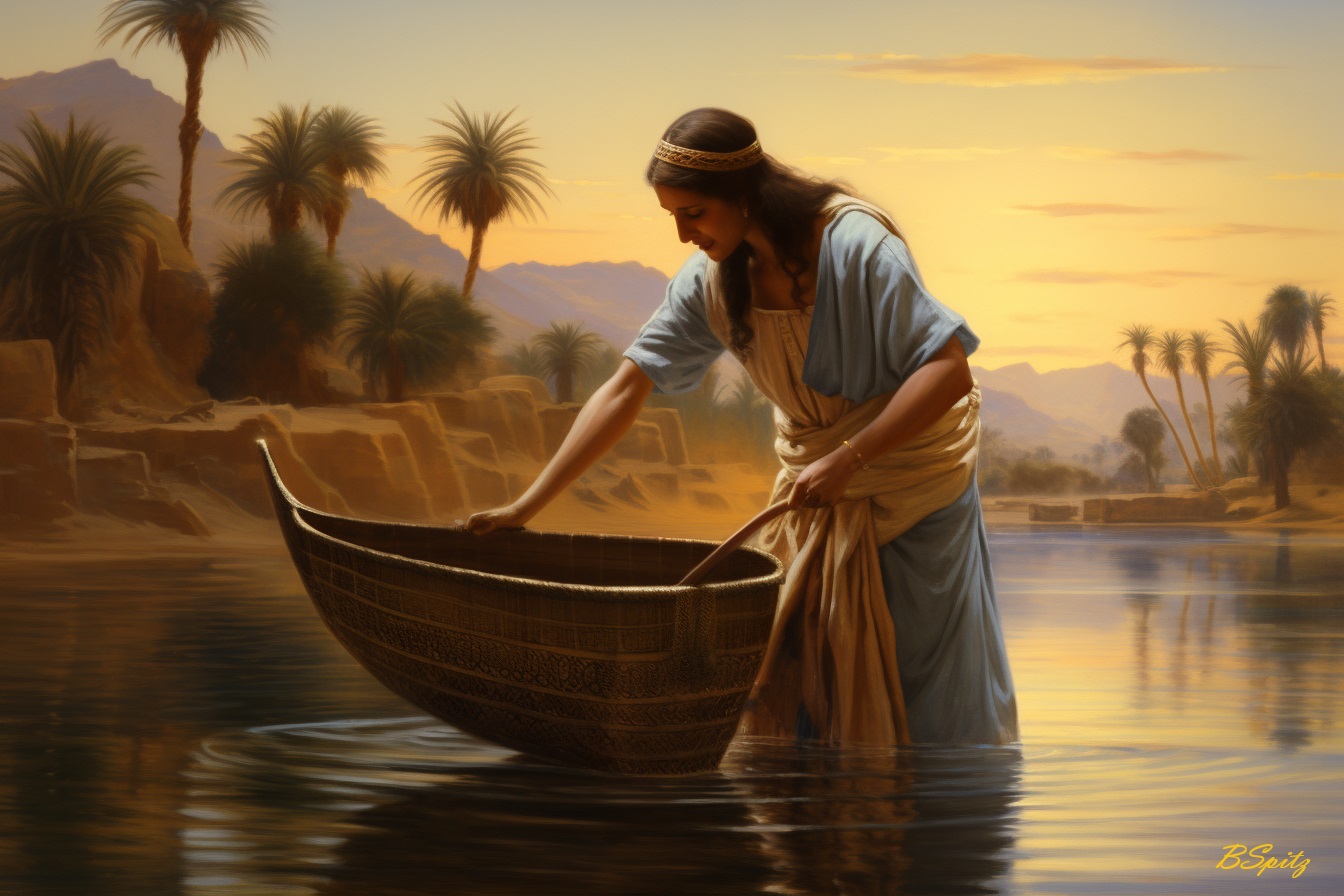
The first two plagues should have convinced Pharaoh that these were the work of G-d, not the work of magic.

One should be galvanized and inspired to plead to the Omnipotent Hashem to be saved from any challenge in any situation. One should never despair of begging for kindness and compassion from the All Merciful.
We say, Shema koleinu Hashem Elokeinu – Listen to our voices, Hashem our G-d. The name Hashem denotes the attribute of rachamim, mercy, while the name Elokeinu is the attribute of din, strict justice.
It is explained that each child was taught his specific verse because it began and ended with the first and last letters of his Hebrew name.
While this story is one of extraordinary commitment and loyalty, it is also one of utter foolishness.
To answer the question, we need to look at the opposite end of the spectrum and ask if we Americans are too sensitive and wimpy.

Many talmidei chachamim do not observe the strict view on Chalav Yisrael, and one has a right to be lenient if he wishes to be
Between the words that are written in the Torah we must hear the voice of Hashem calling each and every one of us in our time.
This isn't just any party. It's a chanukas habayis plus seudas hodaya for your smooth recuperation. We can't just serve sponge cake.

Rashba (1:1028) maintains that the estate is liable for the duration of the rental term, unless the lease allows early termination, because a rental is like a sale for that period.
Suffer The Thief ‘One Stole And Another Stole It From Him …’ (Bava Kamma 68a)
Don’t look for a particular party, look for the heart and soul of those who “get it” on the issues that matter to us.
Who or what does the burning bush represent?
This is not only about resiliency or a return to the routine of daily life and normal functioning. It is rather growth as a direct, beneficial consequence of the trauma itself.
Prayer is part of how we express this faith. Turning to Hashem in difficult times expresses our belief that Hashem is the One behind our suffering as well as the solution to it.

Question: Is it proper to look at tzitzit and kiss them during the recitation of the Keriat Shema? M. Stern Via email
This saintly man became the founder of Chabad chassidism, a movement that developed into one of the strongest and most dynamic branches of chassidism.
By Rabbi Shimshon HaKohen Nadel
Due to the many doubts surrounding where and when this blessing should be said, many authorities rule that the blessing should not be said B'shem U'malchut - with Hashem's name.
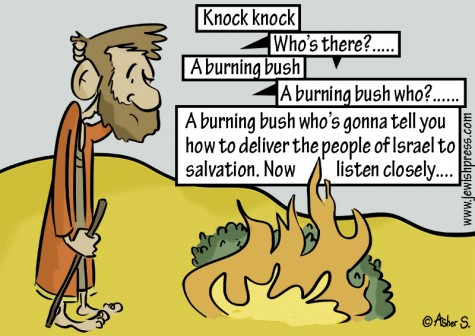
According to some opinions (Zohar, Va'eira 25b), Moshe was cured of his speech impediment, along with the rest of Am Yisrael who were cured of their ailments, before Matan Torah.
After despairing of a slave revolt, did Moshe seek to create a new nation in Midian to replace Israel?

Reuven may seem a little silly until we consider that we are all Reuven at some time or another.
When we live holistic lives, tapping into the true meaning of existence, life becomes a song, a magical and immersive experience.
By Rabbi Lord Jonathan Sacks z"l
Korach’s motives were wrong. He spoke like a democrat but what he wanted was to be an autocrat. He wanted to be a leader himself.
At times a student is told that he is not capable of learning b’iyun (Torah study in depth), and he is insulted. Yet, if the student was asked why he doesn’t try to learn b’iyun he will claim that he is not suited for that kind of Torah study.
By Rabbi Dr. Mordechai Schiffman
Silence has a role in the learning process that leads to wisdom, and is also a signal that one has obtained wisdom.
One of the ways we can perceive the differences between the values of a Torah Jew and the average non-Jew is by contrasting the Top Ten New Year’s resolutions touted for the secular calendar and the commitments a Jew makes before Rosh Hashana.
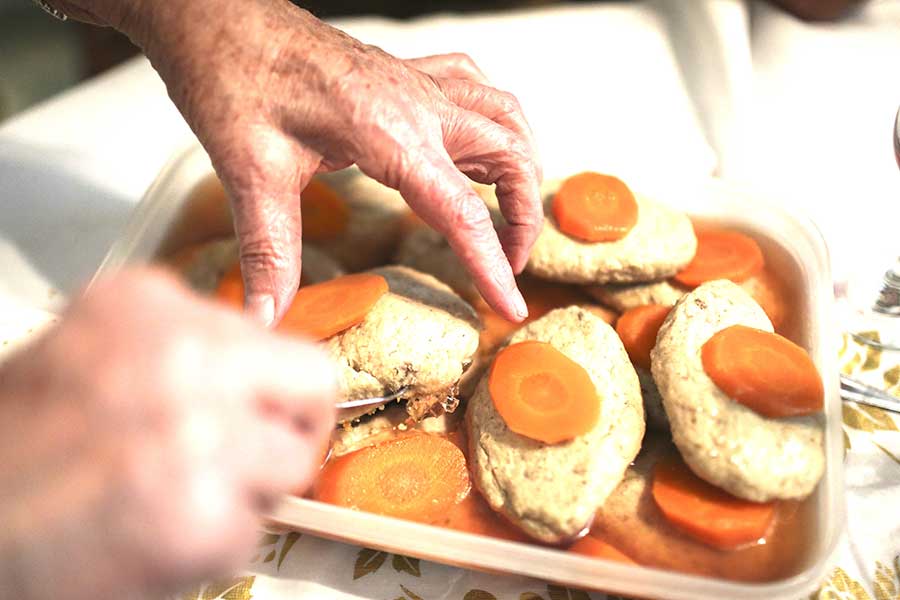
One of the reasons we eat elaborate meals on Shabbat is based on the Talmudic teaching that anyone who partakes of delights in honor of Shabbat will be blessed with all his heart’s desires.
Just as our ancestors didn’t want to hearken to the prophet’s message then, so do many of us not pay much attention to the words of the Prophets in our time.

Regardless of the rationale for how the covenant would be originally binding, the Gemara relates that the Jews fully accepted the Torah after the miracle of Purim.

Even though I don’t believe that a technical halachic problem exists by admiring these seasonal lights, I would hope that an admiration for this display does not compare to the excitement that we have for Jewish holidays and all of the beautiful customs and decorations associated with them.
There was silence in the room, as she opened her mouth and recited,; Shema Yisrael Hashem Elokainu Hashem Echad. There wasn't an eye in the room that was left dry. To recite that phrase for the first time as a Jewish soul is the most incredible feeling one can ever imagine.
By Naama Klein
Aside from the long hours spent in the classroom, there are many more hours devoted to preparing lessons and writing and later grading tests, among many other responsibilities. And, glutton for punishment that I suspect he is, my husband also writes curriculum and a variety of texts/workbooks for his students.

But why should we need a heter iska? asked Yaakov. I’m just covering what you pay to the bank.
A Tale Of Two Cities ‘… The Destructive Force Does Not Distinguish Between the Good and the Evil’ (Bava Kamma 60a)
Question: Is it proper to look at tzitzit and kiss them during the recitation of the Keriat Shema? M. Stern Via email
If you see a person who has love of G-d but lacks love of Torah and love of his fellow, you must tell him that his love of G-d is incomplete.

What are the individual contributions of each Hebrew tribe to Israel's national collective?
Often when a relationship heads into a downward spiral, each will feel the other somehow started, and they are only reacting. While this might be technically true, it also could be that the other may have unwittingly caused hurt or distance first.
Experiences that seem negative can do more than just protect. They often enrich.
Hashem always rewards those who think about and care for others.
We must never fight falsehood with more falsehood or misinformation; our dedication to the truth is our most powerful weapon in the face of this onslaught.
By Rabbi Lord Jonathan Sacks z"l
Between parents and children, he said, there are often tensions. Parents worry about their children. Children sometimes rebel against their parents. The relationship is not always smooth. Not so with grandchildren.
Merchants have no country. The mere spot they stand on does not constitute so strong an attachment as that from which they draw their gains. -Thomas Jefferson
Shana means that which is cyclical and repetitive, representing mindless ritual. However, shana also has another distinct meaning: to learn and to change (shinui, l’shanos). This is because when you add chiddush to shana, i.e., when you infuse newness into the circle, you create spiraling growth.
Among the many terrible decrees enacted against the Jews during the reign of Nikolai I was the forceful conscription of young Jewish children into the Russian army, its overriding aim being to destroy Jewish life.
When we say this blessing hoping for salvation, we should reflect that so many people today are in financial distress because we don’t have the shulchan that brought financial stability to Klal Yisrael.
Belief in Hashem does not exonerate one from personal responsibility. It does not give one license to say, ‘well this is what was supposed to happen, and it’s not my fault.’ In fact, the very opposite is true.
By Rabbi Shimshon HaKohen Nadel
The Mishna Berurah (Orach Chaim 14:4) rules that ideally a minor may not tie tzitzit for an adult, as tzitzit must be tied with express intent for the sake of the mitzvah and a minor may not have the proper intent.
Our Sages tell us that when Hashem creates something or someone, at the same time He creates their opposite.
Believe it or not, the main purpose of the neshama yeteira is to facilitate the consumption of the many gastronomic treats and pleasures that are characteristic of Shabbat without being harmed by the excessive intake.
There is some merit to the argument that New Year’s Eve is no longer a religious holiday, despite its pagan and Gentile origins.
All this war is to ensure our safety in the land of Israel. This power that our soldiers possess, is the power that Yaakov passed on to his children when he did not reveal the future.
By Ann Goldberg
Always ready to be ‘dan le’kav zechus’ she pinned a note on the stroller saying I’m sure you didn’t mean to destroy my stroller – if you’d like to apologize this is my phone number… For days she waited for the phone call that never came.
But I’m in possession of the money, Mr. Simon insisted, and your document doesn’t indicate anything.
Who Permitted Eating Turkey? ‘Geese And Wild Geese Are Forbidden Together’ (Bava Kamma 55a)
Our shul recently hosted Bret Stephens, the Pulitzer Prize-winning journalist and foreign affairs expert. In his talk, he referenced a column he wrote for the New York Times reflecting on the atrocity of October 7th titled, “For America’s Jews, Every Day Must Be Oct. 8.” He opens: There used to be a sign (which, for […]
Yaacov's form of communication with Hashem, was unique.
Question: Should we be reciting the prayer for the welfare of the government? Is it a hefsek during the tefillah, or is it important during wartime? Martin Kahn Via email
The technician was certain that the Rabbi intended to upbraid him personally for having caused him discomfort and for attempting to continue against his will. Rav Moshe, however, had something else in mind.
The Rebbe stressed that the court’s ruling that the library belongs to Chassidei Chabad was a reflection of the Heavenly court’s decision that the Rebbe’s chassidim were doing what was required of them.
During difficult times, we should remind ourselves that everything, including suffering, emanates from Hashem. Though Hashem is the ultimate good and wants the best for us, we know that grief also comes from Him: A person does not stub his toe below unless it was declared above (Chullin 7b).
The Hebrew word chamor stems from the root, chomer, which means material matter. The Egyptian is a slave to his desires and thus servitude and chomer are metaphysically equivalent.
Did Yosef use the famine to bring his family down to Egypt in hopes of implementing an alternative approach to the Hebrew mission in the Diaspora?

While there is an important place for reflecting about past mistakes, that is only with regards to preparing ourselves to do better in the future.

Our sages tell us that there is no calamity that befalls the Jewish people that does not carry within it the sin of the Golden Calf. So devastating was this incident that it was never forgotten in all the succeeding persecutions of the Jewish people.
By Rabbi Lord Jonathan Sacks z"l
In Judaism kadosh, holy, means separation. To sanctify is to separate. Why? Because when we separate, we create order. We defeat chaos. We give everything and everyone their space.
Notwithstanding the fact that this was a family who was not yet Torah-observant, they could not help but recognize ein od milvado – there is none other than G-d.
A politician thinks of the next election. A statesman, of the next generation. -James Freeman Clarke

What was the difference between Leah’s crying and Rachel’s crying? Leah was weeping for her own misfortune... Did Rachel cry over her own misfortune?
In the political and historical affairs that unfold here in the world of events, we find manifestations of higher spiritual truths, and there are designated roles to be played by each of the two Mashiachs in the final conflicts and clashes that will precede the final redemption.
For us, the words of the Maharal ring true in our contemporary times! Hashem is revealing to us, notwithstanding the tragic and heartbreaking casualties of precious Jewish lives, that He is with us every step of the way.
There are a number of reasons why one should not go around barefoot. One of the reasons is that this is considered to be immodest and undignified.
By Rabbi Shimshon HaKohen Nadel
A fascinating footnote to Israeli History: Prime Minister Menachem Begin would seek to move Yom HaShoah to Tisha B'Av following his meeting with Rav Soloveitchik in 1977.
In our house we stopped serving leftovers. It just wasn’t worth the battle. So now when our children ask on Monday what’s for supper? the answer is Shabbos delicacies! True, the foods may be the same as what graced our Shabbos table, but they aren’t leftovers; now they are delicacies!
There may be nothing more enchanting, mystical, and mysterious than the wonder of music. It has the ability to reach the very root of our soul.

It should be noted, though, that even when giving a gift to non-Jews is permitted, there is an additional concern with giving it on his or her holiday.
So many precious lives have already been taken from us and we do not know when this period will pass. Everything passes however. When one is in the middle of something terrible it is so hard to see the light that will eventually come.
My eyes tear up each morning when the name of another soldier fallen in battle is announced on the 6 a.m. news.
I don’t think it’s a problem, said the secretary. Each person is probably happy to eat what he or she is used to. If I order everything kosher, it will come out $100 to $200 more.
Staying Alive Underwater ‘She Has Already Ascended’ (Bava Kamma 50a)
The meal Yosef prepared for his brothers is associated with the Shabbat meal, with a hint of Chanukah.
Question: My husband and I are Ashkenazi, yet my children go to school with Sefardim. My son came home and said that only my husband is to light the Chanukah candles. In my parent’s home, we all lit our own candles on Chanukah to celebrate the great miracle that saved our people for all future generations. Who is correct? Name Withheld Via E-Mail
Over the years, the Rebbe sent him to me several times to help him with what he needed. Baruch Hashem, I had the zechus of helping him and of getting to know him up close.
 October 2, 2026