יום ראשון, ז׳ חשוון תשפ״זSunday, October 18, 2026



Follow Us


Not all of us are perfect, and some of us have veered far from the course.
When someone damages other people’s property while trying to save lives, is he liable for the financial damage to the property?
It is therefore always a good idea to put a time limit on our negative emotions. Instead of just saying, 'It's very hard for me,' say 'It's very hard for me right now.'
A Ruling Too Novel? “One Who Ate Nevelah On Yom Kippur Is Exempt” (Kiddushin 77b)
When all Jews, including small children, learn Torah and do mitzvos, this raises the level of security of iron and copper are your door bolts for the entire Jewish people.
By Rabbi Dr. Mordechai Schiffman
No matter which approach we take, the underlying message of Rabbi Dosa’s teaching is that there are certain habits that can derail us from our larger goals and values.
History teaches us that it is a fatal mistake to become too comfortable in our surroundings and not to believe in an imminent redemption.
Question: I’m told that it is meritorious to complete the reading of the weekly Torah portion during the week and that it is a segula bestowing the blessing of long life. Does this apply even if one has no understanding of the text? Shmuel B. Via Email
Why is Lot so important that Avraham took him along and risked his life to save him?
According to the Kedushat Levi, is what lies at the root of Avram’s question. He knows it is within the power of Hashem to miraculously multiply his offspring and he understands that Hashem has the right to give the Land to whomever He sees fit.
By Rabbi Lord Jonathan Sacks z"l
What then does the Torah say about Abraham? The answer is unexpected and very moving. Abraham was chosen simply to be a father.
Certainly, Sarah possessed the “good eye” to facilitate the change in Hagar and to influence her to conduct herself in the proper way. But Hagar was not of the mindset to change her attitude, to yield to Sarah, and she fled to the desert.
Strikingly, Rav Eliyahu Dessler explains that many people never experience a true assertion of their free will due to its immense difficulty. This is why many people do not change.
Rav Moshe Feinstein concludes that civil marriage, and by extension, a couple who choose to live together, is not halachically binding. He argues that the fact that a couple chose to forgo a Jewish ceremony demonstrates that they have no desire to be married according to Jewish law.
More important than all the physical succos that we construct and dismantle each year, are the spiritual structures that we construct.
The situation for Jews world over is fraught with danger, and leaving Israel to England or the U.S. does not necessarily afford one greater safety.
We are Jews and history is constantly repeating itself to help us improve ourselves, and to help us grow and learn from our mistakes. Hashem is always merciful and is always takings care of us.
Noah was commanded to empty the ark of its inhabitants, but why was he commanded?
By Risa Rotman
I was relieved and rejoiced to see that the moths did not come back to visit after the renovations were done. I assumed the logical reason is because I had moved my kitchen and the windows have more effective screening.
Why does the Torah use the Name that connotes Divine mercy rather than Divine judgement when telling of the Creator's decision to destroy humankind? Could there be more to this story?
Some explain this mitzvah as rooted in the need to spare the animal suffering; others explain it as rooted in the need to help a fellow Jew in distress.
In Spite Of Unintended Consequences “There Is Birtha di’Satya In Babylon.” (Kiddushin 72a)
When all Jews, including small children, learn Torah and do mitzvos, this raises the level of security of iron and copper are your door bolts for the entire Jewish people.
By Rabbi Dr. Mordechai Schiffman
Wisdom must be manifested through deed. It cannot be relegated to a purely intellectual exercise but must be supplemented with and evident through moral and spiritual action.
In Sodom the Hamas was so pervasive and in Mitzrayim the grip of slavery so unbreakable to the extent that nobody who lived in these societies had any hope for a better future.
But the Jews who are loyal to his Torah are compared to chol hayam, the sand of the sea that fells the waves and protects the land from their invasion.

Our hearts, souls, and every fiber of our being must be in and with Israel, wherever we may physically be right now.
The feeling of making a great decision leads you to another great decision, and the cycle continues.
We should beseech Hashem that the elderly and the sick children shouldn’t be woken up in the night to run to bomb shelters and sealed rooms.

How could it be that the animals did not attack Noach and his family, or kill each other? They comprised all different rungs in the food chain.
Some argue that the Torah reading is intended to parallel and recall the giving of the Torah. According to this approach, just as the entire nation stood when the Torah was given at Mount Sinai, one should likewise stand when the Torah is read in the synagogue.
Our acts of chesed, our personal sacrifice and selfless dedication to others, our tzedakah, are all powerful advocates in Heaven on behalf of the defense of Eretz Yisrael.
Question: I’m told that it is meritorious to complete the reading of the weekly Torah portion during the week and that it is a segula bestowing the blessing of long life. Does this apply even if one has no understanding of the text? Shmuel B. Via Email
Unfortunately, however, like other things, when such behavior is overdone and it becomes compulsive and obsessive, it is generally no longer good.
On the one hand we see how true this verse really is the strongest army in the world, the best technology, the best soldiers, and yet so many slaughtered and sent to their death so brutally.
It seems natural to him that the Torah would begin with the creation of the world. After all, the foundation of our beliefs and the basis for our election by the Creator for the purpose of carrying out His commandments is predicated upon the stories in the Torah that precede the Exodus.
The Recanted Testimony ‘A Solitary Witness Said To Him’ (Kiddushin 65b)
It is not that I don’t want to or that I don’t force myself to make time to. Sleep just won’t come. I lie in bed and even shut my eyes, but what’s supposed to happen next just doesn’t.
HaShem's Divine Oneness and the harmonious unity of existence within Him is the deterministic blueprint of all human history that will be revealed to mankind through the story of Israel.
By dvora
I had a hard time leaving family and work, but I still chose to use the time to raise myself spiritually by learning about gedolim. As a result, I was left with this meaningful experience.
Mr. Blum arranged the wire transfer. When he checked the bank statement a few days later, though, he noticed that no fee had been charged. He notified Mr. Leiner.
Question: I’m told that it is meritorious to complete the reading of the weekly Torah portion during the week and that it is a segula bestowing the blessing of long life. Does this apply even if one has no understanding of the text? Shmuel B. Via Email
As the Rebbe finished one segment of his talk, the crowd looked to the new widower to begin a song. What happened next was one of the most dramatic experiences in the lives of those who attended that gathering.
Adam HaRishon was so exalted that the angels wanted to sing his praises as they did for Hashem, yet he fell very low into sin and changed the course of humanity forever. Nevertheless, Hashem forgave Adam.
Now we know that the key to success is change. By changing, by bettering ourselves, we will reach our highest goals. And we also know what gives us the ability to change.
The beautiful Yomim Tovim of Tishrei have awakened us from our spiritual slumber and reenergized us. Now our job is to make sure we don’t fall back to sleep.
The lesson to us is as follows: It is critical and crucial for us to realize that each and every person is a constellation! Every single person is a galaxy! Every person is a universe!
Adon Olam is said to have been authored by Shlomo ibn Gabirol, and it made its way into the siddur sometime in the fifteenth century.
In a journey to the self, all that we know is the starting point; the destination remains to be discovered. We don’t know what we’ll find along the journey, the challenges we’ll face, what people will think, or if we will even succeed.
What was once considered reprehensible or considered out of bounds even one generation ago, today passes as normal civility, even though it is not normal, or civil.

One of the greatest impediments to change is believing that one cannot change.
By Rabbi Lord Jonathan Sacks z"l
Laws shape a society, and a society needs space. A sacred society needs sacred space, a holy land. Hence Jews and Judaism need their own land.
The Torah is not merely some disjointed ritual precepts but rather the Divine Ideal from before existence placed into this reality for the sake of elevating our world beyond its current limitations.
You Are That Man! ‘A Poor Man Looking For A Griddlecake…’ (Kiddushin 59a)
By Naama Klein
During the long Shabbos afternoon hours, Motty became somewhat bored, and he set his sights on some new activities that he had not tried on his previous visits.
While it is true that a tzaddik can stumble and sin, when he does falter he immediately picks himself up and repents.
Question: I recently learned that one may not dance or clap hands on Shabbat or Yom Tov. If so, how do we dance on Simchat Torah? Aryeh Josefsohn Via Email
The pasuk completely blows us away with the statement that the enemy will come Ka-asher yideh hanesher – Like the eagle sweeps, a perfect description of the sudden attack of two widespread huge airliners.
They cannot see your inner world, but they can access it through the outer expressions that you project. The same is true regarding human beings trying to experience Hashem and the spiritual.
Some of his most important contributions to Jewish mysticism are in the form of diagrams that were particularly unsuited to widespread transmission by the technology of his era.
Just as the essence of Shavuot is completely different from the essence of Pesach, so too the essence of Shemini Atzeret is completely different from the essence of Sukkot.
I made light of the loss. I produced a wan smile and announced to my caring Israeli group, Gam zu l'tovah.
I remember now that one of the beams broke last year, Mr. Baum replied. Our sukkos were placed next to each other; one of my boys must have mistakenly taken a beam of yours.
It's the story of two girls in Auschwitz who wanted to fast on Yom Kippur (even though according to halacha or Jewish law they were not, of course, required to do so).
The Snatched Zuz ‘None Pay Regard To R. Shimon’s Dictum …’ (Kiddushin 52b)
Rabbi Schneerson was sitting opposite me, speaking pearls of wisdom, and above his head floated the seven holy guests, the ushpizin who visit every sukkah.
It is especially at the time of harvest, when we celebrate the abundance of our crops, that the Torah instructs us to leave our secure homes and go into the succah. The succah commemorates the Clouds of Glory, and alludes to the Divine Providence that enveloped the Jewish Nation in the Midbar.
We must know that the Gemara teaches us, Yitzro shel adam misgaber alav b’chol yom v’im ein HaKodosh Baruch Hu ozro, eino yachol lo – A person’s inclination prevails upon him every day and if Hashem wouldn’t help him, he wouldn’t be able to prevail.
By Rabbi Lord Jonathan Sacks z"l
The Sukkah represents the singular character of Jewish history, the experience of exile and homecoming, the long journey across the wilderness of time.
One who fully comprehends higher truth understands that there are many valid approaches to achieving such awareness, and he loves and respects his fellow who shares this vision but who might have a different individual perspective.
Though it is always easy to focus on what we are missing in our lives, we must use Chag HaSukkot to focus upon and celebrate Hashem’s great blessings that we often take for granted.
Question: The Gemara in Berachot teaches that the Sages authored our prayers. If so, it would seem that we did not pray before this time. Did we pray before their innovation or not? Menachem Via Email
If the wire is frayed the connection is faulty and that spiritual power will not ignite within our souls.
By Rabbi Dr. Mordechai Schiffman
Another factor that negatively impacts memory is not properly understanding the material when originally learned. When the information is not encoded properly, later retrieval is unlikely.
Amongst the Yamim Noraim, Succos is an anomaly. Rosh Hashana and Yom Kippur are overtly spiritual and transcendent days, with intense rounds of prayer and spiritual elevation. Succos, on the other hand, is grounded in the physical.
When the Mishna rules that visitors to a new place must continue to observe all the restrictions that are normally observed in their hometown, it only refers to customs that are or can be practiced in the new location by the residents of that place.
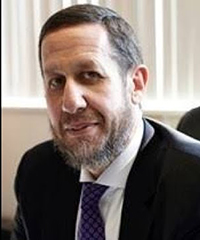
In the United States the issue might be that such action might provoke people to acts of anti-Semitism which has spiraled in the States.
Stories and thoughts for Sukkot.
What does this have to do Yom Kippur?
Brene Brown: “No regrets’ doesn’t mean living with courage, it means living without reflection.”
Every action, every hour of learning, chesed, brachos, tefillos were done for their father’s neshama to merit a closeness to the Kisei HaKavod. That was all that was left for them to do for him.
To avoid potential violation, when a person commits to give ma’aser kesafim or designates money for tzedaka, poskim recommend that he stipulate to distribute it slowly or that the money not be considered tzedaka until he is ready to give it.
But what if, instead of being threatened by an AI god or religion, we can use it for inspiration in the relationship with the One and only true God, Hashem?
Polite And Respectful “It Is Audacious to Appoint One’s Father a Shaliach” (Kiddushin 45b)
Yom Kippur has the power to purify because on this day the bond between the essence of the soul and G-d’s essence is revealed.
Human history – like any great piece of literature – presents a story that is not only inspiring and dramatic on the surface but also allegorically rich with hidden meaning and deep moral lessons.
By Rabbi Lord Jonathan Sacks z"l
As music connects note to note, so faith connects episode to episode, life to life, age to age in a timeless melody that breaks into time.
Most of us are familiar with the process and stages of teshuva. But how do we purify ourselves?
Although it is difficult to imagine, it seems that Dovid HaMelech – the exalted individual, leader of the Jewish nation, fearless warrior of Hashem – was afraid that he had possibly accrued so many sins that he could no longer repent.
By Rabbi Dr. Mordechai Schiffman
Whether nature is vanity or just lower on the values hierarchy than Torah study, both of these approaches seem to agree that nature disrupts the learning process, and presumably, if possible, learning should be done inside, with minimal distractions from the natural world.
Many of us, after making an honest and blunt cheshbon hanefesh, a personal reevaluation of our behavior during the past year, might be filled with despair and despondency at our chances for a good judgment.

All of this would be true even if it were not so that a general education is required for gaining an appreciation of G-d’s wisdom, philosophy, ethics, and laws.
Question: The Gemara in Berachot teaches that the Sages authored our prayers. If so, it would seem that we did not pray before this time. Did we pray before their innovation or not? Menachem Via Email
The heavens have been programmed by G-d to supply rain. Instructing them not to do so is against their nature. It is only harsh and insistent words that will convince the heavens to go against their own nature.
 October 16, 2026