יום שבת, ט״ו תשרי תשפ״זSaturday, September 26, 2026



Follow Us



By Avi Ganz
According to AI, nachas is a Yiddish word that translates to deep pride and joy, especially the kind felt from the accomplishments or meaningful actions of a loved one, particularly one's children.

By Ariela Davis
It’s one thing to have nachat from kids because they get a good grade or follow the path we hope they will follow.

Often, parents view nachas as the payoff for cleaning up diapers and vomit, helping with countless hours of homework and hanging on during the roller coaster that is the teenage years. Even if that payment is not made immediately, it is still viewed as deserved when it comes to fruition in adulthood.

Over the centuries, women have taken on positive time bound mitzvot which bring them nachat such as listening to the Shofar on Rosh Hashanah, shaking the lulav and sitting in the sukkah.

All the good we help bring into existence benefits us in the Next World, to the extent that the soul grows from the experience.

Over salads and pasta in a sleek, dimly lit space, Shulamis shared that she’d received reports from Velvel about how happy they were in the new house in Toms River. But she told Chani confidentially that she didn’t think it was so wonderful that Rikki would be with them for the whole summer.

The announcement of Rivkah’s birth at the end of the previous parsha, preceding the Akeidah, doesn’t necessarily mean that the two events were simultaneous.
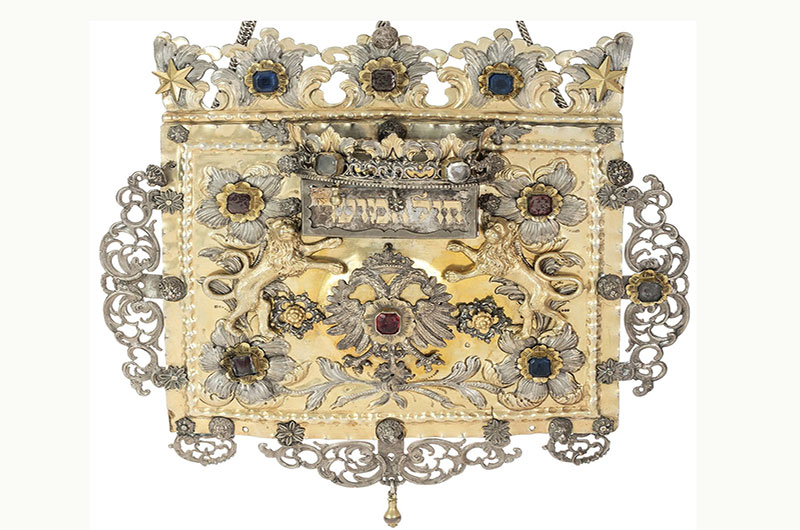
The showstopper of the sale was a truly rare silver piece: a hanging Sabbath lamp from England, dating to the year 1726, as indicated by the numerous British silver hallmarks found on the lamp.

By Irwin Cohen
The Series winning Dodgers were outscored by the Blue Jays over seven games 34 to 26, but the final score in each game, of course, is what matters.

At the center of the storm stood Rabbi Yosef Shalom Abdallah, a distinguished and forceful personality, and a cousin of the Ben Ish Chai.
Levy was both admired and criticized within the American Jewish community. Many Jews saw him as a symbol of Jewish pride and accomplishment, proof that Jews could serve with distinction in the highest ranks of American public life, while others were uncomfortable with his duels, his combative personality, and the controversies that surrounded him.

By Maayan Zik
By providing a discreet and respectful way to meet temporary needs, the gemach truly embodies the spirit of practical, ongoing community support. It is a powerful example of how shared resources can elevate the quality of life for all.

By Akiva Kra
Gemachs can beat any company. Amazon Prime promises two-day delivery. A gemach says, “Come now.” And if Mrs. Gemach is not home, her 12-year-old will meet you outside. No membership fee, just a thank-you and maybe a babka later.

When a person gives to a gemach and allows a fellow Jew to enjoy the material pleasures you once had, for free, it’s a form of tzedakah. Through simple physical objects, olam haba is attained.

By Martin Bodek
Do you know what the actual plural for gemach is? That’s right, gemachim. However, calling them gemachs is a minhag of Klal Yisrael, and we’re very makpid to keep to those.

By Anat Coleman
These everyday exchanges have not only made life more convenient, but also reminded me again and again of the quiet generosity that lives in a community when people are simply willing to help each other out.

And at the center of this revolution stood Daniel Bomberg, a Christian printer from Antwerp who opened a Hebrew press in Venice in 1516. Working with brilliant Jewish scholars, proofreaders, and editors, Bomberg became the single most influential printer of Hebrew classics in the early sixteenth century.
Bitachon is not an excuse for recklessness; it does not absolve a person of the responsibility to use the intelligence and discernment Hashem gave him. One who deliberately disregards danger is not relying on Hashem—he is acting negligently.
Hennie and a friend set up a round-the-clock Tehillim chat, and Mindy, never one to miss any action, insisted on driving back and forth to Monmouth Hospital the next day and throughout most of that week during the hours her children were in day camp.
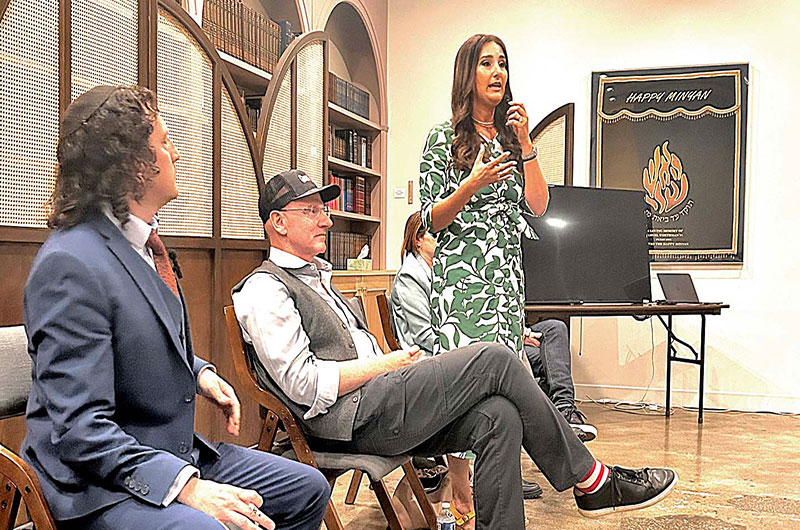
I wanted the movie to be focused on Jewish joy, and I was careful not to include stereotypes as much as I could while still making it feel realistic, Peck said.
Elman participated in benefit concerts for Jewish relief organizations during and after the war, raising funds for survivors and displaced persons. In one case, he and his wife assisted in providing affidavits for the Hammberschlag family in Germany and sponsored them (the family arrived in the United States on July 13, 1939).
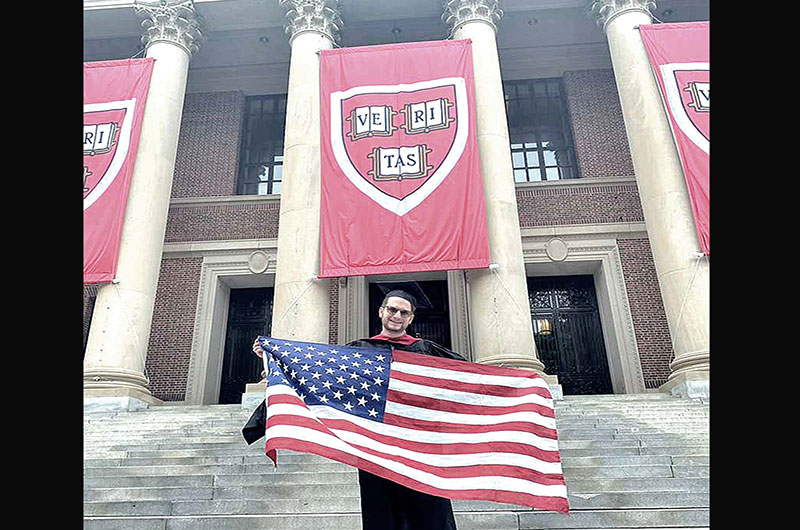
By Eve Glover
Since Oct. 7, many secular Jewish college students have started exploring their Jewish roots and observing Shabbat. They emulate and are inspired by the incredible stories of faith of these released hostages, many of whom are around their age.

By Rabbanit Dr. Adena Berkowitz
In 2022, Agudath Israel of America circulated on Capitol Hill a legislative memo that pointed out the unique and disruptive challenges permanent DST would present to the Orthodox Jewish community; for example having to pray in synagogues at much later times because of later sunrises and then the challenge of getting to their places of work on time.

As a student in high school, I remember looking forward to the initial “Fall back” where we roll back the clock by an hour and for one or two mornings you felt like you gained an hour of sleep!

By Jordana Baruchov Grreenfield
Hashem builds that spring into our lives; not to break us, but rather to launch us.

On a personal note, those of us with young children know that their bodies don’t respond to the National Institute of Standards and Technology’s manipulation of time.

Perhaps this year we can use daylight savings as an invitation to pay more attention to those we love, and to ensure that we are not overlooking the little ordinary moments that we take for granted.

Healing has taught me something softer. Good does not always arrive loud or dramatic. Sometimes it is subtle, barely noticeable. I just have to slow down enough to see it.

Pachter’s talk, Love Triangles without the Romance: Fixing the In-Law Dynamic, is about mother-in-law/daughter-in law drama and how to avoid it – a universal subject if ever there was one.
When we transgress, either willingly or unknowingly, our soul becomes tarnished, and Hashem allows us to cleanse ourselves of these spiritual blemishes.
A little voice seemed to chirp in his ear: You were upset with Chani for letting her family persuade her to break off your shidduch. Now you let Avraham persuade you to date a young, immature woman, and the result was disastrous. Why didn’t you follow your gut instincts?

By Irwin Cohen
Because of the timing of Yom Tov a couple of weeks ago, the local Orthodox community was shut out in catching football and baseball in person, but about 20 people I know took in the opening night game of the Detroit Red Wings hockey season.

According to a 2013 study cited by the American Society for Reproductive Medicine, the median cost of one IVF cycle in the United States is $19,234. Some more recent estimates put this figure even higher.

Rabbi Shmuel ben Avraham Aboab, was among the foremost Sephardic Sages of the seventeenth century.

Sutro opened his own estate to the public and he was heralded as a populist for various astute acts of public generosity, such as opening an aquarium and an elaborate and beautiful, glass-enclosed entertainment complex called the Sutro Baths – which housed seven swimming pools (one freshwater, six saltwater), 517 changing rooms, and could accommodate an unfathomable 7,400 bathers – a museum and an ice-skating rink.

If someone would ask you if you would feel like eating pizza or sushi after eating straight for twenty-four hours, what would you think?

By Nachum Segal
I am amazed at the diverse ways we celebrate Motzei Shabbos and marvel at how many in our community feel the need to make Motzei Shabbos special.

When my great-grandfather, Rabbi Moshe Dubinsky, arrived in America, he was shocked that Melava Malka wasn’t the norm, and marched across the neighborhood, inviting people to take part.

After the tragedy of Charlie Kirk, who was Christian, I was surprised to learn of his call to honor the Sabbath as a means to transform our lives.

The meal need not be elaborate, but the table should be set elegantly. Hymns whose message is to take the Shabbos spirit into the week ahead are sung.
While the mitzvah of tefillah obligates us to ask for what we believe we need, we do so with the awareness that only Hashem knows what is genuinely good for us.
The hours seemed to tick by for an eternity, as the afternoon light began to soften through the windows of the hospital. They paced, they spoke a little, and they prayed, sometimes with tears.

Across a long life that spanned the collapse of the Habsburg world, two World Wars, the Holocaust, and the founding of the State of Israel, Schick combined scientific innovation with leadership in Jewish medical institutions, philanthropic circles, and public-health education aimed at protecting children – an ethic he framed repeatedly with moral language rooted in Jewish concern for life.
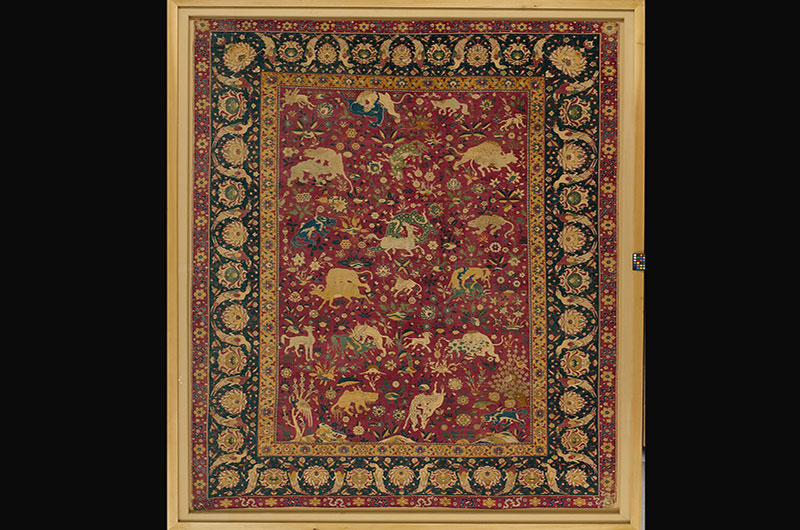
It seems preposterous to me that an ark containing many thousands of animals – and a year’s supply of food for them – could possibly be seaworthy if it were made from reeds.

In the Torah, the term laziness is not found; rather, unwillingness is used. This is because our mindset is geared toward being high achievers and creating outcomes that meet the expectations set for us.

The truth is, what we call laziness often has wisdom in it. Your body might be saying slow down. Your mind might be signaling, This feels overwhelming or This is scary.

It is an explanation of convenience when the adults in charge are more interested in blaming than in looking for a more accurate and helpful explanation for what is going on.

Lazy is the shorthand we use when we don’t want to do that work. It’s ironically the path of least resistance – a way to explain our behavior without actually understanding it.

There’s a fine line between lazy and intentional. It may appear like we're avoiding certain tasks, when really we're prioritizing where to expend our energy and focus. (At least, that's what I keep trying to explain to my accountant!)
Chani tried to view this dispassionately. Why wouldn’t he date her? Lieba was a sweet, pretty girl from a good family.
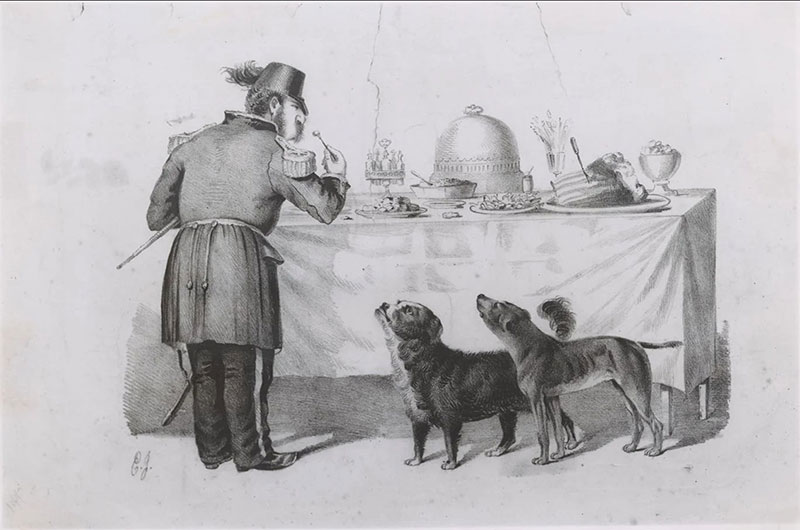
Much has been written about the theatrical elements of his “reign” and the popular tolerance that allowed a self-declared emperor to roam a major American city free of serious harassment.

The Thirteen Middos are more than a prayer formula; they are a blueprint for our personal transformation.

Some of my family’s most joyous memories come from those last few minutes of the Seder, when there are just one or two pages left to turn. We’re about to finish the penultimate song, and we get to its very last stanza – Who knows thirteen?

Everyone was so focused on my brother becoming bar mitzvah that no one remembered it was my birthday too! A milestone birthday. I had become a teenager.

For me as a youngster I couldn't wait to turn thirteen. I would finally be a TEENAGER. The world was going to open up for me.

On a mystical level, 13 is not merely not unlucky, it represents fullness, holiness, and unity, specifically the unity of Hashem.
The more responsible our choices → self-esteem strengthens → ego shrinks → perspective widens → more of reality comes into view → our madreigah rises → bitachon deepens.
Since the Moskowitzes already knew and adored him, it was no big deal to pick Lieba up. Greeting her parents was friendly and informal, not the usual farher-by-the-father type of meeting.
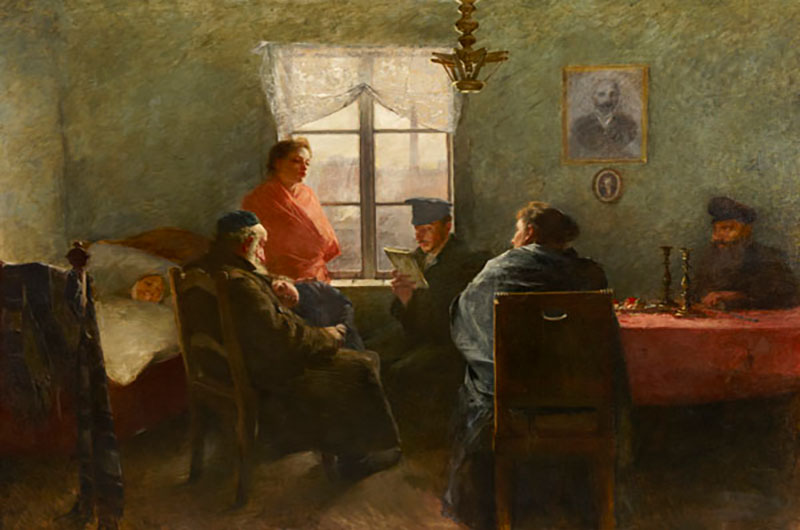
Hirszenberg was born in Łódź, in the Russian partition of Poland, the eldest son of a poor Jewish weaver, who was initially opposed to Samuel's artistic ambitions, which were viewed as incompatible with the values of traditional Jewish life.
Today, Chol HaMoed looks different. It’s about the kids. Taking them to the local jumping place, the orchard, or up to the mountains for air that feels fresher somehow when it’s wrapped in Yom Tov.
By Avi Ganz
Chol HaMoed represents the weekdays or mundane days of the holiday. It isn't less holiday and more mundane, but they are a time to see the festival as it manifests beyond the days during which creative activity is forbidden.

By Keshet Starr
When I think about Chol HaMoed trips, part of what comes to mind is pressure. Pressure to have the best, most exciting trips ever – while also cleaning up from Yom Tov, preparing for the next Yom Tov, and, oh right, working!

In Beit Shemesh we had the Rock and Soul Festival which I usually performed in. So, then we would not go on a trip during the day.

By Hillel Fuld
On these strange days, people have different customs. Some people don’t write, for example, while others do. The one thing that all Jews have in common is that on those days, there is a lot of quality family time.
Chazal observe that lifespan, children, and livelihood are not contingent on merit or effort but on mazal. In these matters, we usually need to do what is considered to be the normal hishtadlus.
Chani appraised the self-righteous young woman, who herself looked rather unkempt in her baggy clothing, scuffed shoes, and unruly haircut. Was the ink even dry on her diploma? What did this young woman’s own apartment look like, that would give her the right to pass judgment?
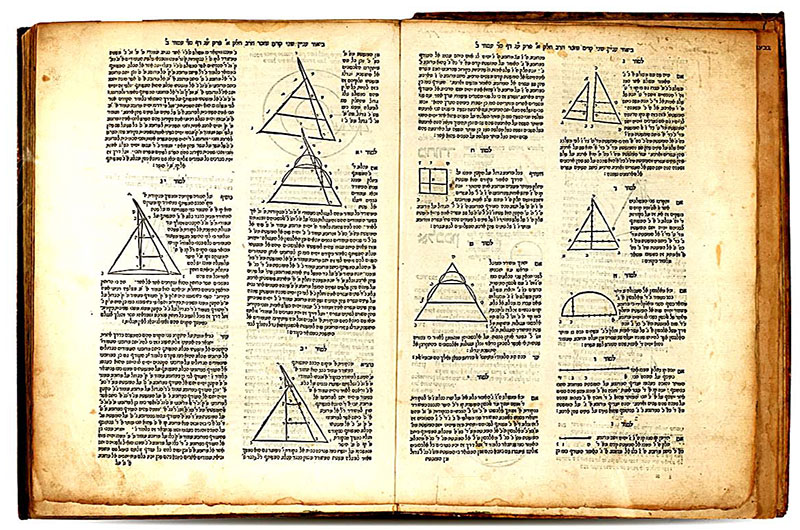
What makes this edition even more significant is its place in the history of Hebrew printing.

The long-term consequences of Carter’s engagement with groups like Hamas were reflected not just in diplomatic circles, but also in the shifting narratives of the Israeli-Palestinian conflict within American discourse.
By Maayan Zik
I follow Chabad traditions and usually a gartel of that caliber is worn by married men. It turns out that bar mitzvahed boys in Chabad also wear a gartel, but it’s thinner and hidden under the shirt. It is the difference between a single man and a married man.
We could hand-wring over this, as some do, seeing it as a turning away from a more rigorous Judaism to one that is more accepting.
The gartel is serious business, but also a reminder that even in the most disciplined practices, there’s room for personality, preference, and humor.

A common custom is to wear a gartel either in accordance with the last approach or because it signifies the differentiation between what is higher and lower about people.

The struggle for every Jew is finding a way to strike a balance between physicality and spirituality. Most of us are not in an environment that is fully focused on ruchnius.

Printed with the Hadrat Kodesh commentary and following the customs of the Kahal Kadosh Ashkenazim, this impressive edition stands out not only for its rich liturgical content but also for its craftsmanship.

By Irwin Cohen
Harold is saving the best for last. He wants to have a bar mitzvah next year at 103. After all, it's only 90 years past due.
Effi ran up to the car to greet his brother-in-law, who addressed the rest of the crowd like a royal pausing to greet the peasants from his carriage.

Perhaps you’re thinking of cherubs. Those may be described as having a childlike face, based on the Talmud. But cherubs are also characterized in Tanach as weapon-wielding guardians, and several medieval Jewish thinkers see them as referring to intelligence, so that reference doesn’t fit either.

By Eli Lebowicz
Yes, we’re flawed, but that imperfectness makes us strive to do better.

By Adina Broder
Angels are perfect in obedience, yet they lack free will. This leads to a paradox: while it is true that they are incapable of sinning, they are also unable to choose virtue, being forced to comply with their directives without the option to disobey.

My hope is that our students see in their teachers not unattainable angels, but human beings reaching upwards – and that they too will be moved to live in an angelic way, lifting themselves and those around them closer to Hashem.

Angelic, to the Chumash, seems to mean something else entirely: something that is wildly interventionist – even sometimes violent. Angels do not stand by and passively watch. They engage.

As the Romantic movement reached its crescendo across Europe in the early nineteenth century, few collaborations seemed as unlikely – and as fruitful – as that between Lord Byron, the scion of English nobility and a literary enfant terrible, and Isaac Nathan, an observant Anglo-Jewish composer and musicologist.
We recall that a person suffering from a phobia – such as claustrophobia – acknowledges reality. He is not deluded; he knows his fear is irrational. This is fundamentally different from someone who insists that their distorted perception is correct.

By Irwin Cohen
First thing that impressed me about him was how he spoke about October 7. He was filled with compassion for the Jewish people and for the soldiers defending Israel. He bought protective vests, armored vests, for soldiers so they should be safer when they go into battle.
We can argue that Yaakov was destined to replace Eisav as having the right of the firstborn, and thus that Rivka’s deceiving Yitzchak, which brought about that result, had Divine sanction.
Chani and Mindy exchanged a glance, silently communicating, I’d get my dysfunctional family out of debt and back into their own house! But Mindy only said, I’d get a bigger house, for sure!

Mikneh Avraham occupies a singular place in the evolution of Hebrew grammatical literature.

Although it has become one of the most familiar and participatory rituals of the High Holiday season that is embedded in contemporary Jewish practice, the extralegal origins of Tashlich and the controversies it once generated have largely been forgotten.

It insists that sweetness and substance go together. That what delights you also roots you. The juice is only there because the seed is there. The beauty of the moment is carrying something hard, lasting, alive.
By Ariela Davis
Of all the Rosh Hashana simanim, the pomegranate is the one that stands out most aligned with Rosh Hashana – be it from the fabled 613 seeds it holds (has anyone actually ever checked that?) or its majestic crown, reminding us that Hashem is the ultimate king.

How unusual it is to have a fruit with its own royal crown, and timed to ripen just as the holiday of G-d’s kingship arrives.
 September 25, 2026