יום חמישי, ד׳ חשוון תשפ״זThursday, October 15, 2026



Follow Us



G-d is not in a popularity contest. In fact, He Himself endows man with the ability to deny His Presence or to believe in any falsity he chooses. That itself is the epitome of awesomeness, in its true meaning.

If someone were to ask you to prove that you exist, you would seriously struggle to do so. One’s own existence simply cannot be rationally proven.

Tehilla understood that nights of interrupted sleep and scampering into the safe room was a small price to pay compared to the price others paid in the terrible loss of life and limbs.

Even though Pinchas explicitly cancelled the agency before witnesses (the other friends), since David was not aware and purchased the pizza as instructed, Pinchas is liable to reimburse David for what David laid out with reliance on him (Nesivos 182:3).
The Mitzvah To Obey The Wise ‘If Beis Din Issued A Ruling’ (Horayos 2b)
In our fixed calendar of today, there is no doubt as to which day Yom Tov is. Yet the practice of one day in Israel and two days outside still applies.
HaKadosh Baruch Hu does communicate “indirectly” with Am Yisrael, showing His pleasure/displeasure with us, by heaping abundance on us or withholding abundance/rain.
One of the hardest feelings, especially now, is uncertainty. We don’t know what tomorrow will bring, and so many people search for answers that can guarantee the future.
Question: I recently returned from a trip abroad and wanted to say HaGomel. When I mentioned this to the officers of my synagogue, however, they told me – as per the instructions of the synagogue’s rabbi – that I would have to wait until Shabbos to do so. I was not given any reason for this and did not wish to display my ignorance, so I quietly acquiesced. Can you please explain why I had to wait? Name Withheld Via E-mail

Once a month, on days meant to be marked by personal introspection, Hashem challenges us to recognize and value the quiet enablers in our midst.

The architecture of Shoftim invites reflection not just on governance, but on restraint. It cautions against excess and sanctifies balance. It insists that power must be regulated by humility, and that leadership demands a commitment to the law: not a manipulation of it.

The mitzvot of Parshat Shoftim are relevant to the governance and political practices of an Israelite (or Israeli) society ruled by law. The king is interchangeable with the elders, as we find in the present passages (Devarim 21:1-9), and stands in for the collective of Israel at large.
One can live free of restriction and obligation and even own slaves, but actually be a slave because he feels beholden to society’s expectations. Conversely, many are physically enslaved but truly free because they maintain their spiritual independence.
Although one may protest that he would never take a bribe the Mishna in Avos (2:4) states, “Do not believe in yourself until the day you die.”
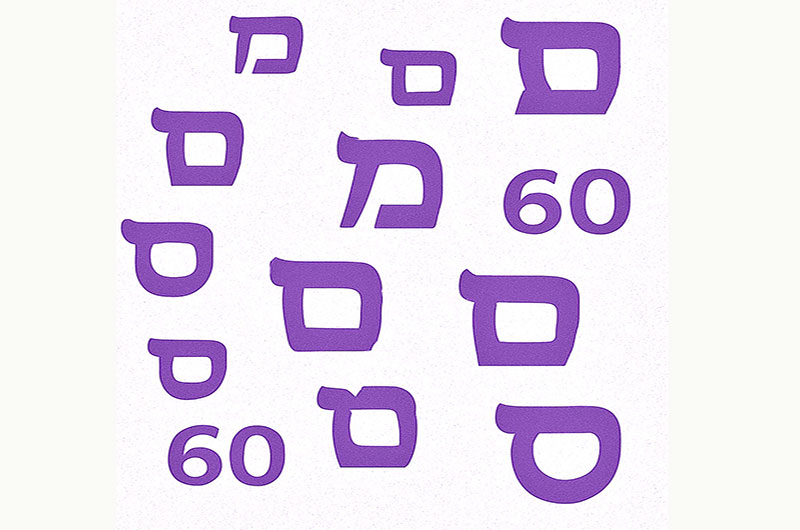
The idea that a prohibited substance is nullified by 60 is portrayed pictographically by a mem (square) surrounded by a samech (circle).

There are several leniencies in applying this restriction when the names do not totally match up. For example, if the names do not match exactly – such as a father-in-law named Yaakov Yosef and a son-in-law named Yosef – some poskim permit the marriage.

It’s an understatement to say that Rabbi Wein has been a major influence in my life. I find myself quoting him constantly. When I had questions about Torah outlook or life matters, I would ask Rabbi Wein. Now that opportunity is lost.
He drove and drove, enjoying every minute when suddenly the car in front of him put on the brakes! David tried to stop in time but couldn't and he went smashing into the car in front of him.
Not Wanted – Dead Or Alive ‘A Mouse That Fell into A Cask Of Beer’ (Avodah Zarah 68b)
Question: I recently returned from a trip abroad and wanted to say HaGomel. When I mentioned this to the officers of my synagogue, however, they told me that I would have to wait until Shabbos to do so. I was not given any reason for this and did not wish to display my ignorance, so I quietly acquiesced. Can you please explain why I had to wait? Name Withheld Via E-mail
It is not enough to read about it, even see pictures of it – in a book, in a video. Only when you are physically there and see it with your own eyes does it have the required effect.

What is the blessing that G-d bestows on us for keeping the mitzvot? It is that “tishme’u,” you will be able in the future to continue performing the mitzvot. There is a future to keeping mitzvot.
All of us should express our appreciation of talmud Torah’s importance by enabling those devoted to its study to focus on that important mission.
The Talmud (Shabbos 151b) expounds that anyone who has compassion on Hashem’s creatures will receive compassion from Hashem, and one who does not have compassion will not receive compassion from Heaven...

Other depictions of the redemption tend to emphasize the glory of G-d that derives from His redeeming His people at a time and in a manner which suits Him. But human beings, even those who are desperate and endangered, ideally don’t want to be given something they have not earned.

Very often, people believe that true depth and wisdom lies only in far-off places – in Eastern spirituality or Western philosophy. However, the deepest wisdom lies within Jewish thought, in the depths of the Torah’s inner wisdom. One must only seek, and they will find.

In reality, every color is actually all the colors except that one – because the surface is absorbing all wavelengths except for one, and reflecting that one back to us.

Being Jewish is not being a religion of holy people. It is a religion of ordinary people aspiring to holiness through sacred acts in daily life.
Promoting ruach (team spirit) and hype are extremely important to help fire up and motivate the team to feel they can win Color War. It’s always fascinating to see a relatively quiet staff member standing on a bench, his face painted his team’s color, screaming a chant with hundreds of campers excitedly following his lead.

By Alan Magill
Three diseases could not stop my mother. They never had a chance. She LIVED and was a giver until the last moment she passed from this world to a better world.
Who’s The Boss? ‘One Hired A Laborer To Assist Him In Yayin Nesech’ (Avodah Zarah 62a)

All her life, from early childhood, Grandma has been meticulous in living a fully observant Jewish life. Her devotion to mitzvot was such that at age 99, when the U.K. was in full lockdown during Covid, she cleaned and kashered her home for Pesach entirely on her own – just months before her 100th birthday.
Question: I recently returned from a trip abroad and wanted to say HaGomel. When I mentioned this to the officers of my synagogue, however, they told me that I would have to wait until Shabbos to do so. I was not given any reason for this and did not wish to display my ignorance, so I quietly acquiesced. Can you please explain why I had to wait? Name Withheld Via E-mail
The Aish Kodesh taught his community, in the abyss of dehumanization and annihilation, that they had been given an opportunity to elicit Hashem’s power to redeem the world and fulfill His promises to our forefathers.

Even a single person’s Torah learning makes the whole world worthwhile!

Eikev gives us the source of the mitzvah to daven. Once again, Rabbinic law has given us the how many times a day, at what times, and what to say. It should, however, never escape us that the Torah’s command to “Serve G-d with all our heart” is the core of our davening.

Covenant grows up here. It moves from bedtime prayers to morning spreadsheets. From mezuzahs on doorposts to mercy in hospital rooms. Not because we are commanded, but because we remember.
There was no danger of becoming arrogant in the desert. There were no self-made men there. It was clear to all that manna rained down from heaven, that water was provided in merit of Miriam, that clothes lasted forever and one’s feet did not swell in the heat (8:4).
The Chazon Ish answered him that Torah is not wisdom; it’s a neshama, a soul.
By not revealing the reward for (most of) the positive mitzvot, HaKadosh Baruch Hu prevented a situation where we would excessively observe only some mitzvot at the expense of others.

As we previously explained, the purpose of techeiles and tzitzis is to straighten the bent path and help connect us back to Hashem, our Source.

Disenfranchised and prolonged grief often require additional support, as they involve barriers – emotional, social, or both – to normal mourning.
A person would think twice before he spoke about someone else, knowing that one statement of lashon hara can cause him to contract tzaraas.
By Risa Rotman
Sunday morning as I was packing up for my retreat, I threw in the Arnica even though I felt like my hand was already feeling and looking much better. It can’t hurt, I thought as I tossed in a few more maybe items.
Our Turn ‘A Gentile Nullifies His Idolatrous Relic...’ (Avodah Zarah 52b)

Eliyahu shared his own pain. I’m Elyakim’s father, he said. He was a security guard at the Nova festival. He saved lives and was killed doing so. And you, Nachman, you survived. Tell me, why did you survive? Nachman had no answer.
Question: I recently returned from a trip abroad and wanted to say HaGomel. When I mentioned this to the officers of my synagogue, however, they told me that I would have to wait until Shabbos to do so. I was not given any reason for this and did not wish to display my ignorance, so I quietly acquiesced. Can you please explain why I had to wait? Name Withheld Via E-mail

To destroy is easy. To build is sacred, slow, and infinitely more precious.

According to our Tradition, not only was it decreed that the adult male population of the generation of the Midbar should wander for 40 years and die out without entering the Holy Land (except for Yehoshua and Kalev), but they actually died on Tisha B’Av – about 15,000 each year.

Adhering to a prohibition like sha’atnez which has kept the Jews alive, but makes as little sense to the layman as the chemical-formula of a life-saving medication, earns the respect of the nations because it is a secret formula that neither they nor us could ever have invented.
The baal habayis could not understand why he merited a visit from R’ Avraham and his son. He waited for the Rav to eat from the delicacies that had been prepared, but R’ Avraham just sat and didn’t do anything.

Most people, at some point in their lives, have felt invincible, unstoppable, almost G-dly. And yet, at other times, these very same people have felt weak, incapable, deflated, and worthless.

Moshe gave the Shema knowing he would not cross the Jordan. He prepared his people not with possessions, but with patterns. That is the quiet brilliance of leadership: offering rhythm in place of proximity.
This is why Rebbe Yossi ben Kisma rejected a substantial monetary offer to move to a city lacking a strong Torah presence. He explained that he prioritized Torah learning and good deeds over money because we take only the former with us to the next world (Avot 6:10).

If a person has an optimistic attitude, the cognitive bias will seek reasons to feel better. It is an inescapable factor in human consciousness that the attitude itself shapes the outcome.

Regarding payment of wages, there is an explicit mitzvah to pay wages promptly (b’yomo titen scharo) and a prohibition to withhold them (bal talin) (Vayikra 19:13; Devarim 15:15; C.M. 339:1).
Question: I recently returned from a trip abroad and wanted to say HaGomel. When I mentioned this to the officers of my synagogue, however, they told me that I would have to wait until Shabbos to do so. I was not given any reason for this and did not wish to display my ignorance, so I quietly acquiesced. Can you please explain why I had to wait? Name Withheld Via E-mail
An Idolatrous Eruv ‘Wood From An Asheira’ (Avoda Zara 49b)
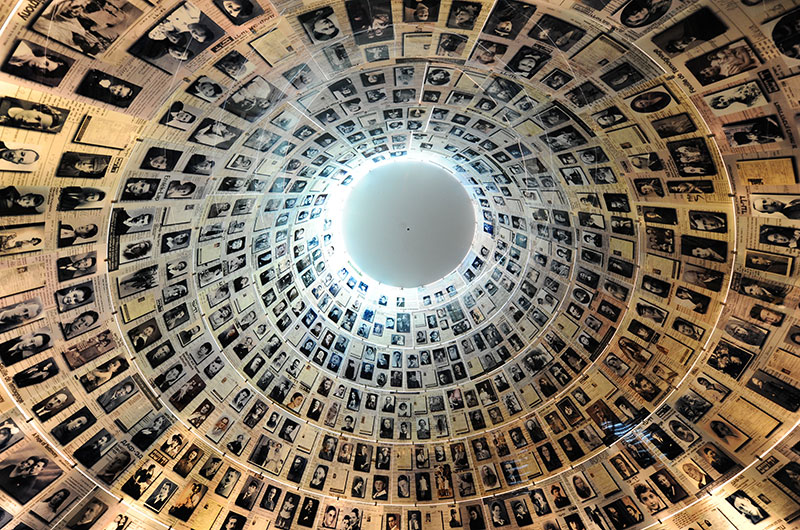
If one were to ask: was it worth experiencing a Holocaust which decimated one third of our people in order to attain a State of Israel? – not only would an affirmative answer be blasphemous, but so is the question.

Notwithstanding Moshe’s defense, the common theme running through these incidents is ingratitude. They had so much to be thankful for. Yet they chose to complain.
If Tzion is to be redeemed, will her captives not be freed as well?

I was taught to make a Kiddush Hashem no matter where I stand; in a parking lot among our own, or as the only Jew in town. Space doesn’t define sanctity. Behavior does. Especially when no one’s watching. Especially when they are.
In a world saturated with the stench of antisemitism, the Gemara puffs a pleasant breath of fresh air.
The Churban “All the Roman commanders who saw the internal conflict among the Jews viewed it as a gift from heaven and urged an immediate attack. But Vespasian wisely counseled patience: ‘If we wait, we will find our enemy fewer in number, after they have worn themselves out through their internal struggle. It […]
The whole Book of Devarim takes place in one location – Arvot Moav – over just 37 days.

How often do we see suffering before our eyes, but somehow we do not notice what is happening?
How was Yonasan allowed to rebuke his own father, Shaul?

How contemporary the Gemara rings when it says the destruction of Yerushalayim puzzled and perplexed the sages, prophets, and angels! It shouldn’t cause us any wonder that we are unable to explain the atrocities of the Holocaust when even prophets and angels were confounded by the similar disasters of yesteryear.
We are guardians over our bodies, not their owners.

Psychologically and sociologically, a conspiracy need not involve maniacal villains plotting world control. It can be an unconscious collusion of interests.

The meraglim not only misunderstood their experience, but they then reported this distortion back to Klal Yisrael.

There’s a limit to how long a person can survive when he is outside of his natural element. When the earthly provisions are depleted, it isn’t long before he will die, unless he returns to a natural earthly environment.

When the borrower refuses to return the borrowed item and continues to use it wrongly, he is considered sholei’ach yad, one who misuses an entrusted item, or sho’el shelo mida’as, one who borrows without permission, and is tantamount to a thief.
When Is Chalav Akum Allowed? ‘Milked By A Gentile’ (Avodah Zarah 39b)

Our justice and our morality are the truth. I’m learning Torah now – chassidut, parashat hashavua. How did I not know about this treasure until now? You shouldn’t have to lose a child, or turn 57, to begin asking who you are and why you’re here.
Question: I recently returned from a trip abroad and wanted to say Ha'Gomel. When I mentioned this to the officers of my synagogue, however, they told me that I would have to wait until Shabbos to do so. I was not given any reason for this and did not wish to display my ignorance, so I quietly acquiesced. Can you please explain why I had to wait? Name Withheld Via E-mail

Each time a phenomenon appears in units of forty in the Torah text, a new reality is about to be born.

G-d instructs Moshe that before he dies he must wage war against the people of Midian for having enticed the leaders of Israel to behave immorally with the Midianite women. This event led to the plague that killed 24,000 Jews (Bamidbar 25:9).

The first notable number is 42. That’s the number of places in which Bnei Yisrael encamped, from the time they left Egypt until they stood poised at the threshold of Eretz Yisrael. If you count the places, you will need to include the place they left Egypt from (Ra-m’seis) among the 42 places.

The Gemara states that one should turn south during prayer if he wants wisdom, and north if he wants wealth. There is no explanation given in the Gemara...

In every home I’ve lived in, one thing has remained constant, a quiet covenant. It’s a reminder of Hashem’s presence, much like a mezuzah, though not one in form.
The fact that there are 42 journeys is not incidental, it corresponds to the name of HaKadosh Baruch Hu that has 42 letters.
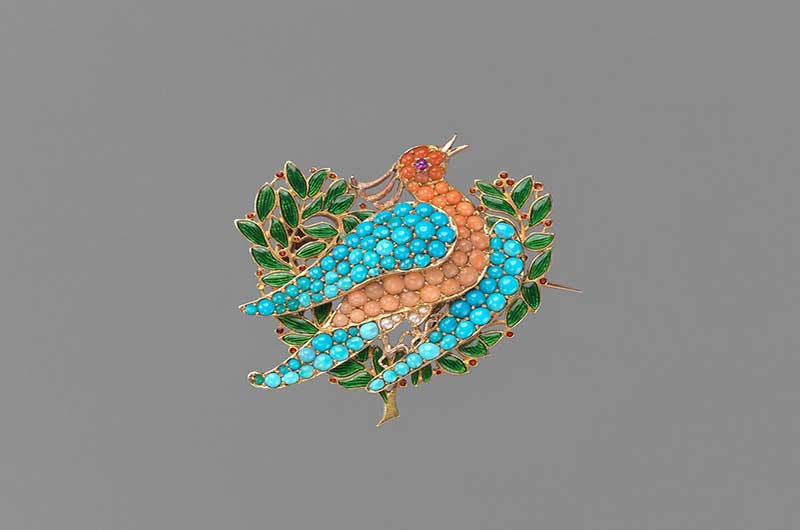
As opposed to the word “peace,” which is related to the word “appeasement,” the Hebrew word “shalom” means whole or complete.
The person who sinned and has now repented had to fight harder to conquer his Evil Inclination than the righteous individual.

Another way to get close to the Shechinah is by visiting the sick. As Rashi teaches us in Parshas Vayechi, The Shechinah always resides by the head of a choleh, an ill person.
There are two levels of reality: The first is how things appear on the physical surface; the second is the meaning that lies behind that exterior.

During the years that I was a division head, 98% of the campers in my division who were homesick were completely fine and enjoying camp within a week. But that first week can be gut wrenching.
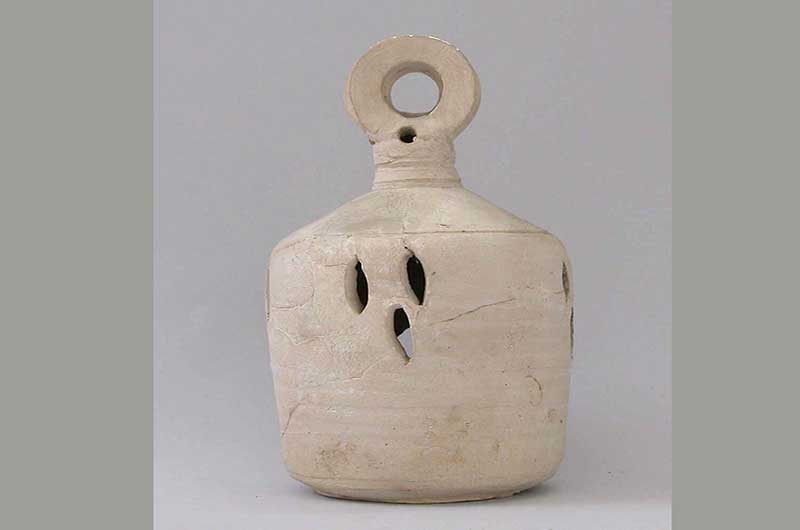
In principle, certain sins indeed leave a mark and are absorbed so deeply that the body must be destroyed. Yet, if the internal actions and repentance reach a level that rationalizations peel away – or at least significantly weaken – the vessel is reformed without actual destruction.

Even investments, which do belong to the person in his lifetime, should ideally be divided according to the beneficiaries. Although these investments are part of his estate, since the person designated beneficiaries, the principle of mitzvah lekayem divrei hames applies.
An Essential Agent ‘Set In The Skin Of The Rennet Of Nevela’ (Avodah Zarah 35a)

When someone makes shalom between rival parties, what does that mean?

Question: I recently returned from a trip abroad. When I entered my synagogue early one weekday morning, I asked the officers for an aliyah so that I could bless Gomel. I was informed that I could receive an aliyah; however, as per the rabbi’s instruction, I would have to wait until the Sabbath to bless Gomel. I was not given any reason for this and did not wish to display my ignorance, so I quietly acquiesced. Can you please explain what was meant? Name Withheld Via E-mail

We daven together in synagogues that feel familiar whether we’re in Toronto or Tel Aviv. We mourn together when tragedy strikes and we celebrate together when a lost hostage comes home or an aliyah flight lands in Ben-Gurion Airport.
 October 9, 2026