יום רביעי, ג׳ חשוון תשפ״זWednesday, October 14, 2026



Follow Us



When a person lives and breathes with the belief that there is none other besides Hashem, then there is no power in the world that can cause him harm if it is not the will of Hashem.

The point is, these blessings of Rabbi Chanina ben Dosa are not a reward for humility, but rather a consequence of humility. Humility makes space for G-d to manifest.

Other cultures have imitated and adopted versions of circumcision and Sabbath observance. But tefillin have remained exclusive to us, uncopied by any other religion.

A mitzva that occurs just once in the Torah will obviously be counted from that one point. But what about a mitzva that occurs more than once?

We mourn on Tisha B'Av not just for the destruction of a building but for the death of the world itself. And we yearn for the day when Hashem will once again be fully and clearly manifest in this world.
The true greatness of G-d lies in the fact that despite His omnipotence, He indeed loves every miniscule one of His creations, and cares for the individual welfare of each one.

“We should notify the congregants that we reached the goal,” a board member urged. “There is no need for additional sponsors.” “Why stop people from donating?” said the treasurer. “We can use the additional amount for general shul expenditures. I see this as a good fundraising cause!”

Bullish or Not? “Where Two Bought, [One] A Cow and [The Other] Its Calf…” (Chulin 82)

The most famous of Rabbi Shimon’s opinions is that he will infer the implied logical reason for a commandment, and then use that reason to allow for exceptions when it runs against the apparent logic.

Now the time was ripe to draw their attention to their shortcomings. That was the only way he could prepare them for the laws of Bein Adam Lechavero, the laws of social interaction, that he was about to lay out before them (1:8).

Ramban acknowledges the practice, but he doesn’t concur that it is necessarily a bad thing. In fact, he states that the idea of escalating difficult matters to higher courts is a praiseworthy practice which confers honor on the law.

“Seventy-five years have passed since our parents founded this kibbutz, and this week, for the first time, a synagogue was inaugurated here. We decided that we are coming back, but that we also want to come back stronger.”
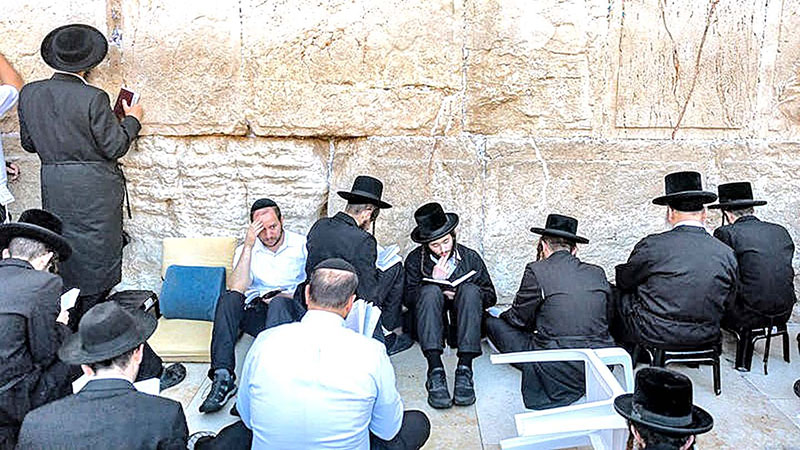
Question: I was taught that due to our mourning on Tisha B’Av, we are not allowed to learn or discuss Torah. Since Torah causes us joy, we are forbidden to lessen our mourning through its study. While I understand why we read Kinot and Eicha, how do we justify reading from the Torah at Shacharit and Mincha? A further question: Do these halachot apply to an individual during his or her seven days of mourning? H. Ellis Via E-mail
G-d, who is all-seeing, all-knowing, doesn't know where Adam is hiding? Rashi (ibid.) says obviously G-d knew where Adam was, but He did not want to startle and frighten him.
The parsha explains that the contribution achieves kaparah – atonement for sins.

It is completely incorrect behavior for children to have an attitude of, “Why does our parent need to get remarried. After all, he has all of us. And the memories should be sufficient.”
If we would grasp how deeply one is impacted by his aveiros, we would appreciate the significance of the Beis HaMikdash and the spiritual cleansing that took place daily.

We sometimes forget that what is recorded in the Torah is not just telling us what happened way back.

What is the meaning behind this strange ritual? Washing oneself with water removes physical filth, but how does it affect one’s spiritual state?
As long as the Beis HaMikdash is not rebuilt and korbanos are not being offered, things are not as they should be. The greatest challenge for us is that we don’t even know what we are missing.

He turned on music and shifted in his seat, struggling to ward off his tiredness. “Only 20 minutes left,” Ari said to himself. A moment later, his eyes closed.
Kosher “Oxymoron” “The Divine Law Permits It With (Any Two) Of Four Simanim” (Chulin 75)
Our relationship with Hashem, our moral conduct, our character, our relationships, our idealism, and our dreams and aspirations should define who we are.

The very person who wanted to destroy the Jewish people became the messenger who blessed them.
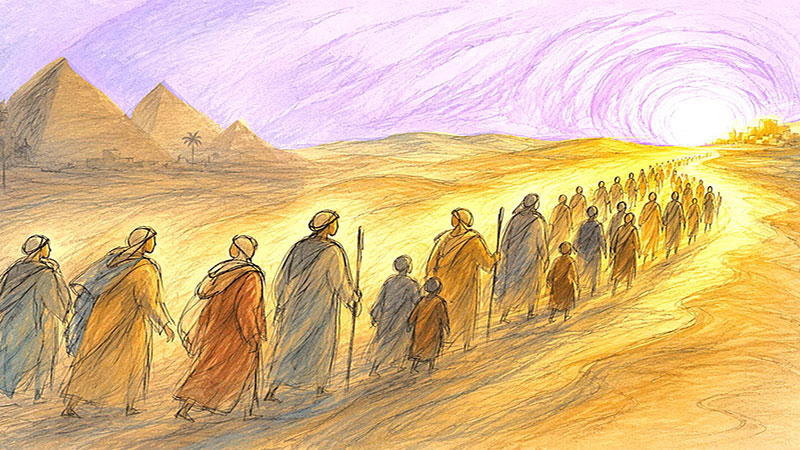
Since the goal of leaving Egypt was to go to Eretz Yisrael, why does the Torah say that they journeyed out of Egypt? It should have said they journeyed toward the land of Israel?
Question: I was taught that due to our mourning on Tisha B’Av, we are not allowed to learn or discuss Torah. Since Torah causes us joy, we are forbidden to lessen our mourning through its study. While I understand why we read Kinot and Eicha, how do we justify reading from the Torah at Shacharit and Mincha? A further question: Do these halachot apply to an individual during his or her seven days of mourning? H. Ellis Via E-mail
To pray meaningfully for the return of the Beit HaMikdash and the restoration of the Temple service, we must first understand the significance of the Mikdash and the purpose of the avodah performed there.

When Hashem created the universe, He saw fit to make it with Judgment counterbalanced by Mercy, so that the free choice and the efforts of humanity could bring about the final rectification of the material world.
All of our nation’s suffering is rooted in the destruction of the Beit HaMikdash. More precisely, our suffering is rooted in what the destruction reflects – distance between us and Hashem.
The absence of Hashem’s Temple also allows for a universal spiritual deterioration where things can get so out of hand in the world that even the American Pledge of Allegiance and pride in our host nations can be ruled unconstitutional!

The Ben Ish Chai explains that Hashem does chesed with a tzaddik who cherishes his speech and is careful with his words. Even if his words can be interpreted in a bad way, Hashem adjusts them to be good.
If the directive is solid and is for our benefit, why allow us to defy it at all? Wouldn't the world be a better place without free choice? And the answer is no, it would not.

On the individual consumer end, there is less education and more propaganda promoting medical interventions than a belief that overall, it is a natural experience which is not necessarily traumatic and is no worse or better than other developmental difficulties, and part of human experience.

They are combined almost 90% of years in Chutz LaAretz, and almost 80% of years in Eretz Yisrael. This year, Matot-Mas’ei (M&M) are combined all over the world.

One of the greatest tragedies is when a new inductee stands at his/her bar/bas mitzvah smiling for pictures and enjoying the “induction ceremony,” but in reality, has absolutely no idea how to be a soldier or how to “handle” the weapons.
Because the words of Torah gladden the heart, studying Torah is forbidden when Tisha B’Av is on a weekday, except for passages in Scripture that deal with the destruction of the Temple and other calamities.

The flight went smoothly. After checking in to his hotel, Mr. Fine placed the phone on the desk in his room until Mr. Neuman’s son would collect it. That evening, he went out to dinner with several business associates. When he returned, the phone had vanished!
An Argument with Karaites “A Fetus that Partially Left the Womb” (Chulin 69a)
A central halachic and emotional theme of the day is to avoid diverting our minds from this national mourning.

This idea is one of the most comforting themes in Judaism. The Almighty is not merely present during moments of triumph and celebration. He is present during moments of anguish and despair.

Mazal tov on the new school year which begins this week! According to Rabbi Yaakov Edelstein, the former chief rabbi of Ramat HaSharon, although summer vacation starts now, this is when kids’ education truly begins.
How can Torah Jews see the return of the Jewish people to Eretz Yisrael as negative?

Question: Have any of the Gedolei Torah of the religious right been supportive of the Jewish State – Medinat Yisrael – even though it is not completely religious in nature and in fact governed as a secular state? Joseph Borkovich Via email

It is the job of the kohen to appease G-d’s anger even as it is stoked by the infidelities of His people.
Am Yisrael have full control over the determination of the festivals, which may also be influenced by their behavior! the good and the … bad.

I don’t know what the state of the world will be in by the time you read these words. I do know that every day brings more confusion, more anxiety, loss of trust, and even loss of life. What can we do? What must we do?

It seems to be pretty clear that although the war with Iran went basically as anticipated, from the point of view of the Americans and the Israelis, the peace “agreement” is not quite what was anticipated.

Hashem wanted to glorify both Moshe and Aharon, who would, through the power of their speech, reveal the hidden power within the material world. At the same time, He wanted to highlight His own Creation of a world of true essences locked within the symbolic framework of the physical universe.
I think we can use the rule I once heard from the late Telzer Rosh Yeshiva, Rav Chaim Dov Keller, zt”l, zy”a: If something will not bother you three hours from now, just be quiet and forget about it. If, however, the issue is of a more lasting nature, you must discuss it at a time when everyone is more level-headed and not so defensive.
The Talmud (Brachos, 20a) discusses the reality that the earlier generations were wholly dedicated to the sanctification of the Name of Hashem, unlike the later generations.
The goal of life is to come into this world and rebuild all that you experienced and understood while in the womb.

Furthermore, the two sides – sharpness and softness – represent a unification of two opposite but necessary features that it takes to fulfill the Torah: humility and brazenness.

Parshat Pinchas contains six of the 613 mitzvot, all positive; it is one of only six sedras that have only positive mitzvot.
There’s something nice about getting a haircut. For a few days the person looks put together and fresh.
We feel guilty and want to help them, but we also feel frustrated because we might know that their pattern is self-destructive or that somehow, they’re doing this to themselves.

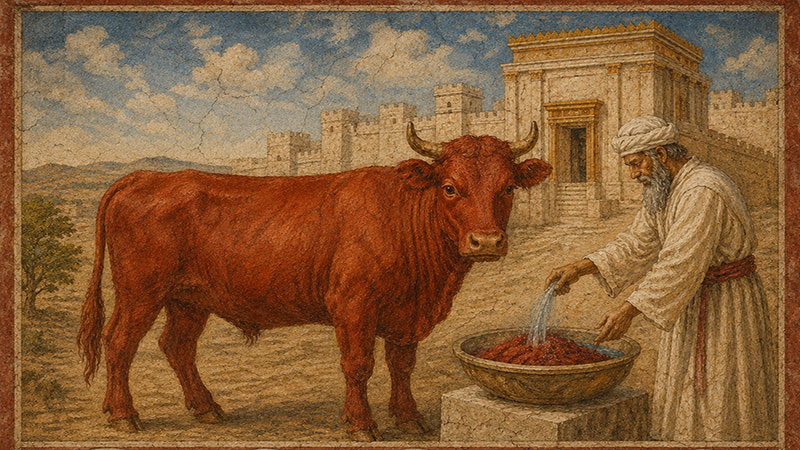
We pray for the hasty coming of Mashiach but might not return to the state of purity during the usable lifetime of this calf.
Genetically Engineered Simanim “A Bird with One Siman” (Chulin 62a)
The Torah gives one the energy to get up each morning and enjoy the day. Learning Torah, keeping it and loving it is the key to life.
As the Jewish people mark 50 years since the miraculous rescue operation, Shai says it is important to pay attention to the dates and events that shape our lives. That is why he held a special kiddush of thanksgiving in his home last Shabbat.
Question: We see numerous instances in Scripture where a person’s name was changed. Notably in the recent parsha, Shelach, it says, “And Moses called Hoshea son of Nun, Joshua.” Some people are then always referred to by their new name, while others are not. A case in point is the way we refer to our Patriarchs in the daily Shemoneh Esrei. Why is that so? Abraham Goldman Jerusalem
The purpose of the ashes of the red heifer is to purify someone who has come into contact with a dead body. The origin of death in the world was the result of Adam and Chava's sin.

It strains our credulity to imagine that such tremendous tzaddikim, especially after everything they have already seen and led us through, would be in any way lacking in belief.

If Korach was so great yet he nevertheless succumbed to the yetzer hara of machlokes, of fighting, what chance do we have?

President Trump’s “Memorandum of Understanding” with Iran and his reprimand to Israel for attacking Hezbollah and Vice President Vance’s increasingly regular threats to cut off weapons to the Jewish State, seems to vindicate Kissinger’s words.

Words don’t just leave our mouth and evaporate into thin air. They create a reality. They are keys that open the doors of blessing or can, G-d forbid, close them. A good word brings good.

The aloneness we experience today as a consequence of the wars being fought in Israel, and by those who defend and support Israel abroad, is built into Jewish history.

When it feels dark and all inspiration seems lost, remember the first stage, remember that spark. If you can’t find the light in the darkness, create it.

Let me summarize the out-of-sync sedra situation (again). Out of the seven pairs of sedras that are sometimes read separately and sometimes combined, three of the pairs serve to bring Israel and Chutz LaAretz back into sync.
Unlike grass which any child can nonchalantly rip out of the ground, chopping down a tree is a great challenge, and uprooting all the branches beneath is an even greater challenge.

When the seller wants to leave the area, if we would require notifying the bar metzra initially, the prospective buyer might retract in the meantime and delay the move, adversely affecting the seller even if he did not have a defined prospective option elsewhere.
Eternal and Immutable “Only Those Enumerated by the Sages” (Chulin 54a)

Question: Is the prohibition of living in the land of Egypt equally applicable to travel there as well? I know people who go there to see the pyramids. Zelig Aronson Via email

"Arnold is a 101-year-old member of our community. In just a few weeks, we will be celebrating his 102nd birthday. On the last day of Pesach, he woke up, noticed the weather outside, and said to his wife: “I’m worried that there won’t be a minyan today because of the weather." So, he walked in the rain to join our minyan.
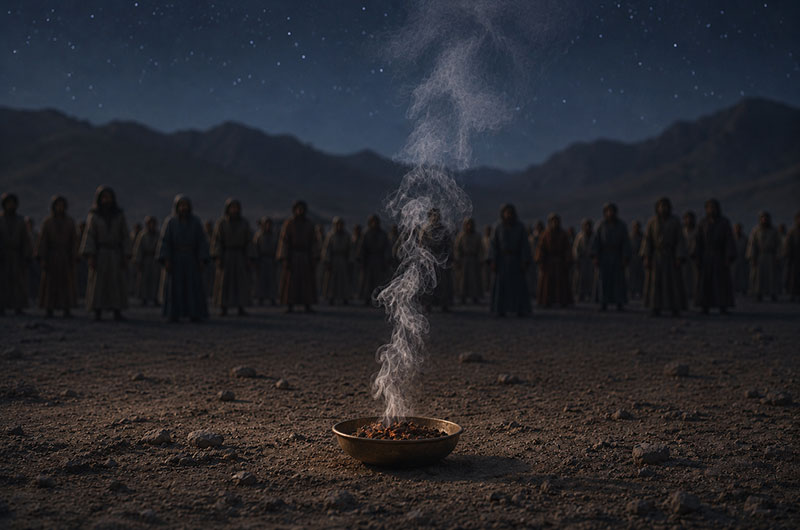
What Korach failed to understand was that both Moshe and Aharon were reluctant leaders. Moshe argued with G-d when G-d picked him as the leader.

Ramban notes that Korach’s brilliance lay in his ability to gather discontent from every direction and bind it with the language of righteousness. It is a pattern as old as humanity. A unity built not on covenant but on negation. A gathering without a center. A movement that cannot endure because it has no soul.
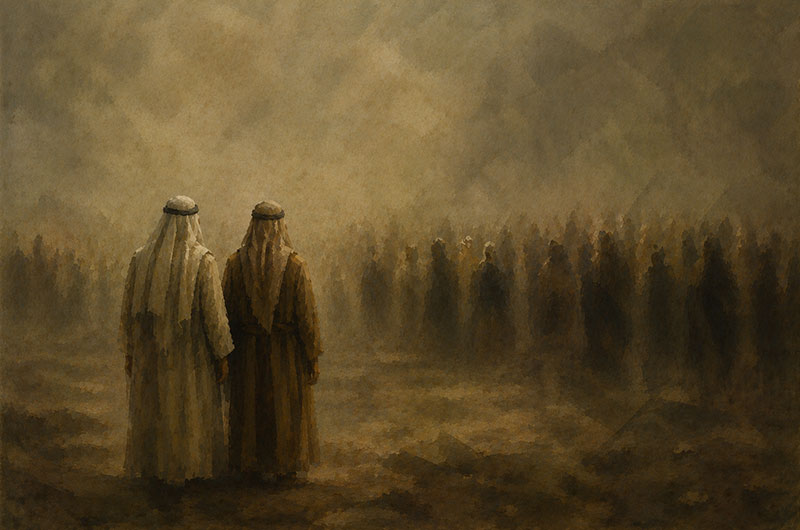
Only Moshe and Aharon are willing to sacrifice themselves and ignore their self-interest for the good of Israel.

Shmuel, who had devoted his life to shepherding the nation through its most turbulent years, may not have been able to invest with the same intensity in his own children.

Opposition to conscription on those grounds is understandable and coherent. But the call for broader charedi participation is not rooted in a sinister desire to weaken Torah study or undermine religious commitment.
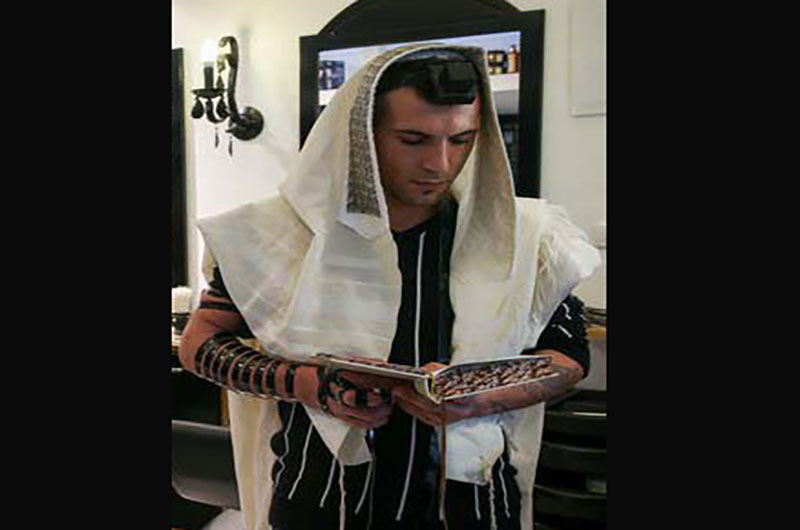
Rav Aharon Yehuda Leib Shteinman, zt”l, whimsically says that a better segulah against anger is simply to keep one’s mouth shut!

It is a fact that when someone envies another’s wealth or property he is tormented until he is able to attain that level of materialism.
Korach was part of the family of Kehat, the bearers of the Aron HaBrit. This task was not entrusted to anyone who was not of a very high spiritual level. It was an extremely hazardous task and Korach, who at this point was over 50, had already completed a successful "tour of duty" in the Mishkan and emerged intact.

Experiential knowledge is a type of knowledge that is known so deeply and powerfully that it becomes part of one’s very consciousness and self. This knowledge cannot be overcome, nor can one blind themselves to it, no matter how strong the competing desire.

Say “Tamuz” to someone and the immediate association is Shiv’a Asar b’Tamuz, the beginning of the Three Weeks and a period of mourning. Not wrong, but not the whole picture.

The reason for the celebration is that Torah is not merely a constitution or a book of the Rights of Man. “It is a Tree of Life for those who grasp it, and those who support it are blissful” (Mishlei).

If we are talking about the fact that he is afraid of being caught by the law and having to pay, it doesn’t make sense that he would throw it over the fence and cause damage.

Eli smiled sympathetically. Normally, you can’t take challah twice, he said. But I remember learning in kollel a famous Ketzos about someone who separated challah without the owner’s authorization. I don’t know what we rule in practice, though.

A Halachic Referral “It [the Lung] Erupted in Blisters” (Chulin 48a)

“I’m sorry” sometimes simply is not enough. These words echo painfully in my mind whenever I witness tragedy, cruelty, or human insensitivity. They reverberate whenever I see people throw words carelessly at one another, unaware that words themselves can become eternal scars.
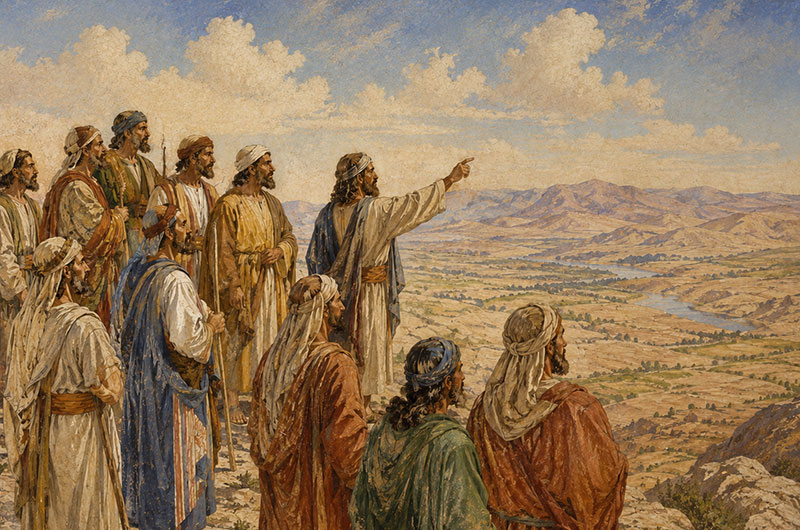
Chazal tell us that a person’s character can be found in his name. If one looks at the names of the spies, one can discern certain innate positive qualities, but one cannot be certain whether the bearer of the name will use those attributes for good or for the bad.
While we hope and pray for continued miracles, we of course have to do all in our power to make miracles unnecessary, and one way is to do a better job explaining to the world which people are interested in genocide and which people are interested in preventing it.

The words are brief, but they open a window into the inner world that shaped everything that followed. The land had not diminished them. The giants had not diminished them. They had diminished themselves.

Question: Is it prohibited to place a siddur or some other sefer on top of a Chumash? Menachem Kooper Via email

To whom is Hashem to show patience and slowness to anger if not to those who transgress against His commands?
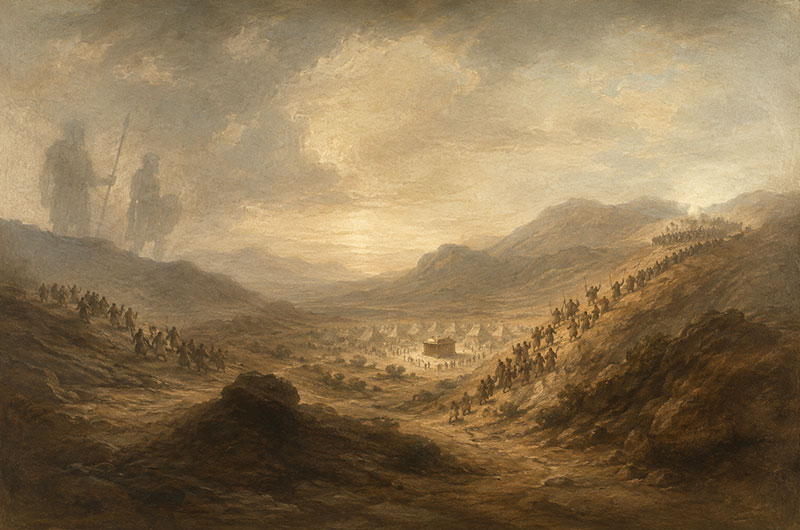
They were determined to reverse the tragedy. The land they had rejected only a day earlier now stood once again at the center of their hopes. Convinced that they could still set things right, they prepared to march forward.
 October 9, 2026