יום חמישי, ד׳ חשוון תשפ״זThursday, October 15, 2026



Follow Us


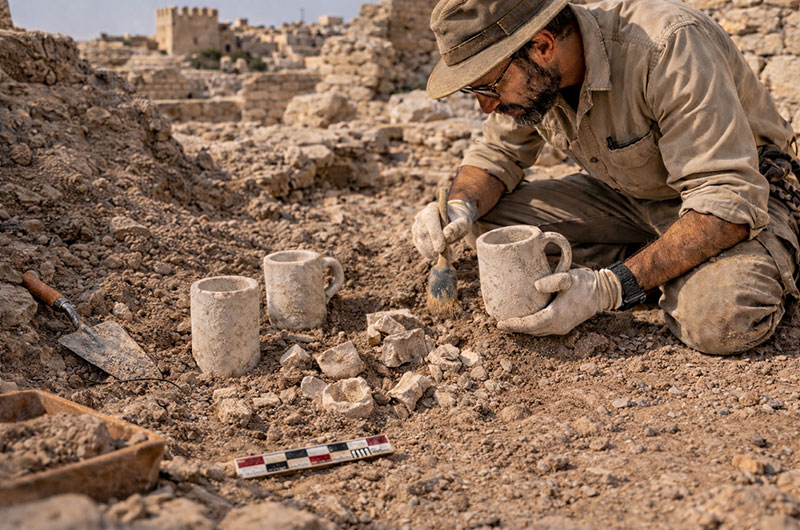
What is most fascinating about the laws of purity is how extensive and invasive they must have been when they were observed properly in the times of our Sages.
Vayikra the Book has the most mitzvot of the five Chumashim – 247, which is 40% of the Torah’s 613 mitzvot. On the other hand, Vayikra is the shortest Book of the Torah, by far – in columns, lines, p’sukim, words, and letters, making its mitzvah-stats all the more impressive.

Everyone is a leader in some capacity. Some will lead their families, while others will lead the world. The scale is irrelevant; the principles remain the same.

I recently heard the Meaningful People podcast in which Uncle Moishy was interviewed. It’s clear that he genuinely loves what he does and takes great pleasure in the fact that he has had such a wonderful impact on so many Jewish children for so many years.

When the renovation finally neared completion, Mr. Landman approached Mr. Fixler. “We relied on your schedule,” he said. “We had to move out. We even rented an apartment. This delay caused real inconvenience and expense. I believe we deserve compensation.”

Shortchanged? “You Shall Count 50 Days” (Menachos 65b)

Each of us has his or her personal story about how this concept of an undisturbable day of rest, so counterintuitive to the ideals of the society we live in, has enriched and prolonged our lives.

There are really two kinds of religious life. The first is built out of inspiration... This second life is not built out of inspiration. It is built out of return.

I’ve always been struck by that phrase “nesa liban,” “their hearts lifted them.” There is something deeply human in it, a quiet rising of the soul toward purpose.

The test facing the Biton family is unimaginable. Yet many people in the room yesterday nodded in agreement. Each person drew strength for the challenges in his or her own life.
Question: Is it permitted to ride a bicycle on the Sabbath or holidays in an area that has an eruv? No Name Please Via email
Philo’s discussion of the clothes of the Kohen Gadol is deeply fascinating, but also probably demonstrates some of the basis for Chazal’s decision to ignore his teachings in the Talmud.

The deeper reality is that Israelis tend to experience their identity primarily as members of a nation rather than as members of distinct local congregations.

When I first learned of this initiative, I felt immediately that it deserved recognition. Not because it is grand, but because it reflects the quiet greatness that sustains Jewish life. Many communities mourn; fewer understand how to transform mourning into blessing.
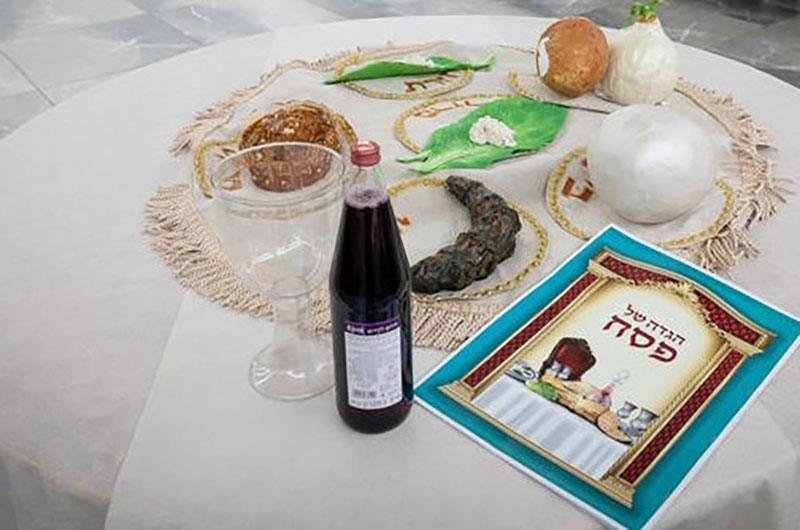
Ashrei is a very important prayer, and the most important pasuk in it is: “Poseiach es yadecha (You) open Your hand and satisfy each living thing according to its need.”

We should realize that at the Seder we are not just talking to our children. Actually, we are showing them how to make a Seder. We are investing in our grandchildren and generations beyond.

The blessing of an ordinary person should never be considered lightly in your eyes.
Counting can be a potentially dangerous thing. The Gemara (Ta'anit 8b) says that someone who weighs/measures/counts something will never see any blessing from that thing, because blessing only rests on something that is undefined/unseen.

Shabbat is the original demonstration of k’dushat z’man, the sanctity of time. Mikdash is the prime example of k’dushat makom, the sanctity of place.

Even this can be only a metaphor, because G-d is complete and needs nothing. The words “need” or “it brings honor” are a stand-in for human perception of a deeper truth or force of the universe.

Only when you look closer, deepening your gaze, do you see the deeper layer of reality, the transcendent root.
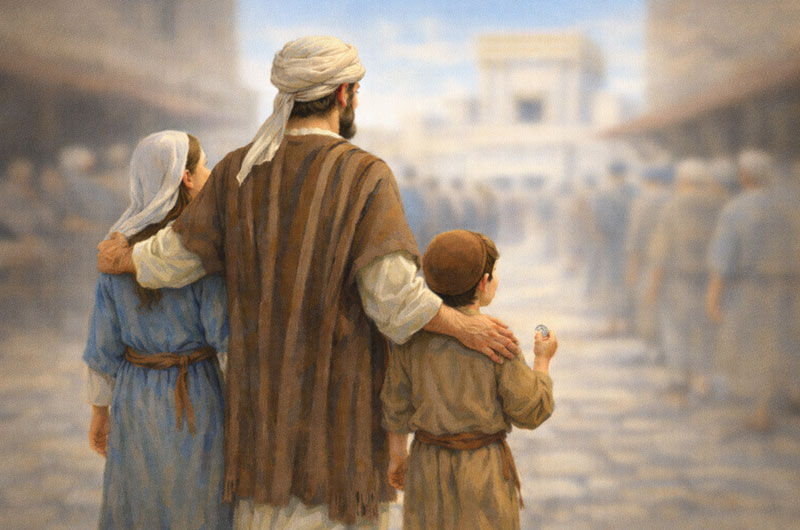
Although they used the child’s coin, this does not adversely affect the animal’s status. And since he gave it willingly, which is valid mi’d’Rabbanan, they have no obligation to return its value to him
Monies in a Pushka “Do Not Add Oil” (Menachos 59b)
Intellectually, of course, I always knew this. But suddenly, that day, I felt it in my heart as well. Fourteen-year-old Matania, with his gentle smile, interpreted reality for me better than any seasoned commentator could.

Being that their acceptance was under duress, the Jews had an escape clause. They could unilaterally revoke the covenant with G-d and abandon their status as the Chosen People at any time.

In the span of a few days, we move from Esther’s quiet courage in the shadows to Moshe holding luchot carved by the hands of Hashem. Two extremes of Divine presence. Two ways a people can tremble. Two ways a heart can break open.

The form of the world we know, like the forms of the letters engraved upon the Luchot, is that which was decreed on High when Hashem decided to create our universe.

Aharon assumed their desire for wealth would quiet their fears. He discovered instead that fear does not yield so easily. When people feel unmoored and uncertain, fear overrides calculation. In that moment, the people did not have the emotional strength to wait.
A person who lives in this world has not been privileged to see everything from the beginning of time. When he observes certain events, he doesn’t understand why one person has various challenges in life, or why one is successful while the other is not.
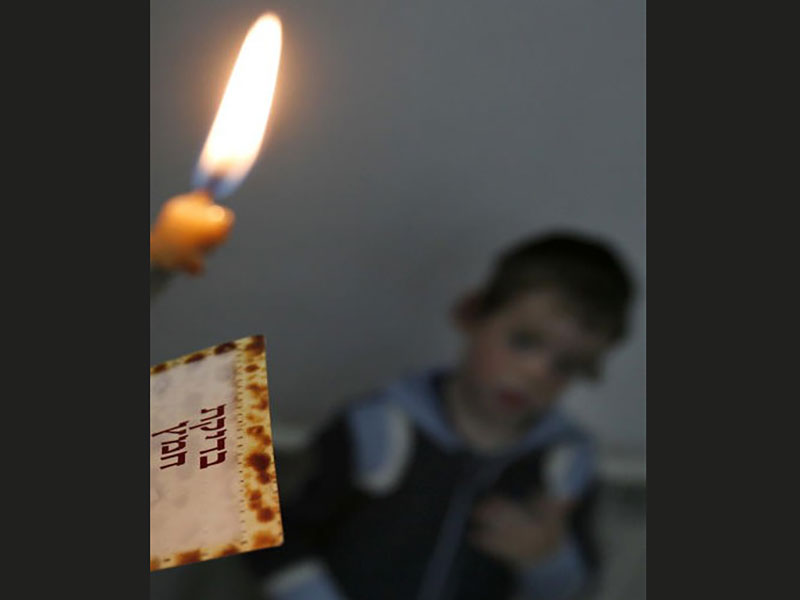
In our Seder right after the Ma Nishtana, we testify to this in the Haggadah, saying that if Hashem hadn’t taken us out, we, our children, and our children’s children, would have been subjugated to an Arabic, slave-like existence.

Question: Is it permitted to ride a bicycle on the Sabbath or holidays in an area that has an eruv? No Name Please Via email
Instead of expressing gratitude to HaKadosh Baruch Hu for this abundance, the snake, the yetzer hara, preyed upon Noach's generation, who rejected HaKadosh Baruch Hu and became a depraved society worthy only of destruction.

Hundreds of chayalim, in all types of uniforms, walking together, right before my very eyes! The same window through which the Nazis would look in, now we were looking out and seeing a miracle unfold before our eyes.

The Torah is asking of us not to devote moments of time toward worship but to live and walk with G-d.

When Ki Tisa and Para are read on the same Shabbat, there is a significant connection between them.

When we smell something, it also allows us to anticipate something we may not see or hear.

On Tisha B’Av, Rav Moshe would wear a threadbare garment that was beginning to tear. One could see the grief in his eyes and his longing for the yeshuah with all of his soul.
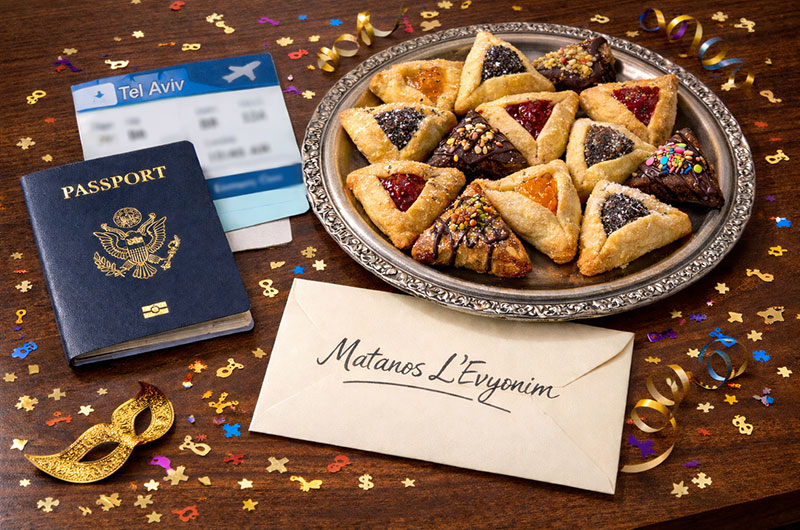
Can I send matanos la’evyonim to someone living in Yerushalayim which they will receive when they are celebrating Purim?
The Greater Reward “The Ketores…Since It Is Infrequent, It Is Most Dear” (Menachos 50a)
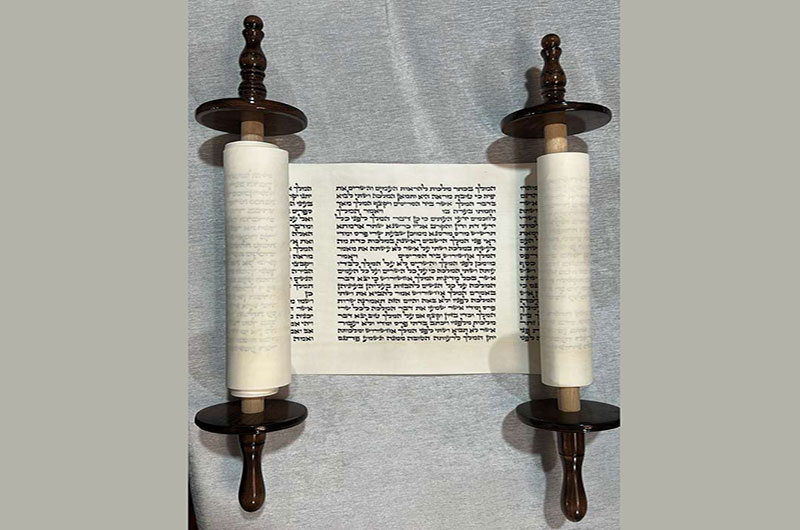
By Moshe Gantz and Joseph Miller
The megillah functions differently. It is read all at once from beginning to end. Since there is no need to leave it open in the middle, one roller suffices according to Shulchan Aruch.

The Jews of Shushan did not change their location. They changed the way they carried their covenant. For a moment, they stopped guarding it and started living it.

There are weeks when I look toward that light and feel held. There are weeks when I look toward it and feel exposed.
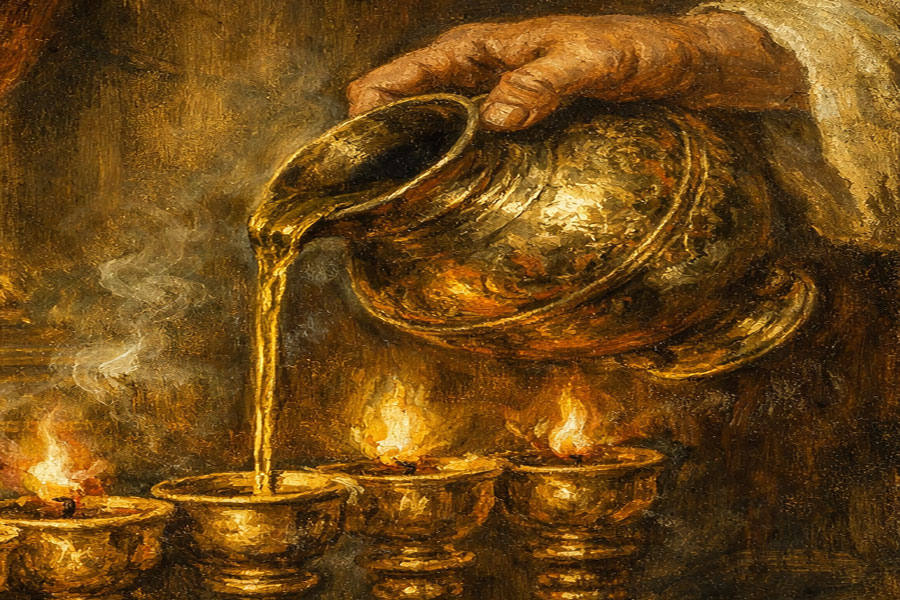
The Choshen Mishpat atoned for miscarriages of justice. It was fastened so tightly that it would never stray from the Ephod (28:28).
Joy is not a fleeting pleasure that fades as quickly as it appears. Real joy connects us to something eternal. It is grounded in simple, practical actions: mitzvot and good deeds that anchor us in purpose.

Question: To whom should one give matanot la’evyonim on Purim? Is there a minimal amount one is to give? Also, what about boys collecting for yeshivot or other institutions – may one discharge his obligation by giving to them? Menachem Via email
Chazal say that Achashveirosh hated Am Yisrael even more than Haman. Achashveirosh was told by his soothsayers that he would eventually be succeeded by a Jew. Since he wasn’t particularly fond of Am Yisrael to begin with, he incorrectly assumed that the only way this could possibly come about was if the Jews staged a coup and overthrew him.
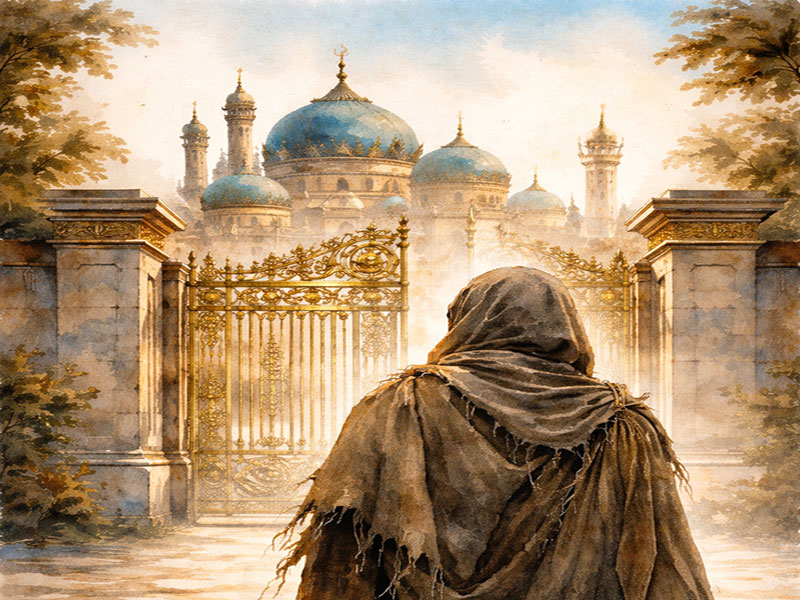
Haman and Achashverosh have effectively lobbed a figurative grenade into the streets of Shushan, creating great consternation among the city’s entire population. The two architects of the impending horror, however, remain removed and unaffected by the turmoil in the streets. While Shushan is in an uproar, its king is busy drinking.

Individual humans upset the balance on their own, Rashi is saying, and thereby provide an opening for the enemy.
Because letter-based communication became so central to imperial rule, letter writing emerged as a prestigious craft. Composers of royal correspondence were trained in language, form, and official convention so that the king’s will would be expressed with clarity.

When I think of polarity, I think of a wife who wears a shmata when her husband comes home but gets dressed to the nines when she goes out with her lady-friends!
The Chofetz Chaim compares the rebuker to a merchant who is trying to sell his goods. Would the shopkeeper ever think that if he is hostile to the customers they would more readily agree to make a purchase?
The Chofetz Chaim compares the rebuker to a merchant who is trying to sell his goods. Would the shopkeeper ever think that if he is hostile to the customers they would more readily agree to make a purchase?

Our Sages wanted to make the connection between Amalek and Haman – who not only descended from Amalek but behaved in the particular style of Amalek in his desire and efforts to wipe out every man, woman, and child, the people of Mordechai.
At this point the Gemara assumes that it is improper to commit a sin even in order to achieve a higher purpose, such as fulfillment of the overall mitzvah.

The first fundamental principle of Jewish belief is that Hashem is the Creator of the world. He is the source of time, space, and all of existence.
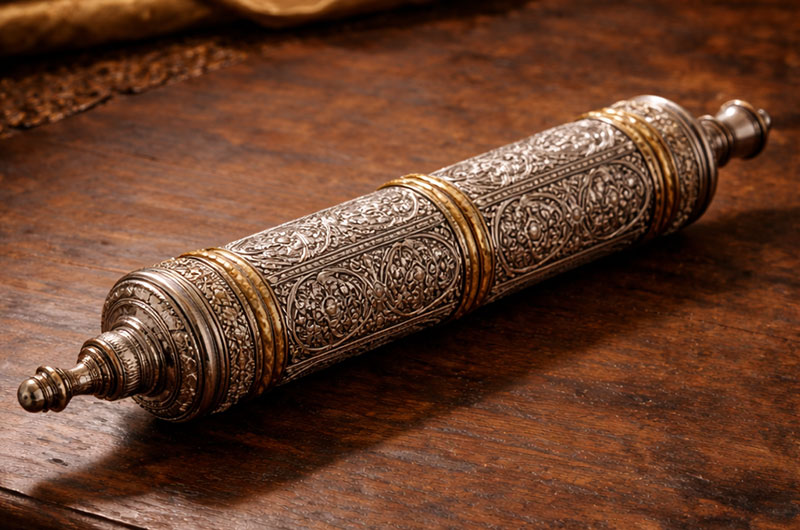
Though Mordechai received no prophecy regarding the correct course of action – hence the term perhaps – this does not prevent him from issuing clear directives to Esther. He reflects on the situation and discerns what action Hashem expects from both of them.

Like people, relationships have ups and downs. They do not remain static and require constant nurturing and attention to maintain and enhance them.

He assumed it probably wasn’t a problem, but his uncertainty held him back. Was exchanging bills considered using company money? Was borrowing temporarily any different?
Something Borrowed, Something Blue “‘You Shall See It’ To Exclude A Nighttime Garment” (Menachos 43a)

Distinct. Individuals. Representing tribes. But in Terumah, at the moment of donation, before they are placed and named in detail, they are called something else. Avnei miluim. Stones defined not by their brilliance, but by their necessity.

What personifies G-d’s presence in the Mishkan most of all? It is the Torah, in the form of Tablets of the Law. The Torah is G-d’s representative on earth. We communicate with Him by studying His words.
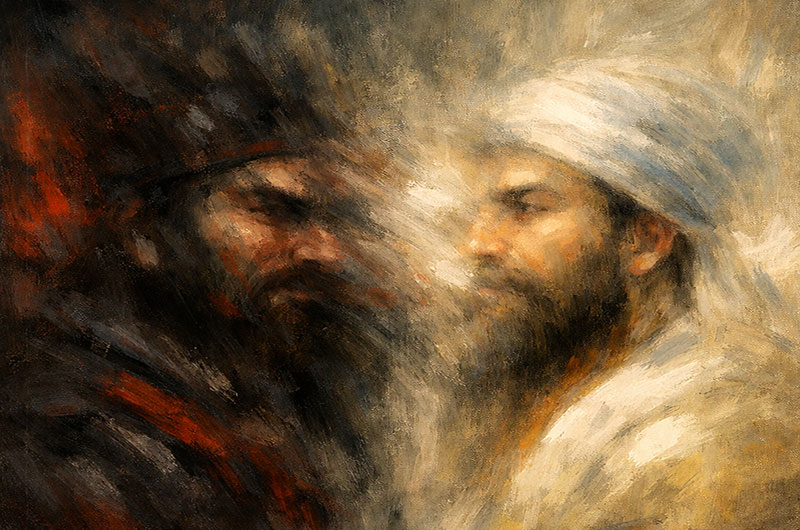
Fundamentally, Judaism is a reality-based religion. We are enjoined to find G-d in our own lives and world, with our feet firmly planted on the ground.

The Mishkan gives Bnei Yisrael predictability through clear instructions, agency through voluntary offerings, collaboration through shared labor, embodiment through materials and craft, and containment through a defined sacred space. It is the Torah’s first blueprint for communal healing.
A Guinness World Record has recently been broken in Israel. It’s a record of generosity and kindness. Last week, 2,000 kidney donors posed for a group photo at the International Convention Center in Jerusalem, forming the largest gathering of organ donors in history.
The reality of the Beit HaMikdash is very much alive and pulsating in our modern Jewish lives, we just don't acknowledge it as such. To us, it is just the normal Jewish routine.
Question: I am the gabbai in a large synagogue, where many people bring Divrei Torah handouts to distribute. As such, I am faced with disposing of the constantly growing accumulation of sheimot. How do I deal with these papers that include the names of Hashem in many substitute forms, mostly in English? No name please Via email

Our calling is not merely to take in and reflect surrounding culture, but rather to shape it, to serve as a light unto the nations by embodying and promulgating the Torah’s Divine values.

Human nature is fragile, and our avodat Hashem can falter. Living a commanded life does not mean that we always succeed. It means that we accept all of Hashem’s mitzvot, without selectively embracing those we prefer and discarding those we resist.
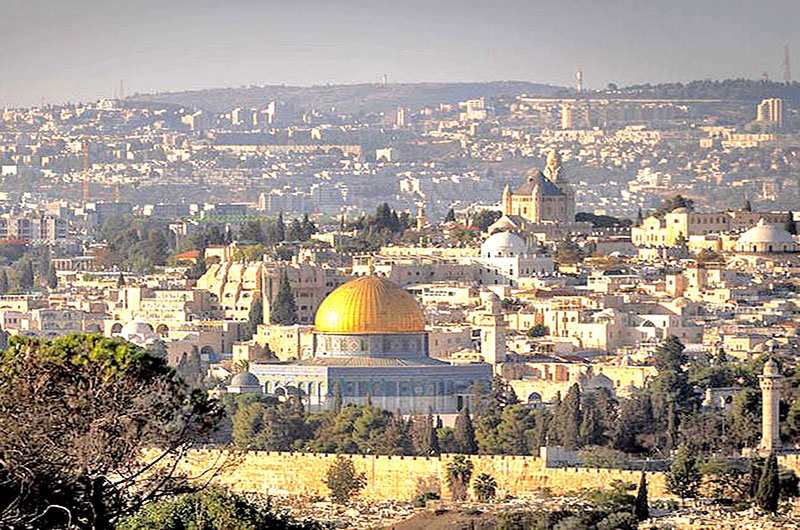
On the evidence of his writings, Philo was almost certainly a Torah-observant Jew who believed in the Divinity of the Torah and the uniqueness of Moshe’s prophecy.
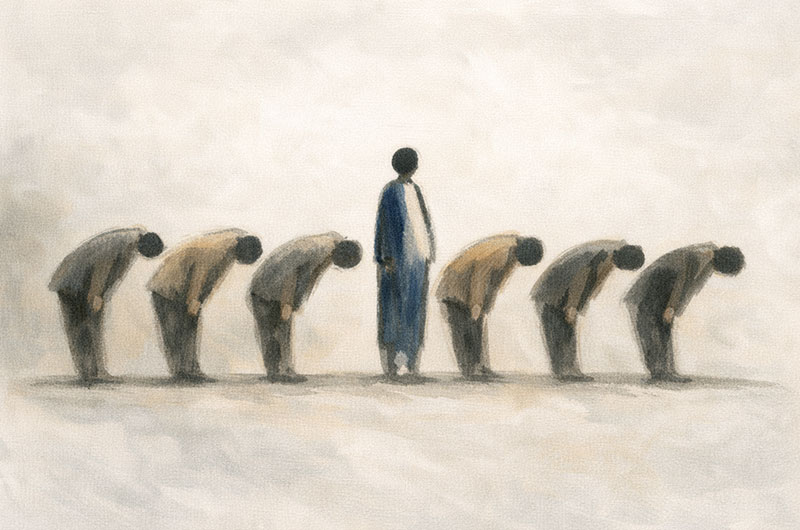
We can make the startling conclusion that the entire event of Purim, the intended genocide of the Jewish people and the miraculous reversal that led to the downfall of Haman and the Amalekis, all hinged on the slander and the snitching of the noblemen at the king’s gate.
In assessing the potential of every Jew, Rabbeinu Yonah writes that even an individual who does not show great promise can achieve exalted heights and become a tzaddik. The simplest and most humble person can merit the Divine presence.

The most primitive form of leadership is selfish leadership, driven by the desire for power and self-gratification. In such a system, the leader represents only himself and his own selfish desires.
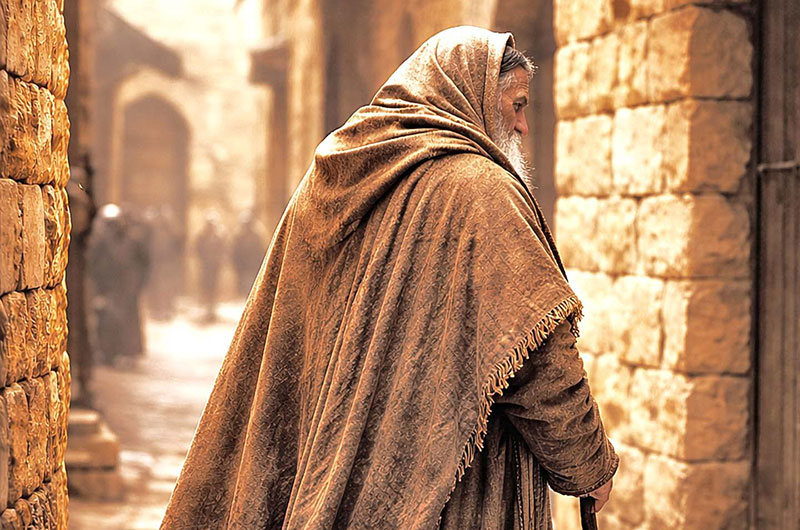
Our forefather Yaakov was described as a wandering Aramean (see Devarim 26:5 pashut p’shat, Ibn Ezra and Rashbam). The Jewish experience is to wander and spread out into the world, like our forefathers did. But the Jew maintains his identity and morals in the outside world by wearing tzitzis.

The message of the Aron’s inclusion of three half-measures is that on its own, it is incomplete. We, the Jewish People partner with it (so to speak) and become whole.
The truth is that much of life is spent waiting. On a simple level, when the world is functioning normally, we wait on store lines, in traffic, for packages to arrive, etc. But on a more significant level, we wait for all sorts of salvations and panaceas.

Miriam opened it slowly. Inside was the dress – her initial order. She stared at it, conflicted. After everything they put me through, she thought, do I really need to give this back?
Is a Shortened Lulav Kosher? “Remnants of Tzitzis are Kosher” (Menachos 38b)
A single decision, a single misstep, can eclipse decades of dedication.
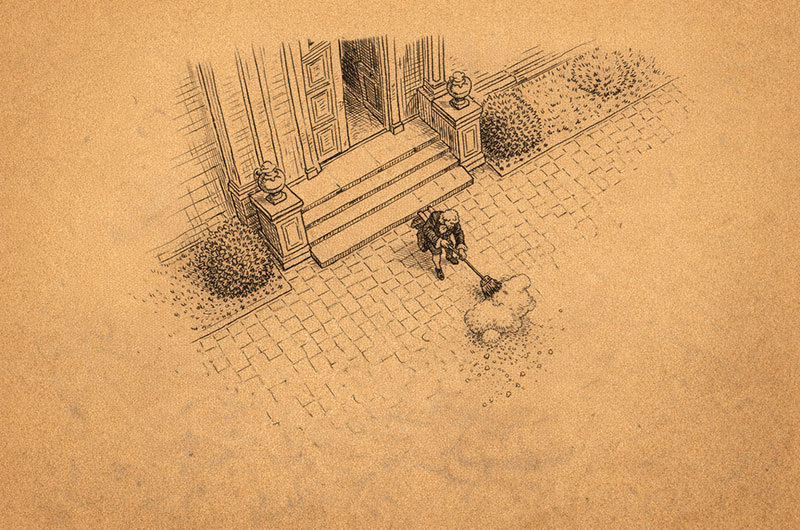
We are also told that when we lend money, we may not charge interest. What? The whole banking system and world economy runs on interest. Why should someone else profit from my money free of charge?

The Torah’s language about the ger, the yatom, and the almanah is not sentimental; it is structural. These identities are not about eliciting pity but about embedding protection into the very framework of halacha.

Question: I am the gabbai in a large synagogue, where many people bring Divrei Torah handouts to distribute. As such, I am faced with disposing of the constantly growing accumulation of sheimot. How do I deal with these papers that include the names of Hashem in many substitute forms, mostly in English? No name please Via email
In addition to all the riches that each member of Am Yisrael carried out of Egypt on 90 Libyan donkeys, Am Yisrael started adding another layer of loot on the donkeys from the spoils from the Red Sea. The purpose of all this material wealth was to develop a lust for money within Am Yisrael, which they would later redirect into a lust to study Torah.
It’s overwhelming, in the best sense. How do you even sum it up? And what does it mean for ordinary people like us, who aren’t heading out this morning to rescue Israeli backpackers lost somewhere in the Far East, but are simply trying to manage the morning rush at home and at work?

Because Mishpatim is the Torah code designed for living in the Land of Israel. Courts, damages, property law, social responsibility – these are not abstract ethics. They assume land, sovereignty, and society

The Torah deliberately places civil law alongside the drama of revelation. At the very moment when heaven meets earth – amid thunder, lightning, and awe – the Torah turns our attention toward human responsibility: how society is ordered, how power is restrained, and how justice is preserved.

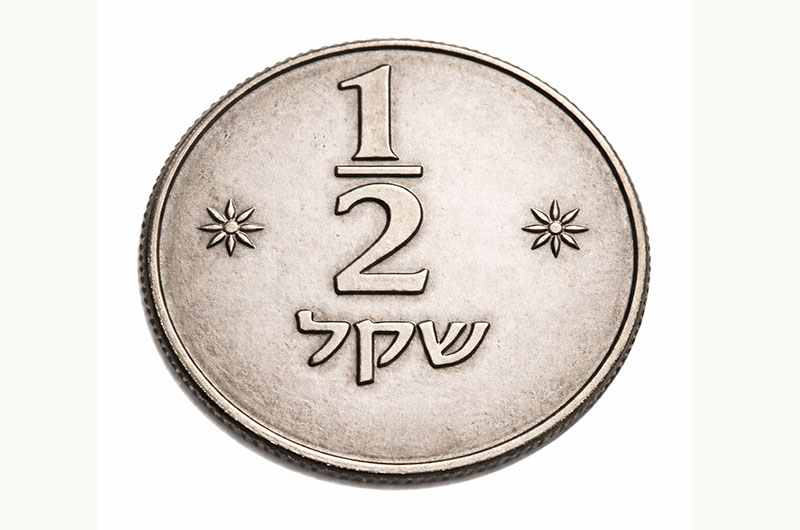
Mystical Insights into the Redemptive Powers of the Half-Shekel.

The Medrash says that water is unique among beverages in that it is only beneficial if one is thirsty. With other drinks, we might enjoy them even if we’re not thirsty, such as a soda or juice. But water only has value when we are thirsty.
When a person is belittled and disparaged, his spirit is broken. He loses any hope of being able to atone for his wrongdoings.

Your job in this world is not to create yourself but rather to recreate yourself; to reattain your original state of perfection, as you were shown by the malach. This time, however, it must be done through free will, i.e., by choosing to become great.
Mishpatim-Sh’kalim-M’vorchim occurs in five of the seven Shana P’shuta year-types, with a frequency of 55.53% – by far, the most common situation for Parshat Mishpatim and Parshat Sh’kalim.

What does it mean to see G-d’s back? In Hilchos Yesodei HaTorah (1:10), Rambam explains that even when one does not see a person’s face, one can still recognize them by seeing their back, provided one knows them well.

There are many lessons and reflections to be gleaned from the surreal events that have taken hold of the world during the Coronavirus pandemic. One of those lessons is a reminder about the effect and influence of every single individual.

Someone called my mother, the oak tree. If you needed someone to lean on, my mother was there for you. She knew that people were different, and she accepted them as they were.

The wedding was beautiful, baruch Hashem, and the pictures came out nicely. Still, when the dust settled, the added expense lingered in Mr. Simcha’s mind.
 October 16, 2026